
What to Do With Stuff You Don't Use: A Practical Guide to Decluttering
May 10, 2026
Published by Life4Rent · Operated by Brohf Software OÜ
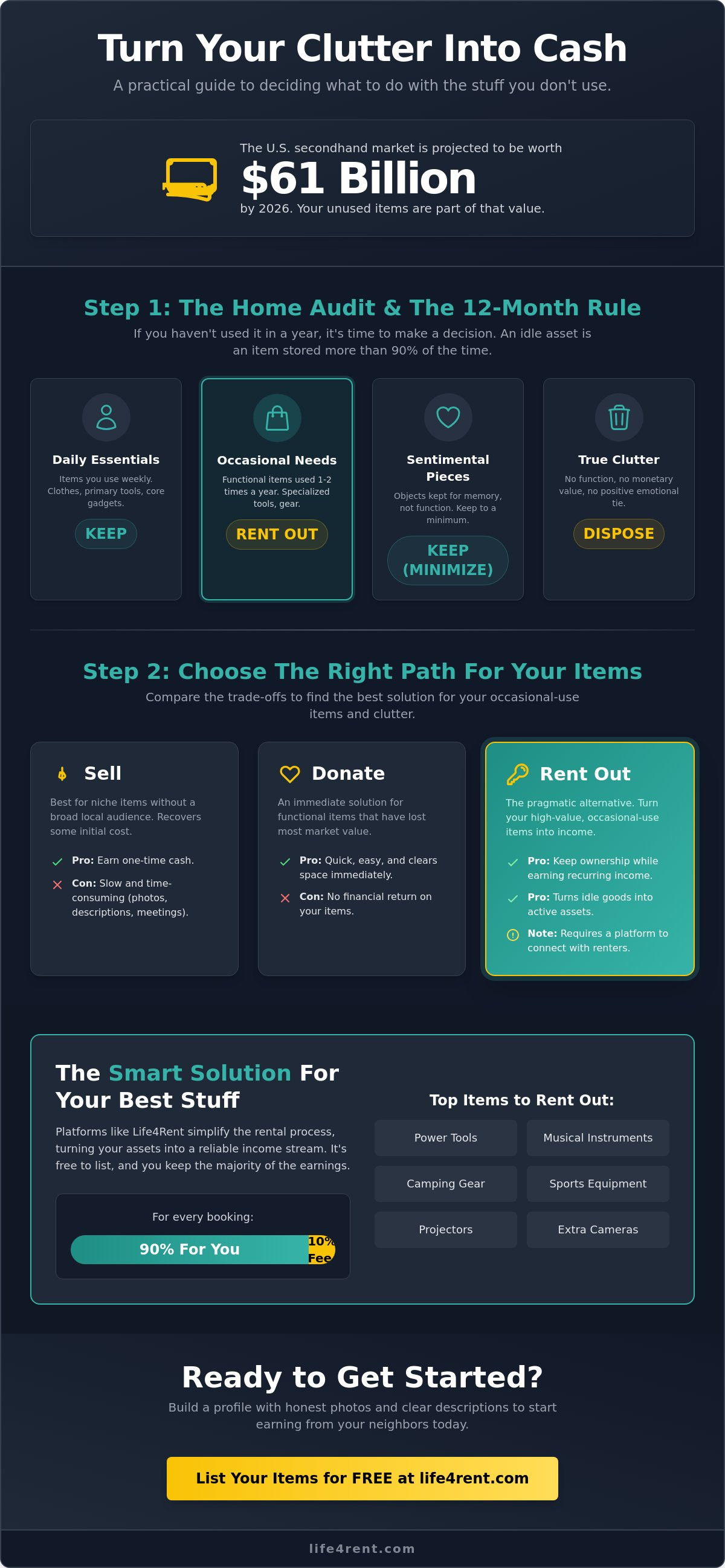
The U.S. secondhand market is estimated to be worth $61 billion in 2026. You likely have a portion of that value sitting in your hallway closet or garage right now. It's frustrating to look at expensive tools or electronics gathering dust while they take up physical space you actually need. Most people feel a sense of wasted money when they look at these items, but they don't know what to do with stuff you don't use.
You can transform that clutter into a practical system that recovers your initial costs. This guide helps you categorize your belongings so you can finally move past decision paralysis. You'll learn how to decide which items are worth selling, which should be donated, and how to earn money by renting out things you still want to own.
Marketplaces like Life4Rent make this process simpler by letting you list items for free and only taking a 10% fee on bookings. This approach turns your idle goods into assets instead of burdens. A clean home and a simple system for future purchases are within reach once you sort your inventory.
Categorizing your belongings: The first step to a clear home
A cluttered home often results from a lack of a clear system for deciding what to keep. When you think about what to do with stuff you don't use, the first step is always a thorough inventory of every room. Methods used in professional organizing suggest that visibility is key to making honest choices. You can't manage what you can't see, so start by opening every closet and drawer to see what's actually inside.
To better understand this concept, watch this helpful video:
The 12-month rule for household goods
Identifying high-value occasional essentials
Your garage often holds the most valuable items you rarely touch. You can locate a tool on rent candidate like a hammer drill or a pressure washer that you only need for specific maintenance tasks. An assessment of camping gear or sports equipment used only for specific holidays shows how much capital is tied up in storage. Electronics like extra cameras, projectors, or sewing machines often gather dust while they could be serving someone else. These high-value items are different from clutter because they are still useful, just not to you right now.
To keep your inventory organized, separate everything into these four distinct groups:
- Daily essentials: Tools, clothes, and gadgets you use every week.
- Occasional needs: Functional items used once or twice a year, like holiday decor or specialized tools.
- Sentimental pieces: Objects kept for memory rather than use, which should be kept to a minimum.
- True clutter: Items with no function, no monetary value, and no positive emotional tie.
Traditional disposal methods and their practical trade-offs
Every decision about what to do with stuff you don't use involves a realistic look at your own schedule and the current value of your items. Each disposal method carries a specific cost, whether it's measured in hours or currency. Sales on digital marketplaces require you to take clear photos, write accurate descriptions, and coordinate meetings with potential buyers. This process can be slow, especially for niche items that don't have a broad audience in your immediate area.
Donations offer an immediate solution for items that are still functional but have lost significant market value. This route provides a therapeutic boost by clearing your physical environment in a single afternoon. However, you must accept that there's no financial return for these goods. You should also acknowledge that some items have lost too much value to justify the labor of a sale, such as older fast-fashion pieces or basic kitchen utensils.
A recycling program is the most responsible path for broken electronics, worn-out textiles, or hazardous materials. Specific regulations now impact these choices; for instance, as of April 1, 2026, the mattress recycling fee in California increased to $18.00 per unit. These fees are often collected at the point of sale, but a search for a local facility still requires effort. If an item is truly at the end of its lifecycle, you don't want to pass the burden of disposal onto a charity.
When to choose selling over donating
You should estimate the resale value before you commit to creating a listing. A good rule of thumb is to focus on items that retain at least 40% of their original purchase price. High-end electronics, power tools, and designer furniture often meet this threshold. You must also consider the effort required for shipping or local pickup. If the logistics cost more than the profit, you might want to list your items for rent instead to maintain the asset while earning back your investment.
The reality of the donation process
Charities often have to pay to dispose of poor-quality donations, which takes resources away from their primary mission. You should research local organizations that actually need your specific items rather than using a donation bin as a convenient trash can. A quick check for clean and functional condition is necessary before you drop anything off. If a piece of equipment requires a specialized repair, most non-profits won't have the budget to fix it. Honest assessment ensures your old gear actually helps someone else rather than ending up in a landfill at a charity's expense.
Rental marketplaces: A pragmatic alternative to disposal
Most decluttering advice focuses on permanent removal through trash or donation. This binary choice often leads to decision paralysis because you might actually need that item in six months. Rental marketplaces offer a middle path when you're deciding what to do with stuff you don't use. You keep ownership of the item while it generates income to offset its initial purchase price. This approach turns a storage burden into a functional asset that pays for its own space.
How peer to peer equipment rental works
You list your item with honest photos and a fair daily rate that reflects its condition. Availability remains under your total control, so you only rent things out when you don't need them for your own tasks. This practical guide to peer to peer equipment rental explains the logistics of insurance and deposits in more detail. Eligible rentals can offer optional protection; it is not insurance and reimbursement is discretionary. It's free to join and list, so there's no financial risk to putting your idle goods to work.
The benefits of sharing over discarding
A home audit for potential rental assets
A systematic walk through your home reveals hidden value in items you've forgotten. Most decluttering guides focus on disposal, but a more practical approach for what to do with stuff you don't use is to treat your home as a warehouse of assets. You should start in the garage and look for large tool on rent opportunities. These high-value items represent a significant initial investment that currently provides zero return while taking up expensive storage space.
Garage and workshop treasures
You should identify heavy machinery like an excavator or simpler power tools that neighbors might need for home improvement. Specialized concrete tools like a MudMixer are particularly valuable because they solve specific construction problems for a short duration. Group smaller hand tools into kits, such as a complete woodworking set, to increase their appeal to local renters. This strategy turns loose items into a professional-grade package.
Electronics and media gear
A thorough test of audio equipment ensures every port and cable works as intended. You should gather all original chargers and accessories for cameras or drones before you create a listing. Verify that projectors or screens are in good working order by checking the bulb life and screen tension. Clear, functional electronics are among the most popular categories for peer-to-peer sharing in the modern rental market. These items often retain their value well if they're stored in a climate-controlled environment.
You can list your household assets to begin recovering your costs immediately.
Listing your items on Life4Rent
Setting up your first listing
You'll need to select the correct category from the 17 available options, ranging from baby gear to construction tools. This ensures your item appears in the right search results for local users who need specific solutions. You can specify any security deposit or ID requirements for renters to protect your property during the transaction. Describe the item's features using plain English and avoid using marketing hype that might mislead a user about the item's capabilities.
Managing the rental process
You should respond promptly to inquiries from neighbors to maintain a high response rate on your profile. When you meet for the hand-off, inspect the item together and demonstrate how to use it safely. This is also the best time to verify that the renter understands any specific maintenance requirements or return times. Peer-to-peer marketplaces work best when both parties are clear on the expectations before the rental period begins.
Use the platform's secure payment system to handle all fees and deposits. Life4Rent keeps 10% of every booking to maintain the marketplace and provide support for users. This system eliminates the need for cash transactions and provides a digital trail for every rental agreement. Once the item is returned and inspected again, the process is complete, and you've successfully turned an idle object into a source of income.
Turning your inventory into an income stream
Start listing your unused items on Life4Rent today to put your idle belongings to work. You'll find that a cleaner home and a little extra income are both very achievable.
Frequently Asked Questions
Is it safe to rent out my personal tools to strangers?
Yes, platforms like Life4Rent use verification and security deposits to mitigate risk for owners. You can screen renters by looking at their profile history and ratings from previous transactions. You can also meet in a public place or have a clear hand-off process to ensure you feel comfortable with the exchange.
How much money can I realistically make from my unused stuff?
What happens if someone breaks an item they rented from me?
You should handle damage through the security deposit you set during the listing process. It's vital to inspect the item together during both the hand-off and the return to document its current condition. If an item is damaged beyond normal wear and tear, the platform's support system helps mediate the resolution based on your documented evidence.
Do I need to pay taxes on the money I earn from rentals?
You generally must report rental income to your local tax authority, although specific thresholds vary by country and region. Most European and North American tax codes treat peer-to-peer rental income as taxable, even if it's just a side activity. You should keep records of your platform earnings and any related expenses, like maintenance or cleaning, to ensure accurate filing.
Which categories of items are most popular on Life4Rent?
How do I determine the right daily price for my belongings?
You should set a price that is roughly 1% to 5% of the item's current retail value per day. A search of similar listings in your immediate area helps you stay competitive and attractive to local renters. If your price is too high, neighbors might choose a commercial rental shop; if it's too low, the effort of the hand-off might not feel worth your time.
Can I rent out items if I live in a small apartment?
What is the difference between selling on a marketplace and renting?
You keep ownership of an asset when you rent it, whereas selling is a permanent transfer of the item. When you decide what to do with stuff you don't use, renting is often better for items you might need again in the future. A direct sale provides a one-time lump sum, but a popular rental item can eventually earn more than its original purchase price.
Life4Rent
Rent it. Earn from it. Own less, access more.
Browse peer-to-peer rentals near you, or list what you own and start earning — all protected by Life4Rent Protect.
About the author
London, United Kingdom
Fred covers rental technology, app features, and platform mechanics for the Life4Rent Renting Academy. With a background in fintech journalism, he specialises in breaking down how digital rental platforms work — from payment protection and identity verification to smart pricing and booking management.