Excavator Rental Guide: How to Choose the Right Machine in 2026
March 27, 2026
Published by Life4Rent · Operated by Brohf Software OÜ
Last March 2025, a freelance landscaper in Berlin paid €450 in extra transport fees because their chosen machine was 10 centimeters too wide for a standard trailer. Many people find that a larger machine actually slows down a backyard project by making it impossible to maneuver in tight corners. If you're looking into excavators rental options for 2026, you've probably felt the frustration of confusing spec sheets and hidden delivery costs.
You likely know that corporate rental contracts often hide cleaning fees or insurance surcharges in the fine print. It's a common struggle to find a balance between a machine that has enough power and one that fits your budget. This guide shows you how to identify the exact tonnage you need, compare daily rates across the EU, and vet peer-to-peer owners to ensure the equipment is well-maintained.
We'll look at technical specs like tail swing and digging depth so you don't pay for capabilities you won't use. You'll also find a checklist for safety requirements and basic controls to help you get started on the job immediately.
Understanding Excavator Sizes and Project Requirements
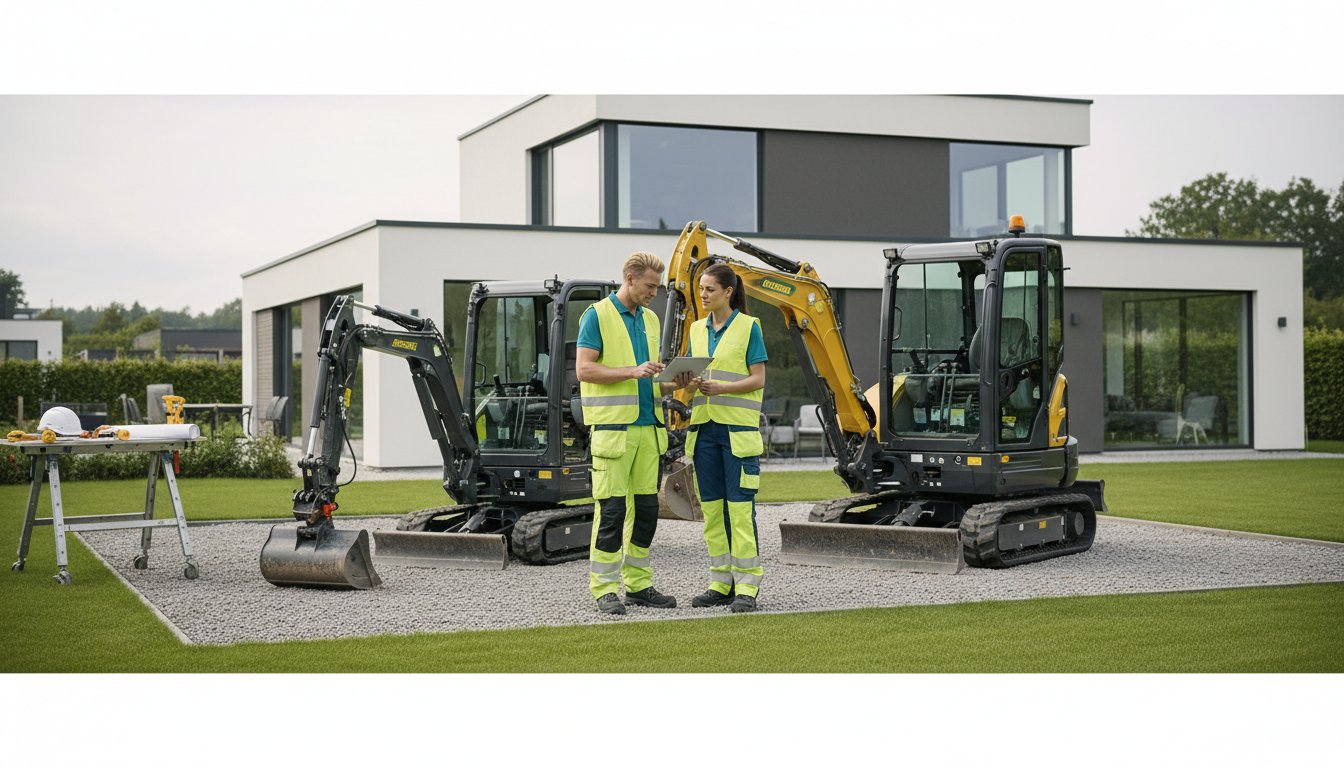
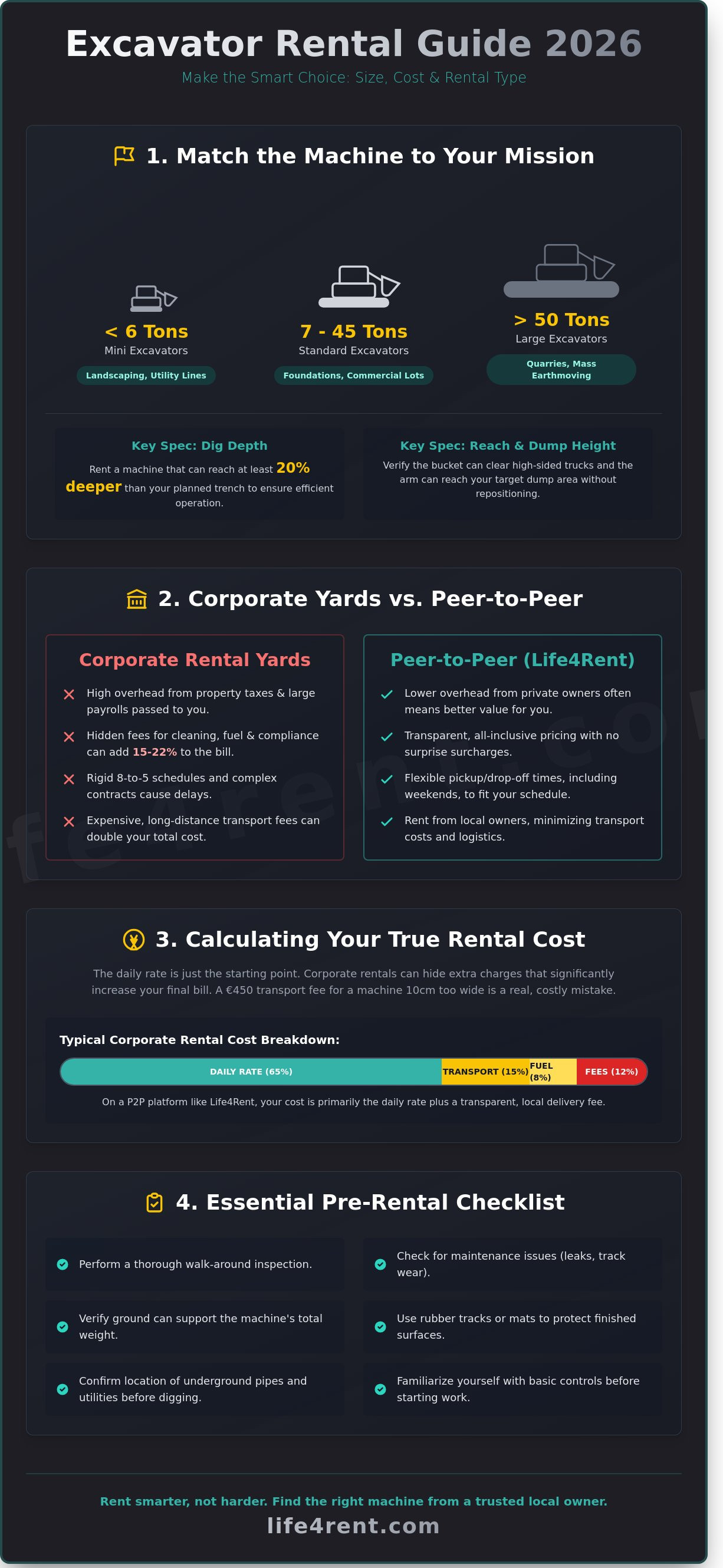
You need to choose a machine based on the physical limits of your site and the specific goals of your project. An Excavator comes in various sizes, and picking the wrong one leads to wasted money or property damage. Most residential projects require a machine that weighs less than 6 tons. These mini units are ideal for digging utility lines or small landscaping jobs where space is tight.
Standard machines usually weigh between 7 and 45 tons. These work best for digging foundations or clearing commercial lots. You'll find that excavators rental options on P2P platforms often include these mid-sized workhorses because they balance power with transportability. Large machines over 50 tons are mostly for quarries or massive earthmoving projects, and you won't see these in a typical neighborhood.
To better understand how to handle these machines on a job site, watch this helpful video:
The Role of Operating Weight
The operating weight is the total mass of the machine during use. It dictates how much pressure the tracks or tires put on the surface. A 3,000-pound mini-excavator might be fine for a backyard, but heavier units can easily crack a standard 4-inch concrete driveway. You should always check the location of underground pipes before you bring a 20-ton machine onto the site for an excavators rental.
Heavier machines provide more stability when lifting heavy loads. However, they also require more expensive transport and can churn up soft soil. If you're working on a finished lawn, look for models with rubber tracks to minimize surface scarring. Always verify that the ground can support the specific weight of the unit you select.
Dig Depth and Reach Explained
Manufacturers list a maximum dig depth for every model they build. You should rent a machine that can reach at least 20% deeper than your deepest planned trench. This extra capacity ensures the arm operates efficiently without overextending the hydraulics. It also allows the operator to maintain a better angle for cutting through tough soil or clay.
Reach also involves the dump height and the horizontal distance the arm can extend. If you're loading a high-sided dump truck, you need to ensure the bucket can clear the top of the truck bed while full. Extended reach arms are useful if you need to move dirt far from the hole without repositioning the tracks. Consider these factors:
- Maximum vertical dig depth for trenches.
- Dump height for loading trailers or trucks.
- Horizontal reach to avoid frequent machine movement.
Each of these specs changes based on the attachment you use. A larger bucket might reduce your maximum dig depth slightly due to its weight and size. Check the manufacturer's spec sheet for the specific configuration you plan to use on your job.
Corporate Rental Yards vs. Peer-to-Peer Marketplaces
Traditional rental companies operate out of massive industrial facilities with high property taxes and large payrolls. These overhead expenses usually show up on your final invoice as "service fees" or administrative costs. When you look for an excavators rental, you'll notice that corporate yards pass these fixed costs directly to the customer.
Platforms like Life4Rent connect you with local contractors or private owners who have machines sitting idle between their own jobs. You'll often find that individuals provide more flexible pickup times outside of the standard 8-to-5 window. Corporate contracts are usually rigid; they require thick stacks of paperwork and complex insurance proof that can delay a project by 48 hours.
The Cost of Convenience
Big companies often add mandatory line items for cleaning, fuel surcharges, and environmental compliance. These can add 15% to 22% to the base price of the machine. Local owners on Life4Rent might offer a better daily rate for weekend projects because they aren't paying a weekend shift to staff a rental desk.
You should always ask about delivery fees before signing. If a machine is coming from a yard 50 kilometers away, transport costs can easily double your total bill. Peer-to-peer listings often involve shorter transport distances, which keeps the logistics manageable and the costs transparent.
Availability and Machine Variety
Corporate yards frequently run out of popular mini-excavators during the spring construction surge. Life4Rent lets you see exactly what's available in your neighborhood in real-time. You can often find specialized attachments like augers, trenching buckets, or thumbs through P2P listings that traditional yards don't always stock for every unit.
Before you start digging, check the OSHA excavation safety standards to ensure your site is compliant. This knowledge helps you pick the right size for your excavators rental needs without overspending on a machine that's too large for the task. If you want to see what your neighbors are listing, you can browse local heavy gear today.
Safety Checks and Machine Inspection Basics
Safety remains the most critical factor when you handle heavy machinery. When you arrange an excavators rental through a peer-to-peer platform, you must act as your own safety officer. You should perform a complete walk-around inspection before you ever start the engine. This 10-minute habit identifies potential failures before they become expensive or dangerous problems on the job site.
Hydraulic leaks are a primary red flag that requires immediate attention. If you notice a puddle under the chassis or a wet sheen on a high-pressure hose, the machine needs repair before use. A single hose failure can stop your project instantly and cause environmental damage. You should also examine the condition of the tracks and the bucket. Loose tracks often slip off the idlers; meanwhile, a worn bucket edge makes digging 20% slower and puts unnecessary stress on the engine components.
What to Look for During Inspection
Open the service panels to check all fluid levels. The engine oil and hydraulic fluid should be clear and sit at the designated "full" marks on the dipsticks. You need to look for hairline cracks in the metal of the boom or the main chassis, especially near the weld points. These stress fractures indicate structural fatigue. Once the engine is running, test every control to ensure the machine responds predictably to your input without any lag or jerky movements.
Operator Safety Requirements
You don't always need a specific heavy equipment license to operate a mini excavator on private property. However, commercial regulations vary significantly by region. In Chicago, operators frequently need OSHA-compliant certifications for any work on public sites. In Tallinn, local safety directives require proof of competence for operators working in high-traffic urban areas. These rules ensure that everyone on the site stays protected from avoidable risks.
You must always wear the seatbelt while the engine is running. It's the only thing keeping you in the cab if the machine tips on uneven ground. You should also establish a clear safety zone around the equipment. Keep all bystanders at least 5 meters away from the maximum swing radius of the boom to prevent accidents. Most site injuries happen because an operator didn't see someone entering their blind spot during a turn.
Calculating the Real Cost of Your Rental
You shouldn't assume the daily rate is your final price when browsing the marketplace. Total project budgets must account for fuel, delivery, and protection plans to avoid surprises. Most renters in Europe find that these additional expenses add 15% to 30% to the initial quote on an excavators rental.
Fuel consumption depends heavily on how hard you push the machine's engine. A compact 3-ton unit might burn 4 liters of diesel every hour during light grading, but a larger 20-ton model can exceed 20 liters per hour when digging through heavy clay at high RPMs. You should check the tank level before you start and refill it before return to avoid high refueling surcharges from the owner.
Transport logistics represent a major expense that varies based on the machine's weight and the distance to your site. Delivery for a mini-excavator usually starts at €80 within a 20-kilometer radius. Heavier equipment requires specialized low-loader trailers, which can push the transport bill over €350 for longer distances across the region.
Insurance or protection plans protect you from expensive repair bills if an accident occurs on site. These plans are essential because a single damaged hydraulic hose or a cracked windshield can cost more than the entire weekly rental fee. You'll find that having clear coverage makes the process smoother for both the machine owner and yourself.
Hidden Fees and Extra Charges
Owners often charge cleaning fees if a machine returns covered in thick mud or concrete dust. These fees typically range from €50 to €150 depending on the time required to pressure wash the chassis. You'll also face overtime charges if you exceed the engine hour limit stated in your contract, which is usually 8 hours per day. Efficient schedules help you save money by grouping all heavy digging into a single day to minimize the total rental duration.
Insurance and Liability
Life4Rent offers protection options to give both owners and renters peace of mind during the transaction. You should always verify if your existing general liability policy covers rented equipment before you sign the agreement. An Item Protection Plan is a service that covers accidental damage during a rental period. This plan reduces your financial risk if a bucket tooth breaks or a panel gets dented during operation.
Compare all-in pricing and find the right excavators rental for your next project today.
How to Rent an Excavator on Life4Rent
Life4Rent functions as a local marketplace that connects you directly with equipment owners in your area. You can search the platform by machine weight, price per day, or specific location to find the right fit for your excavators rental needs. This peer-to-peer model often reduces the high logistics costs associated with traditional rental yards. For example, local transport for a small digger might cost €60 instead of the €180 flat fee often charged by national chains. You'll find listings ranging from 1-ton micro-diggers to 10-ton machines suitable for larger site clearances.
Direct communication is a core part of the process. You can message the owner to confirm if a specific bucket is included or to check the machine's total height for tight access jobs. The platform handles all payments, which means your funds stay in escrow until the rental starts. This system protects both parties and keeps the financial side of the deal clear. It's much safer than carrying large amounts of cash to a job site or dealing with unverified bank transfers.
Setting Up Your Renter Profile
Owners are more likely to approve requests from users with complete profiles. You should upload a clear photo and mention any relevant experience you have with construction machinery. Verification is a mandatory step for an excavators rental to ensure safety and accountability across the community. Most users complete this identity check in under 24 hours. You can also look at the star ratings and written reviews from previous renters to gauge the reliability of a specific machine or owner. If a machine has a history of hydraulic leaks, you'll likely see it mentioned in the comments.
Booking and Pickup Logistics
Select your required dates on the availability calendar and submit a request. Most owners on the platform provide a response within 5 hours during standard business days. You should coordinate a meeting time that allows for a quick technical briefing. Every machine has its own quirks, such as specific startup sequences or fuel shut-off valves. You need to take clear photos of the excavator's condition, including the tracks and the hour meter, during both the pickup and the return. Most owners expect the machine to return with a full tank of diesel, so it's wise to locate the nearest fuel station before you start your work. This documentation serves as your proof of care if any disputes about wear and tear arise later.
Get Your Project Moving with the Right Machine
The right weight class for your job prevents wasted fuel and high transport fees. A 1.5-ton mini excavator works well for residential landscaping, while larger 20-ton models handle heavy site clearing. You'll find that peer-to-peer platforms often provide better value than traditional rental yards. For example, verified local owners in cities like Chicago and Tallinn list their equipment without the 20% to 30% markups typically added by corporate chains.
Always check the hydraulic lines and track tension before you sign the digital handover. This simple inspection ensures you don't pay for damage you didn't cause. When you're ready to book, the Life4Rent marketplace offers a secure way to connect with equipment owners directly. It's a practical choice for contractors who want transparent pricing and reliable machinery. You can browse the current listings for excavators rental to see what's available in your area right now. These local listings help keep your project on budget without the overhead costs of big rental companies. We hope this guide helps you pick a machine that fits your specific site needs.
Find an excavator for your next project on Life4Rent
Frequently Asked Questions
Do I need a special license to rent a mini excavator for my home project?
You don't need a specific operator's license to use a mini excavator on your own private land in most European countries. Most 1.5-tonne machines are designed for DIY use without formal certification. If you plan to operate on public roads or a commercial site, you'll need a certificate like the CPCS or NPORS. Always check your local council's 2024 guidelines to ensure compliance with noise and safety bylaws.
How much does it cost to rent an excavator for a single day?
A standard 1.5-tonne machine costs between €150 and €220 per day on peer-to-peer platforms. You'll often find that excavators rental rates drop by 15% if you book for a full week instead of a single day. Remember to budget an extra €60 to €90 for round-trip delivery if you don't have a suitable trailer. These prices typically include basic insurance but exclude the cost of diesel.
Is it better to rent a machine with tracks or tires?
Tracks are the superior choice if you're working on soft soil or uneven gardens because they distribute weight evenly. Rubber tracks exert about 4.5 psi of pressure, which prevents the machine from sinking into wet mud. Choose a wheeled model if you need to move quickly between work areas on asphalt or concrete. Tires allow speeds up to 20 km/h but offer significantly less traction on steep or slippery inclines.
What happens if the excavator breaks down while I'm using it?
You should contact the owner immediately through the marketplace messaging system if the machine stops working. Peer-to-peer platforms usually provide insurance that covers mechanical breakdowns caused by normal wear and tear. You are responsible for daily checks like oil and coolant levels to prevent damage. If the failure results from misuse, you may have to pay the first €500 to €1,000 of the repair cost as an insurance excess.
Can I transport a rented excavator with my own pickup truck?
You can tow a mini excavator if your truck has a certified towing capacity of at least 2,500 kg. A typical 1.5-tonne machine plus its trailer weighs roughly 2,200 kg in total. Most European B-category licenses only allow for a combined weight of 3,500 kg, so verify your license type before hookup. If the total weight exceeds this limit, you'll need a B+E trailer license to avoid a €200 fine.
What is zero tail swing and do I need it for my project?
Zero tail swing means the rear of the machine stays within the width of its tracks as it rotates. This feature is vital if you're digging next to a house wall or a fence where space is limited to less than 50 cm. Standard excavators rental models often have a counterweight that sticks out 30 to 40 cm. A zero-swing design prevents accidental damage to structures when you turn the cab 360 degrees.
How do I pay for fuel when renting from a peer-to-peer marketplace?
Owners typically provide the machine with a full tank of white diesel, and you must return it the same way. If you return it partially empty, the owner will charge you for the missing fuel plus a service fee of roughly €20. Expect a 1.5-tonne machine to burn about 2 to 4 liters of fuel per hour of active digging. You'll save money by refilling at a local station where prices are currently around €1.65 per liter.
Life4Rent
Rent it. Earn from it. Own less, access more.
Browse peer-to-peer rentals near you, or list what you own and start earning — all protected by Life4Rent Protect.
About the author
Stockholm, Sweden
Stella researches and writes about sustainable consumption and the circular economy for the Life4Rent Renting Academy. She previously worked at a Nordic sustainability research institute studying how access-over-ownership models reduce household CO₂ emissions, and translates that research into practical guides for everyday renters.