P2P Rental Apps: 2026 Sharing Economy Guide
August 2, 2026
Published by Life4Rent · Operated by Brohf Software OÜ
Most households have a drill that's been used twice, a pressure washer sitting in the garage, or a camera lens that hasn't seen daylight in months. Those idle items represent real money, and the growing market for peer to peer rental apps is making it genuinely practical to do something about that, on both sides of the transaction.
If you've looked into this space before, you probably hit the same wall most people do: apps that cover only one category, rental terms that aren't clear until you're already committed, or no real answer to what happens if something gets damaged. Those are fair concerns, and they don't disappear just because the concept sounds appealing.
This guide cuts through that noise. You'll come away knowing which platforms are worth your time for renting everyday items locally, how to list your own belongings in a way that actually generates income, and what legal and safety protections you should look for before you hand anything over to a stranger. The focus is on practical decisions, not hype, so you can make a clear-eyed call on whether renting or listing makes sense for your situation in 2026.
The Evolution of Peer to Peer Rental Apps in 2026
The concept started simply enough: people with spare stuff, people who needed it temporarily, and a platform to connect them. What's changed is the scale and seriousness of the whole thing. Peer to peer rental apps have moved well past novelty status. They now cover everything from cordless drills to camera bodies to baby strollers, and the platforms themselves have grown up considerably in terms of how they handle trust, payments, and local availability.
Early versions of these marketplaces were often built around a single category. Fashion rentals had their moment. Niche photography gear platforms came and went. What's different now is that the broader utility model has taken hold. People aren't just renting for special occasions anymore; they're renting because it's the more rational financial decision for items they'd use a handful of times a year.
Why Access is Replacing Ownership
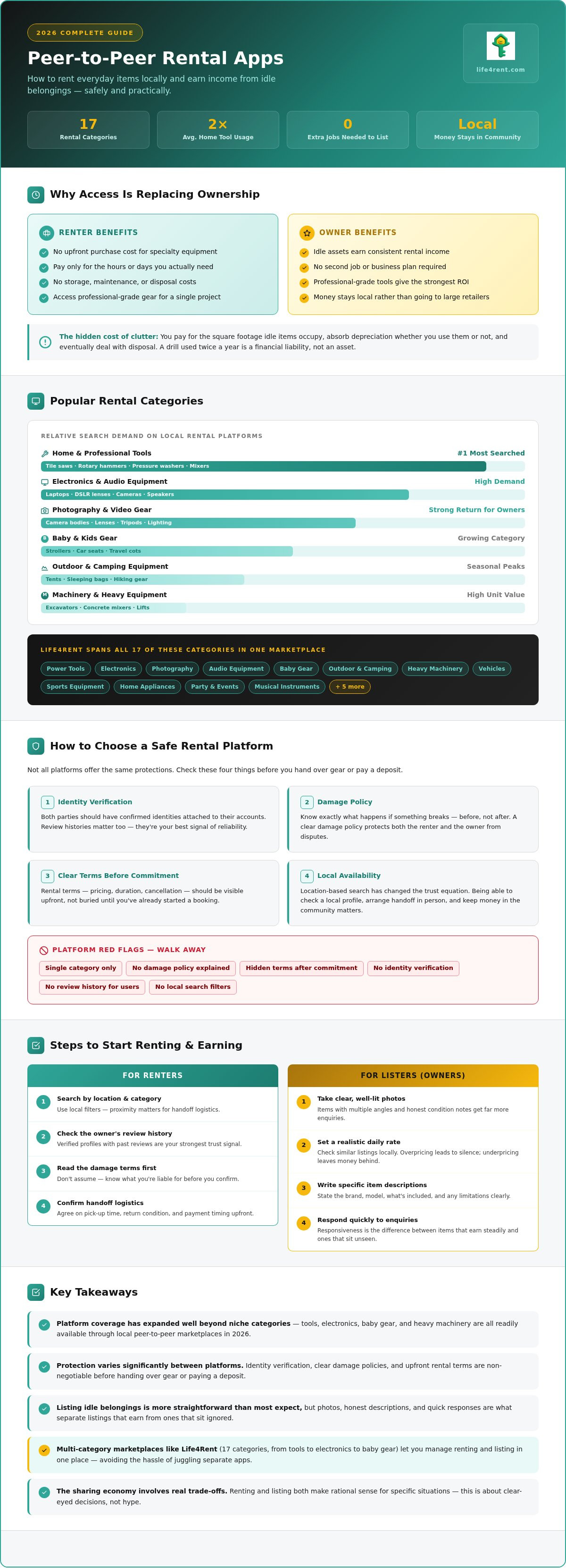
Think about the last piece of equipment you bought specifically for one project. A tile cutter, a pressure washer, a camping tent. You paid full price, used it twice, and now it takes up space you'd rather have back. The appeal of renting isn't just about saving money upfront; it's about not taking on the ongoing cost of storage, maintenance, and eventual disposal.
Household clutter carries a real financial weight that's easy to underestimate. You pay for the square footage it occupies, and you absorb the depreciation whether you use the item or not. Renting means you pay for the hours or days you actually need something, and then it's gone. That's a straightforward trade-off that makes sense for a growing range of items.
Economic Realities of the Sharing Economy
From the owner's side, idle assets are essentially money sitting on a shelf. A decent power tool or a quality DSLR lens can generate consistent rental income when listed on the right platform. That income doesn't require a second job or a business plan; it just requires a listing and a bit of responsiveness.
Renters, on the other hand, sidestep the high upfront cost of specialty equipment they'd rarely use. And when transactions happen locally, the money tends to stay within the community rather than flowing to a large retailer. Platforms like Life4Rent, which span 17 categories from tools to electronics to baby gear, make that local exchange practical at scale without forcing users onto multiple separate apps for different needs.
Verified user profiles and location-based search have also changed the trust equation significantly. The early friction around lending to strangers hasn't disappeared, but it's become much more manageable when both parties have review histories and confirmed identities attached to their accounts.
Popular Rental Categories for Everyday Items
The coverage of peer to peer rental apps in 2026 looks nothing like it did five years ago. Fashion and cars still get the headlines, but the real volume of everyday transactions is happening in far more practical territory: power tools borrowed for a weekend project, camera gear rented for a single shoot, audio equipment pulled together for a backyard event. These are the categories that actually move on local rental platforms, and they're worth understanding before you decide where to list or search.
Home Improvement and Professional Tools
Tools are consistently the most searched category on rental marketplaces, and it's easy to see why. Most home improvement jobs require something specific that you'll never use again. A decent tile saw, a rotary hammer drill, a concrete mixer — these are items that cost serious money to buy and take up serious space to store.
The range available through these platforms is broader than most people expect. You can find standard power tools listed by neighbors, but also more specialized equipment like a mudmixer for short-term concrete work, or even larger machinery through platforms that have expanded into excavator rental for heavier jobs. Owners of professional-grade tools tend to see the strongest return on their original investment here, because the gap between what they paid and what a renter would buy something similar for is large enough to make frequent rentals genuinely worthwhile.
Electronics and Audio Equipment
Electronics rentals fill a different kind of gap. Sometimes you need a laptop for a two-week work trip and don't want to risk your main machine. Sometimes you want to test a mirrorless camera system before committing to buying one. Peer to peer rental apps make both scenarios practical without requiring a formal hire company.
Audio equipment rental has become a particularly active subcategory, especially for local events where hiring a full production company isn't necessary. A solid PA system, a couple of monitors, a mixing board — these items are expensive to own but straightforward to rent locally from someone who already has them sitting in a spare room.
Tablets and laptops also move regularly, particularly among students and short-term visitors who need reliable hardware for a defined period rather than an indefinite one.
Outdoor and Sports Gear
Camping tents, paddleboards, ski equipment, road bikes. Outdoor gear is expensive to buy, seasonal by nature, and takes up a disproportionate amount of storage space relative to how often it's used. Rental demand in this category has grown steadily as people pick up new hobbies without wanting to commit to the full cost of ownership upfront.
If you're trying to manage listings across more than one of these categories without juggling separate apps, Life4Rent's multi-category marketplace covers all of them in one place, which simplifies things considerably for both renters and owners.
How to Choose a Safe Rental Platform
Trust is the actual currency in any peer to peer rental transaction. You can have the best listing photos in the world, but if the platform underneath doesn't give both parties a reason to feel confident, the whole thing falls apart. Before you commit to any marketplace, whether you're renting or listing, there are a few concrete things worth checking rather than assuming.
The clearest sign of a well-run platform is how seriously it handles identity. Any app that lets users transact without some form of verification is passing risk directly to you. That's not a trade-off worth accepting, especially for higher-value items.
Verification and Profile Security
Reputable platforms require government ID checks before a user can complete a transaction. It's a basic filter, but it meaningfully changes who shows up. Beyond that, check how long an account has been active. A profile created three days ago with no reviews is a different proposition from one that's been on the platform for two years with a consistent track record.
For anything valuable, look for multiple positive reviews specifically from owners, not just renters. Someone who's borrowed items responsibly and returned them on time tells you something real. Platforms like Life4Rent use verified profiles to make this kind of evaluation straightforward, so you're not guessing based on a username and an avatar.
Understanding Item Protection and Insurance
Most reputable peer to peer rental apps now offer some form of item protection, but the details vary considerably. Some cover accidental damage up to a set value; others exclude certain categories entirely or require you to opt in before the rental starts. Reading the actual policy, not just the headline, is worth the ten minutes it takes.
There's one step that protects you regardless of what the platform offers: document the item's condition with timestamped photos before it leaves your hands. Do this every time. If a dispute arises, clear before-and-after evidence is far more useful than a policy that's open to interpretation.
A few practical things to check before you commit to any platform:
- Payment security: Does the platform hold funds until the rental is completed, rather than releasing them immediately?
- Dispute resolution: Is there a clear process for raising a claim, and is there a real team behind it?
- Coverage limits: What's the maximum value the protection plan will actually pay out?
- Exclusions: Are there item categories or damage types that aren't covered at all?
Platforms that answer these questions clearly in their documentation are generally the ones that take owner and renter protection seriously. If you have to dig through three help pages to find the damage policy, that tells you something too.
Steps to Start Renting and Earning
Getting started on peer to peer rental apps is genuinely straightforward, but there's a difference between signing up and actually getting results. A few practical habits separate the people who book what they need without hassle from those who waste time chasing unavailable listings, and the owners who build a steady income from those whose items sit unrented for weeks.
A Practical Guide for Renters
The single most common mistake renters make is searching too late. If you need a tool on rent for a weekend project, searching on Friday afternoon is a gamble. Popular items in active areas get booked in advance, so give yourself at least a few days of lead time, especially for anything specialist.
When you're comparing listings, don't just filter by price. Distance matters more than most people account for. A slightly cheaper item that's a 40-minute round trip to collect and return will cost you more in time and fuel than the listing two streets away. Check the map view before you commit.
Before you pick up anything, ask the owner one direct question: are there any operating quirks or maintenance steps you should know about? A battery that needs a full charge cycle before first use, a trigger lock that sticks, a strap adjustment that isn't obvious. Owners know their gear, and a 30-second message through the platform can save you real frustration on the day.
Maximising Income for Item Owners
Treat your listing like a small product page, not a classified ad. Clear photos taken in decent light, from multiple angles, with the item clean and any accessories visible, will consistently outperform a single blurry shot. Write your description the way you'd explain the item to a capable adult: what it does well, what condition it's in, and anything the renter genuinely needs to know.
On pricing, starting slightly below comparable local listings is a deliberate strategy, not a concession. Your first handful of reviews are worth more than the difference in daily rate, because a strong review history is what pushes your listing up in search results and makes future renters confident enough to book without overthinking it.
Keep your availability calendar current. Platforms factor response rate and acceptance rate into how prominently your listing appears. Declining requests because your calendar wasn't updated is a quiet way to damage your ranking without realising it.
If you want to list across more than one category without managing separate apps, browse Life4Rent's 17-category marketplace to see where your items fit and what comparable listings look like in your area before you publish anything.
Life4Rent: A Multi-Category Marketplace Solution
Most peer to peer rental apps solve one problem well and leave you hunting for another platform the moment your needs shift. Life4Rent takes a different approach: 17 rental categories under one roof, covering everything from power tools and electronics to baby gear, outdoor equipment, and home items. If you've been managing separate apps for different types of rentals, that consolidation alone is worth paying attention to.
The practical case for peer to peer equipment rental through a multi-category platform is straightforward. Your rental history, your reviews, your payment details, and your active listings all live in one place. You're not rebuilding trust from scratch every time you move into a new category.
Diverse Categories for Every Need
The 17-category structure matters most for owners. A lot of items that wouldn't fit neatly into a niche tool app or a specialist electronics marketplace find a natural home here: a baby monitor, a portable projector, a kayak, a pressure washer. If you've ever been told by a narrower platform that your item doesn't qualify, that's the gap Life4Rent is designed to fill.
Switching between renting and listing is built into the same interface, so you're not toggling between separate accounts or dashboards. You can be renting a ladder for a weekend project while your camera lens is out on a booking, all tracked in one place.
Secure Community Interactions
Communication between renters and owners happens through the platform's messaging system, which means your personal contact details stay private throughout the transaction. That's a basic but important protection that not every marketplace gets right.
The fee structure is percentage-based and tied to completed rentals, so the platform only earns when a transaction actually goes through. That alignment tends to produce better support when something needs resolving, because there's a shared interest in keeping transactions running smoothly. If a dispute arises, there's a process to raise it rather than leaving both parties to sort it out directly.
A few things that make Life4Rent a practical choice for 2026:
- Single account for all categories: No need to maintain separate profiles across multiple apps.
- Private messaging: Contact details aren't shared between users.
- Performance-based fees: Charges apply to successful rentals, not just listings.
- Support access: Dispute resolution is available if a transaction runs into problems.
If you want to see what's available locally or check where your own items might fit, browse Life4Rent's marketplace before committing to anything. It takes about five minutes to get a realistic picture of demand in your area.
Make Your Idle Gear Work for You
Peer to peer rental apps have matured into something genuinely useful in 2026, whether you're trying to access equipment you'd only use once or turn belongings that are collecting dust into a reliable side income. The fundamentals are straightforward: choose platforms that verify users, understand what protection actually covers before you commit, and treat your listing like something worth finding.
The honest trade-off is that it takes a little upfront effort. Good photos, accurate descriptions, a current availability calendar. But once that's in place, the ongoing work is minimal, and the return on items you'd otherwise ignore is real.
If you want one place to manage all of it, across 17 categories from tools to baby gear, in a secure community environment built for exactly this kind of transaction, it's worth seeing what's already active in your area. Start listing your items and earning today on Life4Rent and find out what your idle belongings are actually worth to someone nearby.
Frequently Asked Questions
Are peer to peer rental apps safe to use in 2026?
Yes, provided you stick to platforms that require identity verification before any transaction can take place. That single requirement filters out a meaningful portion of bad actors. Beyond that, check whether the platform holds payment in escrow until the rental completes rather than releasing funds immediately, and look for a review history on any profile you're dealing with. A few minutes of due diligence goes a long way.
No platform eliminates risk entirely, and it's worth being honest about that. But the combination of verified profiles, in-platform messaging, and documented condition photos before handover makes peer to peer rental apps considerably safer than they were a few years ago. Trust the process, not just the profile.
How much can I earn by renting out my household items?
It depends heavily on what you're listing and how often it gets booked. A quality power tool in a busy area might earn its original purchase price back within a year of regular rentals. A DSLR lens or a PA system can do even better, because the gap between what owners paid and what renters would spend to buy one outright is large. Niche or specialist items often outperform everyday ones because local supply is thinner.
Don't expect passive income from day one. Your first few bookings will come once you've built a small review history, so pricing slightly below comparable local listings at the start is a practical way to accelerate that. After that, earnings tend to stabilise into something predictable.
What happens if a rental item gets damaged or lost?
Most reputable peer to peer rental apps offer some form of item protection, but the coverage limits and exclusions vary considerably between platforms. Read the actual policy rather than the headline summary. Some plans cover accidental damage up to a set value; others exclude specific categories or require you to opt in before the rental starts. Knowing this before you hand anything over is far more useful than discovering it afterwards.
Regardless of what the platform covers, take timestamped photos of your item's condition immediately before collection and after return. That documentation is your clearest evidence if a dispute arises, and it works in your favour whether the platform's protection plan is generous or limited.
Do I need special insurance to rent out my equipment?
Most platforms provide some level of built-in protection for listed items, but this isn't the same as personal or commercial insurance. If you're listing high-value equipment regularly, it's worth checking whether your home contents insurance policy covers items while they're in someone else's possession. Many standard policies don't, and your insurer will want to know if you're renting items out as a regular activity.
For occasional listings of lower-value items, the platform's own protection plan is usually sufficient. For anything worth several hundred pounds or more, a quick call to your insurer to clarify your position is time well spent. Don't assume coverage exists until you've confirmed it.
Is there a fee to list items on peer-to-peer platforms?
Most platforms, including Life4Rent, operate on a percentage-based fee model tied to completed transactions rather than charging upfront listing fees. That structure means you only pay when a rental actually goes through, which removes the risk of paying to list something that never gets booked. The exact percentage varies by platform, so check the current fee schedule directly on the site before you publish your first listing.
Some platforms charge renters a service fee on top of the daily rate, while others split the fee between both parties. Either way, factor this into your pricing so your take-home rate reflects what you actually want to earn per rental day.
How do I choose the best rental app for my needs?
Start with category coverage. If you need to rent or list items across different types, a multi-category platform like Life4Rent is more practical than managing separate accounts on niche apps. If you only ever deal in one specific area, a specialist platform might have deeper local inventory. Neither answer is universally correct; it depends on what you're actually trying to do.
After category fit, check three things: whether the platform verifies user identities, how it handles disputes, and whether there's a clear damage or loss policy. Those three factors tell you more about a platform's reliability than its marketing does. A good peer to peer rental app makes these policies easy to find, not buried in a help centre.
Can I rent out items if I live in a small apartment?
Absolutely. Storage space isn't the limiting factor it might seem. Items like camera lenses, tablets, audio equipment, and small power tools take up very little room but rent consistently well. You don't need a garage full of gear to generate rental income; you need a handful of items that people in your area actually want to borrow.
If anything, apartment-dwellers often list items precisely because storage is at a premium. Renting out something you'd otherwise be storing under your bed turns a space problem into a minor income stream. The key is choosing items with genuine local demand rather than listing everything you own and hoping for the best.
How do I handle a dispute with a renter or an owner?
The first step is always to raise the issue through the platform's official messaging system rather than trying to resolve it directly outside the app. That creates a documented record of the conversation, which matters if the dispute escalates to a formal claim. Most platforms have a defined process for raising damage or non-return claims, and following that process properly is what gives you the best chance of a fair outcome.
If you're an owner, your pre-rental condition photos are your strongest asset in any dispute. If you're a renter, keeping all communication on-platform and returning items in the agreed condition avoids most problems before they start. Disputes are relatively uncommon when both parties have verified profiles and a review history to protect.
Life4Rent
Rent it. Earn from it. Own less, access more.
Browse peer-to-peer rentals near you, or list what you own and start earning — all protected by Life4Rent Protect.
About the author
Tallinn, Estonia
Philip leads editorial at the Life4Rent Renting Academy, overseeing guides on peer-to-peer rental, platform safety, and consumer finance across 25 markets. He has spent over a decade covering the sharing economy and digital marketplaces, helping renters and owners navigate the shift from ownership to access.