
How to Make Money Renting Your Stuff: A Practical 2026 Guide
July 9, 2026
Published by Life4Rent · Operated by Brohf Software OÜ
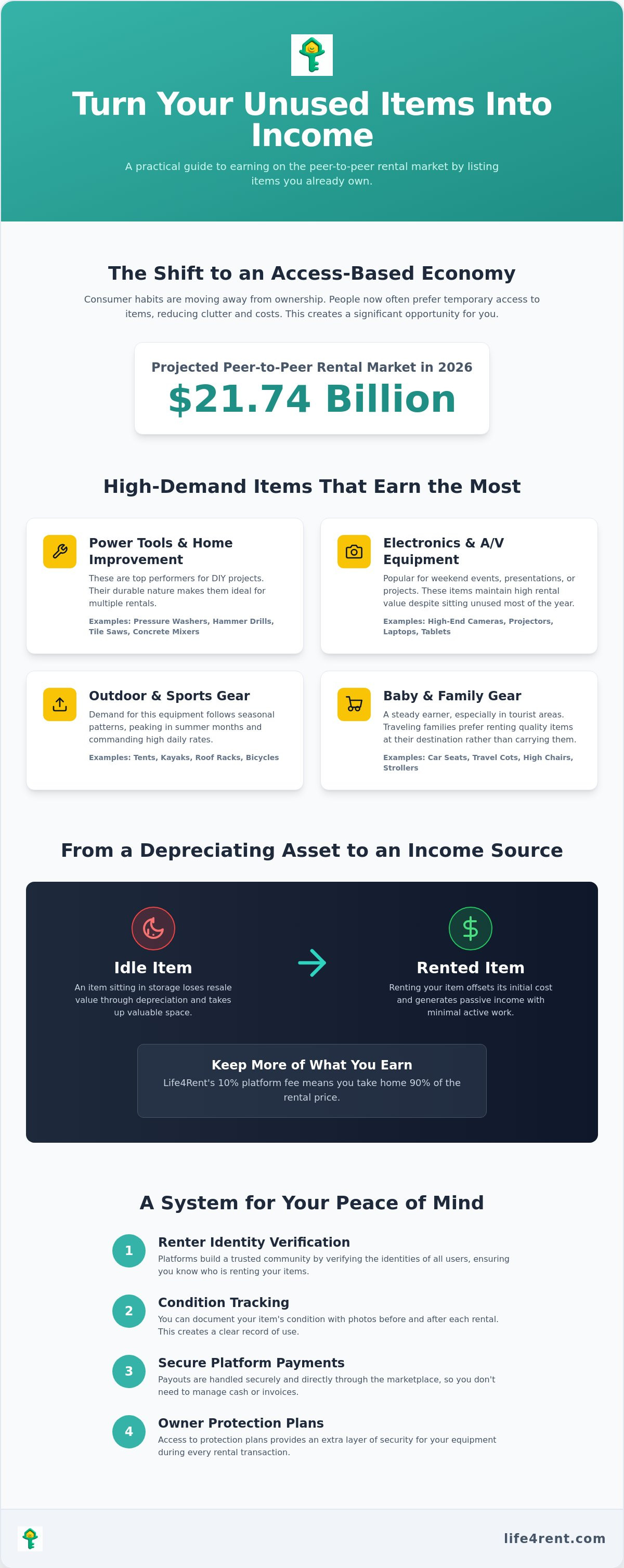
The peer-to-peer rental market is projected to reach $21.74 billion in 2026, yet a significant portion of that value stays locked in suburban garages and spare closets. You probably have hundreds of dollars worth of tools, electronics, or outdoor gear that lose resale value every day they sit unused. It's understandable to feel cautious about letting a stranger use your property. You want to make money renting your stuff, but you need a system that prioritizes the safety of your equipment.
This guide shows you how to turn those idle items into a consistent stream of extra income through the Life4Rent marketplace. You'll find a practical list of the most profitable categories and a simple workflow to get your items listed quickly. We'll also break down the specifics of protection plans and payout schedules. You can manage your rentals with total confidence and clear expectations.
The Shift Toward Access Over Ownership in 2026
Consumer habits in 2026 have moved away from heavy ownership. Most people now prioritize temporary access because they don't want the maintenance costs or the clutter associated with permanent possessions. The Shift Toward Access Over Ownership reflects a broader move toward a circular economy. This model allows you to reduce waste while your belongings essentially pay for their own storage space. It's a practical response to a world where we have too many things and not enough time to use them all.
Peer-to-peer platforms like Life4Rent have removed the traditional middleman. This change lets you keep a larger share of the rental fee compared to older, corporate-owned rental shops. You can effectively treat your garage or spare cupboard as a small, local rental branch. It's a straightforward way to make money renting your stuff without needing a physical storefront. With the P2P rental market projected to reach $21.74 billion this year, there's a significant opportunity for individual owners to capture value from their underused gear.
To better understand how this economy works for everyday items, watch this helpful video:
Why People Rent Instead of Buying
High-quality tools and specialized gear are often too expensive for a single DIY project. Someone who needs a professional-grade hammer drill for one afternoon won't want to spend hundreds of dollars. Storage space is also at a premium in modern urban apartments and homes. Many renters prefer to pay for a few days of use rather than finding a permanent spot for a bulky item. Some users also rent to test a specific model before they commit to a full purchase. This "try before you buy" mentality is common across all 17 categories on Life4Rent, from baby gear to electronics.
The Financial Logic of Asset Sharing
Idle items lose value every month through depreciation. A camera or a power tool sitting in a box isn't just taking up space; it's losing its resale potential. You can often recover the initial purchase price of a high-demand item within just a few successful rentals. Passive income from these assets requires much less active time than a standard delivery or driving job. You don't have to trade your hours for a paycheck when your physical assets can do the work for you. It's a practical strategy to make money renting your stuff while you focus on your primary career or family. Life4Rent typically charges a 10% platform fee, which is a small trade-off for the access to a verified pool of local renters.
High-Demand Items That Earn the Most Income
Professional tools often provide the highest return on investment. Their rugged construction means they can handle multiple users without losing performance. If you want to make money renting your stuff, hardware is a reliable place to start. You should check the tool on rent guide to see which specific items are currently most requested in your area.
Electronics like high-end cameras and projectors are popular for weekend events and corporate presentations. These items often sit in a drawer for 90% of the year, yet they maintain a high rental value. Outdoor and sports equipment follows a seasonal pattern. Tents, roof racks, and kayaks peak during the summer months. You can list these items during their peak demand to ensure you get the highest possible daily rate. Baby gear remains a steady earner, especially when families visit relatives. Parents often find that traveling with infants is stressful, so they prefer to rent a high-quality car seat or travel cot at their destination. This creates a consistent market in tourist-heavy areas or near major transport hubs.
Power Tools and Home Improvement Gear
Pressure washers, hammer drills, and tile saws are top performers in the tool category. These are items people need for specific tasks but don't want to store permanently. You can list specialized items like a mudmixer for local DIY builders who need a portable concrete solution. Homeowners often look for excavators rental options for weekend landscaping projects. Heavy machinery like this commands higher daily rates and can quickly offset your initial investment.
Electronics and Audio-Visual Equipment
Laptops and tablets are frequently rented by business travellers or students who need a temporary device. Event organizers often look for audio equipment rental to avoid high retail costs for one-off functions. Gaming consoles and VR headsets are also high-demand items for birthday parties and social gatherings. You can make money renting your stuff by offering these entertainment options to neighbors.
When you list high-value electronics, you should follow Practical Steps to Protect Your Items to ensure you understand the insurance implications. It's helpful to take clear photos of the item's current condition before every transaction. You can browse the full marketplace to see how others price their gear. This research helps you stay competitive while protecting your assets.
Rental Income vs Other Side Hustles
Active side hustles like ride-sharing or delivery work require you to trade your limited time for money. If you don't drive or deliver, you don't get paid. Rental marketplaces offer a different path where your physical assets work while you focus on your day job or spend time with family. It's a more efficient way to make money renting your stuff because the income isn't tied to your physical presence. You aren't limited by the number of hours in a day, but rather by the number of high-quality items you own.
Maintenance and routine cleaning are usually the only significant time investments for most items. You'll spend a few minutes checking a tool or camera after a return, but it's nothing compared to an eight-hour shift behind the wheel. Scalability is also much easier to achieve in this model. You can add ten new items to your Life4Rent profile without significantly increasing your weekly working hours. This allows you to build a portfolio of assets that generate revenue simultaneously.
The Self-Financing Asset Concept
You can justify buying the best version of a product because you know the rental market will eventually pay for it. High-end equipment often attracts more reliable renters and higher daily rates. This rental income can cover the ongoing insurance and maintenance costs of the gear. Asset utilization is the percentage of time an item is actually providing value. If a drone sits on a shelf 350 days a year, its utilization is extremely low, but rentals change that math. You'll find that high-quality gear often holds its value better, making it a safer investment for your rental business.
Depreciation and Wear Management
High-quality items withstand the wear and tear of multiple users much better than cheap, plastic alternatives. You shouldn't buy budget brands if you plan to list them on a peer-to-peer platform. It's smart to factor a small maintenance fee into your daily rental price to cover future repairs. You'll find that professional-grade tools often look and perform better after fifty uses than consumer-grade ones do after five. Don't forget that every successful rental helps offset the natural depreciation of the item's market value. This is a practical way to make money renting your stuff while keeping your personal toolkit updated with high-performance equipment. You don't have to worry about an item losing value in the box when it's out in the world earning its keep.
Practical Steps to Protect Your Items and Yourself
Safety is a common concern for first-time owners, but the Life4Rent system is designed to minimize these risks. Identity verification ensures you know exactly who is taking your equipment before the exchange happens. You can make money renting your stuff with more peace of mind when you know the platform tracks every user. Check the listing’s deposit and return conditions. You should also check our guide on neiyborly sharing for specific advice on managing local hand-offs.
A standardized hand-off and return process helps maintain professional standards for every transaction. You should walk the renter through the basic operations of the tool or electronic device during the meeting. This ensures they feel comfortable using it and reduces the chance of accidental damage due to misuse. Clear expectations from the start protect both your equipment and your time. You can verify your security settings to ensure your listings include the appropriate deposit levels for your gear.
The platform's protection plan offers a trust-based safety net for higher value items up to €2,500. This plan covers loss or theft for a small additional fee paid by the renter, which is a practical alternative to formal insurance. You'll find that having this extra layer of protection makes it easier to list professional-grade tools. It allows you to make money renting your stuff while knowing there is a process in place for unexpected incidents. Always ensure the renter understands their responsibilities before they leave with your gear.
Documenting Item Condition
Take high-resolution photos of your item from multiple angles immediately before every rental. You should note any existing scratches or unique marks in the listing description to prevent confusion later. Video demonstrations are also helpful to prove the item was in full working order at the time of the exchange. These simple steps protect your reputation and your equipment from unfair damage claims. You can even upload these files directly to the platform chat as a timestamped record of the item's state.
Communication and Trust
You'll find that clear communication in the platform chat builds trust with your renters before you meet in person. Don't be afraid to set firm boundaries for pick-up and drop-off times to avoid scheduling conflicts. You should always trust your instincts when you review a renter's profile and their previous feedback from other owners. If a profile lacks details or has poor ratings, you have the right to decline the request. This mutual respect for the equipment is the foundation of a successful and sustainable rental business.
Maximizing Earnings on the Life4Rent Marketplace
Life4Rent organizes its marketplace into 17 specific categories to ensure your items appear in front of the right people. You don't have to compete with irrelevant listings when you place your tools or electronics in their dedicated sections. These categories range from heavy machinery and baby gear to outdoor sports equipment and electronics. This structure makes it much easier to make money renting your stuff because users can find exactly what they need in seconds. You'll find more tips on profile optimization in the 2026 guide to peer to peer equipment rental.
Competitive pricing is the most effective way to attract your first few renters. You should research similar listings in your area and set your initial daily rate slightly below the average. This strategy helps you build a history of successful transactions and positive feedback. You'll find it much easier to raise your prices once you've established a reputation for reliability. Seasonal price adjustments are also a practical way to manage your earnings. You can charge more for pressure washers in the spring or snow blowers in the winter to capitalize on peak demand. It's a simple way to make money renting your stuff without adding extra inventory to your collection.
Writing Descriptions That Convert
You should use plain English to explain what your item does and who will benefit most from it. Clear language helps potential renters understand if your gear fits their specific project. You'll want to include essential technical specifications like battery life, weight, and power requirements. It's also helpful to mention every accessory included with the rental to reduce back-and-forth questions. You should include these essential details in every listing:
- Technical specifications like battery life, weight, or power requirements
- A clear list of all included accessories like chargers, carrying cases, or safety gear
- Specific recommendations for the type of projects the item handles best
This level of detail reduces confusion and builds confidence before the renter even clicks the booking button. You'll find that transparent listings lead to faster approvals and fewer cancellations.
The Power of Positive Reviews
Prompt replies to messages lead to higher booking rates and better overall ratings. You'll find that most renters appreciate a fast response when they're trying to finalize their weekend plans. Small details can earn you consistent five-star feedback from your community. You might include a printed instruction sheet or a quick tip on how to get the best performance from the tool. Reviews are the primary currency of the sharing economy; they prove your equipment is well-maintained and that you're a fair owner. High ratings help your listings stand out in search results and allow you to command a better price for your assets. Don't forget that a single detailed review often carries more weight than a dozen empty star ratings.
Turn Your Inventory into Income
The shift toward a sharing economy in 2026 makes it easier than ever to offset the costs of high-quality equipment. You've seen how professional tools and electronics can pay for themselves through consistent asset utilization. It's a practical way to make money renting your stuff without sacrificing your free time to a traditional second job. You can focus on maintaining your gear while the platform handles the logistics of finding local renters. This approach ensures your items maintain their value rather than simply gathering dust in a cupboard or garage.
Security is a priority when you let others use your property. Life4Rent provides an identity-verified user community and a secure peer-to-peer marketplace to keep every transaction transparent. You can choose from 17 diverse rental categories to find the best fit for your specific inventory. If you're ready to put your idle items to work, you can start listing your items on Life4Rent today. It's a straightforward process that turns your storage space into a reliable source of revenue. You'll gain the flexibility of an extra income stream while helping your neighbors access the gear they need.
Frequently Asked Questions
How much money can I realistically make renting my stuff?
Your earnings depend on the item's retail value and local demand. High-end professional drones often rent for $250 to $500 per day in 2026. You'll make money renting your stuff more consistently if you list items like pressure washers or cameras that people need for specific weekend projects. Frequent rentals of mid-range tools can easily cover your monthly utility bills or equipment maintenance costs.
Is it safe to let strangers use my expensive equipment?
Life4Rent uses identity verification to ensure you know exactly who is handling your gear. This system reduces the risk significantly compared to informal social media marketplaces. You can also review a renter's previous feedback and ratings before you approve any booking request. Firm communication through the platform's chat helps set clear expectations for the care and return of your property.
What happens if a renter damages my item?
You can use the optional protection plan to cover damage, loss, or theft up to €2,500. This plan requires a 3% add-on fee paid by the renter at the time of booking. It's a voluntary trust program that provides a financial safety net for your most valuable equipment. Check the listing’s deposit and return conditions.
Do I need special insurance to rent out my belongings?
The platform's protection plan is a trust program, not a formal insurance policy. You should check with your personal insurance provider to see if they cover peer-to-peer rental activities. Some homeowners' policies have specific exclusions for items used for business purposes. It's a practical step to verify your coverage before you list high-value professional equipment for the first time.
Which categories are the most popular on Life4Rent?
Tools, electronics, and outdoor gear are the most active of the 17 available categories. High-demand items like tile saws or projectors often see the highest utilization rates. Seasonal sports equipment typically peaks during summer and winter holiday windows. Baby gear is also a consistent earner in urban areas where families frequently travel and prefer to rent bulky items locally.
How should I price my items compared to professional rental shops?
You should research local professional shops and set your price about 20% lower to stay competitive. This attracts users who want to avoid the high overhead costs of traditional rental businesses. You can adjust your rates as you collect more positive reviews from your community. Factor in a small maintenance fee to ensure your daily rate covers the natural wear and tear of the equipment.
Can I rent out items if I live in a small apartment?
You don't need a large garage to participate in the rental market. Small, high-value electronics like VR headsets or tablets are perfect for apartment dwellers with limited storage space. You can arrange pick-ups at neutral public locations if you don't want strangers coming to your home. This flexibility allows you to make money renting your stuff regardless of your living situation.
Do I have to pay taxes on the money I earn from rentals?
Rental income is generally taxed as ordinary income at your standard federal tax rate. If you rent out a property for 14 days or less per year, the income is usually tax-free under the Augusta Rule. You should keep detailed records of your earnings and expenses to stay compliant with local tax laws. It's smart to consult a tax professional to understand your specific filing requirements in 2026.
Life4Rent
Rent it. Earn from it. Own less, access more.
Browse peer-to-peer rentals near you, or list what you own and start earning — all protected by Life4Rent Protect.
About the author
London, United Kingdom
Fred covers rental technology, app features, and platform mechanics for the Life4Rent Renting Academy. With a background in fintech journalism, he specialises in breaking down how digital rental platforms work — from payment protection and identity verification to smart pricing and booking management.