
Writing a Rental Agreement for Equipment in 2026
Joshua Price
April 24, 2026
Most equipment owners lose more money to vague verbal agreements than they do to actual theft. You likely feel that sinking feeling in your stomach when a stranger walks off with your expensive gear. It's normal to worry about damage or the high cost of hiring a lawyer just to draft a single document for a small peer-to-peer rental in Europe. You don't want to spend your profit on legal advice before the rental even begins.
You can protect your property without spending thousands on legal fees or getting lost in confusing terminology. A well-prepared approach to writing a rental agreement for equipment is simpler than it looks. You'll learn how to draft a practical document that clarifies expectations for both parties and keeps your assets safe. This guide offers a clear checklist of essential clauses and a low-friction way to manage your paperwork so you can rent with confidence in 2026.
The Role of a Written Agreement in Equipment Rentals
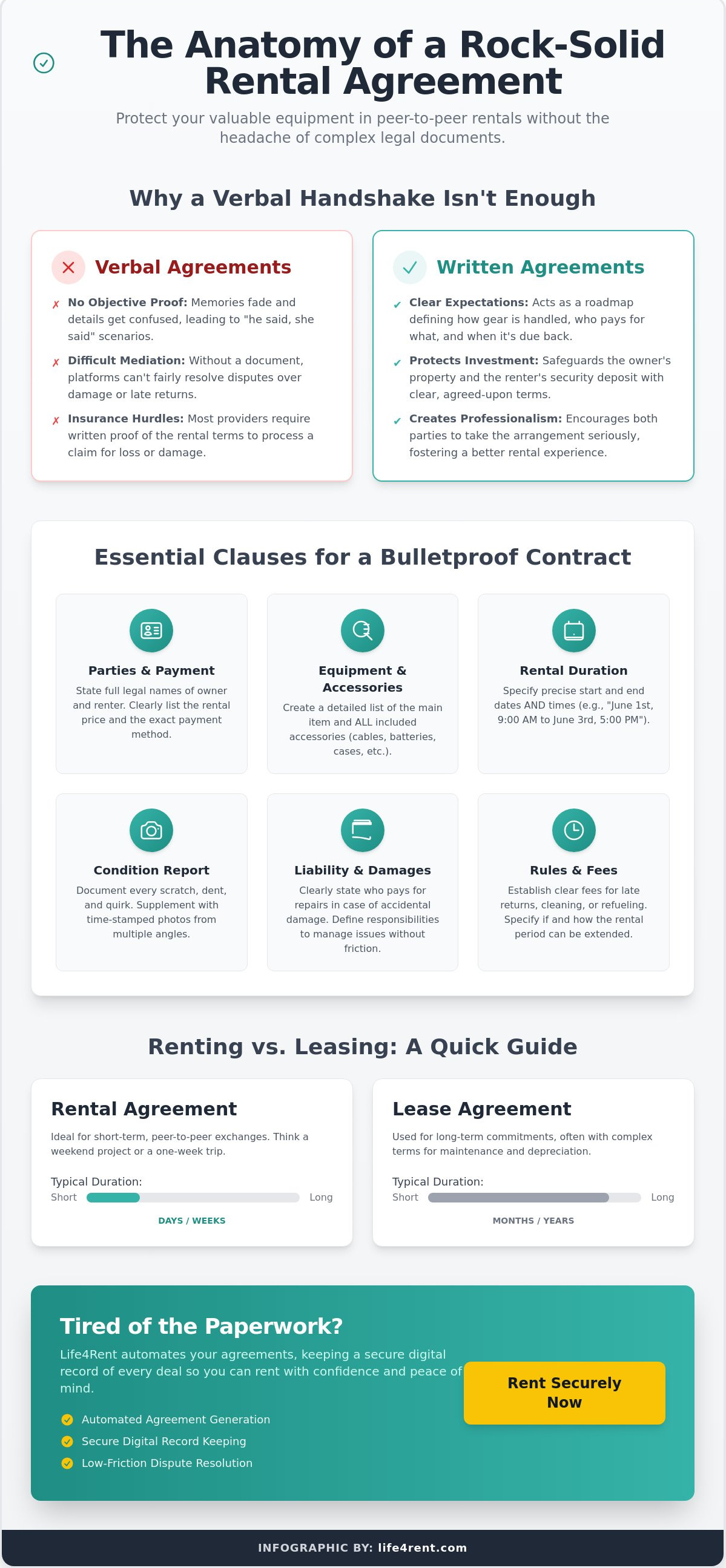
You'll find that a written agreement acts as a straightforward contract between an owner and a renter. It serves as a practical tool to set clear expectations for how gear should be handled. Most users skip this step for smaller items like cameras or power tools, but that choice often leads to avoidable stress. A document provides a reliable way to resolve disputes if a tool breaks or arrives three hours late.
You can use it to outline exactly who pays for what and when the item must return. This process of writing a rental agreement for equipment doesn't have to be complex or involve expensive lawyers. It simply ensures that both parties have a shared understanding of the transaction. Clear rules protect the owner's investment and the renter's deposit simultaneously.
Owners who document the condition of their equipment before the rental starts face fewer headaches later. Renters benefit too, as they know exactly what they're responsible for during the term. A formal Rental agreement establishes the parties involved, the specific term of use, and the agreed-upon price. Without this, you're essentially relying on luck to protect your property or your money.
Why Verbal Handshakes Aren't Enough
Memories of verbal promises often shift over time, especially when money or damage is involved. You'll have no objective proof of the original terms if a disagreement occurs two weeks later. This lack of evidence makes it difficult for peer-to-peer platforms to mediate a solution fairly. Most insurance providers also require a documented record to process a claim for damaged or stolen items.
Digital records are much harder to dispute than a conversation held in a driveway. You'll find that having a signed document encourages both parties to take the arrangement more seriously. It creates a professional boundary that helps maintain a positive relationship between the owner and the renter. If you want to avoid "he said, she said" scenarios, a written record is the only sensible option.
The Difference Between Leasing and Renting
Rental agreements typically cover short-term use, such as a three-day weekend or a single week. These are common for peer-to-peer exchanges where someone needs a specific tool for a one-off project. Writing a rental agreement for equipment in these cases focuses on immediate logistics and daily rates. This keeps the transaction simple and the paperwork minimal for both sides.
Leases usually imply a long-term commitment, often lasting six months or longer, and they carry different tax implications for owners. Specialized providers like leasingprinterscopymachines.com utilize these detailed lease structures for high-volume office printers. These agreements often include clauses for depreciation and maintenance that aren't necessary for a quick rental. You should stick to simple rental terms for peer-to-peer exchanges to maintain flexibility and ensure that both parties understand the temporary nature of the arrangement.
Key Clauses for a Solid Rental Contract
Clear documentation is the foundation of a good deal when you share high-value gear. You should start by identifying the owner and the renter with their full legal names. This step prevents identity confusion if insurance claims need to be filed or if a dispute arises. You'll also need to list the exact rental price and the specific payment method used for the transaction.
Precise start and end times for the rental are vital for managing expectations. Don't just list the dates; include the exact hour and minute the gear must be back. This helps avoid overlaps with other users who might have booked the same item. You can refer to the legal definition of a rental agreement to understand why these specific timeframes are legally significant in a contract.
The agreement should include a detailed list of any accessories included in the hand-off. If you're renting a camera, list the lenses, SD cards, and bags. Owners often lose small parts because they weren't documented at the start. A complete list of items ensures everything returns in one piece and helps in writing a rental agreement for equipment that actually protects your assets.
How to Describe Equipment Condition
You should note every scratch, dent, or mechanical quirk before the hand-off happens. Small aesthetic flaws can lead to big disagreements if they aren't documented. Photos are the best way to supplement your written description. Take at least six clear shots from different angles to capture the current state of the gear. It's helpful to have both parties sign off on the condition report at the time of the swap to confirm the baseline.
Rules for the Rental Period and Fees
You'll want to specify what happens if the gear is returned late. A fixed fee for every thirty minutes of delay keeps the process professional and discourages tardiness. Extra fees for cleaning or refueling should be mentioned upfront so there are no surprises for the renter. You should also clarify if the renter can extend the period while the rental is still active. This flexibility is a core part of the Life4Rent experience, but it must be recorded in writing to stay valid. Clear rules protect your property and ensure the renter knows exactly what they're paying for when writing a rental agreement for equipment.
Liability and Damage Protection Strategies
Accidental damage is a common part of the rental business, especially in the peer-to-peer market. You shouldn't expect every item to return in the exact condition it left your home or warehouse. However, you must define who is responsible for repairs within the contract text. It's important to clarify that the renter assumes all risk during the period of use. Clear clauses in your document help avoid long disputes if a machine fails or a vehicle gets a dent.
The process of writing a rental agreement for equipment involves setting boundaries for liability. You need to state that the renter is liable for any damage caused by misuse or lack of supervision. If you're renting out a high-value item in Europe, local laws often require specific language to make these clauses enforceable. You should consult a template that follows the regulations of your specific country to ensure the renter's signature actually holds weight.
What Counts as Normal Wear and Tear
Small scuffs on a camera body or slightly dull blades on a garden tool are usually considered normal usage. These minor signs of life don't typically impact the function of the gear. Major cracks in a frame or burnt-out motors often fall under renter negligence. You'll save time by agreeing on these definitions before the rental period begins. A simple checklist with "before" and "after" columns helps both parties stay on the same page.
The Role of Security Deposits
Check the listing’s deposit and return conditions. This cash buffer prevents you from having to pay out of pocket for a renter's mistake. You should state exactly when and how the deposit is returned in the text. Most experienced owners on peer-to-peer platforms return the funds within 3 to 5 business days after a successful inspection. This practice is a good way to ensure the renter treats the gear with care throughout the trip.
Trust is a major factor, but a financial incentive reinforces good behavior. Renters are less likely to push a machine to its limit when they know a deposit is at stake. You should document the condition of the item with high-resolution photos right before the hand-over. These photos serve as your primary evidence if you need to withhold funds for repairs. Professional steps for writing a rental agreement for equipment include these protection strategies to create a safe environment for both parties.
Practical Guidelines for Different Rental Categories
You'll find that writing a rental agreement for equipment requires a focus on specific risks associated with each item. Whether you are renting out personal tools or specialized event gear like that offered by professional suppliers such as Advent.lt, a one-size-fits-all template rarely covers every nuance. You need to adjust your terms based on whether you're listing a high-end camera or a simple power drill. This helps prevent misunderstandings and ensures that both parties know their responsibilities from the start.
Electronics agreements must prioritize data privacy and software security. You should include a clause that requires the renter to log out of all personal accounts and delete local files before they return the device. For high-value items like professional cameras, you'll need more detailed terms. You should specify that only authorized professionals can perform maintenance like sensor cleaning. These delicate components are easily damaged by inexperienced users, and a repair can cost over €300.
Baby gear rentals depend on hygiene and safety standards. You should outline clear sterilization requirements in your contract. If a stroller or high chair returns with stains, it's fair to apply a pre-defined cleaning fee to cover professional sanitation. Most parents expect gear that meets current safety regulations, so you should also confirm that the item hasn't been involved in any recalls or accidents.
Safety Terms for Power Tools
Owners of power tools face specific liability concerns that you must address. You should include a section where the renter confirms they have the skills to operate the tool safely. It's a good idea to provide a link to the digital user manual within the agreement so the renter can't claim they didn't have instructions. You also need to state that the renter is responsible for providing their own safety gear, such as goggles or gloves. This shift in responsibility protects you if they fail to follow standard safety protocols.
Special Terms for Construction Gear
Heavy machinery involves complex logistics and higher stakes. You should define who is responsible for transport and whether the machine must return with a full fuel tank. It's vital to check if the renter holds a specific license or certification for the gear before you hand over the keys. You can read our guide on choosing the right excavator rental for more machine-specific tips. Clear rules on engine hours and daily usage limits will help you manage the wear and tear on these expensive assets.
Ready to list your gear and start earning? Create your first equipment listing on Life4Rent today.
How Life4Rent Automates Your Rental Agreements
You'll find that writing a rental agreement for equipment is often the most tedious part of the lending process. Life4Rent handles the core terms of the deal automatically, so you don't have to spend hours with a template. The platform generates a standardized contract that includes the rental duration, price, and pick-up details based on your specific listing. This approach ensures that both parties are on the same page before the gear even leaves your sight.
It's much easier to manage payments through a secure system rather than chasing people for cash or bank transfers. The platform collects the funds and holds them, which adds a layer of security for the owner. You don't have to worry about drafting a new contract for every user because the system adapts the terms to each transaction. This saves time and reduces the chance of making a clerical error that could lead to a misunderstanding.
You'll get a digital record of every transaction and communication within the app. This means you have a paper trail that's accessible at any time. Instead of digging through old emails or text messages, you can see the entire history of a rental in one place. Most users find this level of organization helpful when they manage more than two or three pieces of equipment at once.
Platform Protection Policies
Life4Rent provides built-in frameworks to help with peer to peer equipment rental safety. These policies are designed to protect your assets without requiring you to be a legal expert. You'll have access to support if a renter doesn't follow the rules or fails to return an item on time. It's a more reliable way to rent than using random classified ads, where you have zero backup if a deal goes sour.
- The system verifies users to help ensure you're dealing with real people.
- Standardized rules apply to every rental to keep expectations consistent.
- Support teams can intervene if a dispute arises during the rental period.
How Digital Records Help in Disputes
Timestamped messages and photos serve as clear evidence if a problem occurs. You'll find it easier to prove your case if the gear is damaged because the system encourages "before" and "after" documentation. Digital records are harder to lose than a scrap of paper, and they're much more convincing in a legal or insurance context. Industry data from 2024 suggests that digital documentation reduces dispute resolution time by nearly 50% compared to verbal agreements.
Photos uploaded at the start of a rental act as a visual contract. If a piece of equipment returns with a new scratch, you have the proof ready. This transparency keeps everyone honest and ensures that writing a rental agreement for equipment isn't just a formality, but a functional tool for your protection.
Secure Your Equipment for the Next Season
A solid contract protects your tools and your peace of mind. You should focus on clear liability clauses and specific damage protection strategies to avoid common disputes. You'll find that writing a rental agreement for equipment is much simpler when you use standardized templates that cover local regulations. Most owners in Europe now rely on digital platforms to handle these administrative tasks so they can focus on their projects.
Life4Rent provides automated digital records for every transaction, so you always have a reliable paper trail. The system handles secure payment processing for both owners and renters, which reduces the risk of payment delays or fraud. You can also check verified user reviews to see the history of people in your neighborhood before you agree to a deal. These practical tools make the peer-to-peer process more predictable and transparent for everyone involved.
Simplify your next rental on Life4Rent
We hope these tips help you manage your gear with more confidence and clarity.
Frequently Asked Questions
What should be in a basic equipment rental agreement?
A basic document includes the full names of both parties, a clear description of the item, the rental price, and the exact dates. You should also add a clause about who pays for repairs and how the return process works.
This structure helps you avoid confusion when writing a rental agreement for equipment in 2026. Clear terms ensure both the owner and renter understand their specific duties before the item changes hands.
Can a handwritten agreement be legally binding?
Handwritten agreements are legally binding if they contain the essential contract elements and signatures from both users. These documents serve as a record, but they're often harder to verify than digital versions.
You'll find that using a platform like Life4Rent is more reliable because it provides a timestamped record. Since 2024, digital logs have helped resolve rental disputes in as little as 48 hours compared to weeks for paper contracts.
How do I handle equipment damage in the contract?
You need a specific clause that defines who covers the cost if the gear breaks. The renter typically pays for repair or replacement if the damage results from negligence.
It's helpful to distinguish between a broken part and normal wear and tear from regular use. This written clause prevents awkward arguments and protects your wallet from a 200 Euro repair bill caused by someone else's mistake.
Is a security deposit necessary for small items?
Security deposits are a practical choice for any item that costs more than 100 Euros to replace. This payment acts as a safety net and encourages the renter to treat your property with care.
You might skip the deposit for very low-value items to keep the process simple. On Life4Rent, you can check a user's rating from their last 5 rentals to decide if a deposit is necessary for that specific person.
What happens if the renter returns the equipment late?
Your agreement should clearly list the penalties for late returns, such as a fixed hourly or daily fee. This fee compensates you for lost time and any missed bookings from other users.
You must communicate these costs upfront so the renter knows the consequences of being tardy. Data suggests that 90% of late returns are resolved without conflict when fees are stated clearly before the exchange.
Do I need a lawyer to write my rental agreement?
You don't need a lawyer to draft a contract for 95% of everyday peer-to-peer rentals. A clear document written in plain English is usually enough to protect everyone involved when writing a rental agreement for equipment.
You should only consult a professional if you're renting out high-value industrial machinery or hazardous tools. For a standard tool on rent, the built-in protections of a marketplace are sufficient.
Life4Rent
Rent it. Earn from it. Own less, access more.
Browse peer-to-peer rentals near you, or list what you own and start earning — all protected by Life4Rent Protect.
About the author
Joshua Price
Amsterdam, Netherlands
Joshua writes about the financial side of renting and earning on Life4Rent. His guides focus on helping people understand the real cost of ownership, calculate rental income potential, and make smarter decisions about buying versus renting. He previously wrote on household economics and personal budgeting for a pan-European finance publication.