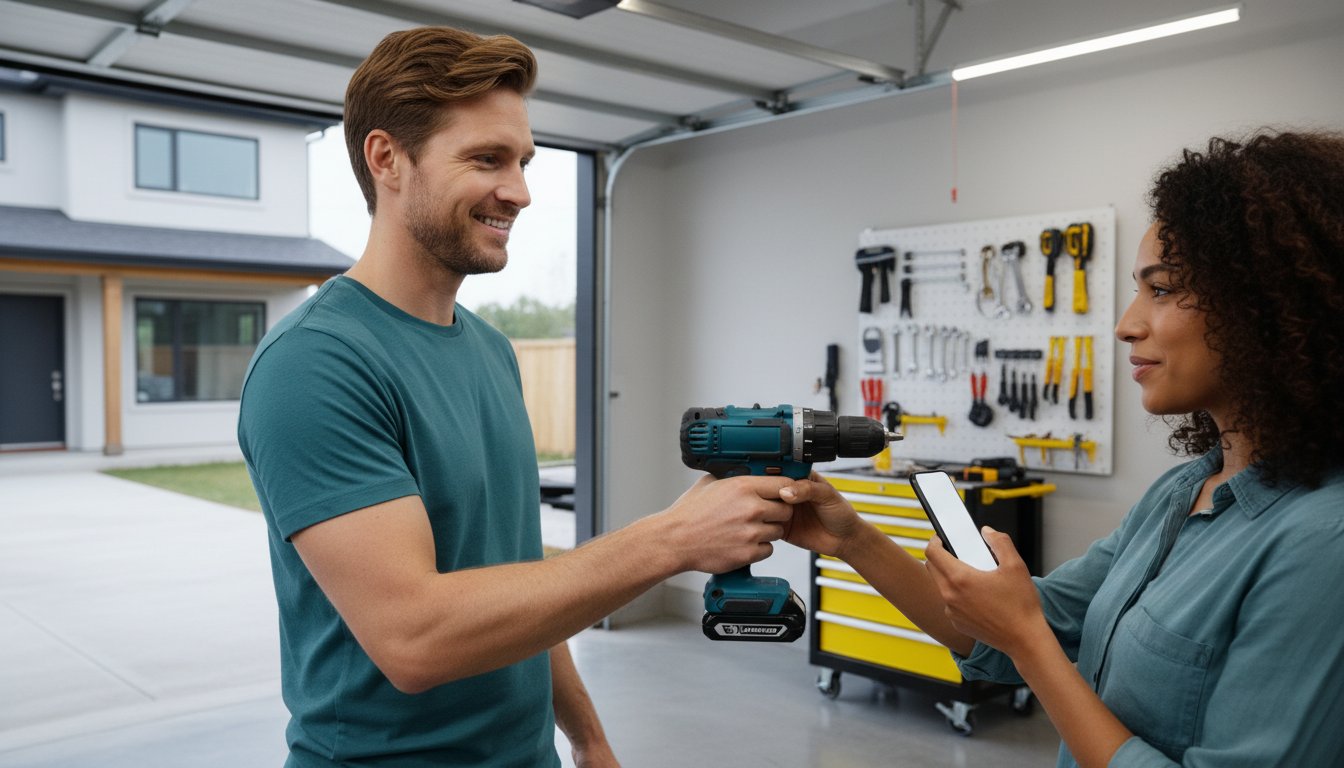
The 2026 Checklist to Rent Tools from Neighbors Safely and Affordably
April 11, 2026
Published by Life4Rent · Operated by Brohf Software OÜ
Last Saturday, Marc stood in a hardware store in Berlin looking at a €125 daily fee for a heavy-duty hammer drill he only needed for three hours. He realized that a local peer-to-peer platform offered the same model for €15 just two streets away. When you choose to rent tools from neighbors, you bypass the inflated overhead of commercial centers and keep your project budget under control.
You probably worry about what happens if a borrowed circular saw stops working mid-cut or if the lender hasn't maintained the blade properly. These concerns are normal because nobody wants an unexpected bill for a tool they don't own. This guide provides a practical framework to verify equipment condition and lender reliability so you can focus on your home repairs instead of liability forms.
We'll walk through a 2026 safety checklist that covers everything from battery health checks to clear communication protocols for the hand-off. You'll learn how to document the state of the gear and set clear expectations before you drive back to your workshop.
Peer-to-Peer Tool Rentals versus Commercial Hire Shops
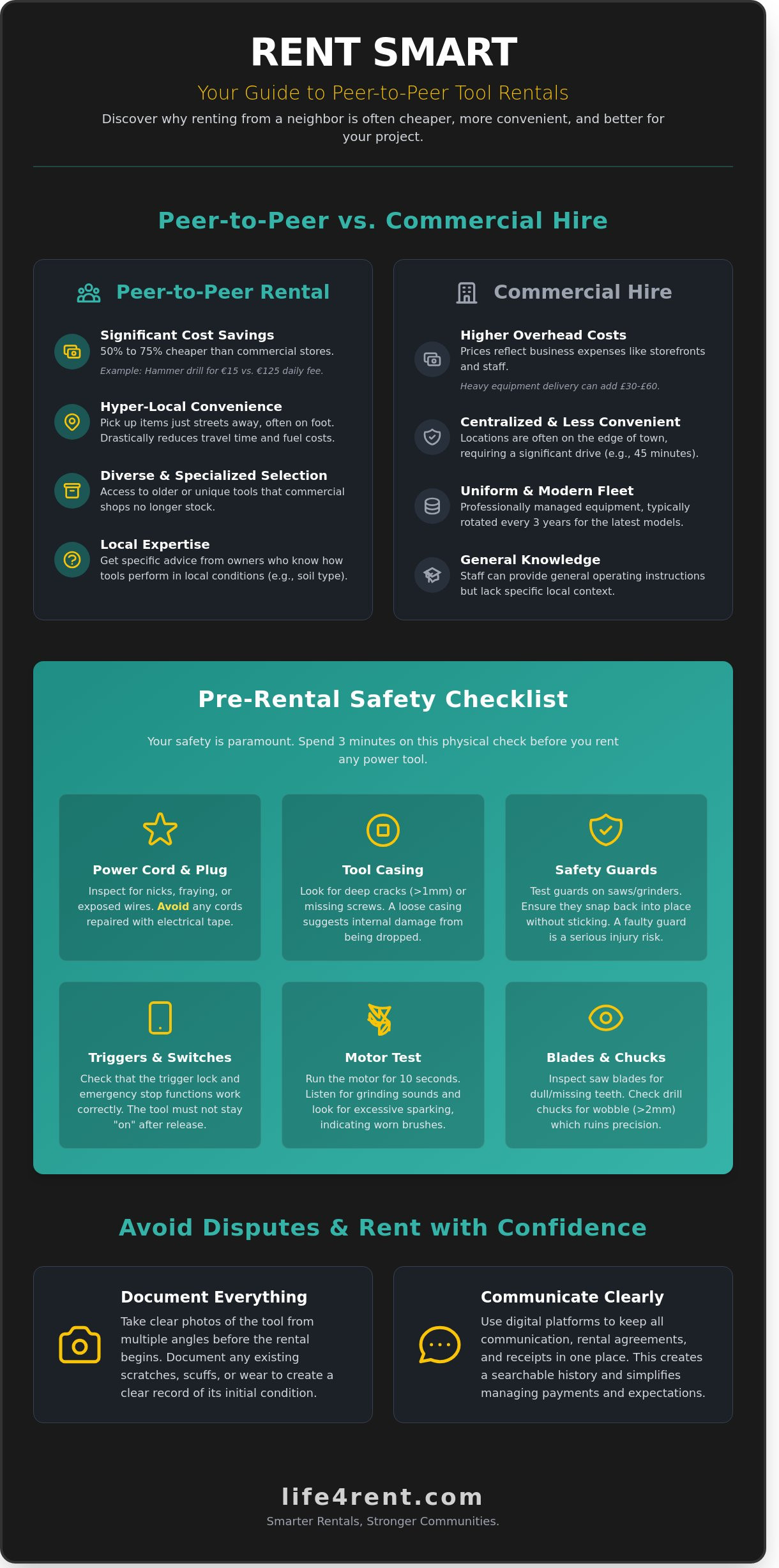
You can often find a power drill or a lawn scarifier just a few streets away for a fraction of the cost found at industrial hire centers. Local listings on peer platforms frequently show prices that are 50% to 75% lower than traditional commercial outlets. This shift toward a sharing economy model allows individuals to access high-quality equipment without the steep overhead costs of a brick-and-mortar business.
Commercial rental companies typically rotate their stock every three years to maintain a fleet of modern machines. You won't find that same level of uniformity when you rent tools from neighbors, but you'll often find a more diverse selection. Private owners often hold onto specialized or older tools that commercial shops no longer carry because they aren't profitable enough to stock in bulk.
Travel logistics also play a major role in the decision between a shop and a neighbor. A trip to a warehouse on the edge of town can take 45 minutes of driving time and consume several liters of fuel. You can often complete a neighborhood pickup on foot or with a five-minute drive, which significantly reduces the carbon footprint of your project.
The Trade-offs of Renting from Individuals
You should expect some visible wear and tear on tools that come from a household garage. These items aren't part of a professionally managed fleet, so they might have scuffs or older batteries. It's a practical choice for most home repairs where the tool's appearance doesn't affect its performance.
Communication speed is another factor to consider before you book. A commercial shop has a dedicated desk for bookings, but a neighbor might only respond after they finish their work day. You should look for platforms that offer an item protection plan to ensure you aren't held liable for mechanical failures that occur during normal use.
Why Proximity Matters for Heavy Equipment
You can save significantly on delivery fees by sourcing heavy gear from someone nearby. Commercial centers often charge between £30 and £60 for equipment drop-off and collection. You might find a neighbor who owns a trailer and is willing to help you transport a heavy wood chipper for a much smaller fee.
Local owners also provide specific insights that a warehouse clerk cannot offer. A neighbor knows exactly how a particular tiller performs in the local soil, which is often consistent across the same street. This advice helps you avoid common mistakes and ensures you have the right attachments for your specific house type or garden conditions.
A Practical Safety Checklist for Power Tool Inspections
You shouldn't assume every item on a peer-to-peer marketplace is in factory condition. When you rent tools from neighbors, the responsibility for a safe workspace starts with a thorough physical check. You can usually spot major mechanical issues within the first three minutes of handling the equipment.
Examine the power cord from the plug to the tool housing. You're looking for nicks, fraying, or any exposed copper wires. If you see electrical tape wrapped around the wire, it's best to pass on that specific rental. Repairs like these often fail when the tool draws high current, which creates a fire risk.
Inspect the tool's outer casing for deep cracks or missing screws. A crack wider than 1 millimeter suggests the tool has been dropped from a height of 1 meter or more. This impact often damages internal cooling fans or motor mounts that you can't see from the outside. If the plastic housing feels loose, the internal components might shift during use.
Safety guards are non-negotiable for high-speed equipment like grinders or circular saws. Push the guard back and release it three or four times to ensure it snaps back into place without hesitation. If the spring is weak or the guard sticks, you risk a serious injury during operation. You should also test the emergency stop or trigger lock at the pickup location. If the trigger stays "on" after you let go, the tool is a major hazard.
Run the motor for about 10 seconds before you put the item in your car. Listen for grinding noises that sound like metal scraping on metal. Excessive sparking in the motor vent is another sign of worn-out carbon brushes. A healthy motor should reach full speed quickly and stop without making a clunking sound.
Specific Checks for Saws and Drills
Inspect the saw blade for missing carbide teeth or dull edges. Look for blue discoloration on the metal, which shows the blade overheated and lost its structural hardness. If you're picking up a drill, tighten the chuck and watch it spin. A wobble of even 2 millimeters will ruin your precision. Ask the owner if the blades were sharpened within the last 6 months to ensure you're getting a tool that can actually do the job. If you want to see what else is available in your area, you can browse the latest listings on life4rent.com for local options.
Battery and Cordless Tool Considerations
Check the battery terminals for green corrosion or white fluid leaks. These chemicals can damage the tool's internal circuitry and prevent a solid connection. You should ask to test the tool under a small amount of load to see if the battery holds its voltage. A battery that drops two bars of power after 10 seconds of spinning is likely near the end of its life cycle. Always confirm the charger is the original manufacturer model and matches the tool's voltage to avoid overheating the cells.
How to Identify Reliable Lenders in Your Area
You can tell a lot about a lender by how they present their equipment. High-quality photos of the actual tool in a clean workspace usually indicate that the owner takes care of their gear. You should avoid listings that only use stock photos, as these hide the actual wear and tear of the machine. Reliable owners often take pictures from multiple angles to show the blade condition or the battery ports.
A detailed description is another sign of a responsible neighbor. You should prioritize lenders who provide the specific age of the tool and a history of its maintenance. For example, a listing that mentions a blade sharpening in April 2024 or an oil change three months ago is more trustworthy than one with no details. When you rent tools from neighbors, these small facts prove the owner understands the machine's limits.
The response rate on the profile tells you if the neighbor is active and communicative. You should look for a response rate above 90% and a response time of less than a few hours. Quick communication suggests the lender is organized and will likely be punctual during the handover. If a lender takes two days to answer a basic question, they might not be available if you run into trouble during your project.
Reviews provide the most honest look at what to expect. You should look for specific mentions of tool cleanliness and the owner’s helpfulness. If past renters mention that the lender took ten minutes to explain the safety features, that's a positive sign. You want to see feedback that confirms the tool worked as described and was ready for use upon arrival.
Evaluating Trust Signals on Life4Rent
Identity verification badges offer an extra layer of security for both parties. These badges mean the platform has confirmed the user's identity through official documentation. You'll often find that repeat lenders treat their peer to peer equipment rental like a small business. They tend to specialize in certain categories, such as heavy-duty landscaping or precision woodworking tools, which means they likely have the expertise to keep the gear in top shape.
Questions to Ask Before You Book
You should always clarify the specifics of the kit before finalizing the booking. Some tools require specific adjustment keys or accessories that might not be included in the base listing. Ask the following questions to ensure you can actually rent tools from neighbors and finish your job without a trip to the hardware store:
- Does this tool come with all necessary wrenches, keys, or adjustment accessories?
- Are there any specific "quirks" or tricks to starting this particular model?
- Can you provide a digital copy of the user manual or a link to it?
Gas-powered tools often have a specific sequence for the choke or primer bulb. You should ask about these details to avoid flooding the engine. Most lenders are happy to share these tips because they want their equipment to be handled correctly. A quick message about the manual also ensures you have the safety specifications on hand while you work.
The Essential Handover and Return Checklist
You need a clear process to protect your deposit and maintain a good relationship with the owner. Take four high-resolution photos of the equipment from every side before you load it into your vehicle. This visual record serves as your insurance against claims for pre-existing scratches, dents, or missing paint that you didn't cause.
You should point out any visible wear to the owner immediately. Request a 30-second demonstration of the motor running or the tool functioning to confirm it works as described. This simple step ensures you don't get home with a dead battery or a faulty switch and then face a dispute later.
You'll find that clarity prevents 90% of rental friction. Agree on the specific return time and cleanliness expectations right at the doorstep. Most owners expect the tool back in the same state it left, so confirm if they want the dust bag emptied or specific parts wiped down.
What to Do During the Pickup
You should verify that the item matches the specific model number listed on the platform. It's common for different versions of a drill or saw to have varying power ratings. Check that the rent a tool near me listing includes all the necessary bits, blades, or safety guards you need for your project.
You'll want to inspect the tool for excessive grease or old sawdust. While these aren't always deal-breakers, they indicate how well the owner maintains their gear. When you rent tools from neighbors, a quick check for frayed cords or loose handles keeps your workspace safe and productive.
The Professional Return Protocol
You should treat the equipment with more care than your own. Clean the casing thoroughly with a dry brush or a rag to remove any debris from your project. If you used a miter saw or a sander, blow out the dust from the crevices so the machine looks professional for the next user.
You'll find that neatness counts when you rent tools from neighbors. Coil the power cords in wide, natural loops and secure them with the original ties or velcro straps if they were provided. This prevents internal wire damage and makes the handover much smoother for the owner.
You must be honest if a blade becomes dull or if you notice a minor mechanical hiccup during use. Report these issues to the owner during the hand-back. Most owners appreciate the transparency so they can sharpen components or perform maintenance before the next booking.
Managing Your Rental Experience on Life4Rent
You need a clear strategy when you decide to rent tools from neighbors. Life4Rent works best when you follow the established protocols designed for local communities. These steps ensure you don't run into unnecessary friction with your neighbors during the process.
The built-in messaging system is your best friend for project coordination. You can keep all pickup times, specific instructions, and return details in one single thread. Owners often share specific maintenance tips or fuel requirements through the chat. You'll find these details are easier to reference on your phone than a verbal conversation had on a driveway.
You should keep your digital receipts and rental agreements organized within the app. This habit is essential for apps that help with rent management and expense tracking. Digital records prevent disagreements if a tool fails or a return window is missed. It's a simple way to maintain a professional standard in a peer-to-peer environment.
You should read the platform’s dispute resolution process before you book a high-value item. It's better to understand the rules before a problem occurs than to scramble for answers later. You should also leave honest, detailed feedback after your project is done. This transparency helps other people in your area find the best tool on rent options for their own home repairs.
Staying Within the Platform for Protection
You must avoid paying in cash outside the application. Cash payments leave no trail and usually void the platform's protection policies. You should keep every conversation on the app to maintain a verified record of your agreement. This documentation is your primary defense if a dispute arises over the condition of the equipment.
Most peer-to-peer platforms offer specific insurance or protection guarantees for their users. These safety nets only apply to transactions that stay on the platform from start to finish. Platform-backed guarantees often cover accidental damage that standard home insurance policies might ignore. You lose this security the moment you take the transaction offline to save a few Euros.
Planning for Multi-Day Projects
You should check for weekly discounts if your home improvement task looks like it will take more than three days. Many owners offer lower rates for longer durations to ensure their equipment stays utilized. You need to communicate early if you realize you'll need an extension. Late fees can add up quickly, so a quick message to the owner can often secure a better rate.
When you rent tools from neighbors, you are handling someone else's property. You must store the equipment in a dry, secure location like a locked garage or a shed. Weather damage or theft is often the renter's responsibility, and moisture is a common enemy for power tools. You should ensure the item is wiped down and clean before you store it for the night.
A Practical Path to Better Home Projects
You can save significant money when you choose to rent tools from neighbors instead of buying hardware that sits in a garage for most of the year. A quick look at the 17 categories of daily essentials on the platform shows how many options exist within a five-mile radius of most European city centers. You should always prioritize the safety checklist, especially for high-voltage gear like mitre saws or jackhammers.
The community-driven review system helps you find lenders who maintain their equipment to a high standard. Secure payment systems ensure your money stays protected until the handover is complete. You'll find that clear communication during the return process prevents most common disputes. It's helpful to document the condition of the tool with a few photos when you first pick it up.
Local rentals reduce the environmental impact of manufacturing new products while putting extra cash into your local economy. You don't need a massive budget to complete professional-grade renovations when you use the right local resources. Browse tools for rent in your neighborhood on Life4Rent. It's a practical way to get your home projects finished without overspending.
Frequently Asked Questions
Is it safe to rent power tools from someone I do not know?
It's safe if you stick to platforms that verify user identities through official documents. Most European marketplaces require a valid ID or passport before a user can list or borrow items. Using RentalNumbers.com for SMS verification can help you safeguard your personal contact details during this process. You should always check the owner's rating and read at least three or four reviews from previous transactions. This data gives you a clear idea of how the lender maintains their equipment and handles communication.
What happens if a tool breaks while I am using it?
You're typically responsible for the cost of repairs if a tool fails due to improper use or an accident. Most rental agreements specify that the borrower must cover the replacement value or professional service fees. You can protect yourself by filming a short video of the tool working before you leave the owner's property. This evidence proves the condition of the item at the start of the rental period.
Do I need to bring my own safety gear like goggles or gloves?
You'll need to provide your own personal protective equipment like goggles, earplugs, and gloves. Owners rarely provide these items because they're difficult to sanitize and must fit the user's body perfectly to work. When you rent tools from neighbors, the listing usually focuses on the machine itself rather than the accessories. You should buy your own gear from professional-grade suppliers like J Racenstein to ensure you meet the safety standards required for the task.
Can I rent heavy machinery like excavators from a neighbor?
You can find heavy machinery on peer-to-peer sites, but these rentals often require proof of experience or a specific operator's certificate. In many European regions, machines that weigh over 1,000kg need a professional license to operate on public land. Always ask the owner for the most recent maintenance records for large equipment like mini-excavators. You should also confirm that the owner's insurance policy covers third-party operators for heavy equipment.
How much cheaper is it to rent from a neighbor compared to a store?
You can expect to save between 30% and 50% on the daily rate compared to a commercial rental company. Individual owners don't have the massive overhead costs of a retail storefront or a large fleet of vehicles. These savings are especially helpful for long-term projects that last more than two days. You'll often find that weekend rates are much more flexible when you're dealing with a local resident.
What if the tool I pick up does not work when I get home?
You must contact the owner and the platform's support team immediately if the equipment doesn't work. Most peer-to-peer sites offer a 24-hour window where you can report a faulty item and receive a full refund. You should always test the power cord and basic switches while you're still at the pickup location. This simple step prevents a wasted trip and ensures the owner knows the fault wasn't your responsibility.
Do I need a special driving license to rent a trailer from a neighbor?
You can usually use a standard Category B license if the total weight of the car and trailer doesn't exceed 3,500kg. If the trailer's maximum authorized mass is over 750kg, you might need a B+E extension on your license. Check your local transport authority's website for the exact weight limits in your specific country. You should also verify that your car's towing capacity matches the weight of the loaded trailer.
How do I handle a dispute with a lender about tool damage?
You should use the platform's internal dispute resolution system if a disagreement arises about the condition of a tool. Clear photos taken at the start and end of the rental are the most effective way to prove your case. If an owner claims you caused damage, the mediation team will look at the timestamped evidence from both parties. You'll find that documented facts resolve most issues much faster than verbal arguments.
Related guides on Life4Rent
Ready to rent instead of buy? See all tools & equipment available to rent on Life4Rent →
Not sure how much your tools & equipment could earn? Try the Tools & Equipment income calculator →
Life4Rent
Rent it. Earn from it. Own less, access more.
Browse peer-to-peer rentals near you, or list what you own and start earning — all protected by Life4Rent Protect.
About the author
Dublin, Ireland
Michael covers consumer rights, rental law, and EU platform regulation for the Life4Rent Renting Academy. He has reported on digital market policy and renter protections across Europe, and brings a clear, practical perspective to topics like deposit disputes, insurance, and the legal rights of renters and owners.