
Rent Out Items You Don''t Use for Money: A Practical 2026 Guide
May 9, 2026
Published by Life4Rent · Operated by Brohf Software OÜ
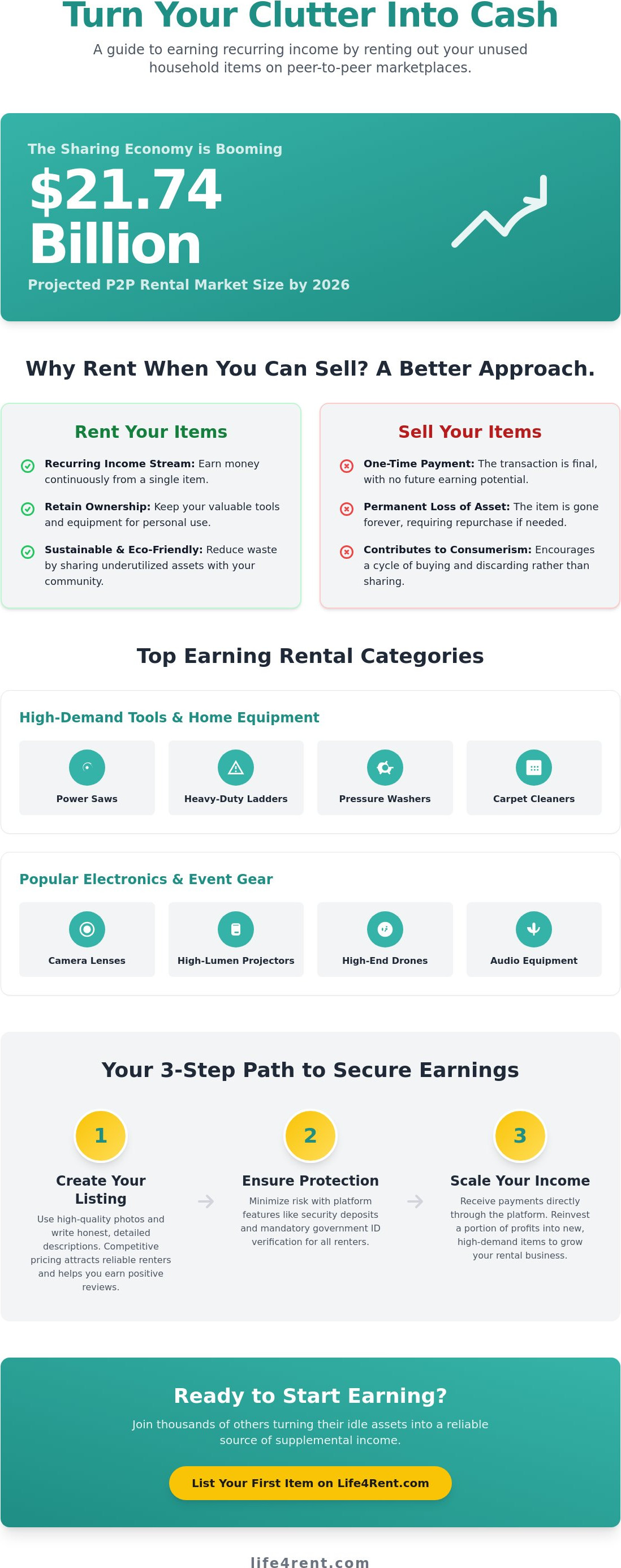
The standard advice for a cluttered garage is to hold a yard sale, but your power tools and camping gear are often worth more if you keep them. You can rent out items you don't use for money through peer-to-peer marketplaces, which turns a one-time sale into a recurring monthly check. With the peer-to-peer rental market projected to reach $21.74 billion in 2026, more people are choosing this method to offset the high cost of living.
You've probably felt the frustration of seeing expensive electronics or tools collect dust while your monthly expenses rise. It's common to feel anxious about a stranger damaging your property, but modern rental platforms now provide specific protection frameworks to address these concerns. This article explains how to turn those idle goods into a steady income stream using the Life4Rent marketplace.
We'll cover the specific household items that are currently in high demand and the steps you can take to ensure every transaction is secure. You'll also see how a reliable platform makes it easier to manage your listings and payments in one place.
What does it mean to rent out items you don't use for money?
Peer-to-peer rental platforms allow you to act as a local lender within your community. You list your belongings, such as high-end power drills, cameras, or camping tents, and neighbors pay a daily fee to borrow them. This allows you to rent out items you don't use for money while keeping the equipment available for your own household needs when necessary.
You maintain full ownership of every asset in your inventory. The income generated is supplemental, helping to cover the initial purchase cost or monthly household bills. Modern systems in 2026 have made peer to peer equipment rental safer through improved identity verification and automated booking schedules.
To better understand this concept, watch this helpful video:
This model is more sustainable than the traditional cycle of buying and discarding. Statistics from 2025 suggest that most household tools are used for less than 15 minutes in their entire lifespan. You reduce waste by sharing these underutilized assets with your community through the Life4Rent marketplace.
The difference between renting and selling
A sale is a terminal transaction. Once you sell a pressure washer, it's gone from your home forever. A rental provides recurring cash flow while you keep the item for your own future projects. You should choose this path for durable goods that stay in storage for most of the year but remain functional for years.
Why the sharing economy is growing in 2026
People are moving away from the burden of ownership. High property prices mean storage space is expensive, so many households prefer to pay for access rather than possession. The sharing economy has expanded because it effectively solves the problem of idle assets taking up valuable square footage.
Trust networks in local neighborhoods have strengthened significantly by May 2026. Verification through government ID and peer reviews has reduced the friction of lending high-value goods. You can now contribute to a lower neighborhood carbon footprint while your garage starts paying for its own maintenance.
Profitable categories for your household rental inventory
Success in the peer-to-peer market depends on choosing items that people need frequently but don't want to store. The Life4Rent marketplace features 17 distinct categories, but some groups offer a better return on your time than others. Many people choose to rent out items you don't use for money to fund their own hobbies or equipment upgrades.
You can rent out items you don't use for money by looking at your storage space through a different lens. Most households own at least three or four items that stay idle for 90% of the year. These belongings are assets that can pay for their own maintenance if you list them correctly.
High-demand tools and home equipment
Power tools are the backbone of the rental economy. Homeowners often need a specific piece of equipment for a single weekend project and find a tool on rent more practical than a $300 purchase. Pressure washers, heavy-duty ladders, and specialized saws are among the most searched items in the DIY category.
- Garden tools like tillers and stump grinders see massive spikes in demand during spring and autumn.
- Carpet cleaners and industrial vacuums are popular for end-of-lease cleaning.
- Specialized plumbing or electrical tools are rare in average households but essential for repairs.
Electronics and event gear
Special events drive a different type of rental behavior. People often look for audio equipment rental or high-lumen projectors for garden parties and weddings. These items command higher daily rates because of their technical complexity and purchase price.
This category is highly profitable; for example, specialized providers like Book a DJ Studio demonstrate how focusing on high-end niche equipment can create a consistent and professional rental business.
Hobbyists also look for camera lenses or high-end drones to test before they buy. You should ensure these items are well-maintained and include all necessary cables. Safety and protection for your personal belongings should always be a priority, especially with electrical gear that requires specific handling instructions.
Outdoor equipment like high-quality family tents and portable power stations are staples for summer campers. Baby gear, including travel cribs and high-end strollers, is a growing niche for families visiting your area. If you're unsure where to start, you can browse the active categories on Life4Rent to see what your neighbors are currently looking for.
Safety and protection for your personal belongings
Personal property is often an extension of your hard work, so the fear of damage or theft is a natural barrier. You can safely rent out items you don't use for money by using platforms that prioritize owner security. Reputable marketplaces use security deposits as a primary deterrent against careless handling. When a borrower has their own funds at stake, they're much more likely to return your equipment in its original state.
Identity verification is another pillar of a secure rental environment. Standard procedures on professional platforms include government ID checks for every user. This ensures that the person standing on your doorstep is exactly who they claim to be. You should also ensure that your rental agreement clearly states the condition of the item before the hand-off occurs.
The hand-off ritual is your best opportunity to set expectations. Always perform a quick functional test in front of the renter. Show them how to turn the device on and point out any specific safety features. This prevents a borrower from later claiming that the item was broken upon arrival.
It also builds a professional rapport that encourages better care of your belongings. Check the renter's profile for reviews from other owners before you approve a request. Previous behavior on the platform is usually the most accurate indicator of how they'll treat your gear.
How to vet potential renters
Communication through the app allows you to gauge their professionalism and technical knowledge. If a borrower is unresponsive or vague about their project, it's perfectly acceptable to decline the booking. Trust your intuition.
A reliable income source through rentals requires a foundation of mutual respect and clear boundaries. Documentation is your primary defense in the rare event of a dispute. Take high-resolution photos of your item from four different angles before every single rental period.
Documenting item condition
Focus on high-wear areas like power cables, screens, or moving mechanical parts. These photos should be clear and well-lit to prove the item's status at the moment of transfer. Note any existing scratches or minor wear in the listing description so there are no surprises for the renter.
Keep your original purchase receipts and user manuals in a dedicated folder. These documents help establish the item's value for insurance purposes and provide the renter with necessary operating instructions. A digital copy of the manual can also reduce the risk of damage caused by improper use. When you rent out items you don't use for money, these small administrative steps protect your investment and ensure a smooth experience for everyone involved.
Practical steps to prepare your first rental listing
You've identified the gear in your garage. Now you need to present it effectively. If you want to rent out items you don't use for money, the quality of your listing is the main factor in your success. A professional appearance builds trust before the first message is sent. It shows that you care about your equipment and your customers.
Clean every item before you take photos. Dust and grime suggest poor maintenance and can lead to lower ratings. Perform a final safety check. Check for loose bolts, worn parts, or frayed electrical cords. If a tool isn't in perfect working order, don't list it until it's repaired. Your reputation as a lender depends on the reliability of your inventory.
Photography and description tips
Natural light is your best friend. Place your item against a clean, neutral background like a white wall or a tidy workbench. Avoid cluttered rooms that distract from the product. Take photos from several angles to show the item's condition clearly. If the item has a screen or a power light, take one photo while it's turned on to prove it works.
Your description should be honest and detailed. Mention the exact model name and technical specifications. Explain who the item is for, such as "this drill is light enough for hanging pictures but strong enough for deck repairs." List every accessory included, such as batteries, carrying cases, or specific drill bits. This clarity prevents confusion during the hand-off and ensures the borrower has everything they need for their project.
Setting a realistic price
Research local commercial rental rates to find your baseline. Set your daily price about 20-30% lower than what a corporate shop charges. This discount makes your listing the obvious choice for neighbors who want to save money. High-value electronics or rare tools can command slightly more, but stay competitive to ensure regular bookings.
- Offer a 15-20% discount for weekly rentals to attract long-term users.
- Reduce your logistical work by encouraging longer bookings instead of many daily hand-offs.
- Adjust your prices for seasonal demand, such as raising rates for snow blowers in winter.
Keep your availability calendar current. If you plan to use the item yourself or go on vacation, mark those dates as unavailable immediately. This prevents the frustration of declining a request, which can lower your visibility in search results. Consistency builds a strong reputation. You can create your first listing on Life4Rent today to see how your neighbors respond to your inventory.
Scaling your rental activity into a reliable income source
Management of one or two items is simple, but scaling requires a disciplined approach to your schedule. You can rent out items you don't use for money to build a small business from your garage or spare room. Organization becomes your most valuable asset once you manage more than five active listings on the Life4Rent marketplace. Consistency in your communication leads to better reviews and more repeat customers over time.
You can reinvest a portion of your earnings into high-demand rental items to grow your inventory organically. Look at your platform dashboard to identify trends, such as high demand for camping gear in July or heaters in November. Reinvestment should focus on items that complement your current inventory, like offering specialized bits for your existing power drills. This data-driven strategy helps you avoid buying gear that might stay idle on your shelves.
Logistical management for hand-offs
Don't let rentals dictate your entire day. Set specific windows for pick-ups and drop-offs to protect your personal time. You should keep a dedicated "rental kit" ready with spare batteries, cleaning supplies, and protective cases. This preparation reduces the stress of last-minute bookings and keeps your gear in top condition. A standard checklist for every return ensures that no small accessories are missing when the item comes back.
Professionalism and reviews
Treat every borrower like a professional client to build a high-rated profile. High ratings are the social proof that allows you to maintain steady booking rates throughout the year. Respond to inquiries within a few hours to increase your chance of securing a rental. Speed is often the deciding factor for neighbors who need a tool for a same-day project. Ask for a review politely after a successful return to help your listings rank higher.
Life4Rent provides an interface to track your earnings and manage multiple categories without confusion. You can see your total revenue for the month and identify which items are your most profitable assets. This clarity is essential when you decide whether to expand your inventory or retire older equipment. You'll find that a consistent, helpful attitude leads to repeat customers who trust your equipment for all their future needs.
Build your local rental inventory
You've seen how underutilized household goods can transform from dusty storage items into active assets. Success depends on small, practical steps like taking clear photos and maintaining an accurate availability calendar. These efforts ensure your equipment remains in good condition while providing a helpful service to your neighbors. It's about being organized and communicative to build a reputation as a reliable lender.
You can rent out items you don't use for money by focusing on high-demand categories like power tools or event gear. The Life4Rent platform supports this process with a secure system that features 17 different rental categories and a community of ID-verified users. You can manage every booking and track your earnings through a single dashboard designed for efficiency. This setup reduces the administrative burden of running a peer-to-peer business.
The transition from a cluttered garage to a functional rental shop is straightforward once you have the right framework. Start listing your unused items on Life4Rent today to begin your first transaction. Your belongings are ready to work for you.
Frequently Asked Questions
Is it safe to rent out my expensive electronics to strangers?
You can safely list electronics by using platforms that verify user identities through government documents. It's best to check the renter's history and reviews from previous owners before you accept a booking. You should also take detailed photos and perform a functional test during the hand-off. This ensures everyone is on the same page about the item's condition.
How much money can I realistically make by renting out my things?
Earnings depend entirely on your inventory and location. Verified data from 2025 shows that top fashion lenders on Pickle made an average of $5,744 monthly. If you rent out a pool on Swimply, the average rate is about $45 per hour. Most casual users find that they can rent out items you don't use for money to cover utility bills or a monthly grocery shop.
What happens if a renter breaks my item during the rental period?
Security deposits act as your primary protection against accidental damage. Reputable platforms allow you to hold a specific amount that covers minor repairs or deep cleaning. If the damage is severe, you'll need to provide your pre-rental photos as evidence to the platform's support team. Most marketplaces have a formal dispute process to help resolve these issues fairly.
Do I need to pay taxes on the money I earn from renting my items?
You must report your rental earnings as taxable income in most jurisdictions. The IRS Publication 527 provides specific details on how to handle rental income and potential deductions for maintenance or platform fees. It's a good idea to keep a spreadsheet of your expenses and earnings. Local regulations in Europe may vary, so check your national tax office guidelines.
How do I handle the hand-off and return of the rented items?
You should arrange a specific time and a safe location for the transfer. A meeting in a well-lit public area or at your front door is standard practice for most peer-to-peer users. Always walk the renter through the basic operations of the item during the hand-off. This step ensures they know how to use it safely and reduces the risk of damage caused by user error.
Which items are in the highest demand for peer-to-peer rental?
Power tools, specialized DIY equipment, and seasonal outdoor gear consistently see the most requests. Homeowners often look for pressure washers or heavy-duty ladders for weekend projects. Baby gear is also a high-growth category, with the global market projected to reach $6.1 billion by 2034. You'll find that items with a high purchase price but low usage frequency perform best.
Can I rent out items if I live in an apartment instead of a house?
Apartment dwellers can be very successful lenders because they live in high-density areas with many potential renters nearby. You might find that smaller items like electronics, kitchen appliances, or camping gear are easier to manage than large ladders. It's often more convenient for neighbors to pick up a tool from someone in their own building or street. Just ensure you have a safe place for the hand-off.
How does Life4Rent protect owners from potential theft or loss?
Life4Rent uses a multi-layered approach to protect your belongings and your peace of mind. Every member of the renter community must pass an identity verification check before they can book your items. The platform also provides a centralized dashboard where you can track every rental across 17 different categories. This system helps you rent out items you don't use for money while maintaining a clear record of every transaction.
Life4Rent
Rent it. Earn from it. Own less, access more.
Browse peer-to-peer rentals near you, or list what you own and start earning — all protected by Life4Rent Protect.
About the author
Tallinn, Estonia
Philip leads editorial at the Life4Rent Renting Academy, overseeing guides on peer-to-peer rental, platform safety, and consumer finance across 25 markets. He has spent over a decade covering the sharing economy and digital marketplaces, helping renters and owners navigate the shift from ownership to access.