
Rent Clothes for a Party: 2026 Guide to P2P Fashion
September 20, 2026
Published by Life4Rent · Operated by Brohf Software OÜ
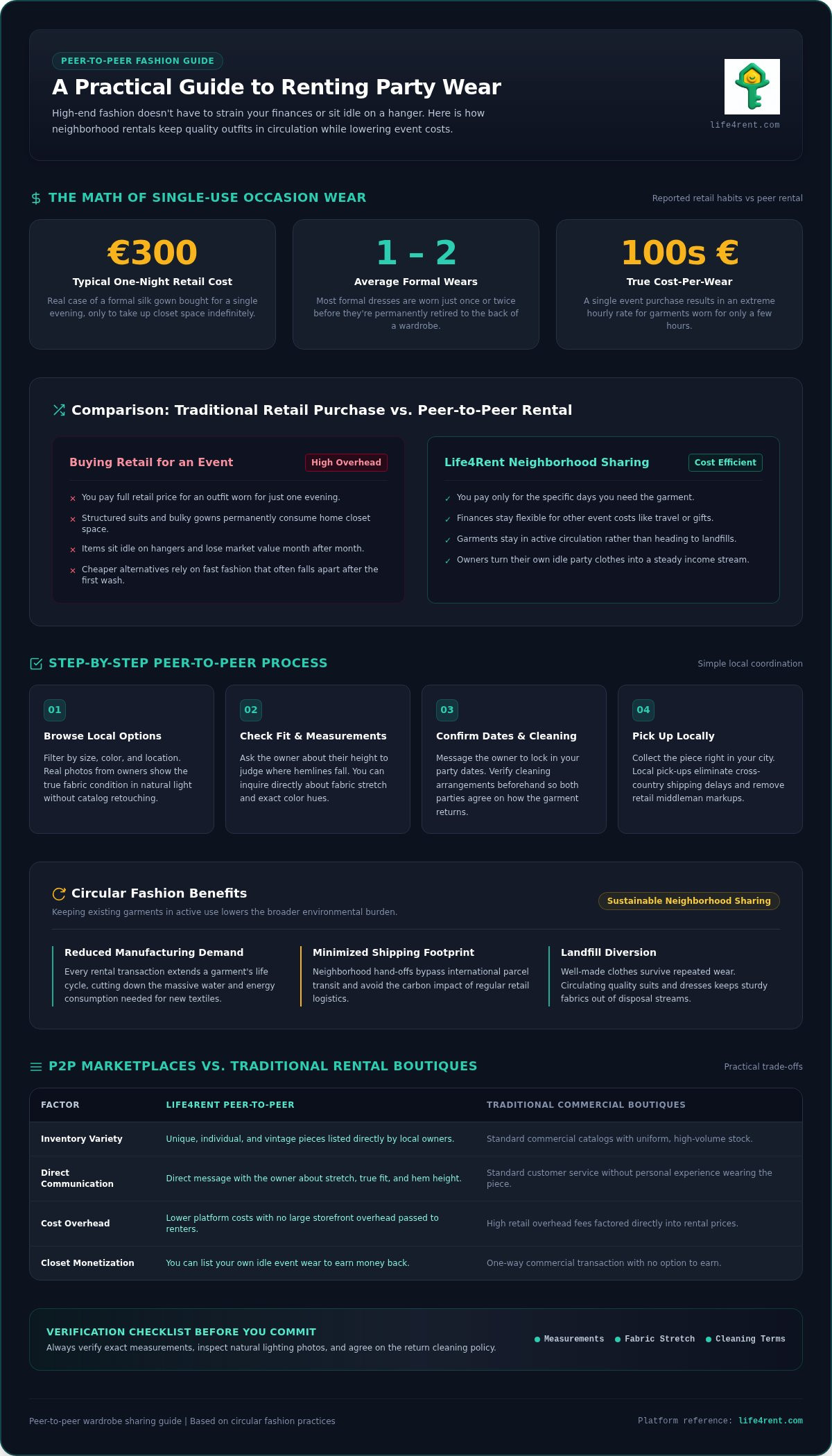
Last year, a friend of mine spent three hundred euros on a silk gown for a single evening, only to watch it take up space in her closet ever since. Many of us face this same dilemma when we need to rent clothes for a party but don't want to support fast fashion or drain our bank accounts. It's frustrating to pay full price for something you'll only wear once.
You probably agree that high-end fashion should be more accessible and less wasteful. This guide explains how to use the Life4Rent peer-to-peer marketplace to find quality outfits from local owners at a fraction of the retail cost. You'll learn the practical steps to secure a great look, handle local pick-ups, and even turn your own idle clothes into a source of income.
The process involves verifying the condition of an item and handling the logistics of returning it after the event. There's no need to buy a new outfit for every invitation when your neighbors have exactly what you need. You'll soon have a clear plan to manage the rental process with confidence.
The logic behind renting clothes for a party
Most people buy a suit or a gown for a wedding or gala and never pull it from the hanger again. This cycle creates a closet full of expensive items that lose value every month they sit unused. When you choose to rent clothes for a party, you gain access to high-quality materials and professional tailoring without the steep retail price tag. It's a logical shift toward paying for the experience of wearing the garment rather than the burden of owning it. You get to wear a piece that might normally be out of your budget while keeping your finances in check.
Estimates often suggest that the average formal dress is worn only once or twice before it's retired to the back of a wardrobe. This makes the cost-per-wear incredibly high, often reaching hundreds of euros for just a few hours of use. Local rentals flip this math in your favor. You support your community members directly instead of sending your money to a massive corporation that prioritizes mass production over quality. It's a practical way to ensure that well-made clothing stays in circulation instead of ending up in a landfill. Similarly, you can learn more about FemiEko to see how reusable solutions are also transforming intimate health by reducing waste.
To better understand this concept, watch this helpful video:
The true cost of one-time outfits
Environmental benefits of the sharing economy
Every rental transaction helps extend the life cycle of a garment, which aligns with the principles of circular fashion. This approach reduces the overall demand for new manufacturing, a process that consumes vast amounts of water and energy. It's a simple way to practice neiyborly sharing within your own neighborhood. You contribute to a system that values resourcefulness over constant consumption. Sharing existing resources within a community minimizes the carbon footprint associated with shipping new clothes across the globe. It's a grounded, effective way to enjoy fashion without the environmental guilt often associated with modern retail habits.
The step-by-step process of peer-to-peer rentals
The search for the perfect outfit begins with a look at what people in your own city are wearing. You browse local listings to find a style that matches your specific event, whether it's a formal wedding or a themed birthday. Owners usually list specific details about the garment, including the fabric type and the exact fit. You then message the owner to confirm the item is free for your party date. This direct line of communication allows you to ask about the stretch of the fabric or the true color of the piece.
Most peer-to-peer interactions are straightforward and friendly. You'll find that people are happy to share their items when they aren't using them. It's a practical way to rent clothes for a party without the high overhead of a retail store. The process is designed to be transparent so both you and the owner feel comfortable with the arrangement.
Browsing and selecting the right look
You can filter by size, color, and location to narrow down the best nearby options. Real photos from the owner show the garment in natural lighting, which is often more reliable than a retouched catalog image. It's a smart move to ask the owner about their height to estimate where the hemline will fall on you. This level of detail ensures you don't end up with a dress that is far too long or a suit with short sleeves.
The Ellen MacArthur Foundation's report on circular fashion highlights how these rental systems keep clothes in use longer. This approach is vital for a sustainable future, as it reduces the need for constant new production. By choosing a local rental, you're participating in a system that values the quality of existing garments rather than disposable trends.
Communicating with the item owner
You should discuss the logistics of the pick-up and return as soon as you start messaging. Clear expectations about when the item needs to be back help both parties plan their week. Honest questions about any wear and tear are expected and help prevent disputes after the event. A quick chat through the platform builds a sense of security and trust before you meet in person.
Local exchanges usually happen through a meet-up, though some owners offer shipping if you live further away. A local handover is usually faster and lets you check the fit before the rental period officially starts. It's often easier to grab a dress from someone a few streets away than to wait for a delivery truck. You can explore the clothing category on Life4Rent to see what your neighbors are offering to help you rent clothes for a party.
P2P marketplaces compared to traditional rental shops
Traditional rental boutiques often focus on high-end designer labels with prices that reflect their storefront rent and staff costs. When you choose to rent clothes for a party through a peer-to-peer marketplace, you're dealing with individual owners who don't have those same overhead expenses. This usually results in much lower fees for the same quality of garment. Neighbors are often more flexible with their terms than a corporation would be. They might let you pick up the item a day early or return it a bit later if your party runs late, provided you communicate clearly.
You should also look beyond just the outfit when planning an event. Many platforms that offer clothing also provide access to peer to peer equipment rental for your other party needs. You might find a high-quality camera or a set of speakers from the same community where you found your dress. This makes the entire planning process more efficient and keeps your total costs down. You can often coordinate multiple pickups in one neighborhood, which saves time during a busy week.
Pricing and value for money
Commercial shops need to turn a profit on every square meter of their floor space. Individual owners list their items at competitive rates because their primary goal is to monetize something that's already in their closet. Direct interaction with a neighbor means you aren't paying for a brand's marketing budget or seasonal inventory losses. It's quite common to find high-quality suits or designer dresses for under 50 euros on these platforms.
- You avoid hidden insurance fees often tucked into boutique contracts.
- Owners don't charge for the maintenance of a luxury fitting room.
- The price usually reflects the actual value of the garment's use.
You get the same high-end look without the markup that corporate rental agencies require to stay in business. These savings add up, especially if you have several events on your calendar this year.
Variety and unique fashion finds
Boutiques are limited by what their buyers think will be popular for the current season. A community-driven marketplace draws from hundreds of different personal closets, which means the variety is much wider when you need to rent clothes for a party. You can find vintage pieces from the nineties, unique indie labels, or outfits for very specific themes that a standard shop wouldn't stock. This variety makes it easier to find something that truly reflects your personal style rather than just following a current retail trend.
It's a low-stakes way to try a bold look. This diversity lets you experiment with styles you might not normally buy, all without any long-term financial risk. If a particular look doesn't suit you after all, you haven't wasted hundreds of euros on a permanent purchase. You'll often find that owners have a personal story or styling tip for the piece, which adds a layer of character that a retail store can't provide.
Guidelines for a successful clothing rental
A successful experience depends on clear communication and attention to detail. You must check the measurements carefully because sizes vary significantly between different brands and vintage eras. It's a common mistake to assume a size from one owner fits the same as that same size in your own closet. This extra step ensures you feel comfortable when you rent clothes for a party and helps you avoid last-minute wardrobe issues.
Ensuring the correct fit
Owners are usually happy to provide specific measurements such as the waist circumference or the total length from shoulder to hem. You should compare these numbers to a garment you already own and love to get a realistic idea of the fit. This practical comparison is the most reliable way to avoid the disappointment of a poor fit. Many owners allow a quick try-on if you meet in person, which is a major advantage of the peer-to-peer model over traditional online retail. If you're between sizes, ask the owner if the fabric has any stretch for added comfort.
Handling care and cleaning
The cleaning policy is one of the most important details to clarify before you commit to the rental. Most owners prefer to handle the dry cleaning themselves to ensure the delicate fabric is treated correctly by professionals. You should never attempt to wash a rented formal item at home, as high-end silks or structured wools can be easily ruined in a standard machine. It's best to report any accidental spills or stains to the owner as soon as they happen. Honesty helps maintain the trust required in a sharing community and allows the owner to take the item to a cleaner who knows how to handle specific substances.
You should inspect the garment the moment you receive it to confirm it matches the listing description and photos. Check the seams, zippers, and hemline for any issues that weren't mentioned in the listing. Take a quick photo if you notice any existing minor flaws so both parties have a clear record of the item's condition. Plan your return for the day after your event to avoid any potential late fees or scheduling conflicts. This organized approach keeps the process stress-free and ensures the owner can prepare the item for the next person who needs it. You can browse local listings to find your next party look and start your rental journey today.
How to use Life4Rent for your next event
Life4Rent serves as a practical hub for neighborhood sharing, offering a wide range of party wear within its clothing category. You can browse listings from people in your area to find exactly what you need for your next social gathering without visiting multiple stores. It's a reliable way to rent clothes for a party while supporting a circular economy that has been growing since the platform was founded in 2021. You'll find that both owners and renters are part of a community built on trust and mutual benefit, where people take care of the items they share.
Finding more than just clothes
Preparation for a party often requires more than just a good outfit. You might need high-quality sound for a backyard gathering or a specific device to capture the night for your guests. The platform makes it easy to find audio equipment rental options like speakers or mixers without the high cost of professional event agencies. You can also find a tool on rent if you need to build a custom photo booth or set up complex decorations. With 17 distinct rental categories, the marketplace acts as a one-stop shop for almost every logistical need your celebration might have, from electronics to outdoor gear.
Earning money from your closet
Your own wardrobe probably contains items that haven't been worn in months or even years. You can list that bridesmaid dress or the suit from a past wedding to earn extra cash while it would otherwise just take up space in your home. This rental income can directly offset the cost when you need to rent clothes for a party yourself for a future event. It turns your unused formal wear into a source of passive income with very little effort beyond the initial listing. You simply take a few clear photos, write an honest description of the fit, and wait for local requests from your neighbors to arrive.
This peer-to-peer model helps everyone in the neighborhood access better quality items without the high price of ownership or the guilt of fast fashion. You don't have to worry about the environmental impact of buying something new for every single occasion on your calendar. Life4Rent provides the structure to make these exchanges safe and efficient for everyone involved in the community. You'll likely find that your neighbors have already listed the very items you were planning to buy at full retail price. Using what already exists in your local area is the most sensible way to handle event planning in 2026.
Smart choices for your next celebration
The peer-to-peer model is a sensible way to access high-quality fashion without the heavy financial burden of permanent ownership. You can easily rent clothes for a party by connecting with neighbors who already have the perfect outfit sitting in their closets. This approach keeps your home free of clutter and supports a more sustainable way of living. Clear communication with owners ensures you get the right fit and understand the care requirements before the event starts.
The Life4Rent platform provides a secure P2P marketplace with community-vetted listings across 17 rental categories. You'll find everything from structured suits to essential event gear like speakers or cameras in one place. It's a reliable resource that helps you manage your budget and your environmental impact at the same time. These local connections make event planning faster and more personal than shopping at a massive retail chain.
You can browse party wear for rent on Life4Rent to see what's available in your neighborhood today. Your next great look is likely just a few streets away, waiting to be part of your next memory. Most users find that once they try the rental model, they don't go back to buying one-time outfits.
Frequently Asked Questions
Is it safe to rent clothes from a neighbor?
User profiles and past reviews provide a clear picture of who you are dealing with on the platform. The community relies on mutual respect and honesty to keep the process smooth for everyone involved. Since 2021, Life4Rent has connected neighbors for various needs, from tools to formal wear. You can message the owner directly to clarify any concerns before you commit to the rental agreement.
What happens if I accidentally damage the rented outfit?
You must report any spills or tears to the owner immediately after they happen during your event. Honest communication is the best way to handle accidents in a sharing community like this one. Small stains might be solved by professional cleaning, while significant damage might require you to cover repair costs. Platform support can help mediate if you and the owner cannot agree on a solution for the repair.
How far in advance should I book my party wear?
You should book your outfit at least ten to fourteen days before your event date to ensure availability. This lead time ensures the owner has the item ready and cleaned for your scheduled pickup. It also allows you to rent clothes for a party without the stress of a last-minute search. Holiday seasons and wedding months see higher demand, so checking the calendar early is always a smart move.
Can I try on the clothes before the rental starts?
You can often meet the owner for a quick fitting if you both live in the same city or neighborhood. Peer-to-peer rentals are flexible, and many owners understand that a good fit is essential for formal events. You should ask about this possibility through the secure messaging system before you finalize your booking. This local interaction is a practical way to ensure you feel comfortable in your choice.
Who is responsible for the dry cleaning costs?
Owners usually prefer to handle the dry cleaning themselves to ensure the garment stays in top condition for future use. They know the specific care requirements for their fabrics and have trusted local cleaners they already use. You should check the listing description to see if the cleaning fee is included in the price. Never try to wash high-end party wear in a home machine, as this can cause permanent damage.
Can I rent accessories like bags or jewelry too?
You'll find accessories like designer bags and jewelry listed in the clothing or personal items categories on the marketplace. Many people offer these pieces to help you complete your look when you rent clothes for a party. The platform's 17 categories make it possible to source an entire outfit from your own neighborhood. You can often bundle these items with your main rental to save time on pickups.
What should I do if the item does not fit when it arrives?
You should message the owner the moment you discover the item doesn't fit correctly after you receive it. Prompt notification is essential for resolving the issue fairly for both sides in the agreement. While accurate measurements in the listing usually prevent this, sometimes a fabric just doesn't sit right. You might be able to negotiate a return or find a different size from another local owner if time allows.
How do I return the clothes after the party?
You should return the garment on the specific date you agreed upon during the booking process to avoid fees. Local handovers are the most common method, allowing you to quickly drop the item back at the owner's home. Ensure the item is packed neatly to prevent new wrinkles or damage during the transport. Timely returns are a key part of being a responsible member of the sharing community.
Related guides on Life4Rent
Ready to rent instead of buy? See all fashion & wearables available to rent on Life4Rent →
Life4Rent
Rent it. Earn from it. Own less, access more.
Browse peer-to-peer rentals near you, or list what you own and start earning — all protected by Life4Rent Protect.
About the author
Stockholm, Sweden
Stella researches and writes about sustainable consumption and the circular economy for the Life4Rent Renting Academy. She previously worked at a Nordic sustainability research institute studying how access-over-ownership models reduce household CO₂ emissions, and translates that research into practical guides for everyday renters.