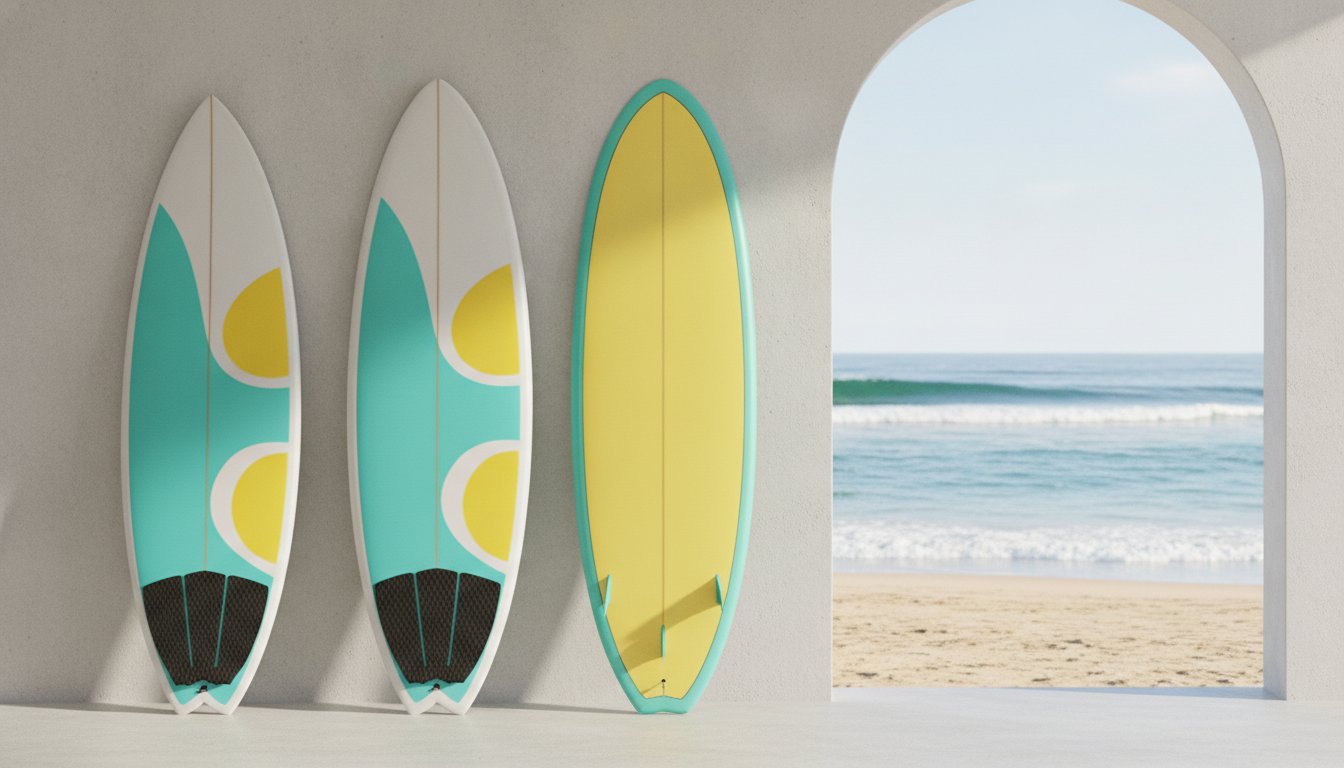
Rent a Surfboard for Vacation: A Practical Guide to P2P and Shop Options in 2026
June 21, 2026
Published by Life4Rent · Operated by Brohf Software OÜ
Why pay $150 in airline fees when you can rent a surfboard for vacation and save up to 75% on your total gear costs? Most surfers agree that shelling out extra cash just to risk a dinged rail isn't worth the trouble. It's a common frustration to drag a heavy board bag through a crowded terminal only to realize your favorite shortboard doesn't suit the local soft peaks.
I know how difficult it is to balance the need for high-quality gear with a realistic travel budget. You'll learn how to find the right board for your skill level while avoiding the hidden costs of transport. This information helps you secure a reliable board that matches the specific wave conditions at your destination.
Traditional surf shops and peer-to-peer marketplaces like Life4Rent offer different benefits for your trip. You can check the latest 2026 rental rates from Hawaii to Portugal and get local advice from people who surf these breaks every day. It's about making your trip simpler and more focused on the water than the logistics.
Why you should rent a surfboard for vacation instead of flying with one
Most surfers find that traveling with a board bag feels like a rite of passage until they see the baggage claim bill. Airlines in 2026 still treat surfboards as an inconvenience rather than standard gear. When you choose to rent a surfboard for vacation, you skip the physical strain of lugging a seven-foot coffin through the terminal. It's about arriving at the beach ready to paddle out instead of spending your first morning hunting for a repair shop to fix a shattered nose.
To see how easy it is to find gear at a popular destination, watch this helpful video:
The true cost of traveling with surfboards
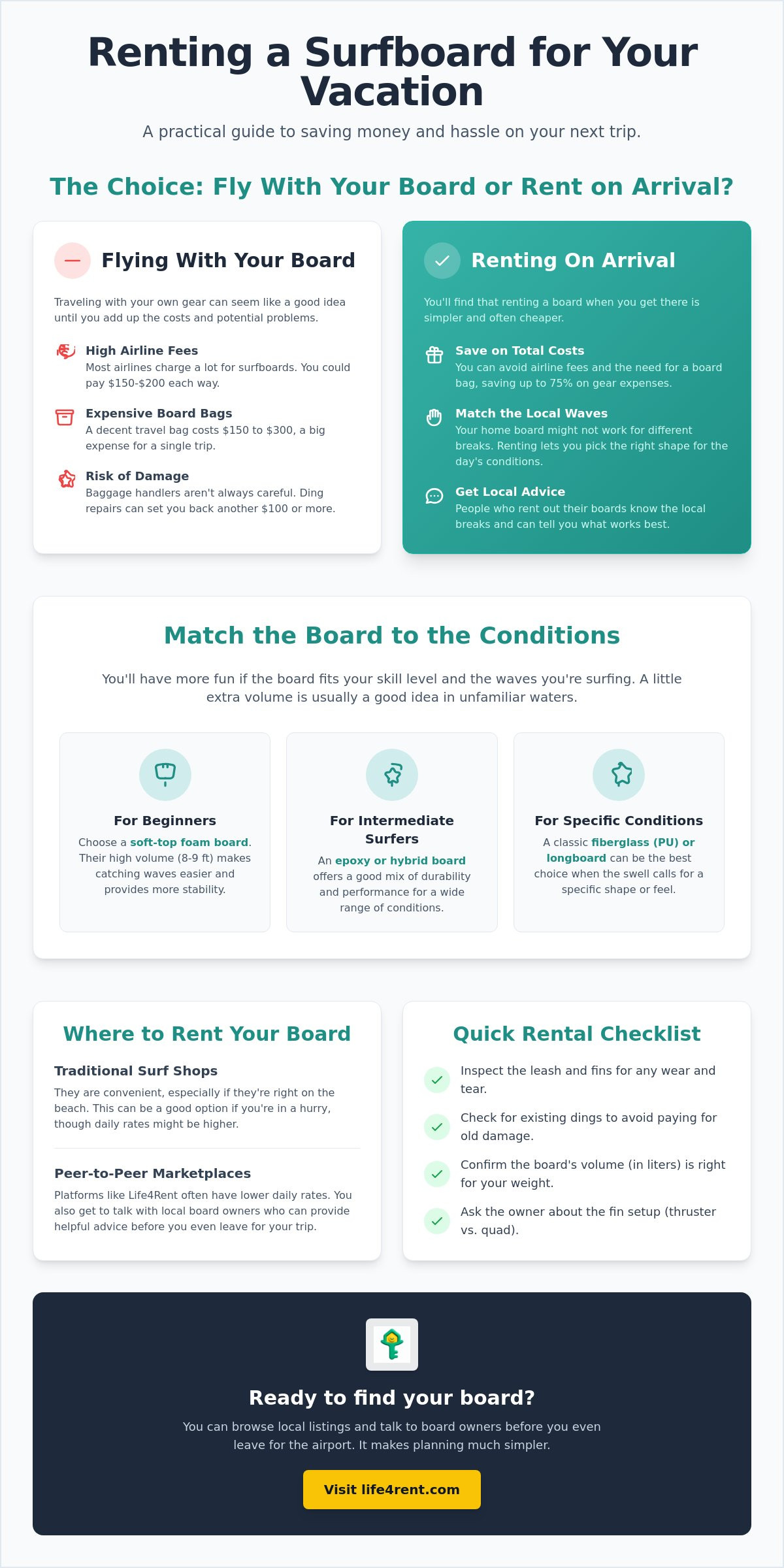
United Airlines charges $150 for domestic flights and $200 for international trips in 2026. JetBlue hits you with $100 per board. Even if you fly with Alaska Airlines for $30, you're still risking a fragile fiberglass investment. The decision to rent a surfboard for vacation often proves to be the more economical choice when you calculate the total logistics.
Don't forget the cost of a heavy-duty travel bag, which usually runs between $150 and $300. Baggage handlers aren't always gentle; a professional ding repair for a crushed rail can easily cost another $100.
Benefits of testing different shapes
Wave conditions change fast. A board that works at your local beach break might struggle with the long, peeling points of a foreign coast. This approach gives you the freedom to swap a performance thruster for a classic longboard if the swell drops.
You can explore the history of surfing by trying out different shapes like a twin-fin fish or a displacement hull. Local residents listing on Life4Rent know exactly what volume you need for the tide at their home break. A quick equipment swap helps you adapt to varying swell heights throughout the week.
Most rentals also include the basics like wax and leashes. You won't need to pack messy accessories or worry about your leash snapping in the middle of a session. It's a cleaner way to travel that leaves more room in your suitcase for things that actually matter. You can save up to 75% on total costs by utilizing local gear instead of shipping your own across the ocean.
Match the surfboard to your skill level and local conditions
The wrong board selection can make even the best waves feel unmanageable. You'll have more fun if you pick gear that complements the local break and your current fitness level. Most vacationers benefit from boards with extra volume to help with paddling in unfamiliar currents. When you rent a surfboard for vacation, you have the flexibility to adjust your equipment based on how the ocean behaves that day.
Beginner boards for a stress-free session
High-volume soft-tops are the best choice for anyone still mastering the pop-up. Boards between 8 and 9 feet provide the stability needed to stay upright on smaller, crumbling summer swells. These foam boards float better than traditional fiberglass, which means you'll catch more waves with less effort. Rubber fins reduce the risk of injury if you fall near the board during a wipeout. It's a practical safety feature that many experienced surfers still use when they're playing in crowded shorebreaks.
Intermediate and performance options
Intermediate surfers often prefer epoxy boards because they offer a middle ground between durability and performance. These boards are lighter than traditional fiberglass but can handle a few bumps without cracking. If you're looking for a specific feel on the wave, fiberglass (PU) boards provide the classic flex that experienced riders appreciate. Volume in liters is a metric you should verify with the owner to ensure the board can support your weight comfortably. You might want to browse local listings to see if a hybrid or "funship" shape is available for those mid-sized days.
Hybrid shapes offer versatile performance across different wave heights. Conversations with the owner about the fin setup can help you understand how the board will turn. A thruster setup (three fins) offers reliable control and stability for most conditions. Quad setups (four fins) generally provide more speed and hold in faster, steeper waves. Swell height usually dictates which shape you should pull from the rack. Longboards are the standard for knee-high days when you just want to cruise. Shortboards require more skill and usually need larger, more powerful wave sections to generate enough speed for maneuvers. Equipment changes help you adapt to varying conditions throughout your trip without the frustration of being under-gunned.
Traditional surf shops vs. peer-to-peer rental marketplaces
The choice between these two models depends on your schedule and how much you value variety. Local shops are usually right on the sand, which makes them perfect for a quick afternoon session. If you want to rent a surfboard for vacation for more than a few days, a peer-to-peer marketplace often provides a better return on your money. You can find gear that fits your specific needs rather than settling for whatever the shop has left on the rack.
Shops focus on high turnover and durable equipment that can survive hundreds of different users. This usually means you'll find a lot of standard foamies and plastic-molded boards. Peer-to-peer platforms allow you to access specialized gear from local shapers that most commercial shops wouldn't stock due to the high replacement cost. It's a way to ride a board with more character and better performance than a typical rental fleet.
When to choose a beachfront shop
Beachfront shops are the best choice for a spontaneous one-hour paddle. You don't need to worry about transporting a large board on the roof of a rental car. Most shops also offer immediate board swaps if you find that your first choice doesn't feel right on the water. It's a low-commitment way to get in the water if the waves suddenly look good while you're walking the boardwalk.
Staff at these locations can provide a quick safety briefing on local hazards. They'll point out hidden rocks or tell you about the local rip currents that might be dangerous for visitors. You can also rent a wetsuit as an add-on, which is a convenience that individual board owners might not offer. This makes shops a reliable one-stop solution for travelers who didn't pack any of their own gear.
The advantages of renting from a local resident
A rental from a resident gives you a connection to the local community. Owners often share insider tips on less crowded surf spots that you won't find in a guidebook. This personal touch is a core benefit of peer to peer equipment rental. You get to interact with someone who actually knows the rhythm of the local breaks.
Life4Rent daily rates are typically more competitive for long-term use. A weekly rental in Hawaii might cost $150 at a shop, but a peer-to-peer owner might offer a similar board for less if you book for seven days. This makes it easier to rent a surfboard for vacation without worrying about a mounting bill every time you stay in the water for an extra hour. Owners might even have extra roof racks or straps they can lend you to help move the board to different beaches.
Some of the best surf breaks are in remote areas where commercial shops don't exist. In these locations, the only way to get gear is to connect with a local surfer who has a spare board in their garage. It's a practical way to explore new coastlines while supporting the local community directly. You get to ride boards that were specifically designed for those exact waves, giving you a much more authentic experience on the water.
Practical tips for a smooth surfboard rental experience
A successful trip depends on more than just finding the right waves. You need to ensure the equipment stays in the same condition as when you picked it up. When you rent a surfboard for vacation, you are taking responsibility for a high-value item that requires specific care. Most disputes occur because of pre-existing damage that wasn't recorded at the start of the rental period. A few extra minutes spent during the hand-off can save you hundreds of dollars in repair fees. It's about being a responsible member of the surfing community while protecting your own travel budget. You'll find that owners appreciate this attention to detail.
The pre-rental inspection checklist
Perform a thorough check before you drive away with your gear to avoid unexpected repair bills. Discolored spots on the fiberglass often hide water damage. You should run your nail over these areas to see if they feel soft. Document the condition with these steps:
- Wiggle each fin gently to ensure the boxes are tight.
- Check the leash for small nicks or fraying near the swivel.
- Take photos of the deck and rails from all angles.
Transporting your rental safely
Safe board transport is a skill many travelers overlook. Most rental cars lack permanent roof racks, so you should ask the owner if they provide soft racks. Always place the surfboard on the roof with the fins facing up and toward the front of the car. This prevents wind lift at highway speeds. Avoid leaving the board in a hot car, as high temperatures can cause delamination and ruin the structural integrity.
Ask the owner about their specific policy for equipment damage before you finalize the booking. Most agreements hold the renter responsible for lost fins or snapped boards. A single fiberglass fin can cost $80 to replace, while a full snap might result in the loss of your entire deposit. You'll have more peace of mind if you clarify these details before you rent a surfboard for vacation. Confirm if a board bag or protective sock is included for transport. These accessories prevent wax from melting onto your car seats and protect the rails from minor bumps. If you're ready to secure your gear for an upcoming trip, find surfboards for rent on Life4Rent and start a conversation with a local owner today.
How Life4Rent makes surfboard rentals easier for your trip
You can plan your ocean sessions ahead of time to take the stress out of arrival day. Life4Rent functions as a bridge between travelers and local residents who have high-quality gear sitting in their garages. Browse local listings at your destination before you even board your flight. It's a more organized way to rent a surfboard for vacation than walking from shop to shop hoping they have your size in stock.
Direct communication with owners allows you to ask about specific board dimensions and volume. You don't have to guess if a board is right for your weight or skill level. Owners often provide clear photos and descriptions of the rocker and rail profile. This transparency helps you find a board that feels familiar even when you're thousands of miles from home.
Search by location and category
The platform lets you filter results to find boards within walking distance of your accommodation. This is helpful if you don't have a rental car or don't want to mess with roof racks. You should check user reviews to ensure the owner is reliable and the gear is in the described condition. Previous renters often leave details about how the board handled in local conditions.
You can also use the marketplace to find other vacation essentials that are bulky to pack. Look for beach umbrellas, snorkeling gear, or cameras to document your trip. If you're planning a sunset gathering, you might even find an audio equipment rental for a beach party. It's a practical way to get everything you need from one trusted source.
Protecting your rental
Safety and trust are built into the platform's structure. You should review the item protection terms to understand your coverage before the rental starts. The platform handles all payments, so you don't have to carry cash or worry about currency exchanges on the beach. If an issue arises during the hand-off, you can follow the official dispute resolution process.
This model is part of a growing community of travelers who prefer tool on rent models over buying new equipment for every project or trip. It's a logical choice that reduces waste and saves you money. You get access to 17 different categories of items, making it easy to rent a surfboard for vacation alongside anything else your trip requires. It's a straightforward way to enjoy premium equipment without the long-term commitment of ownership.
Plan Your Next Session with Confidence
Surfers who decide to rent a surfboard for vacation avoid the $150 baggage fees and the constant worry of transit damage. You now have the tools to pick the right board volume for local conditions and perform a proper safety inspection. It's much more efficient to arrive at the beach and have a board waiting that actually suits the day's swell. This approach lets you focus on the water rather than the logistics of heavy luggage.
Life4Rent makes this process straightforward by offering direct communication with local gear owners who know their home breaks. You can handle secure P2P payments through the platform and browse 17 different rental categories for all your travel needs. Whether you need a performance shortboard or a stable longboard, the right equipment is accessible without the high cost of ownership. Find your perfect surfboard for your next trip on Life4Rent and start planning your sessions today.
You'll enjoy the freedom of traveling light while still having access to high-quality equipment. The local community is ready to help you make the most of your time in the ocean. Catch more waves and leave the heavy lifting behind.
Frequently Asked Questions
How much does it typically cost to rent a surfboard for a week?
Weekly rates usually range between $100 and $160 in major destinations like Hawaii or San Diego. You can often find better value on peer-to-peer platforms for long-term bookings compared to daily shop rates. Prices in places like Costa Rica can be even lower, with five-day rentals starting around $80.
Do I need to bring my own wetsuit when renting a board?
Most surf shops provide wetsuits as a paid add-on, but individual owners on a marketplace might not have your specific size. It's a good idea to check the local water temperature and the listing details before you arrive. If you're sensitive to fit, you might prefer packing your own lightweight spring suit or rash guard.
What happens if I break the surfboard or lose a fin during my vacation?
Expect to pay for professional repairs or replacement parts if the gear is damaged while in your care. Most rental agreements and P2P platforms hold the renter responsible for dings, snaps, or lost fins. You should discuss these potential costs with the owner before you rent a surfboard for vacation to ensure you understand the financial risk.
Can I rent a surfboard if I am a complete beginner?
Beginners are welcome to rent equipment, and most providers have specific boards designed for learning. You'll have a better experience if you look for high-volume boards that offer more stability in the water. Many shops also offer a quick safety briefing to help you understand local etiquette and hazards.
Is it better to rent a foam board or a fiberglass board for my first time?
Foam boards are the standard for first-timers because they offer better floatation and safety. These boards are more stable than fiberglass, which makes it easier to practice your pop-up and balance. Fiberglass boards are much more fragile and can be dangerous for both the rider and others in a crowded lineup if you lose control.
Do rental boards come with a leash and wax?
Leashes and wax are typically provided with the board at no extra charge. You should always inspect the leash for any small nicks or signs of wear before you paddle out. If you rent a surfboard for vacation from a private owner, confirm these accessories are included so you don't have to visit a shop for small items.
How do I transport a 9-foot longboard on a small rental car?
Soft roof racks are the best way to move a longboard on a vehicle without a permanent rack. You'll place the board fins-up and forward-facing to keep it stable against the wind during the drive. These racks are easy to install by looping the straps through the car doors, providing a secure base for almost any board size.
Is it safe to rent a surfboard from a stranger on a P2P marketplace?
Secure payment systems and user reviews make peer-to-peer rentals a reliable choice for travelers. You can read feedback from previous users to verify the owner's responsiveness and the quality of their equipment. This transparency builds a community of trust and allows you to access specialized gear that shops might not carry.
Related guides on Life4Rent
Ready to rent instead of buy? See all sports equipment available to rent on Life4Rent →
Life4Rent
Rent it. Earn from it. Own less, access more.
Browse peer-to-peer rentals near you, or list what you own and start earning — all protected by Life4Rent Protect.
About the author
Amsterdam, Netherlands
Joshua writes about the financial side of renting and earning on Life4Rent. His guides focus on helping people understand the real cost of ownership, calculate rental income potential, and make smarter decisions about buying versus renting. He previously wrote on household economics and personal budgeting for a pan-European finance publication.