Neighbor to Neighbor Rentals: Sharing Economy Guide
August 1, 2026
Published by Life4Rent · Operated by Brohf Software OÜ
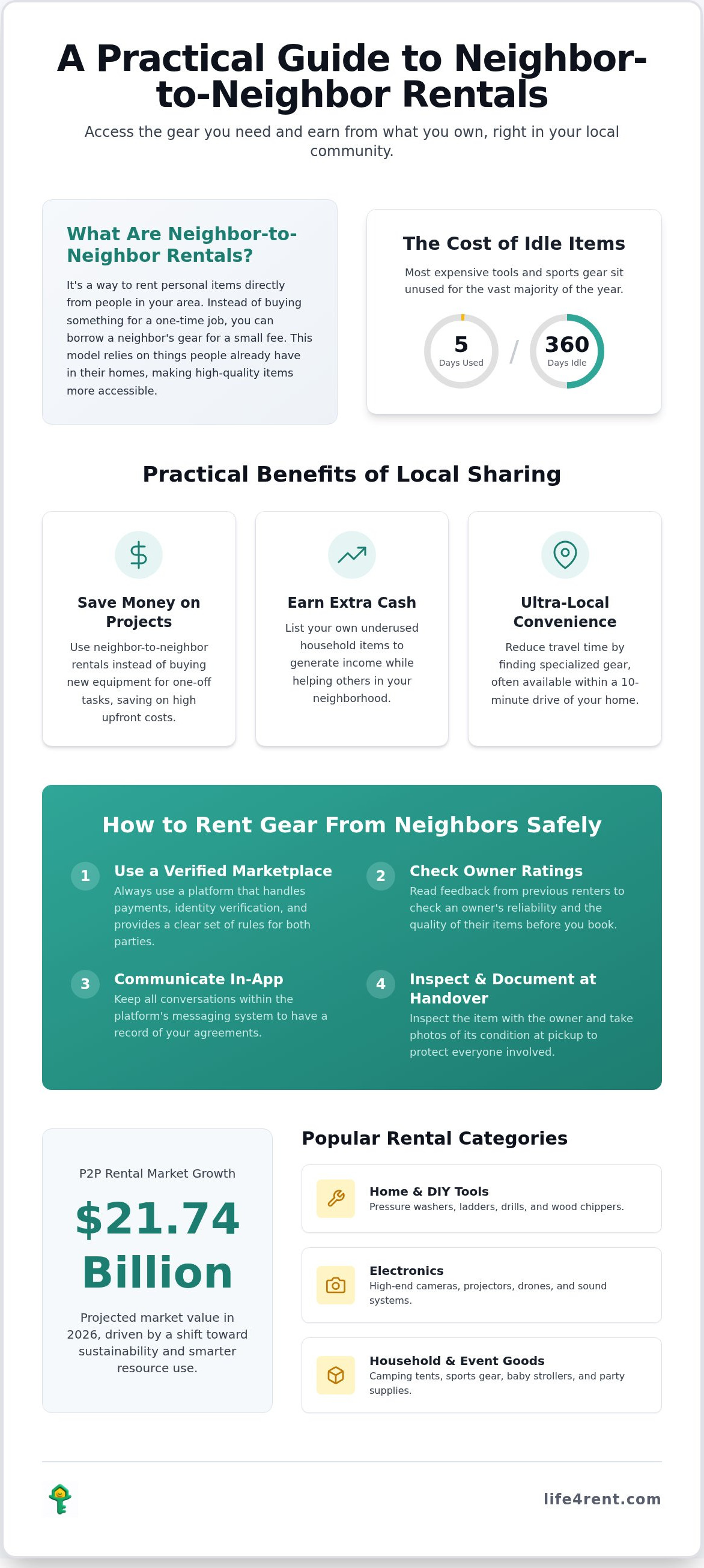
In 2026, your neighbor's garage is often a better resource than the local hardware store. Most of us own at least one expensive tool or piece of sports gear that sits idle for 360 days a year. You've likely felt the sting of buying a bulky item for a one-time job, only to realize neighbor to neighbor rentals would have cost a fraction of the price. It's a common problem, but there's a straightforward way to keep your money and your storage space.
You can access the exact gear you need by connecting with people living within a 10-minute drive of your home. It's a practical way to save money on DIY projects or try out a new hobby without the heavy upfront cost. You'll also see how to list your own underused items to earn some extra cash from things you already own. The Life4Rent marketplace makes it easy to find local listings and manage your first booking with confidence.
What exactly are neighbor to neighbor rentals?
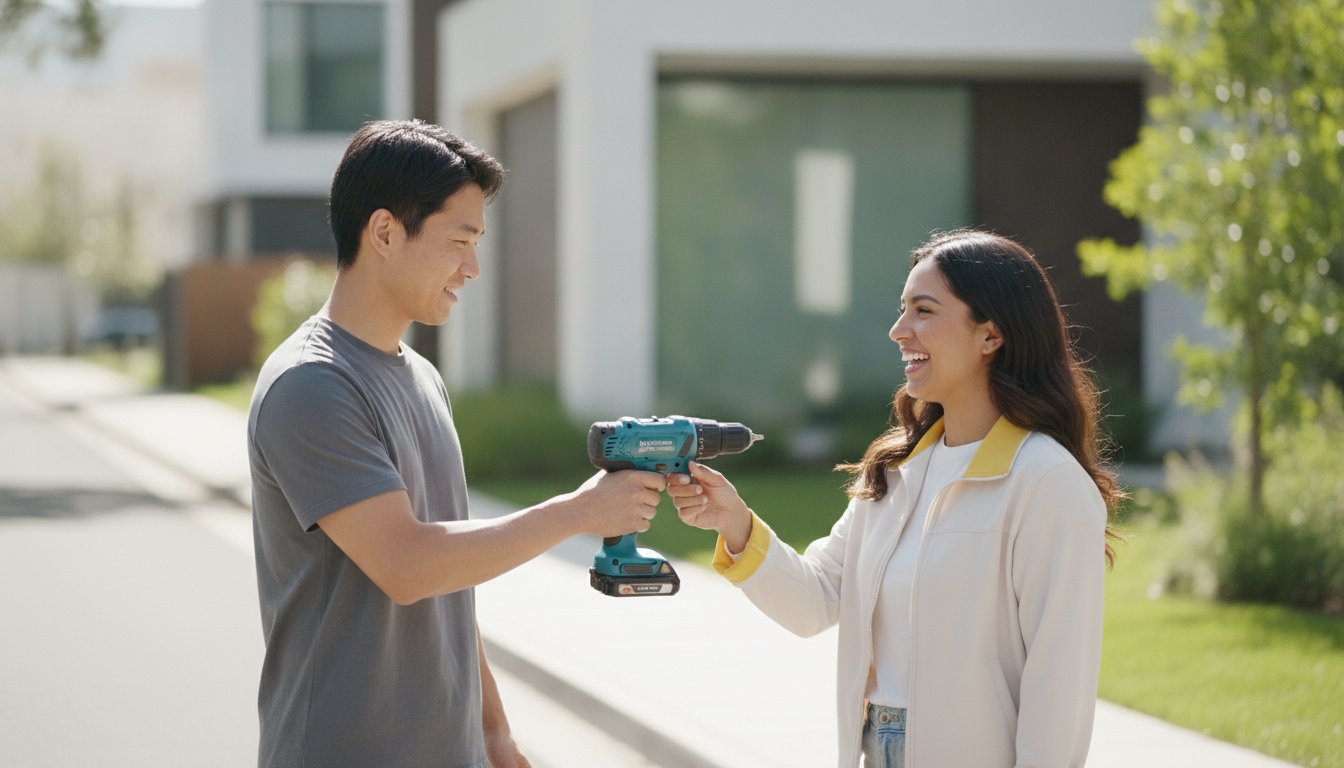
Neighbor to neighbor rentals are a practical way for individuals to list their personal items for others in the community to use for a fee. Unlike traditional rental shops that buy stock specifically to lease it out, this model relies on things people already have in their homes. You might find a pressure washer three houses down or a camping tent just across the street. This is a core part of the modern sharing economy, where access to high-quality gear is more important than owning it yourself.
Security is a major factor that separates professional platforms from casual social media posts. Informal handshakes with strangers can be risky for both parties involved. Modern platforms like Life4Rent provide a layer of protection that old-school community boards lacked. Life4Rent handles the payment processing and identity verification, which makes neighbor to neighbor rentals as reliable as a standard business transaction while keeping the local feel.
The difference between rent assistance and item rentals
Confusion often arises when you search for this topic online. Some charitable organizations use similar names to provide financial aid for apartment rent to families in need. These programs are vital for housing stability, but they don't help you find a drill for your weekend project. If you're looking for physical gear, you need a peer to peer equipment rental marketplace. One provides social support for housing; the other provides physical tools and equipment for specific tasks.
How the sharing economy has changed since 2021
The way we view our belongings has shifted significantly over the last few years. Since 2021, many people have started to treat their household items as assets that can generate income. The peer-to-peer rental market has grown steadily, and it's projected to reach a value of 21.74 billion USD in 2026. This growth isn't just about money. It's about a cultural shift toward sustainability and smarter resource use across Europe and beyond.
Technology is the main driver behind this change. You can now track the availability of a ladder or a baby stroller in real-time using a mobile app. Trust is no longer a blind guess because verified reviews and transparent profiles show you exactly who you're dealing with. This data-driven approach ensures that high-quality items stay in circulation rather than gathering dust in a garage for 360 days a year.
How you can rent gear from neighbors safely
Safety is usually the first thing people ask about when they consider neighbor to neighbor rentals. You aren't walking into a retail store with a corporate return policy; you're walking onto a neighbor's driveway. This is why you should always use a verified marketplace like Life4Rent to facilitate the process. It's the most reliable way to see what's available nearby while ensuring both parties follow a set of established rules.
You'll want to check the owner's rating before you send a booking request for neighbor to neighbor rentals. Reliability is just as important as the rental price. Previous renters leave feedback that tells you if the equipment was well-maintained and if the owner was easy to deal with. If an owner has a history of late responses or poor-quality items, it's better to look for another listing in your area.
The role of the rental marketplace
A professional marketplace takes the guesswork out of the transaction. These platforms handle the payment through an escrow system so you don't have to carry cash to a stranger's house. You'll find that neiyborly sharing works best when there's a neutral third party to manage the financial side. The platform typically takes a 10% commission to cover these security features and digital claims processes.
You should keep your chats within the app to ensure that all agreements about pickup times or item condition are documented. It's a simple step that provides peace of mind for everyone involved. If you want to see how this works in your area, you can explore the peer-to-peer marketplace to find your first rental.
Best practices for a smooth handover
The physical handover is the moment where most misunderstandings can be avoided. You should inspect the item together with the owner before you leave. Take a few clear photos of the equipment from different angles when you pick it up. These photos serve as proof of the item's condition at the start of your rental period, protecting both you and the owner.
Ask for a quick demonstration if you're renting something complex like a wood chipper or a high-end camera. Most owners are happy to show you the quirks of their gear to ensure it's used correctly. Finally, you must agree on a specific return time that respects the owner's schedule. Clear boundaries help build a strong community where everyone feels comfortable sharing their belongings.
The practical benefits of local peer-to-peer sharing
Local rentals are often more affordable because individual owners don't have the massive overhead costs of a traditional retail store. You aren't paying for a storefront, a large staff, or expensive marketing campaigns. This means the price you see for neighbor to neighbor rentals is usually much closer to the actual value of using the item for a day. Most people only need a specific piece of equipment for a single project, and paying a small fee to a neighbor is the most logical choice.
You'll save a significant amount of time by picking up gear within your own zip code. National chains are often located in industrial parks on the edge of town, which can turn a simple rental into a two-hour round trip. When you find a tool on rent just a 10-minute drive away, you can get back to your work almost immediately. This convenience is a major reason why community-based sharing has become so popular in urban areas across Europe.
Sustainability is another core advantage of this model. Our current economic system often encourages buying new items that we rarely use, which leads to unnecessary manufacturing and waste. When a community shares a single high-quality ladder or pressure washer, it reduces the total number of products that need to be made. This approach keeps high-quality items in circulation and ensures that resources are used as efficiently as possible.
Financial savings for the renter
You can skip the high deposit fees that national rental chains often require. These companies frequently hold hundreds of euros on your credit card for days, which can be a real burden if you're managing a tight project budget. Neighbor to neighbor rentals typically involve much lower security requirements because the platform already verifies the users. You get access to professional-grade tools for a fraction of the retail price without any of the long-term maintenance headaches.
Owners of expensive equipment have to deal with storage, cleaning, and occasional repairs. As a renter, you avoid all these hidden costs. You simply use the item for the duration you need and return it to the owner when you're finished. This allows you to tackle complex DIY tasks with the right gear without turning your own home into a cluttered warehouse.
Income opportunities for the owner
Your garage can function as a small business without the need for a physical storefront or a commercial lease. You have the total freedom to set your own prices based on what you think is fair and the current local demand. Many owners find that their underused household items can generate a steady stream of passive income. This extra cash is perfect for covering small household expenses or even funding the purchase of your next piece of high-end gear.
Owners use the Life4Rent platform to reach a wide audience of local renters without having to do any personal advertising. The system handles the logistics, so you can focus on keeping your equipment in good condition. It's a low-effort way to monetize things that would otherwise gather dust in a basement. You help your community while making your own household more financially resilient.
Popular categories for neighborhood rental listings
You'll find that the inventory in your local area is surprisingly diverse once you start looking. Most searches for neighbor to neighbor rentals begin with basic home maintenance needs. High-demand items usually include power drills, circular saws, and tall ladders that people don't want to store permanently in their own homes. These tools are often the most practical starting point for new users because they solve immediate, one-off problems.
Electronics are another major segment where renting makes more sense than buying. You might need a digital projector for a single outdoor movie night or a high-end camera for a specific family event. Gaming consoles also see high turnover, allowing people to try the latest hardware without committing to a full purchase. These items represent a high initial investment, so sharing them within the community lowers the financial barrier for everyone.
Outdoor and sports equipment often sit unused for most of the year. Kayaks, large camping tents, and roof racks take up significant space in a garage or basement. You can rent these bulky items for a weekend trip instead of letting them collect dust. It's an efficient way to enjoy specialized hobbies without the burden of long-term storage or the cost of yearly maintenance.
Baby gear is a category that many people overlook until they have family visiting. Travel cribs, high chairs, and car seats are essential for guests with young children, but they aren't worth buying for a three-day visit. You can find these essentials just a few streets away, which is much easier than trying to transport your own gear across the country. This local availability makes hosting much less stressful for everyone involved.
Specialized equipment you might not expect
Sometimes your project requires something very specific that you won't find at a standard shop. You might search for a mudmixer to handle a weekend patio installation with professional results. Backyard events often benefit from professional audio equipment to ensure the sound quality matches the occasion. Even short-term medical aids like wheelchairs or crutches are frequently available from neighbors who no longer need them after their own recovery.
Why 17 categories matter
The variety of listings across 17 different categories ensures that you can find a solution for almost any household problem. This breadth encourages you to check the marketplace first, whether you're working in the garden, the kitchen, or the home office. It's particularly helpful when you're planning a complex event that requires gear from multiple different areas of life. You can browse the full list of categories to see what your neighbors are currently offering.
How the Life4Rent platform supports your local sharing
Life4Rent provides the structure needed for neighbor to neighbor rentals to work effectively across your community. It organizes thousands of local listings into a system that is easy to navigate, so you don't have to scroll through unverified social media groups. The platform focuses on making the process simple for both parties while maintaining a high standard of trust through verified user profiles. Since its global launch in January 2026, it has become a reliable bridge between people who have gear and those who need it for a specific task.
Trust is built into the system through secure messaging and the "Life4Rent Protect" feature, which includes escrow payments and damage protection. You can monetize your belongings with the confidence that the transaction is handled professionally. It's a practical way to support your local community while ensuring your own items are treated with respect. The platform was founded in 2021 and has evolved into a secure marketplace for daily essentials across 17 different categories.
Your first steps as a renter
You should start by creating a profile and completing the identity verification process. This step is necessary before you can send requests to other users for neighbor to neighbor rentals. You can use the search filters to find specific models or brands that suit your project. Once you find the right item, you pay securely through the app and coordinate the pickup details directly with the owner.
The process to list your first item
You'll need to write a clear description and take several high-quality photos to attract potential renters. It's a good idea to look at similar listings in your area to set a competitive daily or weekly rate. Owners keep 100% of their booking revenue, as the platform takes a 10% commission to cover security and operational costs. You should respond quickly to any inquiries to build a strong reputation and become a top-rated owner in your neighborhood.
Build a more resourceful neighborhood today
You've seen how easy it is to find the right gear without the high cost of buying new equipment. Peer-to-peer sharing makes sense because it keeps high-quality items in use and saves you from cluttered storage spaces. Whether you need a specialized tool for a weekend or want to earn extra cash from your own garage, neighbor to neighbor rentals provide a practical solution for everyone involved.
The marketplace has grown since 2021 to offer a secure way to manage these transactions across 17 different categories. You can trust the system because it relies on verified profiles and a secure payment process. It's a simple way to help your neighbors while making your own household more efficient. You can start renting or listing your items on Life4Rent today to see what’s available in your area. You'll likely find that the gear you need is already waiting just a few streets away.
Frequently Asked Questions
What is the difference between Neighbor to Neighbor and a rental marketplace?
Neighbor to neighbor rentals describe the community-sharing model, while a marketplace like Life4Rent is the tool that makes it work safely. You can think of the marketplace as the digital infrastructure that handles ID checks and payments. It turns a casual favor between strangers into a professional transaction with clear rules. This system provides a layer of security that informal agreements simply can't offer.
Is it safe to rent my expensive electronics to a neighbor?
It's much safer to rent electronics through a platform than through local classified ads. Life4Rent uses identity verification and secure escrow payments to protect your high-value items. You should always check a renter's previous reviews and ratings before you accept a booking. This community-driven feedback system ensures that your gear is handled by responsible neighbors who have a proven track record.
Do I need special insurance to rent out my tools?
You don't usually need a separate commercial insurance policy for casual sharing, but you should review your existing homeowner's insurance. Many marketplaces include their own protection plans to cover accidental damage during the rental period. Life4Rent offers damage protection and escrow systems to minimize your financial risk. It's a good idea to document the item's condition with photos before every handover.
What happens if a renter returns an item late?
You should first contact the renter through the platform's messaging system to see if there's a simple misunderstanding. Most rental platforms have clear policies regarding late fees to compensate owners for the extra time. If the delay continues, you can involve the support team to resolve the issue formally. You should keep all communication within the app to ensure you have a reliable record of the agreement.
How do I price my items for a neighbor to neighbor rental?
You should look at what professional rental shops charge and set your price significantly lower to attract local interest. A daily rate between 1% and 5% of the item's retail value is a common starting point for neighbor to neighbor rentals. The platform takes a 10% commission from the total booking to cover security and payment processing. You can adjust your rates based on the age and condition of your specific gear.
Can I rent out my car or home on Life4Rent?
You can list your home for rent on Life4Rent as it is one of the 17 specific categories available on the platform. The marketplace also covers items like baby gear, electronics, and tools. You should check the current category list on the website to see if vehicle listings are supported in your specific region. Each category has its own set of safety guidelines to follow.
What should I do if an item breaks during the rental period?
You must document the damage immediately and report it through the platform's claim system. It's helpful to have "before" photos from the handover to prove when the damage occurred. The escrow payment system helps ensure that funds are available for repairs if the renter is at fault. Most issues are resolved quickly when both parties have clear records of the item's condition.
How do I find the best deals on rentals in my specific neighborhood?
You can find the best value by using the map view and distance filters to search for items within a five-mile radius. Owners who are just starting out often set lower prices to build their initial rating and reputation. You should also check for bundle listings where an owner offers multiple related tools for a single rate. This strategy often saves you more money than if you rent items individually.
Life4Rent
Rent it. Earn from it. Own less, access more.
Browse peer-to-peer rentals near you, or list what you own and start earning — all protected by Life4Rent Protect.
About the author
Amsterdam, Netherlands
Joshua writes about the financial side of renting and earning on Life4Rent. His guides focus on helping people understand the real cost of ownership, calculate rental income potential, and make smarter decisions about buying versus renting. He previously wrote on household economics and personal budgeting for a pan-European finance publication.