
Local Item Rental App: A Practical Guide to P2P Sharing in 2026
Philip Edward
September 11, 2026
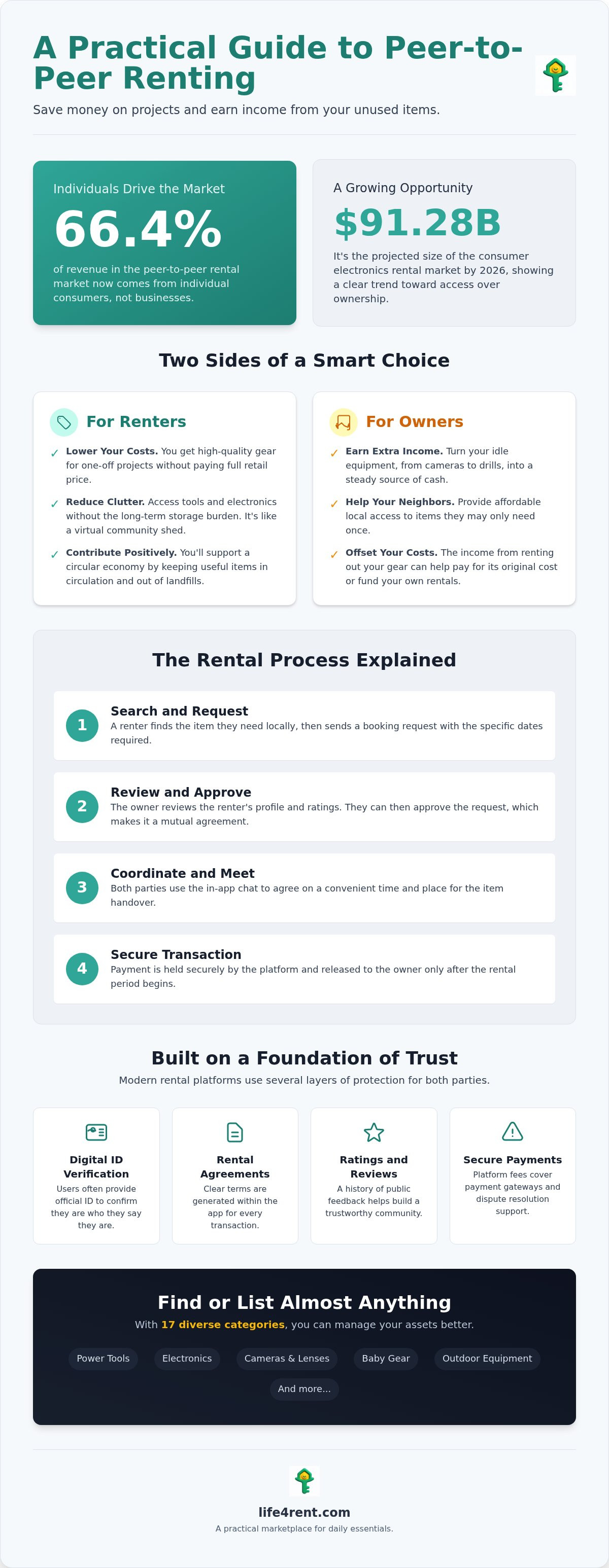
Individual consumers now account for 66.4% of the revenue in the peer-to-peer rental market. This shift shows that more people prefer temporary access over the heavy cost of ownership. You might have a high-end camera or a power drill sitting in a drawer right now. It's possible to rent out electronics for cash using local platforms that connect you with neighbors who need those specific items for a weekend project.
It's frustrating to pay full price for a tool you'll only use once, especially when prices for quality gear continue to rise. Many owners also worry about the safety of their equipment when letting a stranger use it. These concerns are normal, but modern rental apps have built-in systems to help manage these risks effectively.
You'll learn how to use the Life4Rent marketplace to find daily essentials or turn your own idle gear into a steady stream of income. Detailed steps on selecting a reliable app and setting realistic prices help ensure the experience is worth the effort. The 17 different categories available offer plenty of options for both owners and renters to manage their assets better in today's economy.
Why a local item rental app makes sense for your budget
Ownership is expensive when you only use an item once or twice a year. A heavy-duty ladder or a high-end camera lens often collects dust for most of the year while losing its market value. Peer-to-peer marketplaces allow you to bypass these high upfront costs while still getting the job done. You get the benefit of the item without the long-term financial commitment or maintenance costs.
Storage is another hidden cost people often forget. Large tools and specialized electronics take up space that could be used for something else. A rental app acts like a virtual shed, giving you access to everything you need without the clutter. You don't have to worry about where to keep a bulky carpet cleaner once the weekend chore is finished.
Corporate rental stores carry high overhead costs like storefronts, insurance, and large staff teams. These expenses are passed on to you through inflated daily rates and strict return windows. Traditional companies often require large deposits that tie up your funds for days. Local owners on the peer-to-peer sharing economy don't have these burdens, which leads to more flexible pricing and convenient pickup locations right in your neighborhood.
You can also flip the script and become a provider. The consumer electronics rental market is expected to reach $91.28 billion in 2026, and individual consumers now account for 66.4% of that revenue. It's a practical way to rent out electronics for cash without needing a dedicated business license. This turns your storage space into a source of income while helping a neighbor save money. If you have high-quality gear, you can rent out electronics for cash to cover your own costs when you need to rent something else.
Save money on one-time household projects
A professional-grade saw for a single deck repair isn't a wise financial move. You'll spend a lot on a tool that occupies valuable shelf space for years. A quick search for a tool on rent through a local neighbor is much more efficient. You get the specific gear you need, finish the DIY task, and return it without any long-term storage worries.
The environmental impact of sharing over buying
The manufacture and shipping of new products requires vast amounts of energy and raw materials. Every time you rent instead of buy, you reduce the demand for new production. This community-based approach keeps functional items in use longer and prevents them from ending up in landfills prematurely. You contribute to a circular economy by maximizing the lifespan of the electronics and tools already in your community.
How the peer-to-peer sharing economy works today
P2P platforms have moved far beyond simple classified ads. Today, sophisticated software handles the heavy lifting of trust and logistics. Research into the economic impact of P2P rental markets shows that these systems create value by reducing the risks associated with lending to strangers. Unlike traditional retail or financing models, these platforms focus on the direct exchange of value between two individuals in a community.
Digital verification is the backbone of this system. Users must often provide government-issued identification before they can list an item or make a request. This layer of security ensures that everyone on the platform is who they say they are. Rental agreements are then generated automatically within the app, which provides clear terms for both parties regarding duration and care.
The mechanics of a typical rental transaction
The process usually begins when a renter searches for a specific item in their local area. They can filter results by distance, price, or category. Once they find the right piece of gear, they send a booking request that includes the desired dates. Owners then review the request alongside the renter's profile and previous ratings.
Approval is never automatic; it's a mutual choice. Both parties use the in-app chat to coordinate a meeting spot for the handover. Payments are held securely by the platform and only released once the rental period begins or ends, depending on the specific agreement. This protects the owner's income and the renter's money until the item is actually in hand.
Trust and verification in local communities
Platform fees are a necessary part of this ecosystem. These small charges pay for the secure payment gateways, ID checks, and the customer support teams that help resolve disputes. You can rent out electronics for cash with more confidence when you know there's a neutral third party overseeing the transaction. It's much safer than meeting a stranger from a social media group with no record of their past behavior.
Honest communication remains the most important factor in a successful peer to peer equipment rental community. Reviews allow the best owners to stand out and help renters find gear that is well-maintained. If you have high-end items, you'll find that you can rent out electronics for cash more easily as your positive rating grows. You might start by exploring the marketplace to see how other local owners present their listings.
Common categories to explore on rental platforms
Life4Rent organizes its marketplace into 17 distinct categories to help you navigate thousands of items. This structure makes it easy to find specific gear without scrolling through irrelevant listings. You'll find everything from basic home repairs to specialized hobby equipment in one place.
Tools and construction gear consistently rank as the most requested items. Most people don't want to store a large piece of machinery that they only use once every few years. Owners of these items benefit from high demand and can earn back the purchase price of their gear relatively quickly.
DIY tools and home improvement equipment
Homeowners often list mudmixer units for local masonry work or small backyard projects. These portable mixers are a prime example of specialty gear that is too expensive to buy for a single weekend job. You can also find standard essentials like drills, saws, and ladders that are necessary for most home renovations.
Local tool rentals are more efficient than driving to a large industrial rental yard. Neighbors often provide helpful tips on how to use the specific quirks of their machines. This personal touch helps you finish your project faster and with fewer mistakes.
Electronics and specialized hobby gear
High-end electronics offer some of the best earning potential on the platform. If you have a professional camera or a drone, you can rent out electronics for cash during your downtime. Many photographers use this method to fund their next lens purchase or upgrade their camera body.
Professional audio equipment rental is also a popular choice for local events like weddings or neighborhood parties. You don't need to be a professional sound engineer to list your speakers or mixers. Even gaming consoles and high-definition projectors are in high demand for weekend entertainment or family gatherings.
You can also rent out electronics for cash by listing older devices that are still in good working order. A tablet or a laptop might be exactly what a student needs for a short-term project. This variety ensures that almost any functional electronic device has a place in the sharing economy.
Families often look for baby products and outdoor equipment to solve temporary needs. Items like travel cribs, car seats, or camping tents are bulky and expensive to buy new. The use of rental apps for these daily essentials allows families to travel lighter and save money on items their children will soon outgrow.
Practical steps to rent out electronics for cash
Success as a lender depends on how professional your listings appear to your neighbors. You need to present your gear as a reliable solution to their problems rather than just another piece of clutter. High-quality photos are the first thing a potential renter sees, so use a clean background and natural light. Multiple angles help the renter understand exactly what they're getting before they send a request.
Honesty builds a better reputation and prevents disputes later. You should mention any scratches, missing original packaging, or specific battery life quirks in the description. Clear communication about the item's condition ensures that the person who wants to rent out electronics for cash from you knows what to expect. This transparency leads to better reviews, which makes your profile more attractive for future bookings.
You can rent out electronics for cash with more confidence when your listing is accurate and professional. Accurate descriptions also save you time because you won't have to answer the same basic questions repeatedly. It's better to be upfront about a small defect than to have a renter discover it during the handover.
Price your items for maximum interest
You need to find a balance between earning a profit and being affordable for your community. Market research is essential here. Spend some time looking at similar listings in your local area to understand the going rate. A high retail price doesn't always mean you can charge a premium daily rate if there are many similar items available nearby.
- Daily rates should reflect the item's current age and condition rather than its original cost.
- Multi-day discounts are a great way to encourage longer bookings and reduce the number of handovers you manage.
- Weekend rates can sometimes be slightly higher if you notice a spike in demand for specific tools or event gear.
Manage handovers and item inspections
Handover meetings are a critical moment for building trust. You should always meet in a well-lit, public place if you aren't comfortable with a home pickup. Both parties need to inspect the item together at the start of the rental to confirm it works as described. This simple step protects you and the renter from misunderstandings about the condition of the gear when it's returned.
You should take a quick photo of the item during the exchange to document its state in real-time. It's also helpful to give a brief demonstration of how to operate the equipment, especially for complex electronics or power tools. Clear instructions prevent accidental damage caused by improper use. If you're ready to start earning, you can list your first item on Life4Rent today and turn your idle gear into a productive asset.
Life4Rent: A practical marketplace for daily essentials
Life4Rent provides a secure environment where neighbors can trade value without the interference of large corporations. It was founded in 2021 to bridge the gap between people who have idle gear and those who need it for a short time. The platform focuses on 17 specific categories to keep the marketplace organized and easy to use. This variety means you can find anything from baby gear to specialized masonry tools in your own neighborhood.
Fees are only charged when a rental agreement is successfully completed. This simple structure ensures that the majority of the money stays with the users. If any issues arise during a transaction, community support is available to help resolve the situation fairly. You can rent out electronics for cash with the knowledge that the platform is designed to protect both the owner and the renter.
How to get started as a renter or owner
You can set up a profile and start browsing local listings in just a few minutes. The process is straightforward and doesn't require any technical expertise. If you want to list an item, the app guides you through every step to ensure your post is effective. This neiybor approach makes sharing easy and accessible for everyone in the community.
Owners find that they can rent out electronics for cash quite quickly if they provide clear photos and fair prices. You don't need a massive inventory to see results. Even a single high-quality tool or a rarely used gaming console can start generating passive income once it's listed.
The future of local sharing and community rentals
Peer-to-peer apps are fundamentally changing the way we think about owning things. Many people realize that they don't need to own every piece of equipment they use. Local resource pools make high-quality gear accessible to more people without the burden of high purchase prices. This shift creates a more efficient community where assets are used to their full potential instead of sitting idle.
Life4Rent offers the tools needed to build this new kind of local economy. It's a practical solution for modern living where space and budgets are often tight. You can contribute to a more sustainable world by choosing to share what you already have. The platform will continue to grow as more people discover the benefits of access over ownership.
Start your peer-to-peer sharing journey
Peer-to-peer sharing is a practical way to handle the rising costs of quality gear in 2026. You can find high-end tools or daily essentials within your neighborhood while avoiding the steep prices of new retail items. If you have devices that are currently sitting idle, you can rent out electronics for cash to create a reliable stream of extra income. This approach helps you clear out clutter and ensures your items are used to their full potential.
Life4Rent has provided a secure peer-to-peer environment since its founding in 2021. With 17 diverse categories, the platform makes it easy to find exactly what you need or list what you own. You'll join a community that values efficiency and local trust over corporate overhead. The digital verification systems and clear agreements mean you don't have to worry about the safety of your gear.
Browse local listings and start saving on Life4Rent today. It's a simple change that makes your household budget more resilient and helps your community thrive. You'll find that access to the right tools is often much more valuable than just owning them.
Frequently Asked Questions
Is it safe to rent out my electronics to strangers on a local app?
Verification systems and user reviews provide a high level of security for owners. Life4Rent creates a secure peer-to-peer environment where every participant's history is visible to others. You can chat with potential renters before you agree to any handover. This direct communication helps you gauge their reliability and discuss specific care instructions for your high-end gear. ID checks further reduce the risk of fraudulent activity on the platform.
How much does it cost to use a peer-to-peer rental app?
You can list your items for free on these platforms. Life4Rent generates revenue by taking a small percentage fee only when a rental agreement is successfully completed. This means you don't have to pay anything upfront to start your side business. You only share a portion of the earnings once the transaction is finalized. It's a low-risk way to test the market for your idle household assets.
What happens if an item gets damaged during a rental?
Clear rental agreements facilitated by the app help manage these situations. You should always conduct a thorough inspection with the renter during the handover process. Take photos of the item's condition at the start and end of the period. If damage occurs, the platform's support team is available to help mediate the dispute. Most issues are resolved quickly through honest communication and the evidence provided during the initial exchange.
Do I need special insurance to list my tools or electronics?
Platform verification provides a layer of trust, but you should verify your existing coverage. Some home insurance policies don't cover commercial activity or items used by third parties. You don't necessarily need a separate commercial license, but it's smart to check the specific terms of your provider. Many owners choose to set rental prices that account for the wear and tear of regular use in a local sharing community.
How do I set a fair price to rent out electronics for cash?
Research is the best way to determine the right rate to rent out electronics for cash in your neighborhood. You should look at similar listings for items of the same age and condition. High-end gear often commands a higher price, but you must stay competitive with local rental stores. Discounts for longer periods can help you secure more bookings. This strategy keeps your items active and maximizes your total monthly earnings.
Can I rent items for a business or only for personal use?
Users can list or rent items for both personal projects and professional tasks. While many people use the app for DIY home repairs, there is a growing demand for business-to-business rentals. Companies often need specialized equipment for short-term projects or events. Life4Rent supports 17 categories that cover everything from heavy construction tools to office electronics. This flexibility makes the marketplace useful for a wide range of local community members.
How do payments work on a local rental app?
Payments are handled through a secure digital gateway within the application. The system collects the funds from the renter when the booking is confirmed. These funds are held safely and only released to the owner after the rental period starts or concludes. This method protects you and ensures that the money is ready before the item changes hands. You don't have to deal with cash or awkward payment reminders in person.
What categories of items are most popular for renting?
Tools, consumer electronics, and baby gear are consistently the top performers in the sharing economy. Items that are expensive to buy but used infrequently have the highest demand. Power tools for home renovations and high-end cameras for special events are particularly popular choices. Families also frequently search for bulky baby products like travel cribs. These categories offer the most consistent opportunities to rent out electronics for cash or tools for profit.
Related guides on Life4Rent
Ready to rent instead of buy? See all electronics available to rent on Life4Rent →
Not sure how much your electronics could earn? Try the Electronics income calculator →
Life4Rent
Rent it. Earn from it. Own less, access more.
Browse peer-to-peer rentals near you, or list what you own and start earning — all protected by Life4Rent Protect.
About the author
Philip Edward
Tallinn, Estonia
Philip leads editorial at the Life4Rent Renting Academy, overseeing guides on peer-to-peer rental, platform safety, and consumer finance across 25 markets. He has spent over a decade covering the sharing economy and digital marketplaces, helping renters and owners navigate the shift from ownership to access.