
How to Make Money Renting Your Stuff: A Practical 2026 Guide
August 11, 2026
Published by Life4Rent · Operated by Brohf Software OÜ
The global market for peer-to-peer rental apps is estimated to reach $21.74 billion in 2026. Many households have hundreds of dollars in value sitting in a garage or closet collecting dust. You've probably wondered how to make money renting your stuff without the stress of managing a complex side hustle. It's a straightforward way to let your high-quality gear pay for itself while providing value to your local community.
It's natural to feel hesitant about letting a stranger borrow your expensive camera or power tools. You want to be certain your items return in good condition, and you shouldn't have to deal with a difficult listing process. This guide shows you how to use Life4Rent to turn those idle household goods into a steady income stream where you keep 100% of every booking. We cover which of the 17 categories are currently in highest demand, how to price your items for quick bookings, and how Life4Rent Protect handles the security of your property.
Why your idle gear is a missed financial opportunity
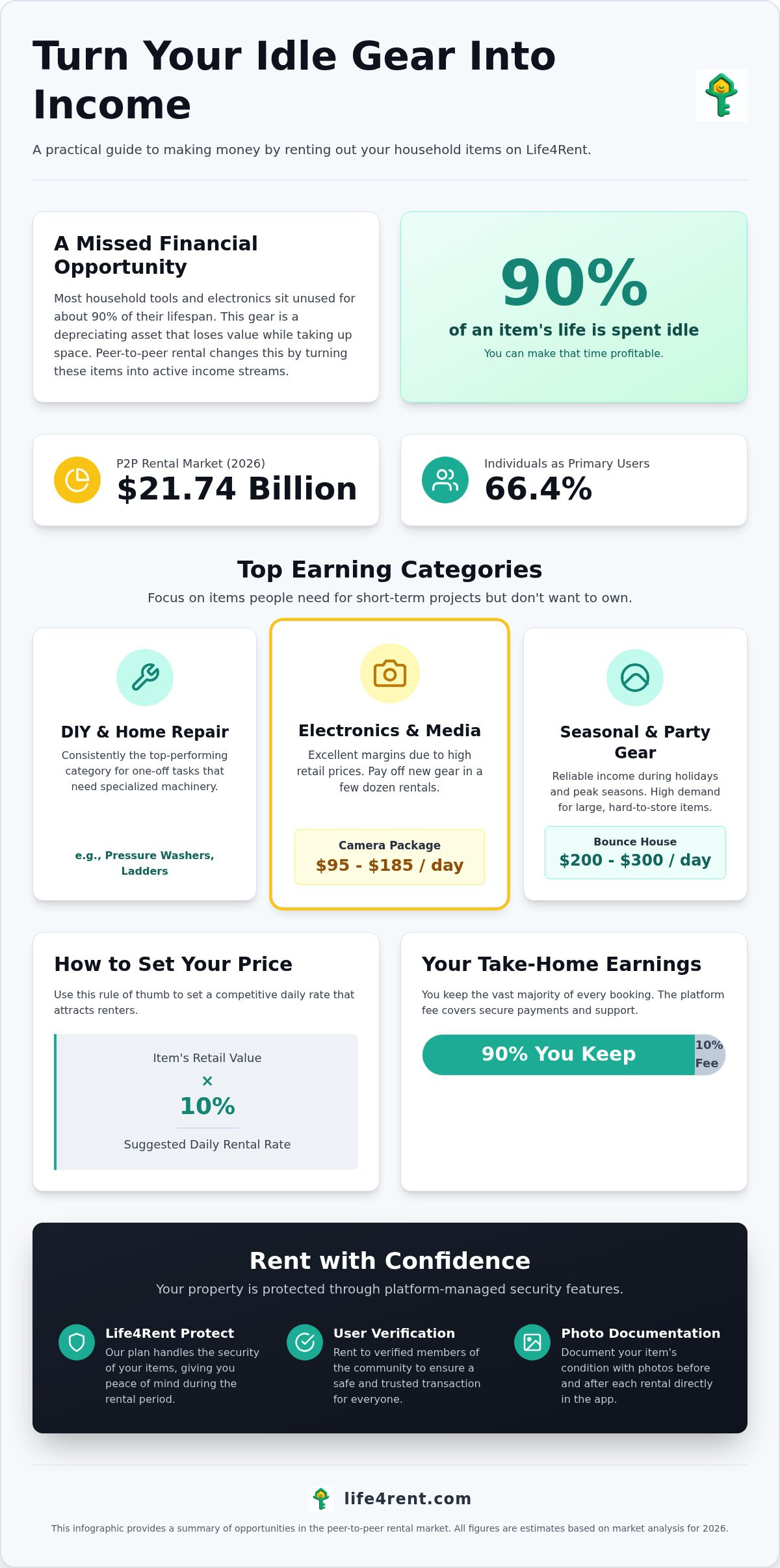
Most household tools and electronics sit unused for about 90% of their lifespan. You probably have a high-end pressure washer or a professional drone that only sees the light of day once or twice a year. This gear is a depreciating asset that loses value while it takes up space. Peer-to-peer rental changes this dynamic by turning these items into active income streams. You retain full ownership, but the item starts to pay for its own upkeep and storage.
The sharing economy in 2026 has shifted its focus toward local access. People want to find what they need in their own neighborhoods rather than waiting for global shipping. This creates a massive opportunity for you to provide value to your community. Life4Rent acts as the secure middleman in this process, handling the technical side of the transaction. By understanding how to make money renting your stuff, you can transform your home into a productive asset.
Understanding the local landscape is key to maximizing these assets, and you can visit 富盛地產|有巢氏太平中山富盛店 to discover how professional local agencies support property owners in thriving redevelopment districts.
The true cost of ownership in 2026
Every item you own carries a hidden price tag beyond the initial purchase price. You have to consider the price-per-use of your equipment. If you spend $800 on a specialized mitre saw and use it for three projects, each session effectively costs you over $260. That's a high price for a tool that spends the rest of the year gathering dust.
- Storage costs: Square footage is expensive. Bulky items you rarely use waste paid space in your home or garage.
- Capital recovery: Electronics and tools lose value every month. Rental income helps you recover that lost capital over time.
- Professional care: High-end gear needs regular maintenance. Rental earnings can cover professional servicing so your equipment stays in top condition.
The shift from buying to renting
Modern consumers are moving away from the traditional buy-and-store mindset. They prefer access to quality gear without the burden of long-term storage or the guilt of under-utilization. This trend is a primary driver of the rental market's growth. The global market for peer-to-peer rental apps is estimated to be valued at $21.74 billion in 2026. Individual consumers now represent about 66.4% of this total user base.
Sustainability is another major factor in this shift. Local rentals on platforms like Life4Rent reduce the carbon footprint associated with manufacturing and shipping new products. When neighbors share resources, it leads to a more efficient use of materials. It's a practical way to support a circular economy while building a reliable side income.
The most profitable items to list for rental
Success in the peer-to-peer market depends on identifying which items people need but don't want to store. While property rentals represent 42.7% of the total market revenue in 2026—a sector where services like Takeem provide essential rental guarantees—household goods offer a more accessible entry point for most people. You don't need a spare apartment to start; you just need to know which categories have the highest turnover. This is the most practical way to understand how to make money renting your stuff without a massive upfront investment.
If you're interested in how the professional side of property management works in premium locations, you can check out King Estates for examples of luxury real estate portfolios.
High-demand tools and home repair gear
Tools and DIY equipment are consistently the top-performing category on Life4Rent. Homeowners often face one-off tasks that require specialized machinery they'll never use again. For instance, a mudmixer is a favorite for weekend patio projects because it's heavy and expensive to buy for a single use. Pressure washers and industrial-grade ladders follow a similar pattern of high frequency and low ownership appeal.
You can also find success in the growing niche of audio equipment rental. Local event organizers often need professional sound solutions for weddings or community gatherings. If you own high-quality speakers or mixing boards, these can generate significant returns during the busy summer event season. It's often better to list several smaller, high-demand items than one expensive piece that rarely moves.
Electronics and media equipment
Professional electronics offer some of the best margins because of their high retail price and technical complexity. In 2026, mid-tier mirrorless camera packages typically rent for between $95 and $185 per day. This allows you to pay off a new camera body in just a few dozen rentals. High-end projectors and drones also see frequent bookings from hobbyists who want professional results for a specific project without the $2,000 price tag.
This is especially true for destination travelers; for example, someone booking vacation rentals Dominican Republic no booking fees might choose to rent a professional drone locally to capture the island's landscape rather than transporting their own expensive gear.
Seasonal and niche opportunities
Outdoor and party equipment peaks during specific times of the year, making it a reliable seasonal earner. A standard 20x20 pole tent can rent for $200 to $500 per day, while even basic folding chairs fetch $1.50 to $2.50 each. If you have the storage space for a bounce house, these typically earn between $200 and $300 per day in the US market. You can start your listing today to capture this demand before the next holiday rush. Baby gear like travel cribs and high-end strollers also provides a steady stream of income from visiting families who can't bring their own equipment.
How to set competitive rental rates
Setting the right price determines how quickly you see a return on your investment. You can easily learn how to make money renting your stuff by following a few basic industry standards. A reliable starting point is to charge roughly 10% of the item's current retail value for a single day's rental. If a specialized power tool costs $300 new, a $30 daily rate is usually attractive to local renters who only need it for a quick project.
You should always check what others are charging for similar gear in your specific area. Prices in major metropolitan hubs might differ significantly from smaller regional towns. Life4Rent allows you to browse local listings to ensure your rates remain competitive. You can justify a higher price if your equipment is a newer model or if you provide better accessories than other listers.
The psychology of rental pricing
Trust is the most important currency in a peer-to-peer marketplace. New listers often benefit from setting their prices about 15% lower than the market average for their first few bookings. This strategy helps you accumulate positive reviews quickly, which is essential for long-term success. Most renters will choose a slightly more expensive item with five-star feedback over a cheaper one with no history.
You can command a premium price by offering a complete solution rather than just a single tool. A mirrorless camera body is useful, but a package that includes a fast lens, extra batteries, and a carrying case provides much more value. Transparency is also vital for building a professional reputation. You should be clear about any cleaning requirements or specific deposit rules in your description to avoid confusion during the handover.
Balancing profit and frequency
You need to decide whether you want high margins or high volume for your gear. High prices might lead to more idle time for your equipment, while lower prices usually result in more frequent bookings and increased wear and tear. It's often more profitable to have an item rented for three days a week at a moderate price than once a month at a high price.
- Weekly discounts: Offer a 15% to 20% discount for seven-day rentals to attract users with longer projects.
- Monthly rates: Consider a significant price break for monthly stays, which reduces the time you spend on handovers.
- Seasonal adjustments: Increase your rates for outdoor gear during peak holidays or local festivals when demand is highest.
You should also track the time you spend managing each rental. If a low-value item requires an hour of communication and travel for a small return, it might not be worth the effort. Focus your energy on high-demand items that offer a better balance between the rental fee and the time required to manage the transaction.
Managing risks and protecting your property
The biggest worry for most owners is the risk of damage or theft. It's a valid concern when you're handing over high-value tools or electronics to someone you haven't met before. You can significantly reduce these risks by following a structured safety routine for every transaction. A firm grasp of how to make money renting your stuff safely is just as important as setting the right price.
High-quality photos are your best defense against false claims. You should take clear, dated pictures of all surfaces, ports, and moving parts right before the handover occurs. These images prove the exact condition of the gear at the moment the renter takes possession. It's much harder for a renter to dispute a scratch or a dent when you have a photo from thirty minutes prior.
Always verify your renters through the platform's internal system before you agree to a booking. Life4Rent uses verified profiles and escrow payments to ensure that funds are secured before the item changes hands. You should keep all communication within the app's messaging system to maintain a clear paper trail for dispute resolution. It's also helpful to explain the specific peer to peer equipment rental safety protocols to your renters so they know how to handle your gear properly.
Handover and return protocols
You should meet in a neutral, public location if you're uncomfortable sharing your home address. A busy parking lot or a local coffee shop works well for smaller items. Take a few minutes to demonstrate how the device works while the renter is present. This prevents damage caused by improper use and confirms the item is in working order at the start of the rental. When the item is returned, check for visible damage immediately before the renter leaves the area.
Insurance and protection plans
Life4Rent Protect is designed to act as a secure middleman for your peace of mind. This system includes damage protection and dispute resolution services if a rental doesn't go as planned. You'll need to keep your original purchase receipts for every item you list to simplify any potential claims. Regular maintenance is your responsibility as an owner. You must ensure that your gear is mechanically sound to prevent accidents or failures that could lead to liability issues. Your property is an asset, not a liability. You can list your first item securely today and start building your reputation as a reliable owner.
Steps to start earning on Life4Rent
A complete profile is the foundation of a profitable rental side hustle. You'll find that transparency builds trust faster than any marketing pitch. It's the best way to show potential renters that you're a real person who maintains their equipment properly. You should include a clear photo and a brief bio that mentions your experience with the gear you're listing.
Honesty in your descriptions will save you time and protect your reputation. If your equipment has specific quirks or requires a certain level of skill to operate, mention it clearly. This prevents confusion during the handover and ensures you don't receive negative feedback for undisclosed issues. You should also aim to respond to enquiries within a few hours to keep your engagement score high.
Optimising your listings
Visual appeal is vital when you're competing with other local owners in your area. You don't need professional photography gear, but you should always use natural lighting for your photos. Take your items outside or near a large window to show their true condition and color. Clear, bright photos reduce the number of questions you'll get from interested parties and lead to faster bookings.
You should also use specific search terms in your title and description to improve visibility. Including phrases like tool on rent helps the platform's search engine connect you with users who need your specific equipment. Be clear about the logistics of the rental, including whether you offer delivery or require local pick-up. This clarity helps people understand how to make money renting your stuff without wasting time on incompatible requests.
Building a rental business
A successful rental business requires a long-term view of your assets and earnings. Many listers reinvest their first few hundred dollars into more high-demand rental items to grow their portfolio. If you notice that your pressure washer is booked every weekend, it might be worth adding a second unit or a related tool. This approach allows your initial items to fund the expansion of your local rental service.
You should keep a simple log of your income and expenses for tax purposes. This makes it much easier to manage your finances at the end of the year and helps you see which categories are most profitable. Focus on providing excellent customer service to encourage repeat business from local renters. A friendly handover and a quick follow-up message can turn a one-time user into a regular client who trusts your gear.
Reviews are the lifeblood of any peer-to-peer marketplace. You should politely ask for a review after every successful return to build your credibility on the platform. Most people are happy to leave positive feedback if the process was smooth and the item worked as described. A strong history of five-star ratings allows you to maintain steady bookings and justifies your pricing in a competitive market.
Turning your idle assets into a reliable income
You now have a clear roadmap for how to make money renting your stuff by focusing on high-demand categories like tools and electronics. Success comes from setting realistic rates based on the 10% retail value rule and maintaining a profile that emphasizes reliability. By using the platform's verification and protection systems, you can manage your items with confidence while they pay for their own upkeep.
Thousands of owners are already using the 17 available categories to tap into their local community's needs. Life4Rent handles the secure payment processing so you can focus on providing quality gear to your neighbors. It's a practical way to support a circular economy while building a steady stream of extra cash. Start listing your items for free on Life4Rent and let your gear work for you.
Frequently Asked Questions
Is it safe to rent out my personal belongings to strangers?
Life4Rent uses verified profiles and escrow payments to protect owners during every transaction. You'll find that taking photos before handovers and communicating only through the app maintains a clear record of the item's condition. This structure minimizes the risks associated with the sharing economy. It's a practical way to ensure your property is handled with care while it generates a steady income for you.
How much money can I realistically make each month?
Your earnings depend on the demand for your specific items in your local area. A mid-tier mirrorless camera can rent for $95 to $185 per day in 2026. If you list high-demand tools like pressure washers or scaffolding, you could realistically earn a few hundred dollars each month. Consistency with your response rate and gathering positive reviews will help increase your booking frequency over time.
Do I need special insurance to rent out my tools?
You should check your current homeowner's policy first, as many don't cover the commercial use of personal property. Life4Rent Protect provides a layer of safety for damage and disputes during the rental period. For high-value professional equipment, some owners choose to add a specific rider to their existing insurance for extra peace of mind. This ensures you are fully covered regardless of the rental situation.
What happens if a renter breaks my item?
You should report the damage through the Life4Rent app immediately after the return inspection. The platform's protection plan is designed to help resolve disputes and handle repair costs or replacements. Keeping your original purchase receipts and taking pre-rental photos is essential for a successful claim. This secure middleman system acts as a buffer between you and the renter to ensure a fair resolution for everyone.
Which categories have the highest demand on Life4Rent?
Tools, electronics, and party equipment are currently the most active categories on the platform. Items like pressure washers, high-end cameras, and gazebos see frequent bookings from people who only need them for short-term projects. Understanding these trends is key to learning how to make money renting your stuff effectively throughout the year. You'll find that seasonal items like camping gear also peak during holiday periods.
How do I handle taxes on my rental income?
You are responsible for reporting any income earned from peer-to-peer rentals to your local tax authority. It's best to keep a simple log of your earnings and any expenses, such as maintenance or platform fees. Tax laws vary by region, so consulting a local professional ensures you stay compliant with current 2026 regulations. This helps you understand your true net profit after all costs and obligations are met.
Can I rent out items that I still have a warranty on?
You should review the terms of your specific warranty, as some manufacturers exclude coverage for items used for commercial purposes. If the warranty is strictly for personal use, renting the item might void it. It's often better to rent out gear that is already past its warranty period to avoid these technical conflicts. You can then use the rental income to fund new equipment or pay for professional maintenance.
Is there a limit to how many items I can list?
There is no limit to the number of items you can list across the 17 available categories. You can list everything from baby gear to specialized construction tools on a single profile. This allows you to scale your local rental business as you learn how to make money renting your stuff and identify what your neighbors need most. Managing more listings is easy once you establish a routine for handovers.
Life4Rent
Rent it. Earn from it. Own less, access more.
Browse peer-to-peer rentals near you, or list what you own and start earning — all protected by Life4Rent Protect.
About the author
Amsterdam, Netherlands
Joshua writes about the financial side of renting and earning on Life4Rent. His guides focus on helping people understand the real cost of ownership, calculate rental income potential, and make smarter decisions about buying versus renting. He previously wrote on household economics and personal budgeting for a pan-European finance publication.