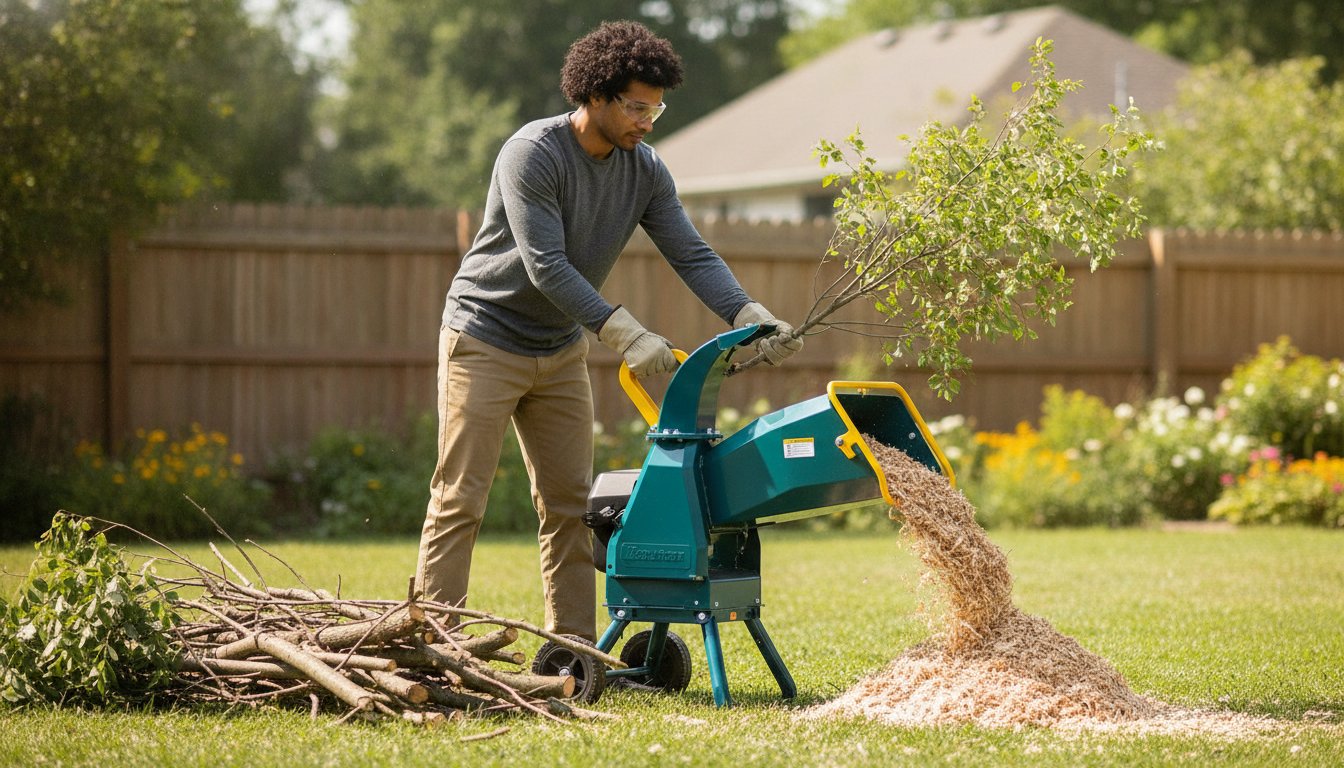
Wood Chipper Rental: 2026 Yard Waste Guide
August 6, 2026
Published by Life4Rent · Operated by Brohf Software OÜ
You've spent the whole weekend clearing overgrowth, but now a massive pile of branches is taking up half the driveway. Professional crews often cost hundreds of dollars for a single visit, while buying a machine you'll only use once a year is rarely worth the investment. A reliable wood chipper rental for yard waste provides a practical middle ground, especially if you want to turn that debris into useful mulch for your garden beds.
It's frustrating when you realize that traditional rental centers often require heavy-duty trucks for transport or hide extra fees in the fine print. You don't need to be a mechanic to understand which machine handles a three-inch limb versus a small twig. This guide explains how to select the right equipment and operate it safely so you can get the job done without the typical headaches.
We'll look at the specific capacities you need for residential work and how peer-to-peer platforms like Life4Rent help you skip the corporate markup. You'll see how to access quality tools directly from people in your own neighborhood. By the end, you'll have a clear plan to clean up your property while keeping your budget intact.
Why a wood chipper rental is the most efficient way to manage yard waste
Seasonal pruning or a sudden summer storm can leave your yard looking like a disaster zone in just a few hours. Piles of brush and branches quickly become an eyesore and a fire hazard if they aren't managed properly. A wood chipper rental for yard waste is often the fastest way to regain control of your property without the exhaustion of manual hauling. Most homeowners find that a single day of work with the right machine accomplishes more than a dozen trips to the local dump.
You'll save money by avoiding the high disposal fees many municipalities charge for bulk organic waste. Trucks for hauling debris aren't cheap to rent either, and they require significant physical labor to load and unload. It's helpful to understand what a wood chipper is and how its internal blades differ from smaller garden tools before you start. These machines reduce large volumes of wood into compact chips that are much easier to handle.
The difference between a wood chipper and a shredder
Chippers are designed for the heavy stuff. They use sharp blades mounted on a heavy flywheel to slice through thick, solid branches. If you have limbs thicker than two inches, a chipper is your best bet. Shredders work differently by using blunt flails or hammers to break down softer green waste and small twigs. You might find combined units on Life4Rent that offer both functions, which is great for general garden cleanup.
Why mulch is better than hauling waste to a landfill
Landfills in the U.S. receive millions of tons of yard trimmings every year, which accounts for about 12.1% of total municipal solid waste according to EPA data. You can help reduce this number by keeping your organic material on-site. Wood chips make excellent mulch that helps your soil retain moisture during dry spells. This layer also suppresses weeds naturally, so you'll spend less time pulling them later in the season.
Local recycling of your yard waste also saves the fuel and emissions associated with driving back and forth to a disposal site. It's a more sustainable way to manage your property that actually adds value back to your soil. Instead of paying someone else to take your resources away, you're creating a high-quality product for your garden beds. This approach keeps your landscape healthy while saving you the cost of buying bagged mulch from a big-box store.
Pick the right machine size for your specific branches and brush
The wrong machine size is a frequent cause of frustration for homeowners. You don't want to struggle with a massive industrial unit if you only have a few piles of hedge trimmings. A wood chipper rental for yard waste should always match the actual scale of the debris in your yard to ensure you aren't overpaying for power you won't use.
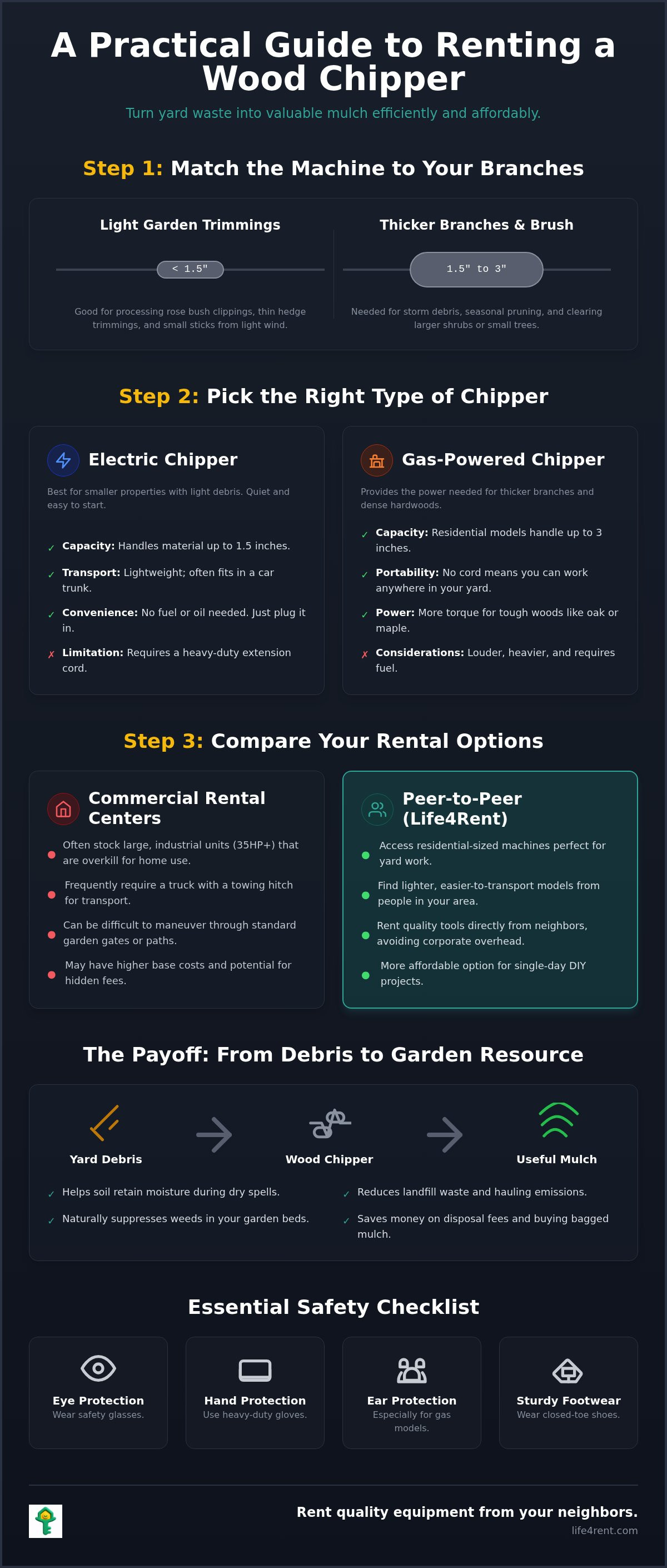
Commercial rental centers often stock 35 HP hydraulic units that are designed for professional arborists. These machines are massive, expensive, and usually require a vehicle with a towing hitch. For 90% of residential projects, these industrial models are simply overkill and difficult to maneuver through a standard garden gate or narrow side path.
Accurate measurements of your thickest branches will help you decide on the right model. Most suburban debris consists of limbs between 1 and 3 inches thick. A machine with a 3-inch capacity is usually the sweet spot for general seasonal cleanup. If you try to force a 3-inch branch into a 1.5-inch electric model, the motor will jam and you'll waste the afternoon clearing the blades.
Small electric models for light garden trimmings
Electric chippers are the quietest and most accessible option for smaller properties. They don't require fuel or oil, and you can start them by simply plugging in a heavy-duty extension cord. These units usually handle material up to 1.5 inches in diameter. They're perfect for processing rose bush clippings, thin hedge trimmings, and the small sticks that fall after a light wind.
Because electric models are lightweight, you can often transport them in the trunk of a standard car. You won't need a trailer or a truck to get the equipment home from a neighbor. These machines are best for fresh waste that is still flexible rather than old, brittle wood that has been sitting for months and has hardened.
Heavy-duty gas units for thick branches
Gas-powered chippers provide the torque necessary for denser hardwoods like oak, maple, or birch. You aren't limited by the length of a power cord, so you can wheel the machine directly to the brush pile at the back of your lot. Most residential-grade gas machines handle branches between 2 and 4 inches thick. If your debris includes limbs as thick as your wrist, a gas engine is the right tool.
Rental owners on the platform often provide a full tank of fuel to help you get started immediately. You can browse local listings to see the specific branch capacity and engine types available in your neighborhood. These units are heavier than electric ones, but their sturdy wheels make them manageable on flat grass or gravel paths.
Compare local peer-to-peer rentals against commercial equipment shops
Commercial rental outlets usually cater to professional contractors who need massive, towable machines. These shops often add fees for fuel, cleaning, and damage waivers that can double your initial quote. If you need a wood chipper rental for yard waste but don't own a heavy-duty truck, the delivery and pickup charges alone might exceed the daily rental rate. You'll often find yourself paying for industrial power that your small garden project simply doesn't require.
Peer-to-peer platforms offer a different experience by removing the corporate overhead and retail markups. You can find a tool on rent from someone living just a few blocks away. This community-based approach makes high-quality equipment accessible for residential projects without the logistical hurdles of a large commercial yard. Skip the long lines at the rental counter. Save your money. Rent local.
Cost savings of the peer-to-peer model
Daily rates on community-driven marketplaces are often 30% to 50% lower than what you'll find at national chains. Owners don't have to pay for expensive storefronts or large staff, so they can pass those savings directly to you. Your wood chipper rental for yard waste doesn't have to be a major logistics project. You'll also avoid the mandatory insurance packages that many commercial shops force onto every contract. You'll keep more money in your pocket by choosing a local option while still getting the same technical performance.
Flexible rental periods and local pickup
Neighbors are typically more flexible with their schedules than a business with strict 5 PM closing times. If you only have a few hours of work, you might even find an owner willing to agree to a half-day rate. Local pickup means you won't spend an hour in traffic driving across town to a warehouse district. Most owners on Life4Rent take great care of their equipment because it's their personal property. They can give you a quick walkthrough of the specific machine's quirks, which is much more helpful than a generic manual. This personal interaction ensures you feel confident before you pull the starter cord for the first time.
You won't have to navigate a complex corporate contract or wait in a long line on a busy Saturday morning. The process is straightforward and focuses on getting the tool to you quickly. This efficiency is why many people are moving away from traditional rental yards for their home maintenance needs. This sharing model also supports your local economy instead of sending profits to a distant corporate headquarters. You get the job done, save some cash, and keep the equipment in use rather than letting it sit idle in a garage.
Stay safe and avoid common mistakes during your DIY project
You need to stay alert and focused when you operate any heavy machinery. Wood chippers are designed to process tough organic material quickly, which means they don't distinguish between a dry branch and a sleeve. A wood chipper rental for yard waste is a safe tool when you follow the manufacturer's instructions, but rushing through a project often leads to avoidable mistakes. You'll get better results and finish the job faster if you maintain a steady, controlled pace.
You must inspect your work area before you even pull the starter cord. Small rocks, pieces of wire, or forgotten metal garden stakes can ruin the blades or cause dangerous kickback if they enter the hopper. It's helpful to organize your brush into piles based on thickness so you don't have to stop and sort while the machine is running. You should also ensure the machine is placed on level, stable ground to prevent it from shifting or tipping during use.
Essential protective gear you need to wear
Safety gear is the most important part of your setup. You shouldn't start the engine without wrap-around safety glasses that protect your eyes from high-speed wood fragments. Gas-powered engines are loud and can reach levels that cause permanent hearing damage over several hours. You'll need high-quality ear muffs or earplugs to stay comfortable and protected throughout the day.
Your choice of clothing also matters for your safety. You must avoid wearing loose hoodies, dangling jewelry, or scarves that could get snagged in the feeding mechanism. Snug-fitting work gloves are great for protecting your hands from thorns and splinters, but they should never be so bulky that they limit your dexterity. Sturdy, closed-toe boots are also a requirement to protect your feet from falling limbs or heavy debris.
How to avoid jams and feed the machine correctly
You should always point the discharge chute toward a clear, open area away from your house, vehicles, or other people. It's best to feed the thickest end of a branch into the chipper first so the blades can catch the main weight of the wood immediately. If you hear the engine start to bog down or change pitch, stop feeding and wait for the RPMs to recover. You'll find that feeding material slowly actually prevents the machine from stalling and saves you the time it takes to clear a jam.
Never reach past the safety curtain of the hopper while the blades are spinning. If a small piece of debris gets stuck, you should use a long, sturdy push-stick to nudge it toward the blades. You must turn off the engine and wait for the flywheel to come to a complete stop before you attempt to clear any significant clogs. If you want to see how these safety features work in person, you can find a reliable wood chipper from a neighbor who can walk you through the controls during the handoff.
Find an affordable chipper through the Life4Rent community
Corporate rental portals often require you to set up complex business accounts or wait days for a custom quote. You don't need that level of bureaucracy for a Saturday afternoon project. Life4Rent simplifies the process by letting you browse a wood chipper rental for yard waste directly from people in your local area. You'll see the actual equipment and the real price without any hidden administrative fees.
It's a good idea to read the item descriptions carefully before you book. Every machine has different limits for branch diameter and specific fuel needs. If you're unsure about the details, you can read our guide on peer to peer equipment rental to understand how the platform works. This transparency helps you avoid renting a tool that's either too small for your debris or too large for your vehicle.
Search for tools in your neighborhood
You can start by entering your location to see which neighbors have equipment available nearby. You'll often find that a wood chipper rental for yard waste is parked just a few streets away, which makes transport much easier. You can filter your search results by price or machine type to ensure the tool fits your specific budget and project requirements. High-rated owners who provide clear, recent photos of their machines are usually the most reliable partners for your rental.
Communicate with owners for a smooth experience
The messaging system allows you to talk directly with the owner to iron out the logistics. You should ask about pickup and drop-off times that work for both of you, especially if you have a tight weekend schedule. Most owners are happy to give you a quick five-minute demonstration of how the machine starts and stops. This walkthrough is the best way to feel comfortable with the equipment before you take it home.
Fuel types vary between models, so you should verify exactly what is needed during your initial conversation. Some gas engines require a specific oil mix, while others take standard unleaded gasoline. You'll want to confirm the return process as well, such as whether the tank needs to be refilled before you bring it back. These small details ensure the transaction is straightforward and keeps the equipment in good working order for the next person in the community.
Transform your landscape with the right tools
Brush piles don't have to be an expensive or complicated ordeal to manage. By choosing a wood chipper rental for yard waste that matches your specific branch sizes, you avoid the frustration of underpowered machines or the high cost of industrial units. Peer-to-peer options allow you to find reliable tools right in your neighborhood while skipping the heavy retail markups found at big-box stores. You don't need a corporate account to get professional results on your property.
The platform offers a safe way to connect with neighbors and access over 17 different rental categories for all your home projects. These secure community-based transactions ensure that you get the machine you need without the logistical headaches of traditional rental yards. Find an affordable wood chipper for rent near you on Life4Rent and see how much easier landscaping becomes when you have the right equipment. Your garden will look better, your soil will be healthier with the fresh mulch, and you'll save yourself hours of physical labor. Good luck with your project and enjoy the clean, organized space you've created.
Common questions about wood chipper rentals
How much does it cost to rent a wood chipper for a day?
Daily rates depend on the equipment's power and your local market conditions. You'll find that residential-sized models are generally more affordable than the industrial units found at commercial yards. Peer-to-peer listings often save you money because owners don't have the same overhead costs as a retail store. It's a good idea to check current listings in your neighborhood to get an accurate idea of the cost.
Can a wood chipper handle wet wood or green branches?
Most chippers process green branches effectively, but wet wood can cause unexpected clogs. Freshly cut "green" wood is actually easier for the blades to slice through than old, dried-out timber that has hardened over time. If the wood is soaking wet from recent rain, the damp fibers can stick to the discharge chute and jam the machine. You'll have a much smoother experience if you wait for a dry day to start your project.
What size wood chipper do I need for standard residential yard waste?
A machine with a 2 to 3-inch capacity is usually sufficient for most home gardens. This size handles the typical limbs and brush found after seasonal pruning or light storm damage. You might need a gas-powered unit with a 4-inch opening if you have larger trees with thicker branches. A wood chipper rental for yard waste works best when the machine's intake matches the actual diameter of your thickest debris.
Is it safe to operate a wood chipper without professional experience?
You can safely use a wood chipper if you follow all safety guidelines and wear the right protective gear. Most residential models are designed for ease of use, but you must respect the machine's power at all times. Always read the manual and ask the owner for a quick demonstration during the handoff. You should never work alone and must keep your hands far away from the intake hopper while the engine is running.
What happens if the rented wood chipper breaks during use?
Mechanical issues should be reported to the owner immediately through the platform's messaging system. You shouldn't attempt to repair the equipment yourself, as this could void the rental agreement or cause a safety risk. Most problems are simple jams that you can clear safely once the engine is completely off. The platform's support team can help mediate the situation if there's a dispute about whether the failure was due to wear or improper use.
How do I transport a rented wood chipper to my house?
Standard cars can usually accommodate smaller electric models in the trunk or hatch area. You'll likely need a truck or a vehicle with a towing hitch for larger gas-powered units that are too heavy to lift. Many owners on the platform provide delivery options for a small fee if you don't have the right vehicle to move the machine yourself. You should always confirm the equipment's dimensions and weight before you arrive for pickup.
Can I use a wood chipper to shred leaves and pine needles?
Standard wood chippers aren't designed for loose leaves or needles and will likely jam if you feed them soft waste. You'll need a dedicated shredder or a "chipper-shredder" combo for that type of light material. These machines use small hammers to pulverize leaves instead of slicing them with blades. If your goal is to process branches, a standard wood chipper rental for yard waste is the better tool for creating high-quality mulch.
Do I need a special license to operate a towable wood chipper?
Standard driver's licenses cover the operation of most towable residential chippers. You only need to ensure your vehicle's towing capacity matches the machine's weight and that your hitch is secure. Special certifications are usually reserved for the massive industrial equipment used by professional tree crews. It's still wise to check your local road regulations if you plan to tow the equipment over long distances on public highways.
Life4Rent
Rent it. Earn from it. Own less, access more.
Browse peer-to-peer rentals near you, or list what you own and start earning — all protected by Life4Rent Protect.
About the author
London, United Kingdom
Fred covers rental technology, app features, and platform mechanics for the Life4Rent Renting Academy. With a background in fintech journalism, he specialises in breaking down how digital rental platforms work — from payment protection and identity verification to smart pricing and booking management.