
Wheelchair Rental for Travel Prices and Delivery Options
Philip Edward
October 24, 2026
The right travel wheelchair is the one that fits the user, the route, and the space it needs to move through. For wheelchair rental for travel, compare weight capacity, seat width, folded size, and who’ll push it; portable rental wheelchairs are often recommended in the 13-18 lb range. A lighter chair can be easier to transport, but comfort and stability matter just as much.
It’s sensible to look beyond the daily rate when arranging wheelchair rental for travel. Rental length can affect the total cost, while handoff arrangements, cleaning practices, and written terms can shape how practical a rental feels once the trip begins.
This guide explains which chair details to compare, how duration affects pricing, and what to look for in delivery, sanitation, and warranty information. It also covers when a manual chair may suit a trip, including travel with a companion who can push it.
Delivery to residences and vacation rentals
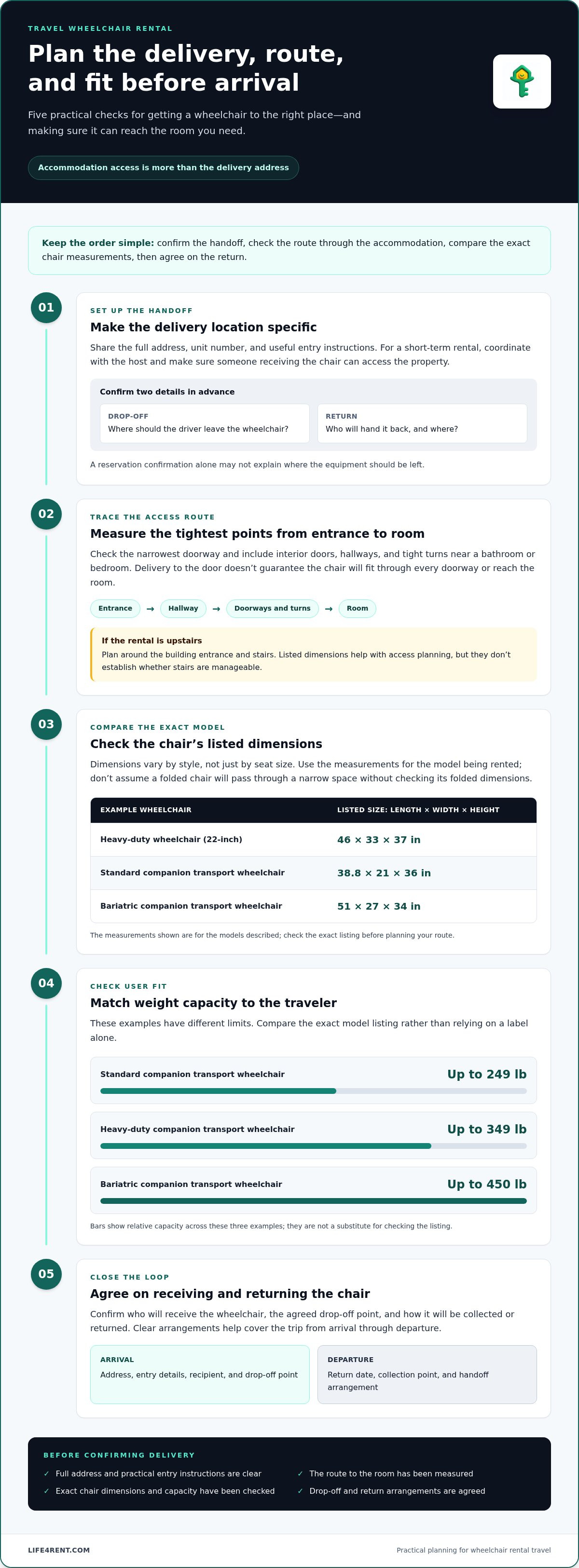
A wheelchair delivered to your accommodation can save you from transporting one through an airport or arranging pickup after arrival. For a private residence or short-term rental, plan the handoff around the address, entry route, and chair dimensions. Delivery to the door doesn’t guarantee the wheelchair will fit through every doorway or reach the room you need.
Start with the exact delivery address, including the unit number and useful entry instructions. For a short-term rental, coordinate the handoff with the host and make sure the person receiving the chair can access the property. A reservation confirmation alone may not tell the delivery driver where to leave the equipment, so clarify the drop-off point and return arrangement in advance.
Measure the narrowest doorway on the route from the entrance to the room. Include interior doors, hallways, and any tight turn near a bathroom or bedroom. Wheelchair dimensions vary by model, so check the listed measurements before planning the route. A heavy-duty 22-inch wheelchair measures 46 inches long, 33 inches wide, and 37 inches high, so its wider frame may need more clearance.
Dimensions vary by style, not just by seat size. A standard companion transport wheelchair measures 38.8 inches long, 21 inches wide, and 36 inches high. A bariatric companion transport wheelchair measures 51 inches long, 27 inches wide, and 34 inches high. Use the listed model’s measurements when planning the route; don’t assume a folded chair will pass through a narrow space without checking its folded dimensions.
Match the chair’s weight capacity to the user before arranging delivery. A standard companion transport wheelchair supports an individual weighing up to 249 lbs. The heavy-duty companion transport version supports up to 349 lbs, while the bariatric companion transport version supports up to 450 lbs. These are different models with different limits, so compare the exact listing rather than relying on labels alone.
- Share the full address, unit number, and practical entry details.
- Measure doorways and turns along the route to the room.
- Compare the chair’s dimensions and weight capacity with the accommodation.
- Agree on where the wheelchair will be received and how it will be returned.
For example, a traveler staying in an upstairs rental should plan the handoff around the building entrance and stairs, not just the apartment door. A wheelchair’s listed dimensions help with access planning, but they don’t establish whether stairs are manageable. Clear delivery and collection arrangements make the chair easier to use from arrival through departure.
Wheelchair rental prices
Wheelchair rental pricing depends on the rental period, chair type, and what the quoted amount includes. A manual chair for a brief city visit may be priced differently from a transport wheelchair rented for a longer itinerary. Compare the full rental total, not just the rate shown for one day.
Daily, weekly, and monthly rates are common rental structures. A longer booking may use a different rate, so compare the total for your actual dates. For example, a week-long trip could cost less per day under a weekly rate, while a shorter trip may make a daily rate more practical. The lowest daily figure doesn’t always mean the lowest overall cost.
Chair type can also affect the price. A lightweight model may be easier to lift into a vehicle, while a heavy-duty or bariatric model may have different specifications and a different rental rate. Compare seat width, weight capacity, and transport needs alongside the price. The right choice fits the traveler and itinerary, not simply the lowest-priced listing.
Ask what the quoted total covers. Delivery and collection, accessories, deposits, and late-return terms can change the amount you pay. A chair delivered to a holiday rental may involve different arrangements from one collected at a rental counter. Compare the rental period, delivery address, included accessories, and return plan side by side.
How far in advance should you reserve a wheelchair rental for travel? Reserve once your travel dates and delivery address are set, especially if the chair must arrive at a residence or Airbnb before you do. This gives you time to coordinate the handoff and make sure the rental period matches your itinerary.
Can you take a rented wheelchair on a cruise, train, bus, or rental car? The rental terms and each transport operator’s rules determine whether the chair can be carried and how it must be stored. Check the agreement for travel restrictions, then compare the chair’s folded dimensions and weight with the space available on your planned transport.
Build a like-for-like comparison before deciding. Use this quick checklist:
- Compare the total for the full rental period, not only a daily rate.
- Include delivery, collection, accessories, deposits, and return conditions.
- Match the chair type to the user’s needs and the available transport space.
- Align delivery and return dates with the travel itinerary.
A clear comparison helps prevent a low starting rate from obscuring extra costs or a poor fit. Write down the full cost and terms for each option, then choose the arrangement that suits the trip’s length, handoff point, and transport plan.
Wheelchair rental pricing by duration
Rental periods often use daily, weekly, or monthly rates, so calculate the total for your actual dates. A one-day rental and a seven-day rental may follow different pricing structures. Compare the full booking cost, not a daily figure multiplied across every day of your trip.
Start with the pickup or delivery date and the planned return date. A three-day trip may cross billing boundaries if the rental begins before travel or ends after you return. Write down the exact period you need, including any arrival day when the chair must already be at your accommodation.
Then compare the available duration options against that period. A listing may show separate rates for one, two, three, four, five, six, and seven days. Check whether the seven-day option covers the whole booking, even if your itinerary uses the chair for fewer days. A longer period can change the average daily cost without changing how much you use the chair.
Monthly pricing may suit extended stays, but don’t assume it automatically costs less. Compare the monthly term with shorter options, and include any delivery, collection, accessory, or return costs in the same calculation. If your dates are flexible, compare the total for each possible start and end date before choosing.
Duration is only one part of the price. A transport wheelchair and a standard manual chair may have different rental rates because they are different equipment types. The chair’s fit, weight capacity, and included services also matter. Compare like with like before deciding that one duration or listing is cheaper.
For a longer mobility need, compare continued rental with purchase costs. Market guidance suggests buying may become more economical when the chair will be used longer than 4-6 months. That’s a useful point for a long stay, but your decision should also account for storage, ongoing use, and whether you need the chair after travel.
- Set the exact rental dates before comparing rates.
- Compare daily, weekly, and monthly terms against the full trip.
- Add delivery, collection, accessories, and return charges to the total.
- For use beyond 4-6 months, compare rental with buying.
A simple comparison table can prevent a misleading daily-rate comparison. Record each option’s rental period, full cost, included services, and return terms. For example, compare a seven-day booking with the days you actually need, then check whether a monthly term makes sense for an extended stay. Choose the duration that fits the itinerary and equipment needs, not merely the smallest headline figure.
Equipment sanitation and warranties
Before using a rented manual wheelchair, inspect the surfaces the traveler and companion will touch. Check the seat, armrests, footrests, push handles, hand rims, and brakes. Look for visible dirt, residue, damage, or loose parts, then compare the chair with its condition at handoff.
Cleaning and disinfection are separate steps with different purposes. Cleaning removes visible soil; disinfection uses a product intended to reduce germs on surfaces. Don’t assume a chair has been disinfected just because it looks clean. Look for a clear explanation of how the equipment is prepared between rentals.
At delivery or pickup, take clear photos of the wheelchair before use. Include close views of the seat, wheels, brakes, and any existing marks. If you notice a problem, record it in the rental platform’s message thread before the first trip. This creates a dated record of the chair’s condition for both parties.
Use a practical handoff routine:
- Inspect the seat, armrests, handles, hand rims, and footrests.
- Check that the brakes engage and the wheels roll as expected.
- Photograph existing wear, stains, or damage before setting out.
- Keep the cleaning and return instructions with the rental details.
Read any written warranty terms closely. Find out what they cover, how long coverage lasts, and what steps apply if a part fails during the rental. A warranty may address equipment defects, while accidental damage or normal wear may be handled differently. The agreement should make those distinctions clear.
For example, if a brake stops working during a trip, the useful details are how to report it, what the response process is, and who handles repair or replacement. Don’t assume a warranty automatically provides a substitute chair or covers travel disruption. Read the actual terms and keep the relevant contact or reporting instructions accessible.
Check whether the warranty applies to the complete chair or only named components. A manual wheelchair has several working parts, including brakes, wheels, footrests, and armrests. If the terms list exclusions, note them before use. This matters if the traveler relies on a particular component throughout the day.
At return, photograph the wheelchair again and follow the stated cleaning instructions. Avoid applying products or making repairs unless the rental terms permit them. A record of the chair’s condition at handoff and return can help resolve questions about cleaning, wear, or damage without relying on memory.
Clear sanitation steps and written terms make a rental easier to assess. Before travel, keep the handoff photos, agreement, and reporting instructions together. These records give you a practical reference if the chair’s condition or operation becomes an issue during the trip.
Reasons to rent a wheelchair for travel
A wheelchair can make a trip more manageable when walking through a large airport, museum, or historic district is tiring or difficult. Renting can also suit a temporary need: someone who uses a wheelchair only during a week away, for example, may not want to transport their everyday chair. The practical choice depends on comfort, route, and how the equipment will be moved.
A manual wheelchair may work well on a trip with a companion who can push it. Travelers on smaller ships, or those traveling with someone willing to push, can consider this option. Think through the whole day: a chair that works around a hotel may be less suitable for long visits, uneven paths, or repeated transfers. For caregivers assisting elderly family members, consulting industry insights on patient transport equipment aged care can also offer helpful tips on safe transfer techniques and stability.
Renting near the destination can reduce the amount of equipment carried between home, airport, and accommodation. A chair delivered to a hotel, cruise port, or holiday rental may be convenient when the traveler mainly needs it after arrival. A rental arranged near an airport may suit a short city stay, while delivery to a resort can work better for a trip based in one location.
What are airlines’ rules for traveling with a rented wheelchair or mobility device? A rented wheelchair is subject to the airline’s procedures for mobility equipment, just like a personally owned chair. Plan how it will be handled during check-in, boarding, and arrival, and account for any extra battery requirements if the device is powered.
Can you rent a wheelchair at airports, hotels, cruise ports, or tourist destinations? Rental arrangements can include these locations where local providers offer pickup or delivery. Match the handoff point to your itinerary, such as receiving the chair at a hotel before sightseeing or arranging collection near a cruise terminal after disembarkation.
Before choosing a manual wheelchair, picture the trip in stages. Consider the airport transfer, the route from the hotel entrance, and the day’s main activity. For instance, a companion may be comfortable pushing through a museum but prefer a lighter chair for a full day of walking between attractions. The traveler’s comfort and the helper’s ability both matter.
- Choose a rental when the need is temporary or destination-based.
- Consider a manual chair if a companion can push it throughout the planned activities.
- Match delivery or pickup to the airport, hotel, cruise port, or destination itinerary.
- Plan airline handling before departure, especially for powered mobility equipment.
For a short trip, browse peer-to-peer rental listings as one way to look for everyday items locally. For wheelchair travel, weigh the convenience of local pickup against the reassurance of having familiar equipment. The best fit is the option that supports the traveler’s plans without adding unnecessary transport or handoff complications.
Life4Rent: Life4Rent is a rental marketplace where users can list and rent daily items accross 17 categories ranging from tools, electronics, outdoor/sports, homes, baby etc
Life4Rent is a rental marketplace where people list and rent everyday items across 17 categories, including electronics, outdoor and sports gear, home items, and baby products. For a trip, it can be a practical place to explore local rental listings for other gear you may need alongside mobility equipment.
Use each listing’s details to compare the item, rental period, handoff arrangements, and return plan. This can help you coordinate travel essentials without buying items you’ll use only temporarily.
To explore the marketplace, visit Life4Rent.
Make the mobility plan part of the trip
A wheelchair rental for travel should support the trip you want, not dictate every decision around it. Before departure, sketch out the days that matter most and decide where independent movement, a companion’s help, or a quieter pace will be important. This gives you a clearer basis for choosing equipment and setting expectations with your travel companions.
Share the plan with your travel companion and agree on practical roles before the first outing. A short conversation about preferences, assistance, and possible changes can prevent avoidable confusion after arrival. Keep the arrangement flexible enough to allow for an unplanned stop or a slower day.
For other everyday items you may need during a trip, explore Life4Rent. Make the mobility plan that fits your travel style, then enjoy the journey at your own pace.
Frequently Asked Questions
What should I look for in a rental wheelchair?
Look for a listing that identifies the chair’s intended use and operating style, rather than relying on a broad label like “travel wheelchair.” A chair suited to occasional outings may not work for a full day of sightseeing. Note how the traveler usually moves between sitting, standing, and transferring, then compare that routine with the chair’s design. Clear listing photos can also help you assess whether the model matches its description.
Where to rent a wheelchair near me?
Search for the place where you’ll use the chair, not only your home address. If your trip includes a hotel near one town and activities in another, look for options relevant to each part of the itinerary. A local rental directory or peer-to-peer marketplace can surface listings from nearby owners. Search terms that include the destination neighborhood or attraction may narrow results more effectively than a broad city name.
Where can you rent a wheelchair for travel in the United States?
In the United States, look for rental options serving the specific destination on your itinerary, whether it’s a city, resort area, or cruise destination. Local mobility-equipment businesses and online rental marketplaces are two places travelers may find listings. For a multi-stop trip, consider whether one rental location serves the full route or separate arrangements are needed at different destinations.
How much does wheelchair rental cost per day, week, or month?
The actual amount varies with the chair and rental arrangement. Treat these as broad budgeting ranges, not a quote for a particular listing. A short booking and a longer booking may use different rate structures, so compare the price shown for the exact rental period you need.
What types of travel wheelchairs can you rent, including manual, transport, and power chairs?
Travel rentals may include manual chairs, attendant-propelled transport chairs, and powered chairs. The key distinction is who supplies the movement: the traveler, a companion, or the chair’s motor. For a powered model, learn the control layout before setting out. For a manual model, consider whether its design supports the traveler’s usual way of moving, rather than assuming every chair with wheels works the same way.
How do you choose the right wheelchair for a trip and the traveler’s needs?
Choose around the day’s main activities and the traveler’s energy, not just the journey between destinations. A long museum visit, an outdoor event, and a short airport transfer place different demands on mobility. Note where the traveler expects to rest, who will accompany them, and whether plans include frequent stops. That outline helps prioritize the chair’s intended use before comparing listings.
What delivery, pickup, and return options do wheelchair rental companies offer?
Common arrangements include collecting equipment from a rental location, receiving it at accommodation, or coordinating a return handoff. The useful difference is how each option fits your arrival and departure schedule. For example, a traveler arriving late may prefer a pickup plan that doesn’t depend on reaching a shop first. Keep the handoff location and return instructions with your trip details.
What should you check for safety, fit, battery range, and accessibility before renting?
Before the first outing, have the traveler try the chair in a calm setting and practise turns, stopping, and transfers. For powered equipment, consider whether charging access fits the day’s plans and whether the traveler can use its controls. Check the route too: steep slopes, loose surfaces, and narrow entrances can affect how manageable a destination feels. Include rest stops on longer outings.
Related guides on Life4Rent
Ready to rent instead of buy? See all medical equipment available to rent on Life4Rent →
Life4Rent
Rent it. Earn from it. Own less, access more.
Browse peer-to-peer rentals near you, or list what you own and start earning — all protected by Life4Rent Protect.
About the author
Philip Edward
Tallinn, Estonia
Philip leads editorial at the Life4Rent Renting Academy, overseeing guides on peer-to-peer rental, platform safety, and consumer finance across 25 markets. He has spent over a decade covering the sharing economy and digital marketplaces, helping renters and owners navigate the shift from ownership to access.