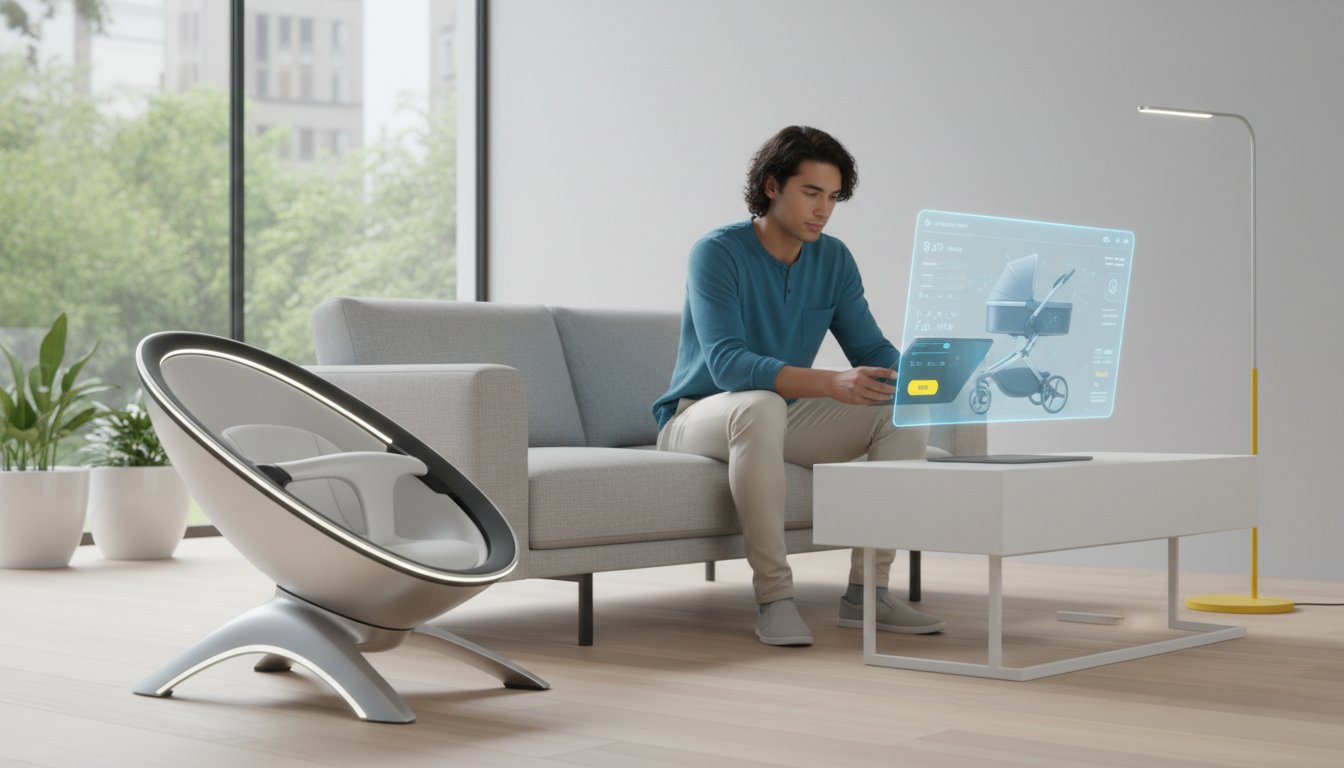
Try Before You Buy Baby Products: A Practical Guide to Testing Gear in 2026
May 17, 2026
Published by Life4Rent · Operated by Brohf Software OÜ
You spent $900 on a high-tech stroller because the reviews were glowing, but it doesn't even fit through your front door. It’s a common story for new parents who end up with a house full of expensive gear that their child simply doesn't like. A solid try before you buy baby products strategy is the only way to avoid these costly mistakes in 2026.
Most parents feel the pressure to buy everything brand new, only to realize later that their baby prefers a basic $20 swing over a $400 motorized seat. It’s exhausting to manage the clutter of items that didn't work out. You can save your budget and your sanity by testing premium gear in your own living room before you commit to a permanent purchase.
This guide explains how to use rental marketplaces and trial programs to see if a product actually fits your lifestyle. We’ll compare peer-to-peer options with retail kits so you can make an informed choice. You'll learn how to keep your home clutter-free while still giving your baby the equipment they need.
The practical case for testing baby products in your own home
Purchase decisions for baby gear are often a gamble based on marketing photos rather than reality. A try before you buy baby products approach acts as a financial buffer; it ensures you don't lose money on a high-end item that your infant rejects. While consumer protection laws allow for returns in many cases, the process is often a hassle once a box is opened and wheels have touched the pavement. This strategy turns a blind purchase into a calculated decision based on your daily routine.
Home testing provides clarity that a shiny showroom can't match. You need to know if a bedside crib aligns with your specific mattress height or if a double stroller can actually clear your hallway corner. Most parents find that the stress of a ticking return window makes it hard to evaluate a product fairly. Short-term trials give you the space to see how an item performs over several days of real use.
To better understand the common pitfalls of gear shopping, watch this helpful video:
Why retail stores aren't enough for testing
Showroom floors are designed to be unnaturally smooth. They don't account for the cracked pavements in your neighborhood or the thick rugs in your nursery. Shop lighting also distorts how you perceive the size of bulky items like high chairs or playpens. You might find that a "compact" stroller feels much larger in your small apartment than it did in a massive warehouse. Testing at home allows you to check if the gear fits your car boot and your storage cupboards without the pressure of a salesperson watching you.
The environmental impact of your choices
Retail cycles of buying and returning items have a hidden cost. Many retailers cannot resell returned baby products due to strict hygiene and safety policies; these items often head straight to landfills. A move toward peer to peer equipment rental helps break this wasteful pattern. You reduce the carbon footprint associated with long-distance shipping and heavy packaging by sourcing gear from someone in your own town. This supports a circular economy where high-quality items get multiple lives instead of being discarded after a single week of use. It's a more honest and sustainable way to find what your family actually needs.
Ways to access baby product trials in 2026
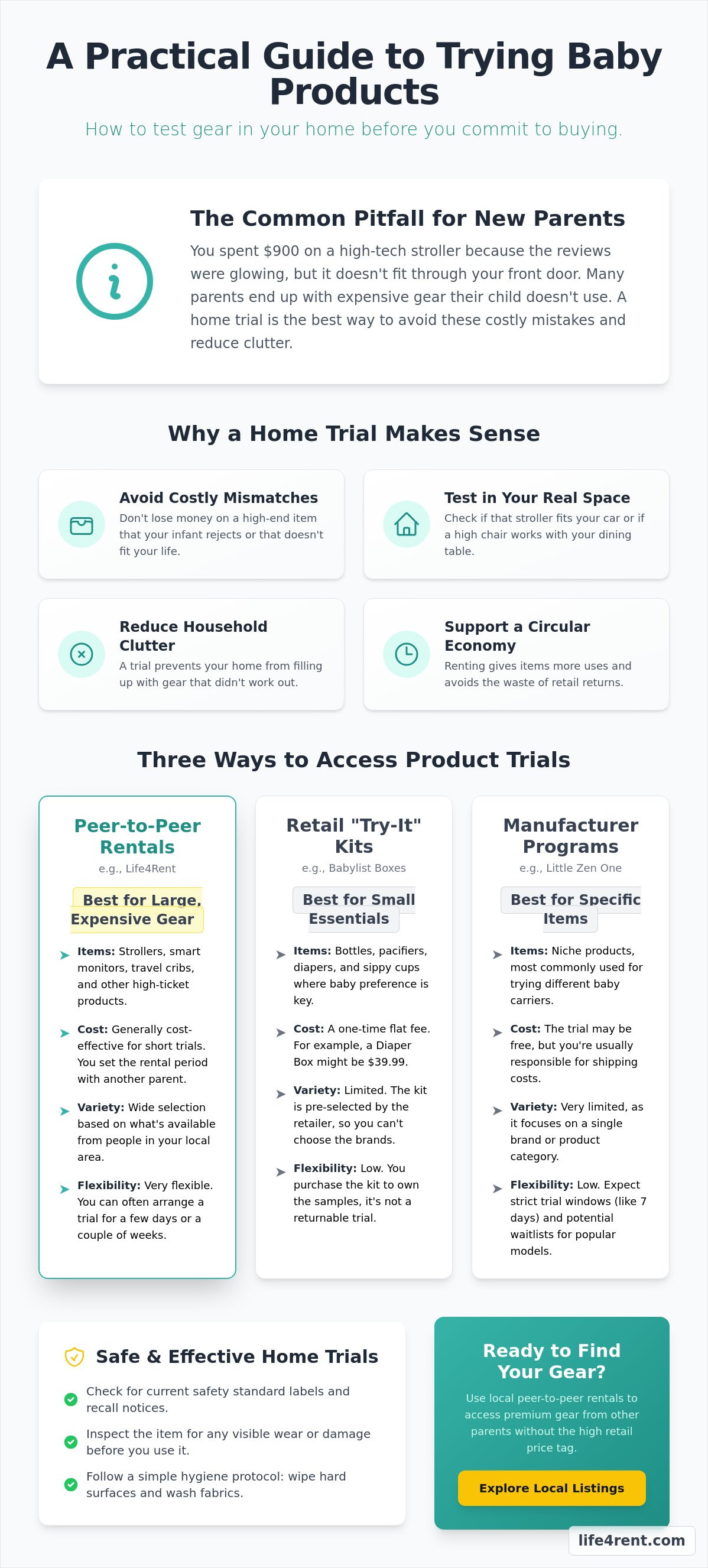
Testing gear doesn't look the same for every category of product. Parents now have three distinct paths to try before you buy baby products depending on whether they need small essentials or heavy equipment. You can choose between pre-selected retail kits, manufacturer-led trial programs, or local peer-to-peer rentals. Each method has specific trade-offs regarding cost, wait times, and the variety of brands available.
Brand-led programs often focus on a single product type. For example, Little Zen One allows parents in the USA and Canada to test up to five baby carriers for one week each. While the trial itself is free, you're responsible for the shipping costs to the next person in line. These programs are popular, with over 20,000 carriers tried through this specific system, but they often involve waitlists for the most sought-after models. You'll also need to make a minimum purchase, such as $125, to unlock additional trials.
Retail kits for small essentials
Retailers have moved toward "try-it" boxes for items that babies are notoriously picky about. These assembled kits are best for bottles, pacifiers, and nappies where you need to see which shape or material your child prefers. Babylist offers several of these options for a flat fee. As of April 2026, their Diaper Box costs $39.99 and their Sippy Cup Box is priced at $25.99. These kits save money by preventing you from buying full-size packs of items that might end up in the bin after one use.
Peer-to-peer rentals for big-ticket items
Local rentals bridge the gap for large, expensive equipment that retail kits can't cover. A neighbor might have the exact stroller or high chair you're considering, allowing for a test run in your own neighborhood. This method is often more flexible than the strict 7-day windows provided by manufacturers. You can check local listings on Life4Rent to see if a nearby parent has the gear you've been eyeing.
- Owners on these platforms often provide honest feedback on how the gear holds up over months of use.
- Rental periods can be adjusted to fit your schedule rather than a corporate shipping timeline.
- The "Option to Buy" feature on some platforms allows you to purchase the item directly from the owner if the trial is successful.
- Hygiene standards are maintained through specific cleaning protocols that owners must follow between bookings.
Peer-to-peer options also offer a financial advantage for the person listing the item. Owners keep 100% of the booking fee, which helps them recoup the high cost of premium gear. This creates a sustainable cycle where high-quality products stay in use longer within the community. It's a practical way to access expensive technology without the immediate commitment of a full retail price tag.
High-ticket baby gear that benefits from a trial run
High-end baby gear often feels like a major investment. Mistakes with products costing over £300 can leave you with significant financial regret and a bulky item taking up space. A practical strategy to try before you buy baby products protects your budget from these high-stakes errors. You wouldn't buy a car without a test drive; premium baby gear shouldn't be any different.
The logic of testing before committing isn't just for nurseries. Many parents already use this approach for home maintenance and DIY projects, as seen in this guide on tool on rent services. This approach to baby gear helps you avoid expensive clutter and ensures every pound spent adds value to your daily routine.
Strollers and travel systems
Strollers are the most common source of buyer's remorse. A "boot test" is vital because dimensions on a website don't account for the specific angles of your car's luggage space. You also need to feel how the wheels respond to the gravel or uneven pavement in your own neighborhood. Practice the fold mechanism while you're in a hurry to see if it's as intuitive as the manual claims. A manageable weight is essential if you frequently deal with stairs or small lifts.
Smart bassinets and baby monitors
Modern electronics offer impressive features, but they often come with software quirks. A smart bassinet might have a white noise setting that sounds perfect to you but irritates your specific baby. Home trials allow you to check if the monitor signal actually reaches from the nursery to your kitchen through your home's walls. You can verify the battery life and app connectivity without the risk of being stuck with an expensive device that doesn't sync with your phone. These tests ensure the technology actually simplifies your life instead of adding new technical troubles.
Practical steps for a safe and effective home trial
Safety is the primary concern when you try before you buy baby products. You should always verify that a product hasn't been recalled by checking the U.S. Consumer Product Safety Commission (CPSC) database before the gear enters your home. This step is vital for peer-to-peer rentals because owners may not always stay updated on every manufacturer notice. Reputable rental platforms expect owners to follow these guidelines to keep the marketplace safe.
Documentation protects both you and the owner during the trial period. Take clear photos or a quick video of the item's condition as soon as you receive it. Note any existing scratches, stains, or mechanical quirks in a message to the owner. This transparent record prevents disputes and ensures you aren't held responsible for previous wear and tear.
ASTM International standards provide a voluntary but helpful benchmark for product performance. Look for these certifications on labels or in the product manual to ensure the gear meets high safety requirements. If you're ready to begin, you can find local baby gear for rent on Life4Rent and start your home trial today.
Hygiene and cleaning protocols
Clean all hard surfaces with baby-safe, non-toxic cleaners to remove dust or lingering bacteria. You should avoid harsh chemicals like bleach which can leave residues that irritate sensitive skin. Steam clean fabrics only if the manufacturer's instructions allow it, as high heat can damage certain synthetic materials. Always use your own fresh linens for cribs or bassinets to ensure the sleep environment is as clean as possible for your child.
Mechanical and structural safety
Inspect all safety belt buckles to ensure they make a secure "click" sound when you fasten them. You must check for frayed straps, loose screws, or any cracks in plastic components that could compromise structural integrity. Test the brake system on strollers multiple times on an incline to verify it holds firmly. Check that the wheels spin freely and don't wobble when the stroller is loaded with weight. Look for the manufacture date sticker to ensure the item hasn't expired, as car seats and some plastic frames have a limited lifespan due to material degradation.
How Life4Rent helps you test gear without the retail price tag
Life4Rent provides a direct way to try before you buy baby products by connecting you with other parents in your community. You can browse through the baby gear category to find specific models that are already being used in your neighborhood. This approach removes the guesswork of online shopping and the high cost of retail mistakes. You get to see how the equipment handles the actual conditions of your home and local streets before you commit to a purchase.
Trust is a core part of the marketplace experience. A transparent review system allows you to see how previous renters rated the cleanliness and condition of an item. Direct messaging lets you talk to the owner about their real-world experience with the product. These conversations often reveal practical details, such as how easy a fabric is to wash or how long the battery actually lasts, that you won't find in a standard product manual.
Finding the right items in your neighborhood
The search function allows you to filter by category so you can see exactly what's available nearby. You should read the descriptions carefully to see if an item is still under its original warranty or if it includes extra accessories like rain covers or car seat adapters. Direct communication with the owner is encouraged so you can coordinate a convenient pickup time. This hyper-local access means you don't have to wait for courier deliveries or deal with massive amounts of cardboard packaging that usually comes with new retail orders.
Transitioning from renter to owner
A short rental period gives you the evidence you need to decide if a product is worth a long-term investment. You don't have to worry about the financial risk of a £500 stroller if you've already tested it for a week at a fraction of that cost. Some owners on the platform enable the "Option to Buy" feature, which allows you to purchase the gear directly after your trial. This ensures you only pay for items that have already proven their value in your daily routine.
The financial benefits extend beyond the trial period. Once your child outgrows their equipment, you can list it on the platform to earn back some of your initial spend. Owners keep 100% of the booking fee, which makes it a practical way to fund the next stage of baby gear. This cycle keeps high-quality products in use longer and helps your local community stay clutter-free while saving money on premium brands.
Smart choices for your nursery
Life4Rent offers a secure peer-to-peer platform where you can browse items across 17 different categories. This model supports sustainable local sharing and lets you access high-quality brands without the full retail commitment. You can even list your own gear once it's no longer needed to help other parents nearby. This community-based approach makes quality equipment accessible to everyone while reducing environmental waste.
Find baby gear to test in your neighborhood on Life4Rent
Real-world experience is always better than a marketing brochure. Take the practical route and let a successful home trial give you the confidence you need for your next purchase.
Frequently Asked Questions
Is it safe to rent a used baby carrier or stroller?
It's safe as long as the item complies with current CPSIA standards and shows no signs of structural wear. You should inspect every buckle and strap for fraying or loose connections before the first use. Peer-to-peer platforms rely on owners to maintain their gear, so a quick visual check for cracks or rust ensures the item remains secure for your child.
How do I clean a rented baby item before using it?
Wipe down hard surfaces with a damp cloth and mild, baby-safe detergent. You don't need harsh chemicals that might damage the materials or irritate your baby's skin. Most fabric covers on strollers or carriers are removable; check the manufacturer's tag to see if they're machine washable or require a gentle hand wash.
What happens if I accidentally damage a rented baby product?
You should notify the owner immediately through the platform's messaging system to discuss the situation. Most minor wear is expected, but significant damage usually requires a repair or replacement fee based on the owner's terms. It's helpful to review the specific rental agreement on Life4Rent before you book to understand your financial responsibility.
Can I try more than one stroller at a time on Life4Rent?
Yes, you can book multiple items simultaneously to compare different models side-by-side in your own home. This is the most effective way to try before you buy baby products because it highlights the subtle differences in handling and weight. You can test how two different strollers fit in your car boot during the same afternoon.
Are there any baby products I should never rent or buy used?
Car seats are the main item you should avoid renting or buying second-hand because you can't verify their crash history. Hidden structural damage makes them unsafe even if they look perfect on the surface. You should also be cautious with breast pumps or crib mattresses due to hygiene concerns and the potential for mold growth.
How much can I save by trying before I buy?
You save the full retail price of any high-ticket item that your baby would have rejected. Testing a £600 stroller for a small rental fee prevents a total loss if the fold mechanism doesn't work for your lifestyle. Many parents find they save hundreds of pounds by identifying the right gear the first time rather than cycling through multiple retail returns.
Do brand-led 'try before you buy' programs charge for shipping?
Most programs do include some form of shipping or service fee. For example, the Babylist Hello Baby Box requires an $8.95 shipping charge plus a minimum $30 purchase. Programs like Little Zen One offer free trials for carriers but require you to pay the cost of shipping the item to the next person in the trial queue.
What should I do if a rented item is recalled while I have it?
Stop using the product immediately and check the official CPSC notice for the specific safety risk. You should then contact the owner and the platform to arrange a return or a safe disposal if the manufacturer recommends it. It's a good practice to set up Google Alerts for the specific models you're currently testing to stay informed about any new safety updates.
Related guides on Life4Rent
Ready to rent instead of buy? See all baby & kids gear available to rent on Life4Rent →
Life4Rent
Rent it. Earn from it. Own less, access more.
Browse peer-to-peer rentals near you, or list what you own and start earning — all protected by Life4Rent Protect.
About the author
Stockholm, Sweden
Stella researches and writes about sustainable consumption and the circular economy for the Life4Rent Renting Academy. She previously worked at a Nordic sustainability research institute studying how access-over-ownership models reduce household CO₂ emissions, and translates that research into practical guides for everyday renters.