Tile Saw Rental for Bathroom Remodel: 2026 Guide
August 8, 2026
Published by Life4Rent · Operated by Brohf Software OÜ
A budget wet saw feels like a win until the underpowered motor vibrates your expensive porcelain tiles into jagged shards. Most homeowners find that professional results require professional tools, but the $800 price tag for a high-end saw is hard to justify for a single weekend of work. It's frustrating to choose between cheap equipment that ruins materials or paying high retail rates at big-box stores. You want clean, crisp edges without turning your garage into a graveyard for bulky tools you'll never use again.
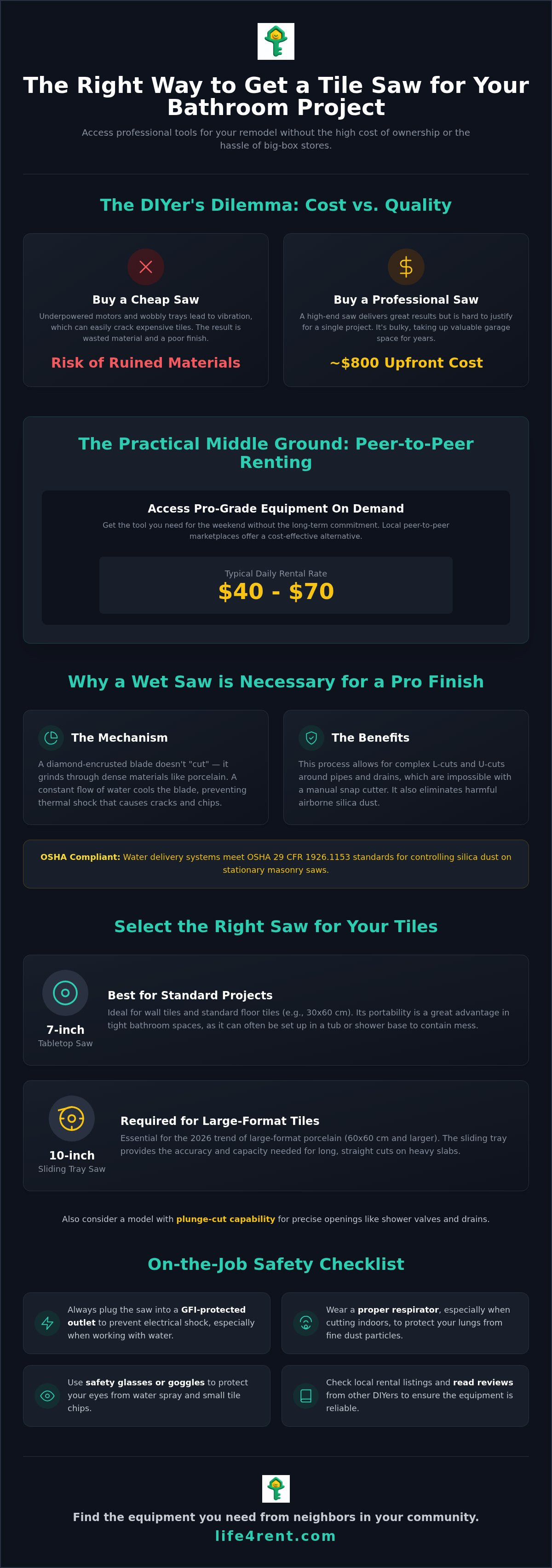
A tile saw rental for bathroom remodel projects offers a practical middle ground that keeps your costs low and your workspace clear. You'll learn how to select the right equipment for 2026 trends like large-format porcelain tiles and how to meet OSHA 29 CFR 1926.1153 standards for water delivery systems. This guide shows you how to bypass the typical retail markup by finding quality gear through peer-to-peer marketplaces like Life4Rent.
We cover everything from daily rates, which typically range between $40 and $70, to the specific respirator requirements for indoor cutting. You can skip the stress of tool ownership and focus on finishing your space with the right equipment. Local neighbors often have the exact masonry saws you need, ready for pickup without the corporate hassle.
Why a Tile Saw Rental is Necessary for Your Bathroom Project
Precision is the foundation of any successful bathroom renovation. Most homeowners realize quickly that a standard ceramic tile cutter works well for simple kitchen backsplashes but fails during a full floor or shower install. You'll likely need a tile saw rental for bathroom remodel tasks because today's materials, specifically porcelain and natural stone, are incredibly dense. These tiles don't just "snap" cleanly under pressure; they often shatter or chip if you use the wrong tool.
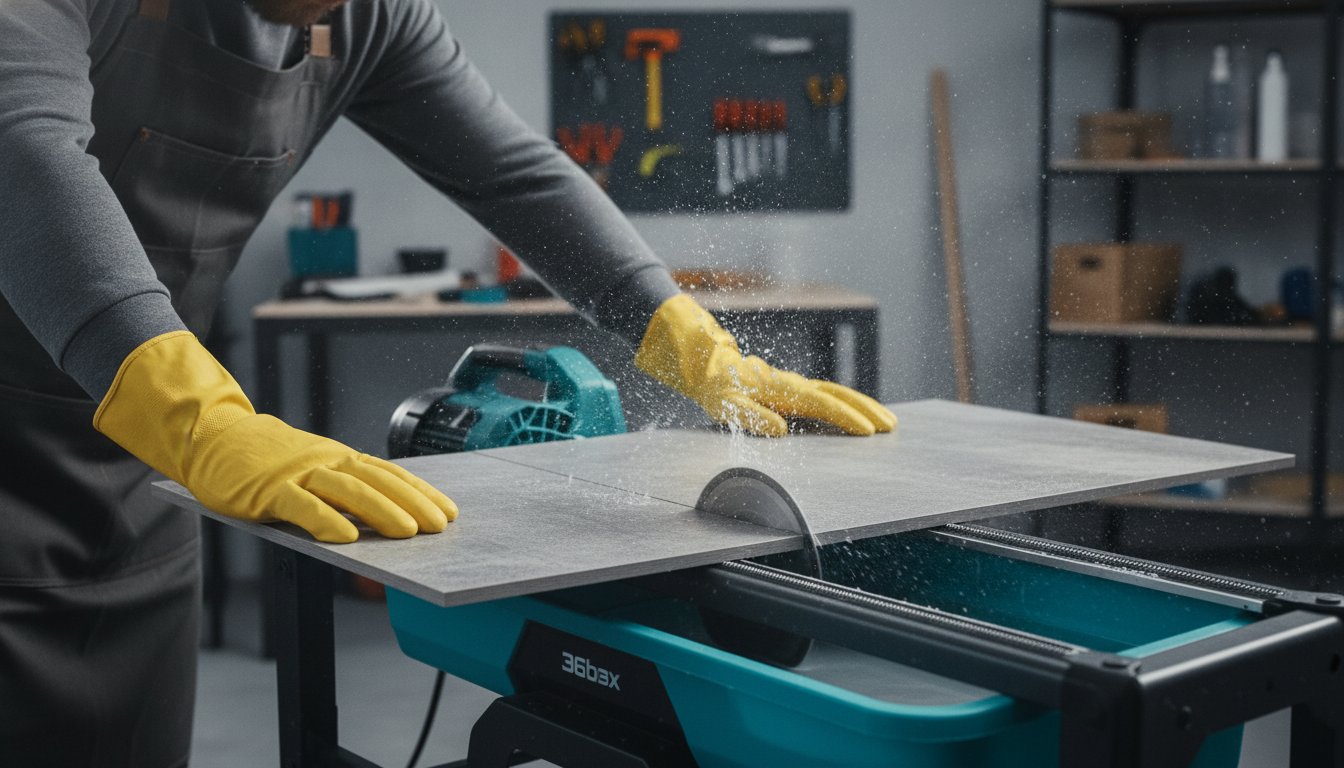
The mechanics of a wet saw are straightforward but essential for quality work. A diamond-encrusted blade grinds through the tile rather than cutting it like a traditional wood saw. Water constantly flows over the blade to prevent heat buildup. This cooling process protects the tile from thermal shock and keeps the diamond surface from wearing down prematurely. It also solves the problem of silica dust. Since you're often working in a small, enclosed bathroom, keeping dust out of the air is a major safety requirement. This water delivery system is actually a requirement under OSHA standard 29 CFR 1926.1153 for stationary masonry saws.
Wet Saws vs. Manual Snap Cutters
Manual cutters are great for speed on thin ceramic. They fall short when you need to make an L-cut around a toilet base or a U-cut for a shower valve. A wet saw allows you to stop and start cuts mid-tile, which is impossible with a snap cutter. You get clean, chip-free edges that look much better once the grout is applied. This level of detail is what separates a DIY look from a professional finish. Complex cuts for floor drains also require the control that only a powered blade can provide.
The Cost of Buying vs. Renting
It's hard to justify spending hundreds of dollars on a professional wet saw for a project you might do once every ten years. Cheap, entry-level saws often have plastic trays that flex, leading to crooked cuts and wasted material. A tile saw rental for bathroom remodel projects gives you access to heavy-duty equipment without the long-term storage headache. These machines are bulky and take up significant shelf space in a garage or basement.
Marketplaces like Life4Rent offer a smart alternative to traditional retail rentals. You can find high-quality wet saws from people in your local community. This peer-to-peer model usually costs less than big-box stores and doesn't require the same steep deposits. It's a practical way to get the gear you need while supporting a more sustainable sharing economy. You get the benefit of a professional tool without the high cost of ownership or the hassle of corporate rental counters.
You Should Choose the Right Saw for Your Tiles and Space
Bathrooms are notoriously tight spaces, and a massive industrial machine isn't always the right fit for a home project. You'll need to pick a saw that balances power with the physical limits of your workspace. A 7-inch tabletop wet saw is a smart choice for wall tiles and standard floor projects. These units are portable enough to sit inside a bathtub or on a small temporary bench, which helps keep the water and mess contained in one area.
Large-format tiles are a major trend in 2026, with many homeowners choosing 60x60 cm or even 90x90 cm porcelain slabs to minimize grout lines. A tile saw rental for bathroom remodel projects using these sizes usually requires a 10-inch sliding tray saw. These machines offer the accuracy and bed length needed to prevent the tile from binding or cracking during long cuts. You'll also want to look for a model with a stand to save your back during a long day of floor work.
Plunge-cut capabilities are another feature to prioritize if your layout is complex. This allows you to lower the blade directly into the center of a tile, which is necessary for cutting precise openings for shower valves or floor drains. You'll find that having the right specialized equipment makes these difficult cuts much less stressful than trying to use a handheld grinder. You can check the tools section on Life4Rent to see what types of saws are available from neighbors in your area.
Size Matters for Bathroom Layouts
Most 7-inch rental saws handle standard 30x60 cm tiles without a problem. However, large format tiles require a saw with a significantly larger cutting capacity to manage the weight and length of the slab. Always check the maximum rip cut and diagonal cut length before you agree to a rental. If your tiles are larger than 18 inches, a standard 10-inch tub saw is usually the minimum requirement for a clean, professional finish.
Essential Features for Precise Results
A reliable water pump is the most important component of any wet saw. It ensures the blade stays cool and prevents the fine silica dust from becoming airborne in your home. Laser guides or clear measurement scales are helpful for beginners who need to align cuts quickly without a lot of trial and error. If you plan on custom corner joints or decorative patterns, make sure the unit includes a miter gauge for angled cuts.
Where to Find a Tile Saw Rental Locally
You used to have to visit an industrial park or wait at a corporate service desk just to secure a tile saw rental for bathroom remodel projects. Big-box stores are the most common route, but they often require high deposits and have strict return windows that don't always align with a DIY schedule. If you miss the return time by even an hour, you're often hit with a full extra day's charge. These retailers also tend to have equipment that has been heavily used and poorly maintained by hundreds of different renters.
Specialty tool hire shops are another option, though they usually cater to professional contractors. These businesses might not have the patience to explain how a specific model works if you're a first-timer. They also tend to be located in industrial areas that require a significant drive, eating into your project time. If you don't have a large truck, transporting their heavy-duty industrial units can be a logistical nightmare. You'll often find that these professional shops close early on Saturdays and aren't open at all on Sundays.
The Benefits of Renting from Neighbors
Owners on platforms like Life4Rent often provide the specific diamond blade you need for your tile type. Since these are private individuals, they might even offer advice on how the saw handled similar porcelain or stone in their own homes. Neighborhood rentals save you fuel and time because the equipment is usually just a few streets away. This peer-to-peer model is a more sustainable way to manage resources in 2026, as it reduces the need for new power tools to be manufactured and shipped. Flexible pickup and return times are common, making it easier to grab the saw on a Friday evening and return it Sunday night.
What to Check Before You Take the Tool Home
You should always examine the equipment before you leave the pickup point. Check the diamond blade for visible wear, missing segments, or warping. A dull blade will cause the very chipping you're trying to avoid and can even be a safety hazard. Test the water pump to ensure it provides a steady, continuous stream to the blade to keep dust down. Finally, verify that the sliding table moves smoothly without any grinding or catching that could ruin a precise cut. This brief inspection saves you from having to drive back for a replacement mid-project.
You Can Use Your Rented Saw Safely with These Tips
Safety starts with the realization that you're mixing water and high-voltage electricity. This combination is dangerous, so you must always plug your equipment into a GFI-protected (Ground Fault Interrupter) outlet. If the saw doesn't have a built-in GFI on the cord, use a portable one to protect yourself. This simple step prevents electric shocks if water splashes into the electrical components during your work.
Personal protective equipment is non-negotiable when the motor is running. These saws are loud, and the high-pitched whine of a diamond blade hitting porcelain can cause hearing damage over a long afternoon. Safety glasses are equally vital because the blade can throw small, sharp shards of glaze or stone at high speeds. You'll also find that a tile saw rental for bathroom remodel work produces a thick slurry of water and tile dust. This mixture can permanently stain finished surfaces like wood floors or marble, so you should protect your workspace with plastic sheeting or heavy drop cloths.
Proper cutting technique depends on patience. You should let the blade's speed do the work instead of forcing the tile into the diamond segments. If you push too hard, you risk cracking the tile or overheating the motor. Slow, steady pressure ensures a crisp edge and prolongs the life of the rented blade. You'll get much better results by taking your time on every pass.
Setting Up Your Workspace
A stable, level surface is the key to accurate cuts. If the saw wobbles, your lines will be crooked and the vibration might chip the tile. Always use a "drip loop" on your power cord. This means the cord should hang down below the level of the outlet before it goes back up to the plug. This prevents water from running down the cord and straight into the socket. You should also keep a bucket of clean water nearby to refresh the reservoir, as dirty water can clog the pump.
Maintenance and Return Protocol
Owners expect the tool to come back in the same condition they provided it. You should clean the tray and the water pump thoroughly after you finish your cuts. Tile sediment can turn into a concrete-like substance if it dries, making it very difficult to remove later. Dry the metal components with a rag to prevent rust before you return the gear. Check the blade one last time to ensure no segments are missing or damaged. If you're ready to find a reliable machine, you can browse available tile saws on the marketplace today.
Start Your Bathroom Remodel with Life4Rent
You've planned your layout and understood the safety protocols, so now you need the right gear to get started. You can browse the "tools" category on Life4Rent to see the current inventory available near you. This marketplace connects you directly with neighbors who own professional equipment. You'll find that a tile saw rental for bathroom remodel projects is much easier to manage when you aren't dealing with corporate bureaucracy or industrial park commutes.
Take a moment to compare daily rates and read reviews from other DIYers who have used the equipment recently. These honest insights help you identify which saws are reliable and which owners are easy to coordinate with. You should message the owner before you commit to ask about the specific blade type they provide. If you're cutting glass mosaic tiles, you'll need a different diamond grit than someone cutting thick porcelain floor slabs. This tool on rent approach keeps your project budget under control by avoiding the steep purchase price and depreciation of new power tools.
How to Find a Saw on the Marketplace
Enter your location to see listings within a few kilometers of your home. This proximity makes it easy to pick up the saw on a Friday evening after work. You should look for high-resolution photos that show the current condition of the saw, including the water tray and the power cord. If the photos are blurry or outdated, don't be afraid to ask for a current picture. Confirm the rental duration with the owner to ensure you have enough time for both floor and wall tiling without feeling rushed. Many owners offer better rates for a three-day weekend than for single-day rentals.
Prepare for Your Bathroom Project
You should measure your bathroom area and calculate your tile needs before you book the saw. Factor in a 10% waste margin for cuts and potential breakage, or 15% if you're using a complex herringbone pattern. Gather your other essentials like spacers, thin-set mortar, and waterproof membranes so you don't waste your rental period running back to the hardware store. It's helpful to have a dedicated workspace cleared out before the saw arrives. Book your tile saw rental for bathroom remodel a few days in advance to ensure the equipment is ready when your project window begins. This preparation ensures that once the saw is in your hands, you can focus entirely on making those precise cuts that give your bathroom a professional finish.
Finish Your Bathroom Project with the Right Gear
A successful renovation depends on using the right equipment for modern porcelain and natural stone. Your choice between a 7-inch or 10-inch saw ensures clean edges and reduces material waste based on your specific tile layout. You don't need to buy expensive gear that will just collect dust in your garage after a single weekend of work.
A tile saw rental for bathroom remodel projects is a smart way to access professional-grade wet saws without the typical retail markup. You can support your local community by renting directly from neighbors while keeping your project costs low. The secure and transparent process on the marketplace makes it simple to find reliable tools just a few streets away. You get the benefit of pro-grade equipment for a fraction of the retail price.
You've got the plan and the safety tips; now you just need the tool to bring it all together. Find a tile saw for rent near you on Life4Rent and start making those precise cuts today. Your new bathroom is within reach once you have the right machine for the job.
Frequently Asked Questions
How much does it cost to rent a tile saw for a day?
Daily rates for a standard wet saw typically range between $40 and $70. If you need a larger model for massive floor tiles, you can expect to pay around $79 per day. Prices vary by location; rural areas might be as low as $25, while major cities like Seattle often reach $100. Always check for hidden fees like damage waivers or cleaning charges before you sign the agreement.
Do I need a special blade for porcelain tile?
You definitely need a diamond blade specifically rated for porcelain. Standard ceramic blades are too soft and will dull quickly or cause the tile to shatter. Porcelain is much denser than ceramic, so the blade needs a continuous rim to provide the smoothest possible finish. Check with the tool owner on Life4Rent to see if they've included a porcelain-rated blade with the saw.
Can I use a wet tile saw indoors during a bathroom remodel?
You can use a wet saw indoors if you follow strict safety protocols. OSHA standards for 2026 require an integrated water delivery system to control silica dust. You must also wear an APF 10 respirator when cutting in confined spaces like a bathroom. It's a good idea to set the saw up in a bathtub or on a heavy plastic drop cloth to contain the slurry.
Is it hard to learn how to use a wet tile saw?
Most DIYers find the basic operation of a wet saw easy to master within a few practice cuts. The most important part is to let the blade do the work without forcing the tile. You'll need to focus on keeping your hands clear of the blade and maintaining a steady water flow. A tile saw rental for bathroom remodel projects usually pays for itself in the time you save.
What size tile saw do I need for standard bathroom tiles?
A 7-inch tabletop saw is usually enough for standard subway tiles or 12-inch squares. If you're working with large-format tiles over 18 inches, you'll need a 10-inch sliding tray saw. These larger machines provide the rip capacity and stability required for long, straight cuts. Always check the diagonal cutting capacity of the machine if you plan on laying tiles in a diamond pattern.
Who is responsible if the saw blade breaks during my project?
Responsibility for a broken blade usually depends on the cause of the failure. If the blade wears down naturally from use, the owner typically covers the cost as part of the rental fee. However, if you damage the blade by forcing it or cutting improper materials, you might be responsible for the replacement. It's best to discuss this with the owner through the messaging system before you start.
How do I transport a heavy 10-inch tile saw?
Most 10-inch tub saws are bulky and heavy, so you'll likely need a vehicle with a large trunk or an open bed. These machines often come with a folding stand that you should secure separately to prevent damage during transit. It's helpful to bring a friend to help with the lifting; these units can weigh over 30 kilograms. Make sure the water tray is empty before you load it.
Should I buy a cheap saw instead of renting a professional one?
Professional-grade saws are almost always a better choice than buying a cheap, entry-level model. Budget saws often have underpowered motors and flimsy trays that flex, leading to crooked cuts and wasted tiles. A tile saw rental for bathroom remodel tasks gives you access to a high-quality machine that would otherwise cost $800 or more. You'll get cleaner edges and a much faster workflow without the storage headache.
Life4Rent
Rent it. Earn from it. Own less, access more.
Browse peer-to-peer rentals near you, or list what you own and start earning — all protected by Life4Rent Protect.
About the author
London, United Kingdom
Fred covers rental technology, app features, and platform mechanics for the Life4Rent Renting Academy. With a background in fintech journalism, he specialises in breaking down how digital rental platforms work — from payment protection and identity verification to smart pricing and booking management.