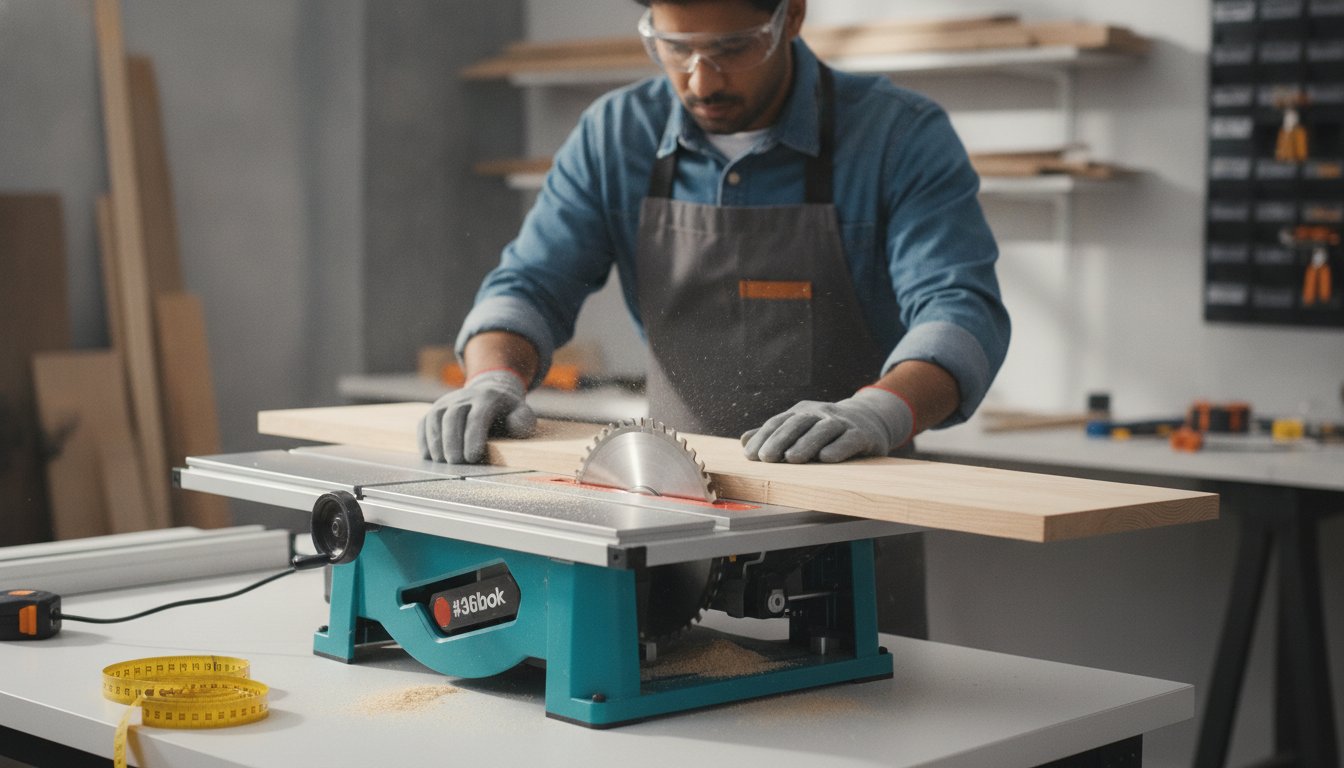
Table Saw Rental: Guide to Getting the Right Tool
August 29, 2026
Published by Life4Rent · Operated by Brohf Software OÜ
You don't need to own a professional workshop to finish that custom shelving unit or deck project. Most high-end woodworking tools spend nearly all their lives gathering dust in a garage, taking up valuable space you could use for something else. A table saw rental provides a practical way to get professional-grade results without the heavy upfront cost of a new machine. You likely already know that buying a quality saw can set you back hundreds of euros, which is a lot of money for a one-off weekend task.
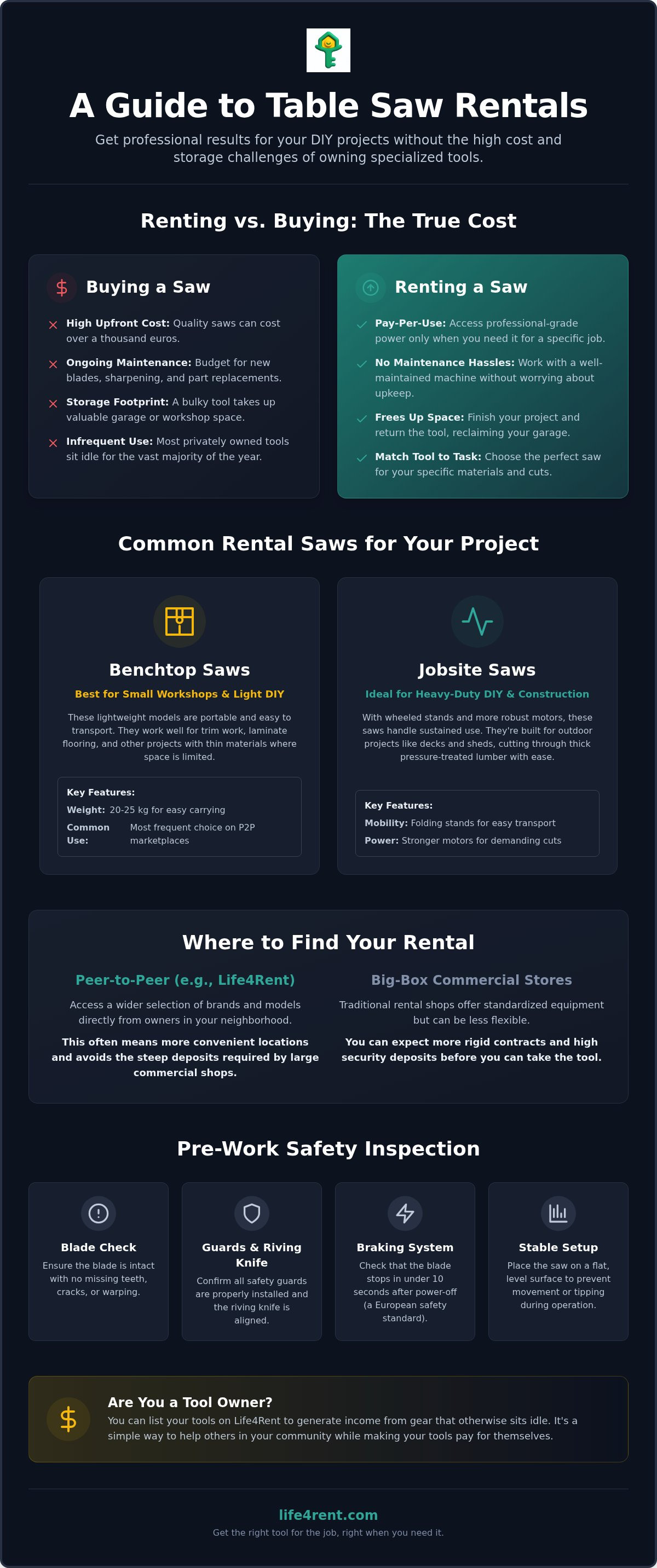
This guide will show you how to pick the right machine for your specific job and compare different ways to find one. We'll look at why a peer-to-peer marketplace like Life4Rent often beats the rigid contracts and high deposits found at big-box stores. You'll also learn the essential safety requirements, such as why European models must stop their blades in under 10 seconds, so you can work with confidence. It's about getting the tool you need, finishing the work, and then simply giving it back.
Why a table saw rental is often better than buying
Most homeowners don't have a massive workshop with endless floor space. A table saw is a bulky machine that requires a significant permanent footprint to operate safely. If you only have a standard garage, storing a large saw means sacrificing space for your car or other storage needs. You'll also need to account for the outfeed area, which further expands the room required for a safe setup.
A table saw rental solves this problem by providing the tool only when it's necessary. High-quality cabinet saws often cost more than a thousand euros, which is a steep price for a tool you might not use every week. You get the benefit of professional power without the massive upfront investment. It also saves you from the hassle of installing specialized electrical circuits that many stationary models require.
To see how a table saw works and why it's such a vital tool for your workshop, watch this helpful guide:
The true cost of tool ownership
The sticker price on a new saw is just the first expense you'll encounter. You also need to budget for high-quality blades, which require professional sharpening or replacement as they dull over time. Motor brushes, belt replacements, and alignment checks add to the long-term maintenance debt. Garage space also has a hidden value. Every square meter occupied by a stationary tool is space you can't use for other hobbies or storage.
Frequency of use as a decision factor
Major DIY projects like building a deck or remodeling a kitchen are often isolated events. You might need to make precise rip cuts for two weeks and then not touch the saw again for years. Many privately owned power tools sit idle for 350 days a year. A table saw rental matches the equipment to the specific phase of your job. You'll always work with a well-maintained machine without the storage headache or the risk of tool obsolescence.
Common types of table saws available for rent
Specific projects demand specific equipment. You don't need a massive cabinet saw to cut a few pieces of trim, just as a small benchtop model won't handle thick oak beams for a pergola. A table saw rental gives you the freedom to choose a machine that matches your workspace and your material list. Most rental options fall into four categories based on their size and motor power.
Benchtop and jobsite models are the most common because they're portable. Contractor and cabinet saws offer more stability but are much harder to move between locations. You can browse the tools category on Life4Rent to see which models are currently available in your neighborhood.
Benchtop saws for small workshops
Lightweight designs make transport in a standard car easy. Most of these units weigh around 20 to 25 kg, so you can carry them into a basement or up a flight of stairs without help. These models work best for trim work, thin materials, and light DIY tasks like installing laminate flooring. They're a favorite for peer-to-peer listings because they're easy to store and hand over to another user.
The rip capacity is usually smaller than larger professional units. You might struggle to cut wide sheets of plywood on a benchtop model without using additional support stands. They provide a practical solution for indoor projects where space is limited and the materials are manageable.
Jobsite saws for heavy-duty DIY
Wheeled stands allow one person to move the tool around a driveway or a backyard construction site. These stands often fold down, which makes them easy to load into a van or large SUV. The motors are generally more robust than benchtop versions and can handle sustained use throughout a long workday. They're built to withstand the dust and vibration of a busy project site.
A tool on rent like this is ideal for building a shed, a deck, or any project that involves thick pressure-treated lumber. The fences on jobsite saws are typically more accurate and stay parallel longer than those on entry-level benchtop models. They offer a significant upgrade in power without sacrificing the portability you need for home projects.
Contractor saws provide a balance between stability and mobility for larger boards. They feature heavier tops that reduce vibration, which leads to cleaner cuts on long rips. Hybrid or cabinet saws are rarer in the rental market but offer the best precision for fine furniture. These machines are designed for permanent workshop placement, so you'll usually need a trailer and extra help if you find one for rent.
A comparison of commercial shops and peer-to-peer platforms
The location where you pick up your gear is just as important as the model you choose. Commercial rental shops have been the standard for decades, but the rise of digital marketplaces has shifted the balance. You now have the choice between a large industrial supplier and a local neighbor. Each path has its own set of trade-offs regarding cost, convenience, and the actual condition of the equipment.
A table saw rental from a large company often feels like a transaction at a bank. You'll find standardized processes, but you might lose the flexibility that a home project requires. Peer-to-peer options provide a more community-focused alternative that often fits better into a busy DIY schedule.
The big-box store experience
Large commercial shops maintain standardized fleets of a few specific brands. You can usually expect rigid 4-hour or 24-hour rental windows that don't always align with your actual project timeline. Paperwork at these locations can be extensive and often involves significant credit holds on your bank account. These tools see heavy use from contractors and amateurs alike, so they might lack the fine precision needed for detailed furniture work due to rough handling by previous users.
Benefits of the Life4Rent marketplace
The peer to peer equipment rental model offers a more personal and flexible approach to sourcing tools. You can communicate directly with the owner to ask specific questions about the fence alignment or the age of the blade. Prices are often lower because individuals don't have the massive overhead costs associated with a retail storefront. Local listings often mean you'll find a high-quality saw just a few streets away rather than driving across the city to an industrial park.
Transactions with a neighbor support your local community directly. You're helping a fellow DIY enthusiast or professional woodworker offset the cost of their own shop. This marketplace model fosters a sense of trust and shared knowledge that you simply won't find at a corporate checkout counter. Most owners are happy to provide a quick demonstration or share tips on how to get the best results from their specific machine.
Pickup and drop-off times are much easier to manage when you deal with an individual. You won't have to rush through traffic to beat a 5:00 PM closing time at a warehouse. Instead, you can coordinate a time that fits your life, whether that's a late-evening handover or a Sunday morning start. This flexibility reduces the stress of the table saw rental process and lets you focus on the quality of your woodwork.
Safety requirements and pre-work inspections
Safety is the most important part of any woodworking job. You need to approach a table saw rental with a plan to protect yourself and the machine. A thorough check ensures that the tool is ready for the precision work you have planned. This process is especially vital when you use a machine that has been previously operated by other DIYers. A table saw rental remains a safe option only if you treat the equipment with respect and follow a strict inspection routine.
Essential safety gear for woodworkers
Impact-resistant eye protection prevents injury from flying splinters that a high-speed blade can eject. You should also use ear protection to manage the noise from the motor, which often reaches 86 dB. Dust masks are necessary when you work in enclosed spaces to keep your lungs clear of fine particles. Tight-fitting clothes prevent fabric from snagging in the spinning blade, so tuck in your shirt and remove any jewelry or loose sleeves.
The five-point rental inspection
Check the power cord for any frays or exposed wires before you plug the machine into a socket. Verify that the riving knife is present and properly aligned behind the blade. This metal plate is a critical safety feature that prevents the wood from pinching the back of the blade and causing kickback. Test the emergency stop button to confirm it kills the motor immediately. European safety regulations require a braking system that stops the blade in under 10 seconds, so verify this function before you begin your first cut. Ensure the blade guard moves freely and covers the teeth as the wood passes through the cut.
Inspect the blade itself for any cracked or missing carbide teeth while the machine is unplugged. A damaged blade produces rough cuts and increases the risk of the tool grabbing the material. The rip fence must lock securely at both ends to prevent it from shifting mid-cut. This stability is what keeps your lines straight and your hands safe from sudden movements. Push sticks are essential for any cut that brings your hands near the blade. These simple tools give you control while keeping your fingers at a safe distance from the spinning teeth.
You can find well-maintained equipment and ask owners about their safety features by browsing the available tools on Life4Rent.
The process to find or list equipment on Life4Rent
You can find the right equipment without visiting a massive industrial park. The Life4Rent marketplace connects you with neighbors who have the specific tools you need for your DIY project. You can filter the tool category by your zip code to find a table saw rental that's just a few streets away. This local approach saves you time on transport and makes a table saw rental more accessible for a quick weekend task.
The platform handles the communication between you and the owner through a secure system. You can discuss the specific requirements of your job or ask for a quick demonstration when you pick up the saw. This transparency ensures that both parties understand the condition of the tool and the terms of the agreement. It's a much more personal experience than the standard retail checkout.
How to choose a reliable listing
A reliable listing usually features clear photos of the actual tool in its current workshop environment. Avoid listings that only use generic stock images from a manufacturer, as these don't show the machine's true condition. You should read through previous reviews from other renters to verify the owner's reliability and the machine's performance. It's also smart to ask the owner about the age of the blade or if they have specific push sticks available before you commit.
Monetize your own workshop
Most experienced woodworkers have a collection of high-quality tools that spend most of the year sitting idle. You can turn your stationary equipment into a source of passive income by listing it on the platform. This helps you offset the cost of your own hobby while providing a valuable service to your local community. It's a practical way to help others get their projects done without them needing to buy new gear.
You should create a detailed listing that includes clear safety instructions and the specific technical parameters of your saw. Mention any extra accessories you include, such as a miter gauge or a mobile base. Set a fair daily rate based on what other listings in your area are charging. The platform manages the bookings and handles the payment process, which protects your equipment and your time.
Finish your woodwork with the right equipment
A table saw rental gives you professional results without the burden of long-term storage or maintenance costs. You now know how to inspect the blade and why local marketplaces offer more flexibility than commercial depots. These practical steps ensure your woodwork is accurate and your workshop remains safe. It's a smart way to handle one-off projects like deck building or floor installation.
Life4Rent provides a secure platform to browse 17 categories of rental items, ranging from heavy-duty workshop tools to outdoor gear. Local support comes from neighbors who know their equipment well and offer direct advice. This model keeps your DIY budget under control while giving you access to the exact machine your job requires. The marketplace is a reliable and honest alternative to traditional retail that builds trust within the neighborhood.
Find a table saw for your next project on Life4Rent and get your woodwork started today.
Frequently Asked Questions
How much does it cost to rent a table saw for a day?
Prices for a daily rental vary depending on whether you choose a commercial shop or a peer-to-peer platform. You can often find local listings for approximately £14 or €30 per day, while industrial suppliers may charge £50 or more. The total cost usually reflects the saw's power and included features like a stand. A table saw rental through a community marketplace typically offers a more affordable path for a quick DIY project.
Do I need a truck to transport a rented table saw?
Most benchtop and jobsite models fit easily inside the trunk or the backseat of a standard passenger car. These portable units typically weigh around 21.5 kg and are designed for easy transport by a single person. You only need a truck or a trailer if you decide to rent a stationary contractor saw or a massive cabinet model. It is always smart to check the machine's dimensions in the listing before you pick it up.
Is it safe to rent a power tool from a neighbor?
Peer-to-peer transactions are reliable when you use a marketplace that features a transparent review system. You can check the history of the equipment and the owner's reputation before you commit to the deal. Most tool owners take great pride in their workshop gear and maintain it better than a high-volume commercial shop. A quick demonstration during the handover can also help you verify that the machine is in good working order before you leave.
What happens if the table saw blade gets dull during my project?
You should discuss the condition of the blade with the owner before the rental period begins. Some owners include a sharp blade in the daily rate, while others might ask you to provide your own for intensive projects. If the blade becomes dull while you work, stop immediately to avoid motor strain and dangerous friction. It is often easier to buy a specific blade for your task to ensure you get the cleanest possible results.
Can I rent a table saw for a single afternoon?
Many peer-to-peer listings allow for flexible durations that include single-day or even shorter windows. Commercial shops often have a minimum 24-hour charge regardless of how long you actually use the equipment. A table saw rental through a marketplace like Life4Rent often provides the most flexibility for small tasks that only take a few hours. You can coordinate the exact pickup and drop-off times directly with the owner to fit your specific schedule.
What is kickback and how do I avoid it with a rental saw?
Kickback occurs when the wood pinches the back of the spinning blade and is thrown toward the operator at high speed. You can avoid this by ensuring the saw has a riving knife and a properly aligned rip fence. Never attempt to make freehand cuts without a fence or a miter gauge to guide the material. Push sticks and a stance to the side of the blade path help you stay safe during operation.
Does Life4Rent offer insurance for the tools I list?
Life4Rent facilitates the connection between owners and renters, and you should check the current platform terms for specific coverage details. Most peer-to-peer platforms encourage owners to maintain their own equipment insurance for high-value workshop tools. The secure payment system and user reviews provide a layer of trust for every local transaction. It is always a good idea to document the tool's condition with photos before and after the rental for your own peace of mind.
Are push sticks usually included in a table saw rental?
Most responsible owners include push sticks and other essential safety accessories as part of their table saw rental package. These items are vital for keeping your fingers at a safe distance from the blade during narrow rip cuts. You should verify their presence in the listing description or ask the owner directly through the platform's messaging system. If they aren't included, you can easily find or make your own to ensure you work safely on your project.
Related guides on Life4Rent
Ready to rent instead of buy? See all tools & equipment available to rent on Life4Rent →
Life4Rent
Rent it. Earn from it. Own less, access more.
Browse peer-to-peer rentals near you, or list what you own and start earning — all protected by Life4Rent Protect.
About the author
Stockholm, Sweden
Stella researches and writes about sustainable consumption and the circular economy for the Life4Rent Renting Academy. She previously worked at a Nordic sustainability research institute studying how access-over-ownership models reduce household CO₂ emissions, and translates that research into practical guides for everyday renters.