Table Saw Rental: A Practical Guide to Local P2P Woodworking Tools (2026)
Michael Wright
July 29, 2026
The most expensive tool in your workshop is often the one you only use once a year. A professional-grade cabinet saw can easily cost over $1,500, which is a steep investment for a single flooring project. Most hobbyists find that heavy equipment is a nightmare to transport and big-box store contracts are unnecessarily complex. You want clean, professional cuts without the burden of permanent storage or high retail costs.
A local table saw rental through a peer-to-peer marketplace is often the most practical way to get the job done. You'll learn how to select the right motor power for your materials and how to move these heavy units without damaging your vehicle. This guide explains how to secure a reliable machine from someone in your community while avoiding the typical markups of commercial rental yards.
We'll cover the safety essentials for 2026 and the specific steps to verify a tool's condition before you start your project. Platforms like Life4Rent help you access quality gear at a fraction of the cost of buying new. This approach keeps your project on budget and keeps bulky machinery out of your garage when it isn't needed.
Why Table Saw Rental is Often Better Than Buying
Accuracy matters for any project where joints must fit together without gaps. A circular saw is fine for crosscuts, but it's nearly impossible to rip an eight-foot sheet of plywood perfectly straight without a guide. A table saw provides the stable fence and flat surface needed for repeatable, professional results. You'll find that the rigid table surface supports the weight of the wood, which prevents the material from binding or bowing during the cut.
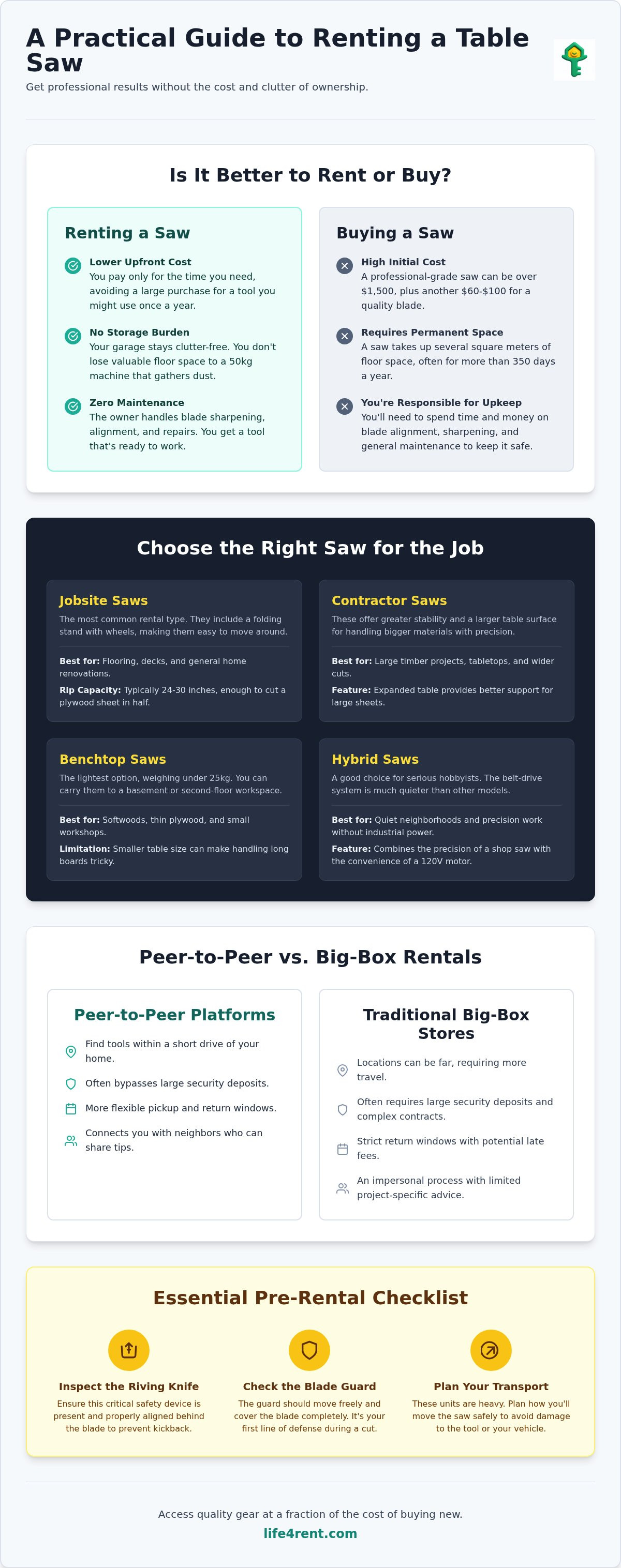
Most DIYers find that a table saw rental makes more sense than a purchase because the active work time is usually less than 48 hours. If you buy a saw, you aren't just paying the retail price. You're also responsible for the blades, which can cost $60 to $100 for a decent 40-tooth carbide version. A dull blade is a safety hazard, so you'll eventually need to pay for sharpening or replacements as you use the tool over several years.
Maintenance is another hidden burden that many people overlook when they browse tool catalogs. You have to ensure the blade is perfectly parallel to the miter slots and the fence. If these parts drift out of alignment, the saw becomes dangerous and produces inaccurate cuts. Rental units are typically kept in working order by owners who take pride in their equipment, so you don't have to spend hours with a dial indicator before you start cutting.
The Real Cost of Tool Ownership
Garage space has a price that's often higher than the tool itself. If you store a 50kg machine, you're losing several square meters of floor area that could be used for other things. Most saws gather dust for 350 days of the year. You could use that space for a car, a gym, or other hobbies. A table saw rental allows you to use a premium 10-inch saw when you need it and return it when the job's done. This keeps your home clutter-free while still allowing you to build high-quality furniture or cabinetry.
Benefits of the Sharing Economy for Woodworkers
Local P2P platforms change the dynamic of home improvement and tool access. You can often find a saw within a ten-minute drive from your house. This proximity saves you the fuel and time involved in traveling to a distant industrial park or a corporate warehouse. Neighbors often share their experiences with the tool, such as which hardwoods it handles best or how the dust collection performs. You can read more in our 2026 guide to peer to peer equipment rental to see how this model is changing access to high-end gear. This community approach to tools builds a local network of makers who value resourcefulness over mindless consumption.
The Best Table Saw Types for Different Woodworking Projects
The machine you pick depends on where you plan to work and what you need to cut. You'll find that table saw rental listings usually fall into four specific categories. Each design handles weight and power differently, so you should match the tool to your workspace and the thickness of your material. A mismatch between the saw and the job often leads to poor results or unnecessary struggle during transport.
Benchtop models are the lightest options you'll find on a rental platform. Most of these weigh under 25kg, so you can easily carry them to a second-floor apartment or a basement workshop. Their motors are sufficient for softwoods and thin plywood, but they can struggle with thick oak or maple. If your project involves intricate furniture, the smaller table size might limit your accuracy when you're handling long boards.
Hybrid saws offer a specialized experience for the serious hobbyist. They use a belt-drive system that's much quieter than the direct-drive motors found in smaller saws. This is a huge benefit if you're working in a quiet neighborhood and want to avoid noise complaints from the people next door. These units provide the precision of a professional shop saw without the need for a 240V industrial power supply. You can browse local tool listings to see which specific models are available in your neighborhood this week.
Rip capacity is a critical number to check before you commit to a table saw rental. Jobsite saws usually offer about 24 to 30 inches of space to the right of the blade. This is enough to rip a standard sheet of plywood in half. If you need to make wider cuts for large tabletops, you'll likely need the expanded table surface of a contractor saw.
Jobsite Saws for Flooring and Decks
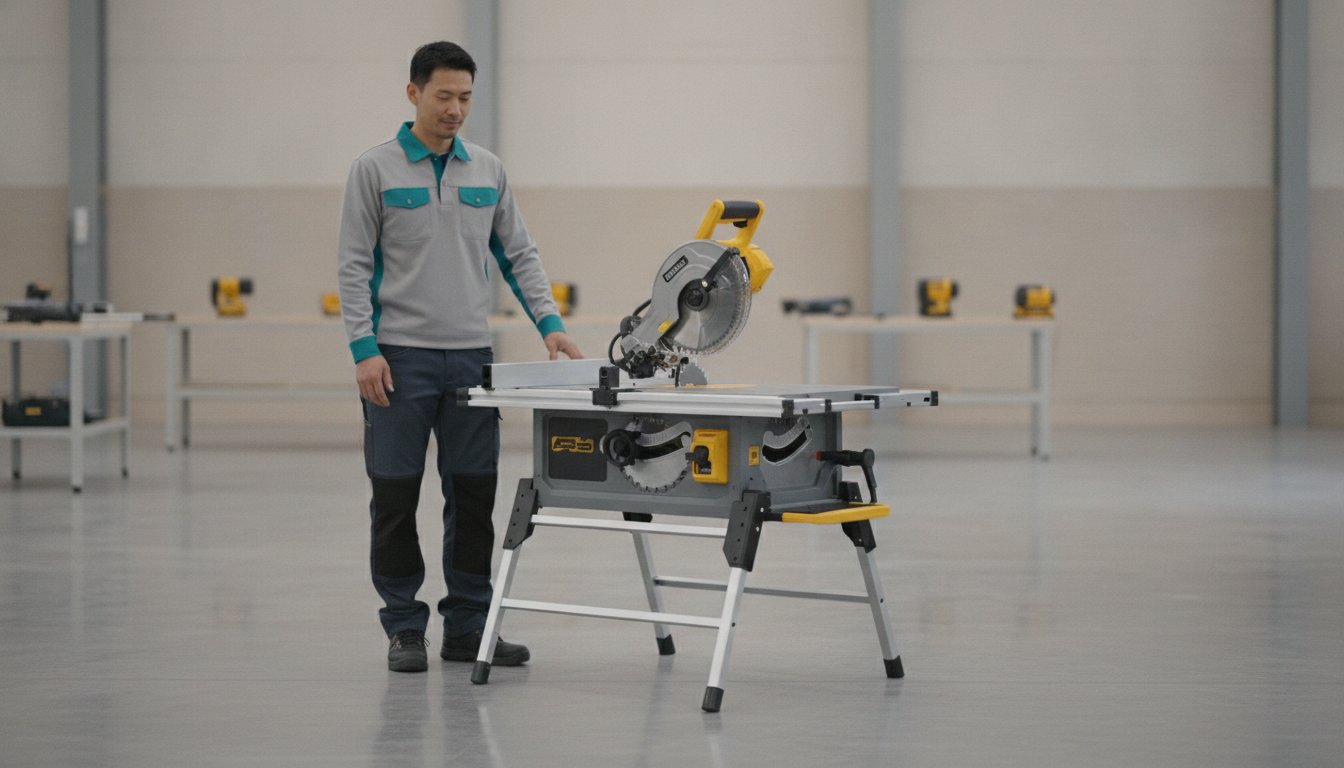
These are the most frequent units you'll encounter in the peer-to-peer market. They almost always include a folding stand with wheels, which makes them easy to move around a driveway or a garage. You don't need special wiring because these motors run on standard household outlets. You can usually fit a jobsite saw into the back of a hatchback or a small SUV without much trouble, provided you fold the stand correctly.
Precision Cutting with Contractor Saws
You should look for a contractor saw if you're building furniture or custom cabinets. The cast-iron tables on these units provide a much flatter surface and significantly less vibration than portable plastic models. This stability leads to cleaner cuts that require less sanding later. You'll definitely need a second person to help with the transport; these saws often weigh over 100kg and don't typically have the same folding mechanisms as jobsite versions.
Peer-to-Peer Rentals Compared to Big Box Store Services
Corporate rental centers often feel like visiting a busy freight terminal. You wait in a queue behind contractors, fill out long liability forms, and hand over a credit card for a massive hold. A table saw rental through a community marketplace feels different because you're dealing with a person, not a bureaucracy. It's a more practical way to get the gear you need without the industrial overhead and complex paperwork.
Commercial hire centers frequently lack the personal touch that helps a DIY project go smoothly. You might get a machine that's been through hundreds of rough construction jobs and hasn't been calibrated in months. P2P owners generally take better care of their personal tools because they use them for their own woodworking. This means you're more likely to get a saw that's clean, aligned, and ready for precision work.
Transparency in Pricing and Deposits
Commercial rates look low on the flyer, but they often climb once you add the mandatory damage waivers and cleaning fees. Most big-box stores require a security deposit that can tie up $200 to $500 of your credit limit for the duration of the hire. Peer-to-peer owners usually list a flat daily rate that includes the basic wear on the blade. You can often talk to the owner about a custom rate if your project spans several weekends. This makes the tool on rent experience much more predictable for your household budget.
Availability and Proximity
Industrial estates are rarely located in the middle of residential districts. You might spend 45 minutes in traffic just to reach a commercial depot, only to find the specific saw you reserved is still out on another job. A neighbor might have the same model sitting in a garage just three streets away. You save on fuel and avoid the frustration of navigating heavy traffic in a vehicle loaded with equipment. Life4Rent organizes these local options across 17 categories, so you can see exactly what's available in your immediate surroundings before you leave the house.
P2P isn't just about saving money; it's about the flexibility of the schedule. Most big stores have strict "return by 8 AM" rules that can ruin your morning if you finish a project late at night. P2P owners are often happy to arrange a pickup or drop-off time that fits around your actual work schedule. This level of convenience is hard to find in a corporate environment where the clock always dictates the price.
Essential Safety Checks and Transport Tips for Renters
Safety is the most important part of any woodworking project. You shouldn't assume a rental tool is perfectly tuned just because it looks clean or the owner seems professional. A table saw rental requires a quick physical audit before you load it into your car. You'll want to focus on the mechanical parts that prevent the wood from kicking back toward you during a cut.
The riving knife is a small metal plate located behind the blade. You must verify that it's perfectly aligned with the teeth. If it's bent or missing, the wood can pinch the back of the blade and launch toward your chest. This is a common cause of serious workshop injuries, so don't overlook this check. You should also verify that the blade guard moves freely and doesn't snag when you push material through the saw.
Electrical safety is just as vital as mechanical safety. You should inspect the entire length of the power cord for frays, exposed wires, or heavy tape repairs. A damaged cord is a fire risk and can cause a short circuit in your home. Always ask the owner for a push stick. You'll need this to keep your fingers at a safe distance from the blade when you're making narrow cuts. If the owner doesn't have one, you should make your own from a scrap piece of wood before you start your project.
How to Inspect a Rental Blade
The condition of the blade determines the quality of your cut and the safety of the machine. You should look for missing carbide teeth on the edge of the blade. If even one tooth is gone, the saw will vibrate and produce a rougher finish. Check the sides of the blade for a sticky, brown substance called pitch. This buildup causes friction and heat, which leads to burn marks on your wood and increases the risk of binding. You can find well-maintained equipment by looking through the listings on Life4Rent today.
Safe Transport in Personal Vehicles
Table saws are heavy and awkward to lift, often weighing between 25kg and 50kg for jobsite models. You should place a thick moving blanket in your trunk or backseat to protect your car's interior from scratches. Lower the blade completely into the housing before you lift the unit. This protects the teeth and prevents the blade from cutting through your transport blankets. Use ratchet straps to secure the saw base to your vehicle's tie-down points. You don't want a heavy machine sliding forward if you have to brake suddenly in traffic.
Getting Started with Table Saw Rentals on Life4Rent
You can start your table saw rental by browsing local listings on the Life4Rent platform. The interface organizes items into 17 specific categories to help you find precisely what you need for your workshop. You'll find that the system handles the communication between you and the owner within a secure environment. This keeps your personal contact details private until you've confirmed the booking and are ready to arrange the pickup.
Reviews from previous users provide a clear picture of the tool's actual condition. You can see if a saw was well-maintained or if the owner was helpful with transport advice. These honest accounts help you avoid machines that might have alignment issues or dull blades. It's a much more transparent way to rent than relying on the word of a corporate clerk at a warehouse. You can check if the previous renter found the fence to be sturdy or if the dust port fit a standard shop vac.
You might also consider listing your own equipment to offset the cost of your workshop. Tool owners on the platform often earn between €15 and €40 per day by sharing their gear. You keep 100% of every booking, which makes it a sensible way to generate passive income from a machine that usually sits idle. This income can quickly cover the cost of new blades or other shop upgrades. It's a practical way to let your tools pay for themselves over time.
The communication tools within the platform allow you to ask specific questions before you commit to a hire. You can check if the owner includes a miter gauge or if they have a spare blade for different materials like melamine or hardwood. This direct dialogue ensures that both parties understand the expectations for the hire. It's a grounded approach that builds trust within the local woodworking community while saving you money on retail markups.
Security is a priority for both the owner and the renter during the transaction. The marketplace uses a verified system to ensure that everyone on the platform is who they say they are. This reduces the risk associated with meeting strangers from unverified classified ads. You can focus on your project knowing that the logistics and payment are handled through a structured system. This reliability is a key reason why many woodworkers are moving away from traditional classifieds for their equipment needs.
Finding Tools in Estonia and Beyond
The platform has a strong presence in Tallinn and other Estonian regions where the community of makers is growing. You aren't limited to woodworking gear either. The 17 categories cover everything from high-end electronics to baby strollers and outdoor sports equipment. This variety allows you to handle multiple household needs through a single marketplace. Local support is always available if you have questions about how the marketplace works in your specific city or region.
Creating a Trustworthy Rental Profile
You'll get better results if you take the time to complete your user profile. Owners are more likely to approve your request if they see you're a serious DIYer with a history of responsible rentals. If you decide to list your own saw, make sure you include clear photos from several angles. A single sentence defining the specific model and its maximum cutting depth is usually enough to attract the right renters. You should also mention if you provide safety gear like push sticks or featherboards with the machine.
Streamlining Your Next Woodworking Project
A successful build relies on the right equipment and a clear plan. You don't need to own every tool to achieve professional results in your home workshop. A table saw rental provides the precision you need for rip cuts without the burden of long-term storage or maintenance. You've learned how to inspect the riving knife and how to secure these heavy machines for safe transport in your own vehicle. These practical steps ensure your project stays on schedule and your workspace remains safe.
The peer-to-peer approach offers a sensible alternative to the industrial atmosphere and high deposits of commercial hire centers. You can support local tool owners while accessing high-quality gear just a few streets away. Life4Rent provides a secure environment where you can browse reviews and communicate directly with your neighbors. This community-focused model makes specialized tools accessible without the typical retail markups or complex contracts.
You can find a table saw for rent near you on Life4Rent and start your project today. It's a reliable way to get the job done while keeping your workshop clutter-free. Find your machine. Start your build. Good luck with your project.
Frequently Asked Questions
Do I need to bring my own blade when renting a table saw?
Most owners include a standard 40-tooth carbide blade with their equipment. You should check the listing details or message the owner to confirm the blade's current condition. If you're working with delicate veneers or expensive hardwoods, you might prefer to bring your own specialized 80-tooth blade to ensure the cleanest possible finish.
Is it difficult to transport a table saw in a standard car?
Jobsite models are designed for portability and usually fit into the trunk of a hatchback or a small SUV once the stand is folded. You'll likely need a van or a trailer for larger contractor saws because they don't disassemble easily for transport. Always measure your car's cargo space and compare it to the saw's dimensions before you drive to the pickup location.
What happens if the table saw breaks during my rental period?
Communication with the owner is the first step if you encounter a mechanical issue. Most peer-to-peer platforms have clear guidelines for handling equipment damage within a secure environment. You won't be held responsible for normal wear and tear, such as a motor brush reaching the end of its life, but misuse or accidental damage should be discussed immediately to find a fair solution.
Can I use a table saw for cutting materials other than wood?
You can cut plastics or thin non-ferrous metals like aluminum with the correct specialized blade. You must ask the owner for permission before you use a table saw rental for anything other than standard timber. Cutting masonry or steel on a woodworking saw is dangerous and will likely damage the motor and the arbor.
How much does it typically cost to rent a table saw for a day?
Commercial rates often vary by region, with daily prices typically ranging between $40 and $60 in many metropolitan areas. Peer-to-peer listings are often more competitive because they don't have the overhead costs of a large warehouse. You should check local listings on Life4Rent to see the current rates offered by tool owners in your specific neighborhood.
Do I need special safety gear to operate a rental table saw?
Safety glasses and hearing protection are essential whenever the motor is running. You should also have a push stick ready for any cut narrower than six inches to keep your hands away from the blade. Avoid wearing loose clothing or jewelry, as these can get caught in the spinning machinery and cause serious injury.
How do I know if my home electrical circuit can handle a table saw?
Most portable jobsite saws run on a standard 15-amp or 20-amp household circuit. You might trip a breaker if you use a high-draw tool on the same circuit as a space heater or another large appliance. If you're renting a larger industrial saw, you should verify if it requires a specialized 240-volt outlet before you bring the unit home.
Related guides on Life4Rent
Ready to rent instead of buy? See all tools & equipment available to rent on Life4Rent →
Life4Rent
Rent it. Earn from it. Own less, access more.
Browse peer-to-peer rentals near you, or list what you own and start earning — all protected by Life4Rent Protect.
About the author
Michael Wright
Dublin, Ireland
Michael covers consumer rights, rental law, and EU platform regulation for the Life4Rent Renting Academy. He has reported on digital market policy and renter protections across Europe, and brings a clear, practical perspective to topics like deposit disputes, insurance, and the legal rights of renters and owners.