Stump Grinder Rental: A Practical Guide to DIY Stump Removal in 2026
Stella Johnson
July 23, 2026
That old tree stump in your yard isn't just an eyesore; it's a permanent obstacle that often costs more to remove professionally than the tree was worth. You've likely looked at it for months, weighing the high price of a tree service against the hassle of driving to a distant industrial rental yard. It's common to feel stuck when the nearest stump grinder rental requires a heavy-duty trailer and a long Saturday trek just to get started.
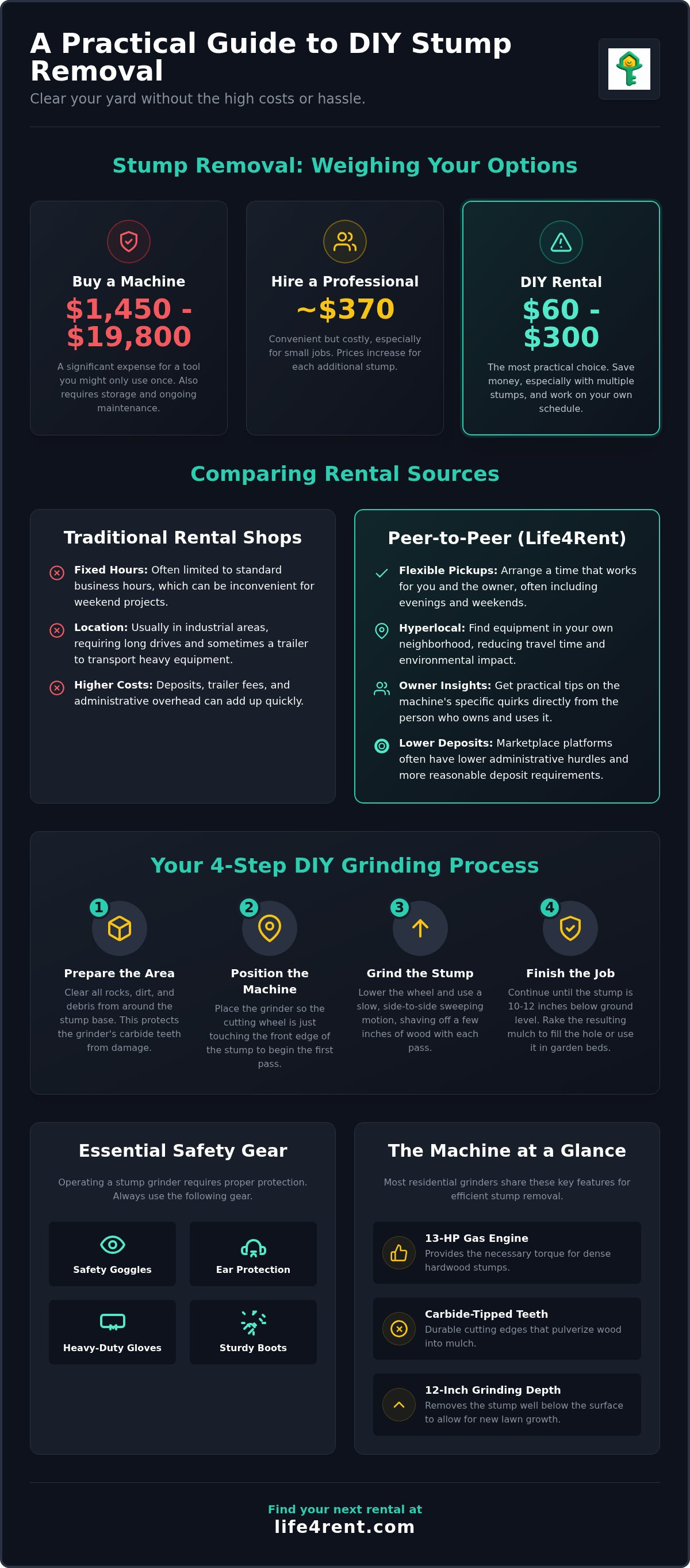
You're right to be cautious about the project, as professional removal averages around $370 while a standard rental can sit near $300 once you factor in deposits and fuel. This guide explains how to use peer-to-peer platforms like Life4Rent to find equipment right in your neighborhood. You'll learn how to select the right machine, follow the updated 2026 OSHA safety standards, and clear your yard efficiently.
We'll walk through the specific gear you need to stay safe and the technical steps to turn that hardwood into mulch. By the end, you'll have a clear plan to reclaim your lawn without the professional price tag or the corporate rental stress.
Why a stump grinder rental is the most practical way to clear your yard
A stump grinder is a specialized power tool designed to remove tree stumps by using a high-speed rotating cutting disk. You can learn more about how these machines work to see how they chip away at dense wood until only mulch remains. Most homeowners choose a stump grinder rental because these machines are expensive to buy and take up a lot of garage space. A new unit often costs between $1,450 and $19,800, which doesn't make sense for a tool you'll only use once or twice.
The storage of specialized equipment is a major trade-off that many people forget until the machine is sitting in their driveway. These units are heavy and require a significant footprint in your shed or garage. A rental allows you to use the power you need for a single day and then return the space to your home immediately. You don't have to worry about winterizing an engine for a machine that sits idle most of the year.
You can see the process in action and how quickly it works in this video:
The cost-benefit analysis of DIY stump removal
Professionals often charge an average of $370 for stump removal, but you can find daily rentals for around $300. If you have a small stump under 10 inches, a mini grinder rental might only cost $60 to $90. Small stumps can sometimes be dug out with a shovel, but anything larger or deeply rooted requires mechanical power to avoid a back injury.
You'll save the most money when you have two or three stumps to clear, as the daily rental rate stays the same while pro fees climb with every extra stump. Many arborists have a minimum call-out fee that makes a five-minute job cost the same as a two-hour one. You also avoid the $50 trailer fee often charged by big-box stores when you find a neighbor who can help with delivery.
The benefits of neighborhood-based tool sharing
Peer-to-peer platforms like Life4Rent help you find a tool on rent from someone who lives just a few streets away. This approach cuts down on the carbon footprint since you don't have to haul a heavy machine across town to a commercial depot.
Local owners usually give you practical tips on the specific quirks of their machine, which is helpful if you've never operated one before. You get to support your local community while clearing your yard on your own schedule.
Marketplaces like this often have lower administrative hurdles and more flexible pickup times than traditional rental companies. The experience feels more like borrowing from a friend than dealing with a corporate counter clerk who is in a rush. You can read reviews from previous neighbors to ensure the machine is well-maintained and ready for work.
The mechanics of stump grinding: how these machines work
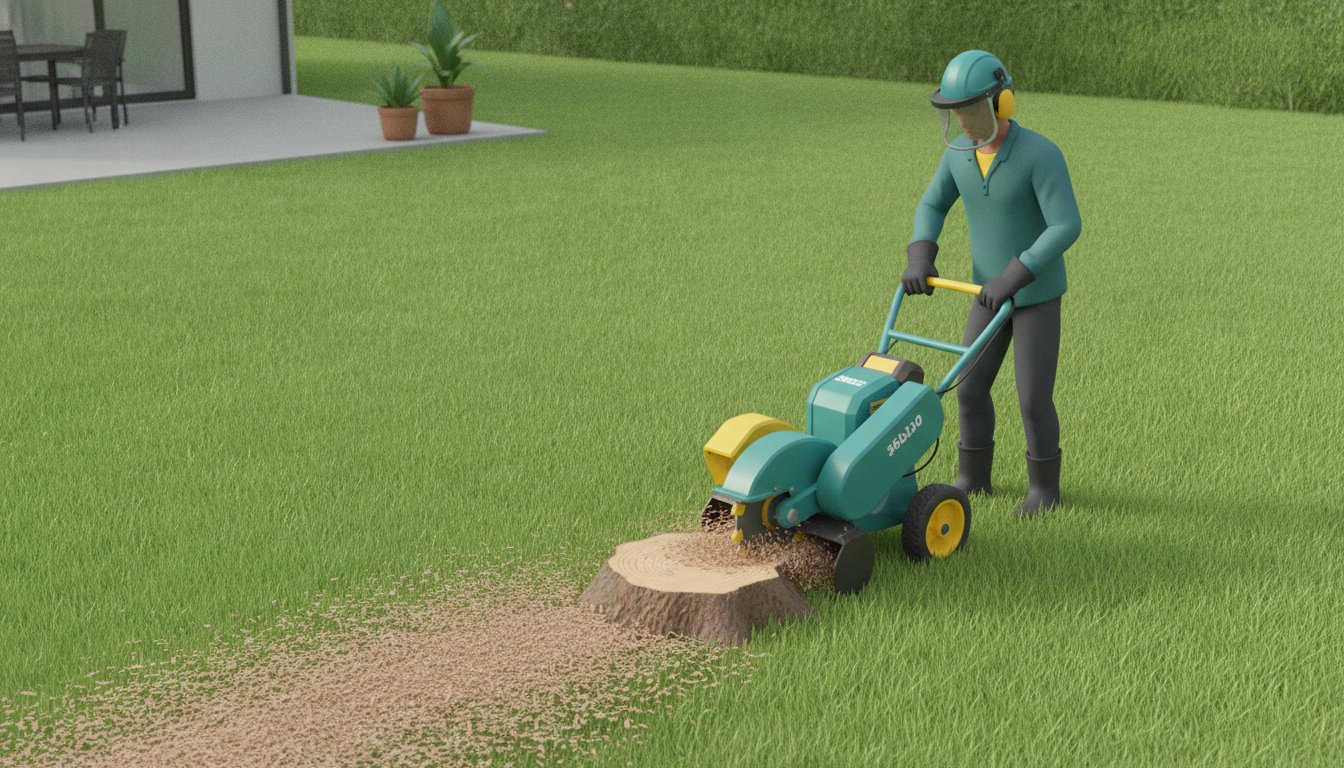
Most residential machines you'll encounter for a stump grinder rental rely on a 13-HP gas engine. This power level provides the necessary torque to handle hardwood stumps without making the machine too heavy for one person to maneuver. These units look quite similar to a rugged walk-behind lawnmower, but they house a vertical cutting wheel at the front instead of a horizontal blade. This wheel spins rapidly, using its weight and speed to pulverize wood into small chips. You don't just lose the stump; you gain a pile of fresh mulch. This material is excellent for suppressing weeds in your garden beds or lining your backyard paths once the project is finished.
The cutting wheel is the heart of the machine. It's fitted with several carbide-tipped teeth that do the heavy lifting. Carbide is preferred for its durability, as it can handle the constant contact with soil and small stones that are often embedded in old root systems. You'll use a side-to-side sweeping motion to operate the machine effectively. This technique allows the teeth to shave off thin layers of wood with every pass rather than trying to bite into the whole stump at once. Most residential rental units are built to grind the wood down to about 12 inches below the surface.
Understanding the cutting wheel and teeth
The machine's pivot point is a critical feature for manual operation. You lock one wheel into place to act as an anchor, which allows you to swing the cutting head smoothly across the face of the stump. This reduces the physical strain on your arms and back. Smaller mini grinders might only have a 6-HP to 9-HP engine, which is fine for stumps under 10 inches but will struggle with larger oaks or pines. Reference industry best practices to help you avoid deep-set rocks that might damage the equipment or cause kickback.
Choosing between vertical and horizontal grinders
Vertical grinders are specific tools often used for stumps in tight spaces. If your stump is right against a stone wall or a wooden fence, a vertical model might be your only option because it doesn't require as much lateral clearance. Horizontal sweep grinders are the more common choice for open lawns. These machines require a bit more room to swing the handle from left to right. You should evaluate your yard's layout and the proximity of obstacles before you finalize your choice. If you're unsure which model is nearby, you can browse available tools on Life4Rent to see what your neighbors are currently offering.
Comparing your options: peer-to-peer vs. traditional rental companies
Traditional rental yards often feel like industrial hubs, which is fine for contractors but intimidating for a homeowner with one stump. A standard stump grinder rental from a big-box store usually requires a refundable deposit between $150 and $200. You also face strict return windows, meaning if you're 15 minutes late, you might pay for an entire extra day. These shops prioritize high-volume turnover over your individual project needs.
Peer-to-peer platforms like Life4Rent offer a more personal experience. You aren't dealing with a corporate counter; you're talking to a neighbor who owns the tool. This often means the machines are better suited for residential yards. Many neighbor-owned grinders are compact enough to fit in the back of an SUV or a van, saving you the $50 to $60 trailer rental fee.
Flexibility and local support
Communication is much simpler when you use a peer to peer equipment rental platform. If the job takes longer than expected, you can usually message the owner to request an extra hour without facing a massive corporate penalty. Owners frequently include the specific fuel mix or extra safety gear as part of the deal. They might also waive cleaning fees if you return the machine in a reasonable state, whereas a commercial shop will charge for every speck of dirt. You get the benefit of local knowledge, as owners often share tips on how the machine handles specific wood types like oak or pine.
Logistics and transportation
You don't have to wait in a long queue at a rental desk when you book through a digital marketplace. Most P2P owners are flexible with pickup and drop-off times, often accommodating evening or weekend requests that commercial shops won't. Some owners even offer delivery for a small fee, which is often more affordable than the delivery rates from a professional landscaping company. Always check the machine's weight before you arrive to ensure your vehicle's suspension can handle the load safely. If the unit is over 200 pounds, you'll need ramps or a few extra hands to help with the loading process.
Big-box stores often stock heavy, track-mounted machines that are overkill for a single pine stump. These units are powerful but can tear up a manicured lawn if you aren't careful. Neighbor-owned machines are frequently smaller, wheeled models that are easier to push across grass without leaving ruts. This makes them a better choice for maintaining the aesthetics of your yard while you work.
A step-by-step approach to safely grinding a stump yourself
You'll need to prepare the physical workspace before you ever pull the starter cord. Clear away any large rocks, bricks, or loose debris from the base of the wood. These hidden objects will quickly dull or chip the carbide teeth on your stump grinder rental, which can lead to expensive repair fees from the equipment owner. A clean area also prevents these materials from becoming dangerous projectiles once the cutting wheel begins to spin.
Position the machine so the cutting wheel is directly over the front edge of the stump. You should always work from the side of the stump closest to you and move toward the back as the wood disappears. This keeps the machine stable and ensures you aren't trying to chew through the entire diameter at once. It's much easier to maintain control when you take small, manageable bites out of the wood.
Use the machine's pivot lock to anchor one wheel while you swing the handle. This side-to-side motion should be fluid and steady rather than jerky or forced. You don't need to apply heavy downward pressure; the rotation of the cutting wheel will naturally pull it into the wood. If the engine starts to bog down or smoke, you're likely cutting too deep and should lift the wheel slightly to let the RPMs recover.
Continue this process until you reach a depth of at least 4 to 6 inches below the soil line. This specific depth is necessary if you plan to fill the hole with topsoil and plant grass seed later. If you stop at the surface, the remaining wood will prevent roots from taking hold and will eventually rot, creating a sinkhole in your lawn. Once the main stump is gone, use the same sweeping motion to shave down any large surface roots that might damage your lawnmower blades.
Preparation and underground safety
You must call your local utility marking service at least a few days before you start. Even a shallow stump can have gas lines, fiber optic cables, or water pipes running directly underneath it. Trim any tall grass or weeds around the stump so you have a clear view of the ground while the machine is running. You shouldn't ever attempt to grind a stump that is soaking wet because the damp wood fibers will clog the machine's discharge chute and make the resulting mulch extremely difficult to clear.
Personal Protective Equipment (PPE) essentials
The 2026 OSHA updates require stricter adherence to safety gear for high-risk equipment like stump grinders. You need high-impact safety goggles and a full face shield to block the high-velocity wood chips that the machine throws in every direction. Wear heavy-duty work gloves and steel-toed boots to protect your hands and feet from moving parts or falling debris. Earmuffs or high-quality earplugs are necessary because these gas engines produce noise levels that can damage your hearing during the hours it takes to finish the job.
You can find a local machine that includes these safety essentials by checking the tool listings on Life4Rent today.
Finding the right equipment on the Life4Rent marketplace
You can find a variety of local options by browsing the tool category on the Life4Rent marketplace. Neighbors list their personal equipment here, which often includes smaller units that are easier to handle than industrial models. The reviews from previous renters are your best resource to verify that a machine is well-maintained and ready for work. It's helpful to communicate directly with the owner to confirm the specific dimensions of the machine before you arrive with your vehicle.
The platform handles all payments through a secure system, so you don't need to carry cash or worry about bank transfers on the day of pickup. This system ensures that the transaction is transparent and documented for both parties. You'll find that owners on this platform are usually more invested in the performance of their tools because their reputation depends on positive ratings. A quick look at a user's profile can tell you if they are a reliable partner for your landscaping project.
How to evaluate a listing
Look for clear, close-up photos of the cutting teeth in the listing description. Sharp teeth are essential for a quick job, and dull ones will only prolong your work and waste your rental time. Check if the owner provides accessories like ramps or safety goggles as part of the stump grinder rental. You should also verify whether the engine requires a specific 2-stroke fuel mix or standard unleaded gasoline so you can prepare a canister in advance.
The condition of the machine's tires and handles can also tell you a lot about how it's been stored. If the machine looks rusty or neglected in the photos, you might want to look for a different listing. A well-cared-for machine will start more reliably and complete the task with fewer interruptions. You can ask the owner when the teeth were last sharpened to ensure you are getting the best performance for your money.
Next steps for your yard project
The wood chips left behind make an excellent addition to your compost pile or a natural filler for the hole. You might find that removing the stump opens up space for a new project, like a fence or a mailbox post. If you plan to set a new post in that exact spot, a mudmixer can help you pour a stable concrete base quickly. Once you finish the grinding, you'll have a clear, level yard that is much easier to mow and maintain.
You can find a stump grinder for rent on Life4Rent today and start clearing your yard this weekend. Your outdoor space will feel much larger once you finish this rewarding DIY project, and it adds immediate value to your home. With the right machine from a neighbor, you can skip the corporate rental desk and get straight to work.
Reclaim your yard with the right local tools
A stubborn tree stump doesn't have to remain a permanent obstacle in your lawn. You can handle the removal project safely by following current safety standards and choosing a machine that fits your specific yard layout. A local stump grinder rental provides the power you need for a single day without the storage headaches or high costs of ownership. You'll save money compared to hiring a professional while keeping the process simple and manageable.
Life4Rent offers a community-driven rental marketplace where you can find 17 categories of daily essentials right in your neighborhood. The platform ensures secure peer-to-peer transactions; this means you can focus on your project instead of worrying about payment safety. You'll find that renting from a neighbor is often more flexible than dealing with corporate rental counters and their rigid return schedules.
Browse local stump grinder rentals on Life4Rent to find the equipment you need for a clear, level lawn. You can finally remove those tripping hazards and enjoy a beautiful, open outdoor space this season.
Frequently Asked Questions
How much does it cost to rent a stump grinder for a day?
The average cost for a stump grinder rental is $300 per day, though prices generally range between $90 and $400 depending on the machine's size. Mini units for stumps under 10 inches are the most affordable, typically costing between $60 and $90 daily. You should also expect a refundable deposit of $150 to $200 when you book through most platforms or local shops.
Can I fit a rented stump grinder in my car?
Most standard units require a truck or a trailer because they weigh several hundred pounds and have bulky, rigid handles. However, smaller mini grinders can often fit in the back of a large SUV or a van if you have ramps and a few people to help with the load. You should always check the exact dimensions with the owner on Life4Rent before you arrive for pickup to ensure it fits your vehicle.
Is it hard to operate a stump grinder if I have never used one?
The basic operation is straightforward, but the machine requires physical strength and constant focus to manage the vibrations. You'll need to master a side-to-side sweeping motion while keeping the machine stable on uneven ground. It's helpful to ask the neighbor you're renting from for a quick demonstration, as every model has its own specific controls and safety switches.
What happens if I hit a rock while grinding a stump?
Rocks can dull or chip the carbide teeth instantly, which reduces the machine's efficiency and might lead to repair costs. You'll likely feel a sharp jolt through the handles and hear a loud metallic clank if the wheel strikes a stone. You should stop the engine immediately and inspect the cutting wheel for any missing or broken teeth before you continue with the project.
How deep should I grind the stump into the ground?
You should aim for a depth of 4 to 6 inches below the soil line to ensure you can plant grass or small shrubs over the spot. Some projects might require going as deep as 12 inches if you plan to pour a concrete foundation or set a fence post in that exact location. This prevents the remaining wood from pushing up through your new lawn as it naturally decays over time.
Do I need to call the utility company before I start grinding?
You must call your local utility marking service at least two business days before you start any grinding or digging. Pipes and cables often run directly beneath old trees, and hitting a gas line or fiber optic cable is a dangerous and expensive mistake. It's a free service that ensures your yard project stays safe and doesn't interfere with neighborhood infrastructure.
Can a stump grinder remove the roots as well?
These machines are designed to grind down the main stump and any large surface roots that stick up above the grass. They don't typically reach deep enough to pull out the entire root system, but they'll shave them down far enough so they don't interfere with your lawnmower blades. The remaining underground roots will eventually rot away on their own over several years without causing further issues.
What should I do with the wood chips after I finish?
You can use the wood chips as a natural mulch for your garden beds or add them to your backyard compost pile. They're also perfect for filling the hole left by the stump, though you'll need to mix them with topsoil to prevent the ground from sinking as the chips settle. This recycled material helps suppress weeds and retains moisture for your other plants while saving you a trip to the local dump.
Life4Rent
Rent it. Earn from it. Own less, access more.
Browse peer-to-peer rentals near you, or list what you own and start earning — all protected by Life4Rent Protect.
About the author
Stella Johnson
Stockholm, Sweden
Stella researches and writes about sustainable consumption and the circular economy for the Life4Rent Renting Academy. She previously worked at a Nordic sustainability research institute studying how access-over-ownership models reduce household CO₂ emissions, and translates that research into practical guides for everyday renters.