Student Violin Rental & Buying Guide 2026
September 19, 2026
Published by Life4Rent · Operated by Brohf Software OÜ
Why pay hundreds of euros for a brand-new instrument when your child might decide to try the drums next season? Most parents feel the same pressure. It's hard to rent a violin for student music lessons without a massive deposit or a long commitment. Children outgrow their instruments quickly, and technical details like bridge height can be overwhelming.
You don't have to sign a restrictive long-term contract or spend a fortune to get started. It's often simpler to use local peer-to-peer platforms to find what you need. You'll learn how to measure for the correct size and what to look for to ensure the instrument is actually playable. Reliable options often exist right in your neighborhood.
Practical steps for evaluating rental agreements help you find a deal that's easy to cancel if interests change. Local pickup is almost always safer than risking shipping damage with a fragile wooden instrument. These tips help you focus on musical progress instead of worrying about paperwork.
Reasons to rent a violin for a new student
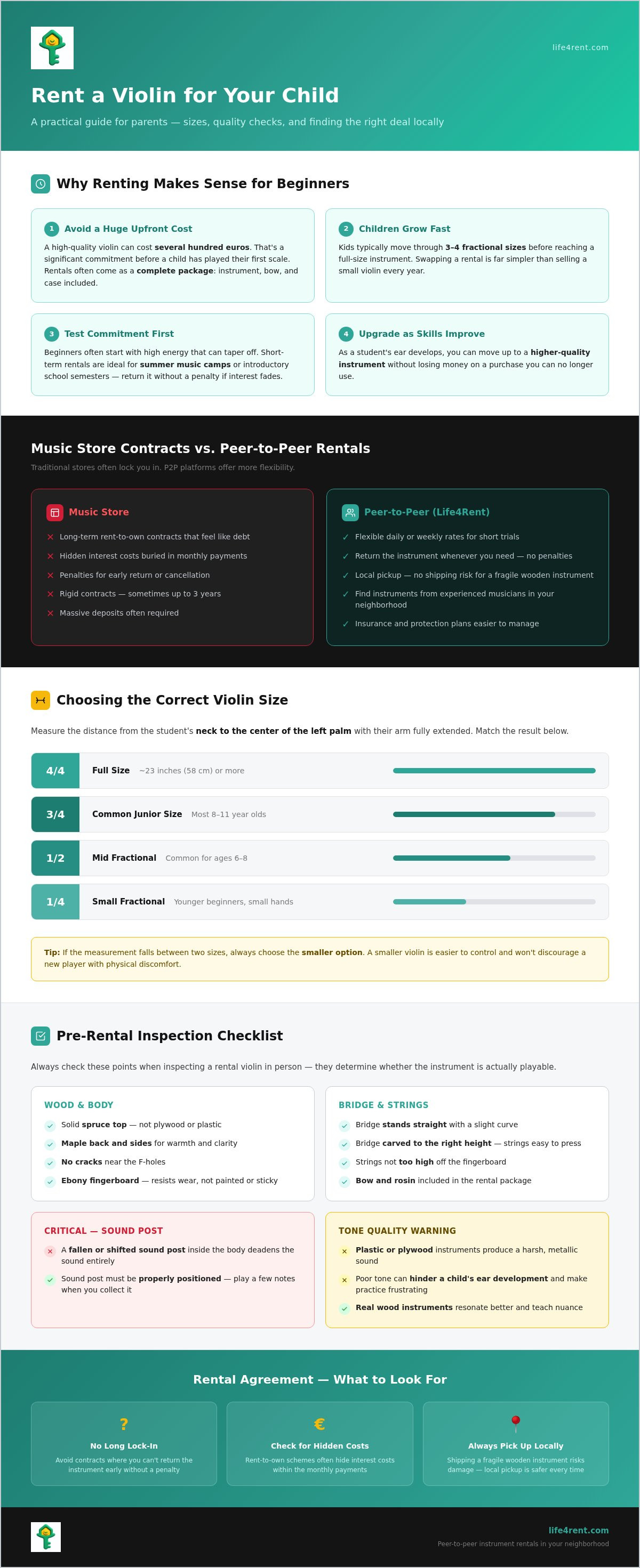
Most parents find that starting with a rental is the most sensible path for a beginner. A high-quality violin can cost several hundred euros, which is a significant commitment for a family just starting their musical journey. If you rent a violin for student use, you typically receive a complete package that includes the instrument, a bow, and a case. You don't have to worry about buying expensive extras before your child has even played their first scale.
Growth and sizing adjustments
Children grow at unpredictable rates. They usually move through three or four different fractional sizes, such as 1/4 or 3/4, before they're ready for a full-size instrument. It's far more practical to swap a rental for a larger size than to try and sell a small violin every year. You can learn more about the benefits of peer to peer equipment rental to see how this model provides easy access to different sizes. This approach keeps the student comfortable and prevents the technical bad habits that come from playing an instrument that's too large or too small.
Financial risk management for beginners
Beginners often start with high energy that might taper off after the first few months of practice. A rental allows you to test a student's commitment without a heavy investment hanging over your head. Short-term agreements are particularly useful for summer music camps or introductory school semesters. You won't be stuck with an expensive item in the closet that's difficult to resell for its original value.
Peer-to-peer options offer a level of flexibility that traditional music stores often lack. Many shops use rent-to-own contracts that feel like long-term debt because they hide interest costs within the monthly payments. A flexible rental means you can return the instrument whenever you need to without a penalty. This setup takes the pressure off the parents and the student, making the learning process more about the music and less about the money. It is much easier to rent a violin for student needs when you aren't locked into a three-year contract.
- Rentals include essential accessories like the bow and rosin.
- Insurance or protection plans are often easier to manage through a rental platform.
- You can upgrade to a higher-quality instrument as the student's ear develops.
- Local pickups save you the high cost and risk of shipping a fragile wooden instrument.
How to choose the correct size and quality
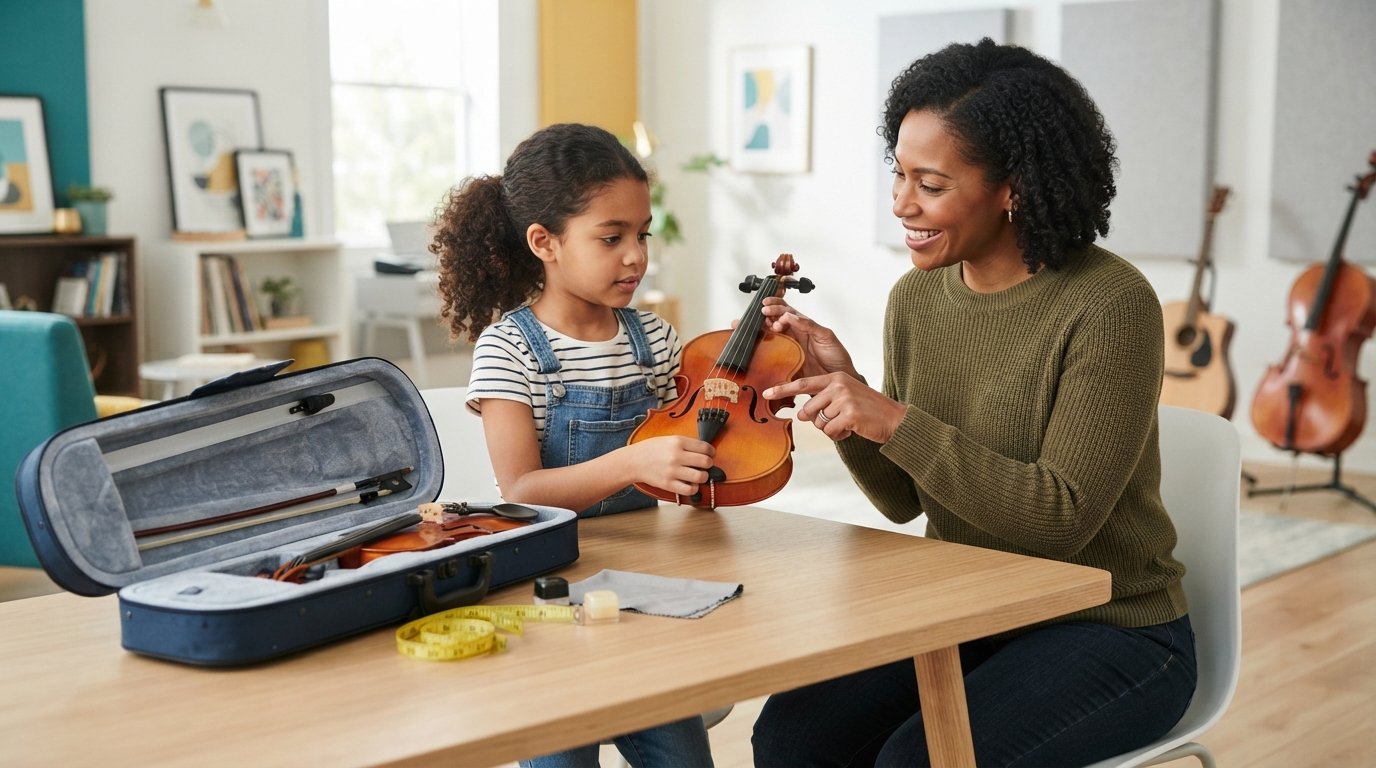
The right fit is the most important factor when you look to rent a violin for student music lessons. Violins come in fractional sizes like 1/4, 1/2, or 3/4 to accommodate smaller hands and shorter arms. It's much harder to learn on an instrument that is too large, as it causes strain and poor posture. Most teachers suggest you rent a violin for student learners because it's easy to swap for the next size up when they grow.
Simple arm length measurements
You can determine the correct size at home with a simple ruler. Measure the distance from the student's neck to the center of their left palm while their arm is extended. This measurement correlates to specific sizes; for example, a reach of 23 inches usually means a 4/4 or full-size violin. If the measurement falls between two sizes, it's usually better to choose the smaller option. A smaller violin is easier to control and won't discourage a new player with physical discomfort.
Quality is just as important as the physical size. Many cheap violins made of plastic or plywood produce a harsh, metallic sound. This poor tone can actually hinder a child's ear development and make practice sessions frustrating. Real wood instruments resonate better and help the student understand the nuances of the instrument.
Material and setup quality standards
Look for a solid spruce top and maple back and sides. These tonewoods provide the warmth and clarity needed for a pleasant learning experience. Ebony fingerboards are also a sign of a better instrument because they resist wear from the strings over time. Painted wood fingerboards often chip and feel sticky, which makes shifting positions difficult.
Setup details like the bridge and string height are often overlooked but vital. The bridge should stand straight and have a slight curve to allow the bow to hit one string at a time. If the strings are too high off the fingerboard, they'll be painful to press down. A quick check of these details ensures the instrument is actually playable. You can often find well-maintained instruments by browsing local instrument listings from experienced musicians in your area.
The bridge must be carved to the right height, and the sound post inside the violin should be properly positioned. A sound post that has fallen or moved will deaden the sound entirely. These technical specs might seem small, but they determine whether a child enjoys the process or gives up out of frustration.
Music store contracts versus peer-to-peer rentals
Traditional music stores often push rent-to-own programs that build equity over time. This sounds helpful, but the math rarely works in your favor if the student stops playing after six months. You'll often find that these contracts include high interest rates disguised as monthly maintenance fees. It's difficult to rent a violin for student beginners without feeling like you're signing a long-term financial commitment.
P2P marketplaces offer a more honest alternative. You can rent a violin for student needs on a daily or weekly basis, which fits the reality of a school schedule much better. Life4Rent connects you with local owners who have instruments sitting idle in their homes, allowing for a much more flexible arrangement.
Monthly costs and contract terms
Most specialized music shops require a minimum three-month commitment. This is a waste of money if your child realizes the violin isn't for them after the second week. Peer-to-peer rentals allow you to pay only for the time you actually need the instrument.
You can read more about neiyborly sharing to see how these local dynamics keep costs low. This model removes the overhead costs that stores pass on to their customers, such as storefront rent and sales commissions. You get a better price because you're dealing directly with a neighbor.
Convenience and local availability
A drive across town to a specialized music shop can be a hassle during a busy week. Local owners in your own zip code often have instruments ready for pickup today. These neighbors can also share useful advice about local teachers or where to find affordable sheet music. It's a more personal way to get started with a new hobby.
You won't have to wait for a store to process a credit check or verify your employment history. This speed helps a student start their first lesson without unnecessary delays. Marketplaces also offer a wider variety of instruments, from basic student models to older, well-played violins with a warmer tone.
- Avoid high-interest equity programs that rarely pay off for beginners.
- Save money by paying only for the days or weeks you actually use.
- Skip the credit checks and long wait times of traditional retail.
- Access a broader range of instrument qualities within your own community.
Crucial inspection points for a rental violin
You can perform a basic check yourself before committing to a rental. While professional repairs are for experts, any parent can spot signs of neglect or damage. This ensures the instrument is ready for practice as soon as you get home. It is much easier to rent a violin for student lessons when you know exactly what to look for during the hand-off.
Body and bridge inspections
Start with the wood surface. Look closely at the area around the F-holes and where the neck meets the body for any visible cracks. These areas are under constant tension and are prone to splitting if the wood gets too dry. Gently tap the edges of the violin with your knuckle to listen for any buzzing or loose seams.
The bridge is a critical piece of the setup. It should stand perfectly straight and not lean toward the fingerboard. Check that the feet of the bridge sit flat against the violin body with no gaps at all. You should also peek through the F-hole to see the soundpost, which must be standing upright inside the instrument.
Pegs must turn smoothly so the student can actually tune the instrument. If the pegs slip or feel stuck, the violin will go out of tune every few minutes. This makes it almost impossible for a beginner to develop a good ear for pitch. Test each peg to ensure it holds tension without jumping or sliding back.
Bow and case considerations
The bow is just as important as the violin itself. Loosen the hair and check that the wooden stick has a slight natural curve. If the stick is straight or warped when the hair is loose, it won't play correctly. Ensure the hair isn't brittle or mostly missing, as re-hairing a bow is an extra cost you want to avoid.
Inspect the case for working latches and a sturdy handle. Students carry these instruments to school and rehearsals, so the case must stay securely closed during transport. Look for a small block of rosin in the accessory compartment. A bow won't make a sound without it, so make sure it's included in the deal.
When you rent a violin for student beginners, these simple checks prevent a lot of frustration later. You don't need to be a professional musician to see if a latch is broken or a bridge is leaning. You can find a well-maintained violin to rent from a local owner to get a quality instrument into your child's hands quickly.
How to secure a violin rental on Life4Rent
Life4Rent offers a community-based way to find musical instruments without the overhead of a retail shop. This marketplace connects you with local owners who have instruments sitting idle, which is often the most cost-effective way to rent a violin for student use. You don't have to deal with aggressive sales staff or complex credit checks. Instead, you'll find real people who understand the needs of a beginner and are happy to help a neighbor get started.
Local search strategies for better deals
You can use the built-in filter tools to narrow down your search to a 5-mile radius of your home. This makes the pickup process fast and eliminates the risk of damage that often happens during shipping. When you look at different listings, compare the included extras like shoulder rests or spare strings. Some owners might include music stands or sheet music, which adds value to the deal.
It's helpful to read through peer reviews before you commit to a specific instrument. These reviews provide an honest look at the condition of the violin and the reliability of the owner. You can also check the tool on rent guide for general advice on how to use the marketplace effectively. A quick look at several local options helps you find the best balance of price and quality for your child's lessons.
Communication and item protection plans
Message the owner directly through the app to ask specific questions about the instrument's history. You should ask when the strings were last replaced and if the violin has been kept in a climate-controlled environment. These details are important because wood is sensitive to humidity and temperature changes. It's also a good chance to verify the sizing one last time before you finalize the rental on the app.
The platform handles the payment process, so you don't have to worry about carrying cash to a neighbor's house. Secure transactions and basic protection steps are built into the system to keep both parties safe. If the student decides to continue their lessons after the initial trial, it's easy to extend the rental period with just a few taps. You can keep the same instrument for as long as it fits the student, which provides a sense of continuity that helps with their progress.
This model is a practical alternative to the rigid structures of traditional music stores. You get the flexibility to test the waters without a major financial burden. It's a straightforward way to rent a violin for student beginners while supporting your local musical community.
Start your musical journey today
The correct size and a quick check for wood cracks ensure your child has a positive start. You can avoid the high interest rates of traditional music store contracts by looking at local peer-to-peer options. It's much simpler to rent a violin for student lessons when you aren't locked into a rigid three-year commitment. These small steps prevent technical frustration and financial regret later on.
Peer-to-peer marketplaces provide a secure community-based environment where you can find instruments without long-term corporate contracts. You often find a quality violin available for local pickup today right in your neighborhood. This flexibility allows you to test your child's interest without a massive upfront investment. Find an affordable student violin rental near you on Life4Rent and skip the retail hassle entirely.
Music is a rewarding skill that should be about the joy of learning, not the stress of paperwork. You have all the tools to pick a playable, high-quality instrument that fits your budget. Good luck with your first rehearsal and enjoy the process of making music together.
Frequently Asked Questions
What size violin does a 10-year-old student usually need?
A 10-year-old usually fits a 3/4 size violin, though individual reach varies based on their height. You should measure from the student's neck to the middle of the palm to be certain of the fit. This size typically suits a reach of about 56 cm. It's better to choose a slightly smaller instrument than one that feels cumbersome or causes physical strain during long practice sessions.
How much does it cost to rent a violin for a student per month?
Monthly costs depend on the instrument's quality and your local area. Traditional music shops often have fixed fees and mandatory insurance that can add up quickly. You'll often find better rates when you rent a violin for student programs through local neighbors on the platform. Check current listings for the most accurate prices in your zip code to find a deal that fits your budget.
Should I buy a cheap violin online or rent a better one?
You should rent a quality instrument rather than buying a cheap one from a generic website. These low-cost violins often have structural issues like warped bridges or slipping pegs that make them impossible to tune. A better rental helps a student develop a good ear for music and makes practice more enjoyable. You'll avoid the high cost of constant repairs this way.
What accessories should be included in a violin rental?
Most rentals include the violin, a bow with good hair, and a protective hard case. You should also look for rosin and a shoulder rest in the listing to ensure the student is ready to play. These items are essential for every practice session and can be expensive to buy separately. Confirm these details with the owner before you book the item to avoid any surprises.
Can I change the size of the violin if my child grows mid-semester?
You can swap for a larger size at any point in the semester if the student has a growth spurt. Children grow quickly, and a flexible rental agreement makes a size change easy without a penalty. You don't have to wait for a store's inventory to update or sign a new contract. Just find a new listing that fits the student's current height and arrange a quick swap to rent a violin for student needs.
Is it safe to rent a musical instrument from a neighbor on Life4Rent?
The platform provides a secure environment for all peer-to-peer transactions between neighbors. You can read reviews from other parents before you decide on a specific violin for your child. You'll meet the owner in person to allow for a quick inspection and a chance to ask questions about the instrument's history. This community approach ensures the instrument is exactly as described and ready to use.
What happens if the violin strings break during the rental period?
Renters usually cover the cost of a new string if one breaks during the trial period. It's a common occurrence for beginners who are still learning how to tune the instrument correctly. You should keep a spare set of strings in the case to avoid missing a lesson. Ask the owner which brand they prefer to keep the sound consistent and ensure the new string matches the set.
How do I return the violin when the student is finished?
The return process is a simple hand-off between you and the owner at the end of the term. You'll coordinate a convenient time and place through the app messaging system. This local approach eliminates the high cost and risk of shipping fragile wooden instruments. Ensure the case is clean and all accessories like the bow and shoulder rest are inside before the meeting.
Life4Rent
Rent it. Earn from it. Own less, access more.
Browse peer-to-peer rentals near you, or list what you own and start earning — all protected by Life4Rent Protect.
About the author
Tallinn, Estonia
Philip leads editorial at the Life4Rent Renting Academy, overseeing guides on peer-to-peer rental, platform safety, and consumer finance across 25 markets. He has spent over a decade covering the sharing economy and digital marketplaces, helping renters and owners navigate the shift from ownership to access.