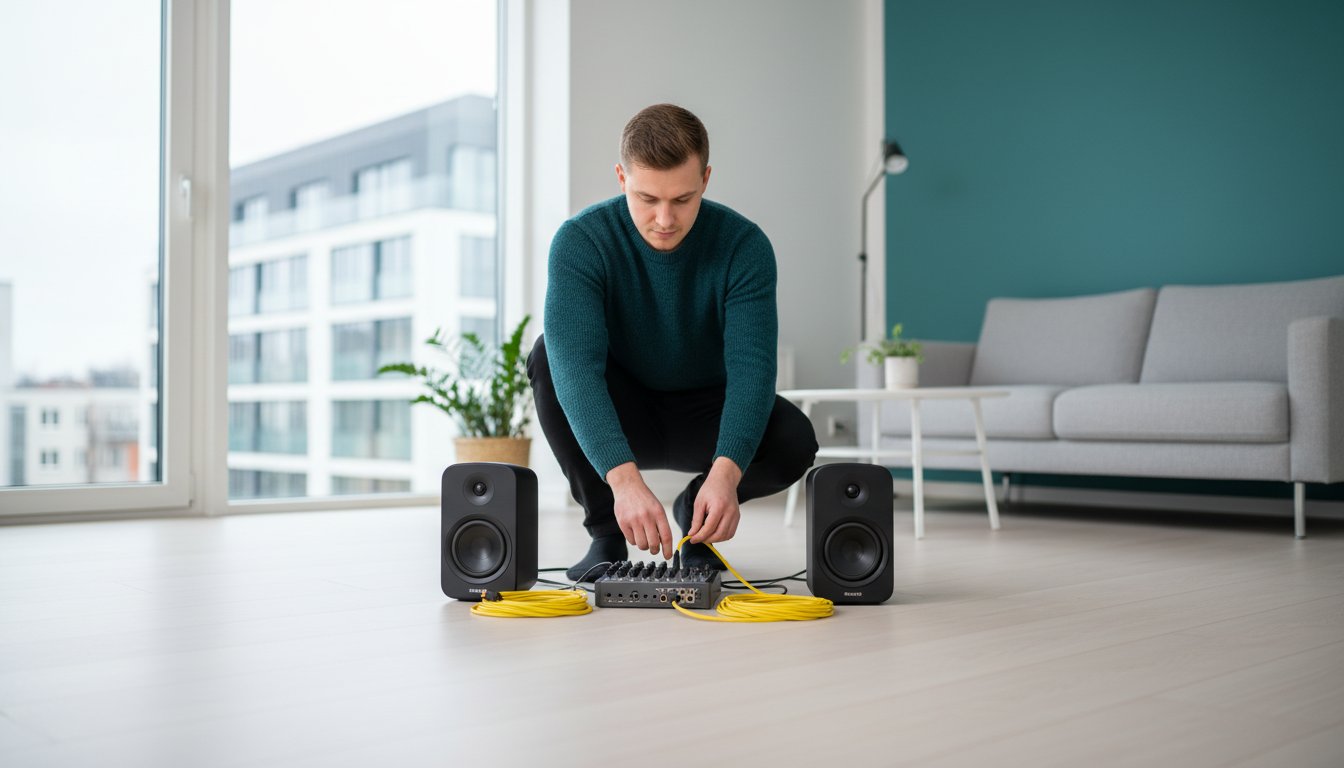
Sound System Rental: A Practical Guide to Local Audio Gear in 2026
April 8, 2026
Published by Life4Rent · Operated by Brohf Software OÜ
Last June, an event host in Berlin spent four hours untangling cables for a 50-person garden party, only to find the speakers didn't match the mixer. It's common to feel overwhelmed by technical jargon or to worry about overpaying for a massive rig you don't actually need. You'll learn how to secure a reliable sound system rental from local providers who offer practical gear without the standard corporate markups.
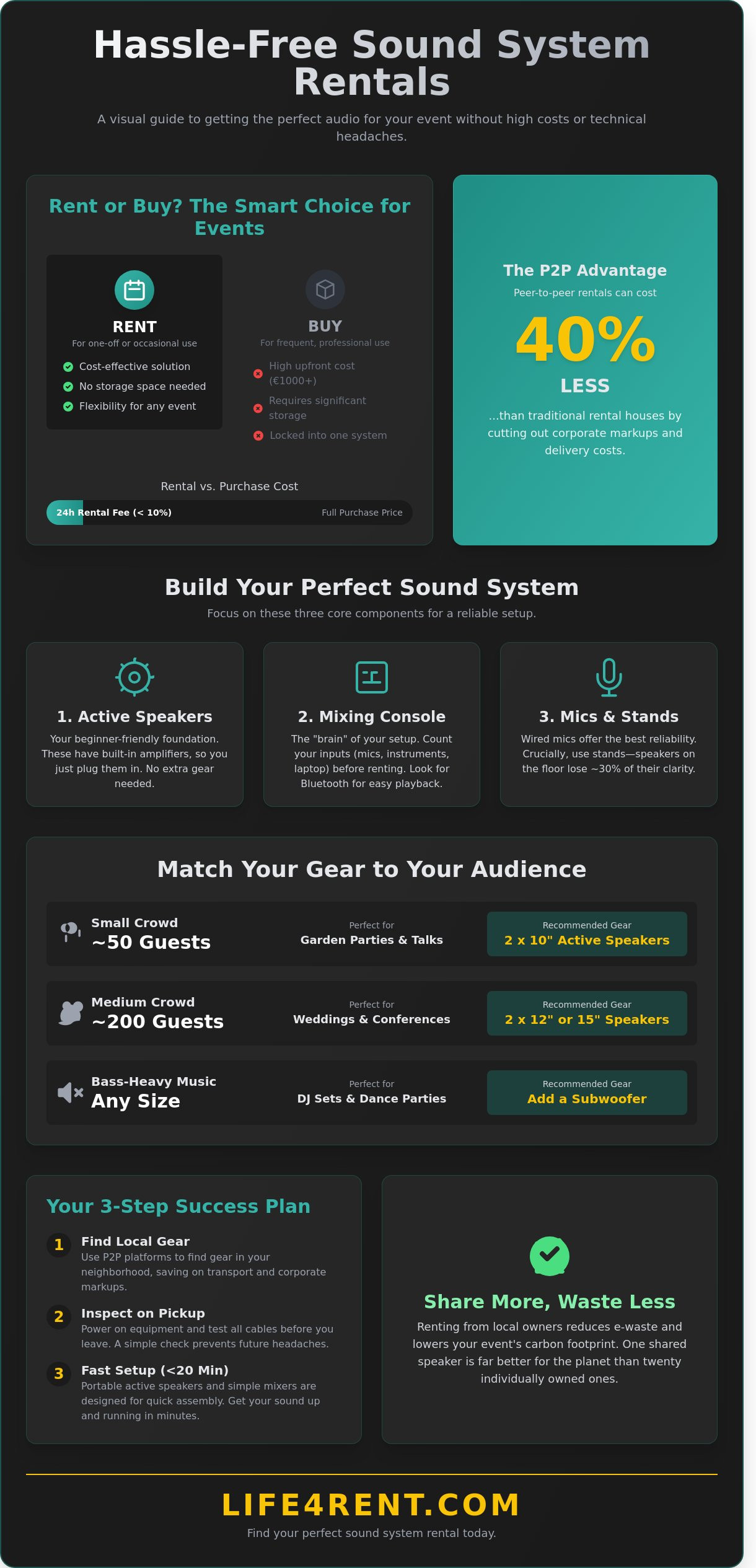
Most people just want clear audio that works the first time they plug it in. A 2024 market analysis by the Audio Rental Network shows that local peer-to-peer rentals can cost up to 40% less than traditional rental houses. This breakdown identifies the exact components your space requires, from active speakers to basic mixers.
You don't need to be an expert to get great results. Portable equipment that fits in a standard car usually takes less than 20 minutes to assemble with the right instructions. You'll gain the confidence to handle your own audio needs while keeping your budget under control.
Choose sound system rental over buying for one-off events
A sound system rental provides temporary access to professional audio components like active speakers, analog mixers, and microphones. You don't own the hardware; you simply pay for the time you use it. This approach works well for events that happen once or twice a year. You'll avoid the high upfront costs of purchasing gear that spends most of its life in a closet.
Professional speakers and subwoofers are often heavy and take up a lot of room. If you live in a small apartment or work in a compact office, you likely don't have space for two 15-inch PA speakers and their stands. Rentals solve this problem because the equipment goes back to the owner as soon as your party ends.
You can also pick different gear for every event. You might need a sleek, white speaker system for a wedding one month and a rugged, high-output setup for an outdoor festival the next. This flexibility allows you to match the audio quality to the specific theme without a long-term commitment.
Financial benefits of the sharing economy
You'll find that the math favors renting for most private users. A mid-range PA system with two speakers and a mixer often costs between 1,000 and 1,500 EUR at retail. In contrast, a 24-hour rental fee on a peer-to-peer platform is often less than 10% of that purchase price.
Peer-to-peer platforms skip the high overhead costs that traditional music stores pass on to customers. This makes the equipment more accessible for everyone. You can also use rentals to test different brands like JBL, QSC, or Yamaha before you decide to make a permanent purchase for your own studio.
Environmental impact of equipment sharing
You help reduce electronic waste by sharing gear with people in your neighborhood. Most electronics have a high carbon footprint from manufacturing and international shipping. You lower this impact when you maximize the utility of existing hardware. A single speaker used by twenty different people over a year is much better for the planet than twenty people buying their own units.
This model of peer to peer equipment rental supports local sustainability by keeping resources within the community. It's a practical way to enjoy high-quality sound without the environmental guilt of over-consumption. Local sharing ensures that gear is maintained and used until the end of its functional life.
Understand the core components of a reliable sound setup
A reliable sound system rental includes several moving parts that must work together. Most users find success with active speakers because these units house their own amplifiers. You won't need to carry extra power racks or match impedance levels. Passive speakers are common in fixed venues, but they require technical expertise that complicates a quick setup. Beginners should stick to powered units to reduce the chance of equipment failure.
The mixing console functions as the brain of your audio setup. You need to count your inputs before you commit to a rental. A simple presentation might only require two channels, but a small band often needs 12 or more. Compact mixers are easy to transport and often provide enough utility for weddings or private parties. You should ensure the board has enough XLR inputs for every microphone you plan to use when browsing a sound system rental marketplace.
Wired microphones provide the highest level of reliability for any event. The Shure SM58 is a standard choice because it handles high volume without distortion. Wireless models offer mobility for stage presenters, but they require careful battery management. You'll need to check if the rental package includes XLR cables, power extensions, and tripod stands. Speakers placed on the floor lose roughly 30% of their clarity because human bodies absorb high-frequency sounds.
Speakers and subwoofers for different crowds
A crowd of 50 people usually requires two 10-inch speakers to maintain clear communication. If your guest list reaches 200, you'll need 12-inch or 15-inch speakers to push sound to the back of the room. You should add a subwoofer if you play bass-heavy music like house or funk. Low frequencies require significant air movement that small speakers can't provide alone. Two smaller speakers placed 6 meters apart often sound better than one large unit that creates loud hot spots.
Mixers and input sources
Match audio equipment to your specific venue and crowd size
The success of your event depends on how well you match your sound system rental to the environment. A backyard party for 30 people requires a different approach than a 200-guest wedding in a hotel ballroom. You should evaluate the physical dimensions of the space before you browse any peer-to-peer listings. Large open areas swallow sound, while small rooms with hard surfaces create messy echoes.
Backyard parties present unique power and neighborly challenges. Sound travels further than you expect in residential areas. Noise ordinances in cities like Tallinn or Chicago often mandate lower decibel levels after 10:00 PM. You'll need to check your local municipal code to avoid fines. Outdoor setups also face "sound evaporation" because there are no walls to reflect the audio back to the crowd. You might need two extra speakers to maintain clarity at the back of the yard.
Indoor weddings require a balance between aesthetics and performance. You don't want bulky black boxes blocking the view of the floral arrangements. Slim column speakers offer a professional look and provide clear acoustics for both the emotional speeches and the high-energy dancing later. These systems distribute sound evenly across the room, so guests at the back hear the vows just as clearly as those in the front row.
Corporate presentations focus almost entirely on vocal clarity. Feedback is the biggest risk when you use microphones near a stage. You need a mixer that lets you control laptop audio and multiple mics independently. Small concerts add another layer of complexity. Performers must hear themselves to stay in tune. Any sound system rental package for a live band should include floor monitors or "wedges" so the musicians don't lose their place in the song.
Indoor vs. outdoor audio challenges
Carpeted rooms and heavy curtains absorb high frequencies. This can make a speaker's voice sound muffled. You'll need to adjust the treble on your mixer to compensate. Open fields have the opposite problem. Sound just disappears into the air without boundaries. You should always plan for weather protection. Pop-up tents or simple plastic covers keep your electronics dry if a surprise shower occurs. Battery-powered PA systems are a reliable alternative for up to four hours of use if you lack nearby outlets.
Specialty gear for unique needs
Sometimes a standard speaker setup isn't enough for a high-end event. You might need to add a piano rental near me to your list if a professional musician is performing live. Lapel mics are better for hands-free presentations than handheld units. They allow the speaker to move naturally on stage. You might even find a sewing machine rental useful for fixing a torn stage curtain or a costume on-site. Having these resources available through a local marketplace saves time and reduces transport costs.
Follow these practical steps for a successful peer-to-peer rental experience
A sound system rental through a peer-to-peer platform requires more than just a quick handshake. You need to verify the technical state of the equipment before it leaves the owner's sight. Plug every speaker into a power source and run a signal through each input channel. A faulty XLR cable or a crackling potentiometer on a mixer can ruin an event, so check these small components during the hand-off.
Documentation protects both parties from misunderstandings. Use your phone to take clear photos of the gear from multiple angles. Focus on existing scratches, dents, or wear on the speaker grilles. This record ensures you aren't held responsible for damage that existed before your rental period started.
Ask the owner for a brief walkthrough of their specific hardware. Modern digital mixers often have complex routing or hidden sub-menus that differ between brands. Five minutes of instruction can save you hours of troubleshooting later. You should also confirm the exact return time to avoid late fees or conflicts with the owner's next booking.
Logistics often present the biggest challenge for sound system rental users. Measure your vehicle's cargo space before you arrive. A dual 18-inch subwoofer often requires a van or a large SUV, as these units rarely fit in a standard sedan trunk. If the gear doesn't fit, you risk damaging the equipment or your car's interior.
The pre-rental checklist
Inspect every cable for frayed insulation or loose connectors. These small defects lead to signal loss or dangerous electrical shorts. Make sure the owner includes enough extension cords and power strips for your specific venue layout. You should also ask for a PDF manual or a physical "cheat sheet" that covers basic setup steps and troubleshooting tips.
Safe transport and setup
Place heavy speakers on the floor of your vehicle and secure them with ratchet straps or heavy blankets. This prevents the gear from sliding and protects the finish during sharp turns. When you arrive, follow a logical setup order. Position your speakers first, then connect the mixer, and finally plug in your microphones or laptops.
Always keep the master faders and gain knobs at zero when you power the system on or off. This simple habit prevents loud pops that can damage high-frequency drivers. Check your signal levels frequently to ensure you stay out of the red "clip" zone on the mixer's display.
Find local audio equipment on Life4Rent
Life4Rent functions as a peer-to-peer marketplace where you find equipment directly from other users in your community. You can find a local sound system rental without the overhead of a large commercial warehouse. This setup usually means you'll pay for the days you actually use the gear rather than a rigid weekly block. You can pick up the speakers yourself to avoid delivery fees that often add 15 to 20 percent to the total bill. Owners on the platform usually provide honest advice about what their gear can actually do. They know the small details, like which cables are prone to tangling or how long the battery lasts on a wireless set.
Direct communication with the owner is a major advantage of using this platform in 2026. You can ask specific questions about the equipment's history or its performance in similar venues. Most owners are happy to explain the setup process, which is helpful if you aren't a professional audio engineer. They might even include extra cables or a backup microphone at no additional cost. This personal touch is rarely found at big-box rental stores. You get the benefit of their experience without the corporate sales pitch.
Daily rates on Life4Rent are often more flexible than traditional business models. You can negotiate a half-day rate for a quick afternoon presentation or a multi-day discount for a weekend festival. This flexibility allows you to stick to your budget while still getting the quality you need. You don't have to worry about hidden insurance fees or surprise surcharges that often appear on commercial invoices. Every transaction supports the local sharing economy, keeping money within your neighborhood.
Local rentals reduce the carbon footprint of your event because the gear doesn't travel across the country in a freight truck. You are also putting money back into the pockets of local creators and hobbyists. This peer-to-peer model ensures that high-quality audio tools remain accessible to everyone, regardless of their budget. It's a practical alternative to buying equipment that you might only use once or twice. You'll find that neighbors often take better care of their gear than large rental corporations do.
How to search for sound systems
Specific keywords provide the most accurate results on the platform. You should search for "active speakers" or "PA system" instead of just "sound" to find professional sound system rental options. Filters allow you to narrow down results to a 10-mile radius from your location. This makes the logistics of pickup and return much simpler. You can check the reliability of an owner by looking at their response rate and past reviews. Previous renters often leave details about how well the equipment performed during their specific events.
List your own gear for extra cash
You might have a mixer or a pair of microphones that only gets used twice a year. These items can generate a steady stream of passive income if you list them for others to use. You maintain full control over your calendar and the prices you set for each day. Many owners find that renting out a single PA system three times a month covers their storage and maintenance costs. It's a sensible way to help neighbors while making your gear pay for itself. You decide who rents your equipment and when it is available.
Plan your audio setup for success
You'll save significant budget by renting audio gear instead of buying equipment that sits in storage most of the year. It's important to match the power of your speakers to the actual dimensions of your venue and the number of people attending. Most users find that a basic setup with a mixer and two active speakers covers the needs of an average party or corporate presentation. You should always test the cables and connections before the guests arrive to avoid any technical glitches during the event.
Life4Rent has provided a secure peer-to-peer platform since 2021, connecting people who have gear with those who need it. You can browse through 17 categories of essentials in cities like Tallinn and Chicago. This model keeps costs down and supports a more circular economy in your local area. It's a straightforward way to get the results you need without a massive upfront investment or the hassle of long-term maintenance.
Check the listings today to see what's available for your specific dates. Find an affordable sound system rental near you on Life4Rent. Your next event will benefit from the right preparation and reliable gear.
Frequently Asked Questions
Do I need a technician to set up a rented sound system?
Most small to medium setups are plug-and-play and don't require professional help. If you choose a basic sound system rental with two active speakers, you can usually complete the physical setup in 20 minutes. Larger events with 500 guests or complex rigging often require a technician to ensure safety and proper acoustic balance.
What is the difference between an active and a passive speaker?
Active speakers have a built-in amplifier, while passive speakers require an external power amp to produce sound. Most casual users prefer active models because they involve fewer cables and less technical troubleshooting. Passive systems offer more control for sound engineers but increase the weight and complexity of your transport logistics.
Can I connect my phone or laptop to a rented sound system?
You can connect almost any modern device using a 3.5mm jack, a USB-C adapter, or a Bluetooth receiver. Check with the owner to see if they provide an XLR-to-mini-jack cable or a small mixing board. Digital devices sometimes require a DI box to prevent ground hum, which is a common issue in 15% of older venue circuits.
How much power does a typical sound system rental require?
A standard mobile DJ setup usually runs safely on a single 16-ampere European wall outlet. Two active speakers and a small mixer draw roughly 600 to 1,000 watts during peak performance. If you add high-output subwoofers or large lighting rigs, you might need two separate circuits to avoid tripping a 10-amp breaker.
What happens if the equipment gets damaged during my event?
You are responsible for repair or replacement costs as defined in your rental agreement. Peer-to-peer platforms often include basic insurance, but it's smart to take photos of the gear when you pick it up. Statistics show that 3% of rentals experience minor cosmetic wear, while serious electrical damage usually requires a dedicated security deposit.
Are wireless microphones better than wired ones for weddings?
Wireless microphones offer better mobility for toasts, but wired versions are more reliable for stationary musical performances. Modern digital wireless units operate on 2.4GHz or UHF bands and rarely drop out within a 30-meter range. Keep a wired backup on hand because battery failure or signal interference can occur in crowded urban environments.
How far in advance should I book a sound system for a holiday party?
You should secure your gear at least 6 weeks before peak dates like December 15th. Demand for a sound system rental spikes during the winter season; 80% of local inventory is often booked by early November. Last-minute searches usually result in higher prices or lower-quality equipment that hasn't been serviced recently.
Will a sound system fit in a standard sedan for transport?
A basic kit with two 12-inch speakers and stands will fit in the trunk of a Volkswagen Golf or a similar hatchback. If your rental includes an 18-inch subwoofer, you'll need to fold the rear seats down or use a station wagon. Measure your cargo space before pickup to ensure the 50-kilogram flight cases don't damage your car's interior.
Life4Rent
Rent it. Earn from it. Own less, access more.
Browse peer-to-peer rentals near you, or list what you own and start earning — all protected by Life4Rent Protect.
About the author
Stockholm, Sweden
Stella researches and writes about sustainable consumption and the circular economy for the Life4Rent Renting Academy. She previously worked at a Nordic sustainability research institute studying how access-over-ownership models reduce household CO₂ emissions, and translates that research into practical guides for everyday renters.