
Sharing Economy Platforms: A Practical Guide for 2026
Joshua Price
September 12, 2026
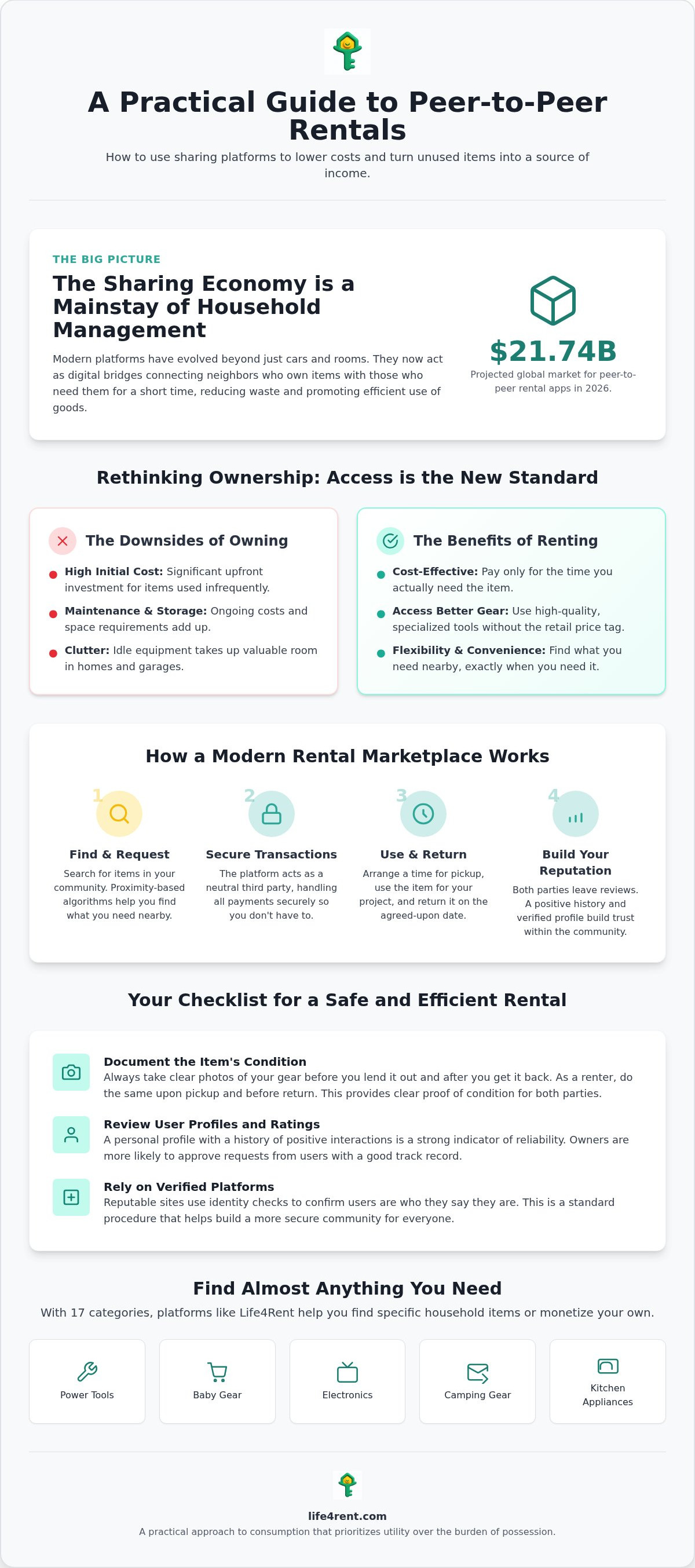
The global market for peer-to-peer rental apps is projected to reach $21.74 billion in 2026. You've likely noticed that sharing economy platforms are no longer just for spare rooms or city cars; they've become a staple for everyday household management. It's normal to feel hesitant about letting a stranger borrow your expensive power tools or baby gear. Worries about hidden platform fees and the potential for item damage often keep people from participating in these marketplaces.
This guide provides a professional perspective on how you can use platforms like Life4Rent to lower your cost of living and turn idle items into a steady stream of extra income. You'll learn how to identify reliable local listings and protect your belongings without having to sift through unnecessary hype. We'll examine the practical side of peer-to-peer rentals, including the impact of 2026 EU tax regulations and the best ways to ensure your transactions remain secure. By the end, you'll have a clear plan for making the most of the rental economy while keeping your risks low.
The current state of sharing economy platforms in 2026
The concept of a sharing economy has matured significantly over the last decade. Modern sharing economy platforms act as digital bridges that connect individuals who own specific items with neighbors who need them for a short duration. This model has moved past the experimental phase and now functions as a reliable alternative to traditional retail. You can find everything from heavy-duty power tools to specialized baby strollers listed by people in your own community. Increased regulation in the EU has brought more transparency to these exchanges, making it safer for both owners and renters to interact.
Local listings often provide a more practical solution than buying a product you might only use once or twice a year. This shift helps reduce household waste by ensuring that high-quality products stay in active use rather than sitting in a storage unit. It's a pragmatic approach to consumption that prioritizes utility over the burden of possession. You'll find that most platforms now include verification steps to build trust between users.
To better understand how these systems function in a modern context, watch this helpful video:
Evolution beyond ridesharing and housing
Most people used to associate these marketplaces strictly with car rides or vacation rentals. Today, the scope has widened to include almost every category of household good. Marketplaces for peer to peer equipment rental are now a standard resource for home maintenance and hobbyists alike. You'll often see high-end cameras, camping gear, and specialized kitchen appliances available for rent nearby. These items represent significant investments that many owners are happy to monetize when they aren't in use. It helps them offset the original cost while providing a service to the neighborhood.
Why access matters more than ownership
Ownership comes with hidden costs that often outweigh the benefits for occasional users. You have to consider storage space, which is at a premium in many European cities, along with the time and money required for maintenance. Access through a dedicated platform allows you to use the best tool for a specific task without the steep retail price. You only pay for the time the item is actually in your hands. This flexibility allows you to tackle complex projects or enjoy expensive hobbies without a permanent financial commitment or a cluttered garage. It's about having the right gear when you need it, not just owning things for the sake of it.
How modern rental marketplaces facilitate peer-to-peer exchange
Modern marketplaces provide the essential infrastructure that makes peer-to-peer exchange possible for everyone. They act as a neutral third party to manage the logistical details that used to make renting from a neighbor a bit of a gamble. Most sharing economy platforms handle the payment processing and provide a structured framework for settling any disputes that might arise. This professional setup removes the awkwardness of discussing money or damages directly with a stranger in your neighborhood.
You'll find that these platforms use specific search algorithms to match your needs with the most relevant local owners. This technology focuses heavily on proximity to reduce the time and fuel you spend traveling to pick up a tool or a piece of baby gear. The platform typically takes a small percentage fee from each successful agreement to fund its operations. This income allows the service to provide human support teams and maintain the digital security tools that keep your data safe.
Reliability in these communities is built through your personal user profile. It serves as a transparent history of your past interactions and behavior within the marketplace. Owners are naturally more likely to approve rental requests from people who have a proven track record of on-time returns and high ratings. You can list your own items to start building this reputation while you earn some extra income from household goods you don't use every day.
The role of verification and trust
Identity checks are now a standard requirement for joining most reputable sites. These procedures confirm that you're interacting with real people who have been verified through official documentation. Reviews from previous renters offer a realistic perspective on the condition and performance of a specific item. You should always look for owners who maintain a high response rate on their profile. A quick response usually indicates a serious host who takes care of their equipment and values your time.
Payment security and item protection
Security starts with the way the platform handles your financial information during a transaction. Funds are typically held in a secure gateway and are only released to the owner once the rental period actually begins. This protects you from potential fraud or listings that don't exist. Many platforms also incorporate protection plans to address accidental damage to the gear. These measures help users navigate complex regulatory issues in the sharing economy by establishing clear liability rules from the start. If an issue does occur, you'll need to use the platform's internal reporting tools immediately to ensure the protection remains valid.
Evaluating different types of sharing platforms for your needs
The choice of sharing economy platforms depends heavily on your specific project and how often you plan to use the service. Recent data regarding the current state of the sharing economy suggests that users now prioritize convenience and local proximity over massive, unmanaged inventories. You'll find that some marketplaces focus exclusively on high-value assets like cars or industrial machinery, while others cater to everyday household needs. Local availability is the most important factor for daily rentals because the savings disappear if you spend two hours driving to a pickup location.
Specialised vs. general marketplaces
Specialised sites often provide deeper technical support for complex gear like professional film equipment or vehicles. These platforms might offer specific insurance policies that are tailored to the unique risks of that single category. The downside is the need to maintain multiple accounts and go through several identity verification processes. It can become a hassle to manage different logins for every hobby or home repair task.
General platforms like Life4Rent simplify this by offering 17 different categories within one system. You can pick up a tool on rent for a Saturday morning repair and book a high-end projector for a family movie night using the same account. This approach lets you build a strong reputation in one community rather than spreading your reviews across five different apps. It's a more efficient way to manage your household resources and track your rental history in one place.
Local vs. global coverage
Global platforms provide a huge pool of items, but their local density can be inconsistent. You might find the perfect item only to realize it's located in another city or requires expensive shipping. Local-focused sites ensure that your options are actually accessible within a reasonable distance from your home. This proximity makes the logistics of picking up and returning items much simpler for everyone involved.
Neighbors in your own area are usually more flexible with pickup and drop-off times compared to large commercial rental centers. They can also give you practical advice on how to use the item, which is helpful for gear you've never handled before. This personal interaction adds a layer of reliability that's hard to find on massive, impersonal global sites. You'll likely find that the people living near you are your best resource for finding high-quality items quickly.
Consider your long-term needs before you commit to a specific platform. A marketplace that covers everything from baby gear to camping equipment is often more useful for a busy household than several niche apps. It reduces the digital clutter on your phone and makes it easier to manage your budget. Most users find that a versatile marketplace provides the best balance of variety and security for their daily lives.
Practical steps for safe and efficient renting
Safety on sharing economy platforms depends on your attention to detail during the initial handover. You must inspect the item thoroughly at the time of pickup to ensure it matches the description provided online. Check for any visible wear or functional issues that aren't mentioned in the listing. It's much easier to address a problem before you leave with the equipment than it is to dispute it later after you've already used it.
Photos of the item before and after the rental protect both parties from unfair damage claims. Take clear shots of all surfaces and any existing scratches or dents while the owner is present. This documentation serves as your primary evidence if a disagreement occurs regarding the item's condition. Most experienced users consider this a standard part of the process, and honest owners won't mind the extra minute it takes to document the gear's state.
Clear communication with the owner prevents most common misunderstandings about pickup times or specific usage instructions. Ask questions about how to operate the gear if you're unsure, especially for complex electronics or power tools. You should also read the cancellation policy before you commit to a specific date. Unexpected schedule changes happen, and it's better to know the financial implications upfront so you don't lose your deposit.
Listings and owner reviews
Look for detailed descriptions that mention the item’s age and specific condition. A reliable owner usually provides high-quality photos from multiple angles to show they have nothing to hide about the gear's current state. Recent reviews are far more valuable than feedback from several years ago. A user's behavior can change, or the item might have degraded over time, so focus on what people are saying in the last six months. You can browse verified listings to see how professional hosts present their equipment and manage their reviews.
Rental agreements and fees
Fees are usually added to the daily rate shown on the listing, so your total cost will be higher than the initial headline price. This often includes platform service charges or optional protection plans that cover accidental damage. You should check if there are late return penalties in the agreement to avoid surprise costs on your final bill. If you think you might be late, message the owner as soon as possible to negotiate an extension through the app. Most platforms provide a digital receipt for every transaction, which you should keep for your personal records or tax purposes.
Finding everything you need on Life4Rent
Life4Rent operates as a versatile hub within the landscape of modern sharing economy platforms. You'll find a wide array of items organized into 17 distinct categories, which covers almost every need a typical household might encounter. This diversity means you don't have to jump between different apps to find a pressure washer for your driveway and a high-chair for a visiting relative. It's a practical way to manage your resources without the clutter of excessive ownership.
The platform brings together a community of owners and renters who value utility and local access. You can find everything from high-end electronics to essential baby gear in one place. This centralized approach saves you time and reduces the mental load of managing multiple rental agreements. Each transaction contributes to a more sustainable way of living by keeping high-quality products in circulation longer.
Renting across 17 diverse categories
Tools and home goods are consistently popular for DIY projects and seasonal maintenance. You might only need a heavy-duty drill once a year, so renting it makes more financial sense than buying one. Outdoor and sports equipment rentals allow you to test out new hobbies like paddleboarding, camping, or cycling without a large upfront investment. If you find you enjoy the activity, The Cycle Centre provides excellent resources on the health and lifestyle advantages of regular riding. If you decide the hobby isn't for you, you haven't wasted hundreds of euros on gear that will just sit in your garage.
You can turn the idle items in your garage or attic into a steady stream of extra income. The listing process is straightforward and only requires a few clear photos and a brief, honest description of the item's condition. It's an effective way to let your belongings pay for themselves over time. You'll find that items you rarely use, like a tile cutter or a roof box, are often in high demand within your local community.
Owners maintain full control over who rents their items and when they are available. You set your own prices based on the item's value and the local market demand. You also define the availability calendar to fit your own schedule. This level of control ensures that participating in the rental marketplace remains a helpful addition to your life rather than a burden. It's a professional and secure way to share what you own while helping your neighbors save money.
Practical ways to manage your household resources
Modern sharing economy platforms have evolved into essential tools for anyone looking to reduce their cost of living while accessing high-quality gear. You can now avoid the burden of ownership by tapping into a network of neighbors who are willing to share their belongings. Success depends on clear communication and careful documentation of an item's condition at the start of every agreement. These small steps ensure that every transaction remains professional and fair for everyone involved.
Life4Rent offers a secure peer-to-peer environment where you can explore items across 17 categories, including professional tools and baby gear. Owners benefit from a simple listing process that turns idle household objects into a source of extra cash. You maintain full control over your schedule and pricing while helping your community reduce waste. It's a reliable system that prioritizes utility and trust within your local neighborhood.
Browse the Life4Rent marketplace to find your next rental and see how easy it is to get started. You'll find that the right equipment is often just a few streets away. It's a sensible way to tackle your next project without the high retail price tag. You'll enjoy the flexibility of having what you need exactly when you need it.
Frequently Asked Questions
Are sharing economy platforms safe for high-value items?
Safety depends on the platform's verification and protection policies. Reputable sharing economy platforms use identity checks to confirm users are real people. You should take detailed photos at the start of every rental to document the item's condition. Life4Rent provides a secure peer-to-peer environment that helps mitigate risks through a structured agreement process. It's always a good idea to check an owner's previous reviews before you finalize a high-value exchange.
How much does it cost to list an item on a rental platform?
Most marketplaces allow you to list your items for free. The platform typically generates revenue by taking a percentage fee from each successful rental agreement once it's finalized. You don't pay any upfront costs to create a profile or upload photos of your gear. This model ensures the platform only makes money when you do. It's a low-risk way to earn money from household items that would otherwise sit idle in your garage.
What happens if I accidentally damage a rented item?
You should report any damage to the platform and the owner immediately. Most services have a clear dispute resolution process to handle repairs or replacements. Many sharing economy platforms offer protection plans that are often included in the service fees you pay at checkout. These plans are designed to address accidental damage during the rental term. You'll need to provide photos as evidence to help the platform's support team resolve the situation fairly for both parties.
Can I rent items for my business through these platforms?
Yes, many users rent specialized equipment for short-term professional projects. You can find electronics, office gear, and heavy-duty tools that help you complete tasks without the overhead of purchasing them. Life4Rent includes 17 specific categories that cater to both household and professional needs. This flexibility is helpful for freelancers who need a specific camera or projector for a few days. It allows you to maintain professional standards while keeping your operational costs low.
Do I need special insurance to rent out my personal belongings?
You should check your existing home insurance policy, as it might not cover items rented out for profit. Many rental marketplaces provide their own protection schemes to cover accidental damage during a transaction. These internal policies act as a primary layer of security for owners. It's sensible to read the platform's terms of service to understand exactly what is covered. If you plan to list high-value items frequently, you might consider a specialized third-party insurance policy.
How do I know if a rental price is fair?
A fair price is usually based on the item's retail value and local market demand. You can compare similar listings in your area to see what others are charging for the same equipment. Most owners set their own prices, and you'll find that daily rates often decrease for longer rental periods. It's a good sign if the price reflects the age and condition of the item. Don't forget that service fees are typically added to the daily rate shown.
What is the best way to handle item pickups and returns?
You should arrange pickups and returns in a safe location that works for both parties. Clear communication through the platform's messaging system is vital for setting expectations. Use the handover time to inspect the gear and verify that everything is in working order. Both owners and renters should confirm the return in the app as soon as the item is handed back. This ensures the rental period ends officially and any security deposits are released promptly.
Are there platforms that operate specifically in Europe?
Several marketplaces focus on the European market to ensure better local density and compliance with regional regulations. Life4Rent operates as a comprehensive marketplace with global coverage, making it a reliable choice for users across various regions. It handles the complexities of 2026 EU tax and data sharing rules so you don't have to. A platform with a strong presence in your specific country increases the likelihood of finding items within a short distance from your home.
Life4Rent
Rent it. Earn from it. Own less, access more.
Browse peer-to-peer rentals near you, or list what you own and start earning — all protected by Life4Rent Protect.
About the author
Joshua Price
Amsterdam, Netherlands
Joshua writes about the financial side of renting and earning on Life4Rent. His guides focus on helping people understand the real cost of ownership, calculate rental income potential, and make smarter decisions about buying versus renting. He previously wrote on household economics and personal budgeting for a pan-European finance publication.