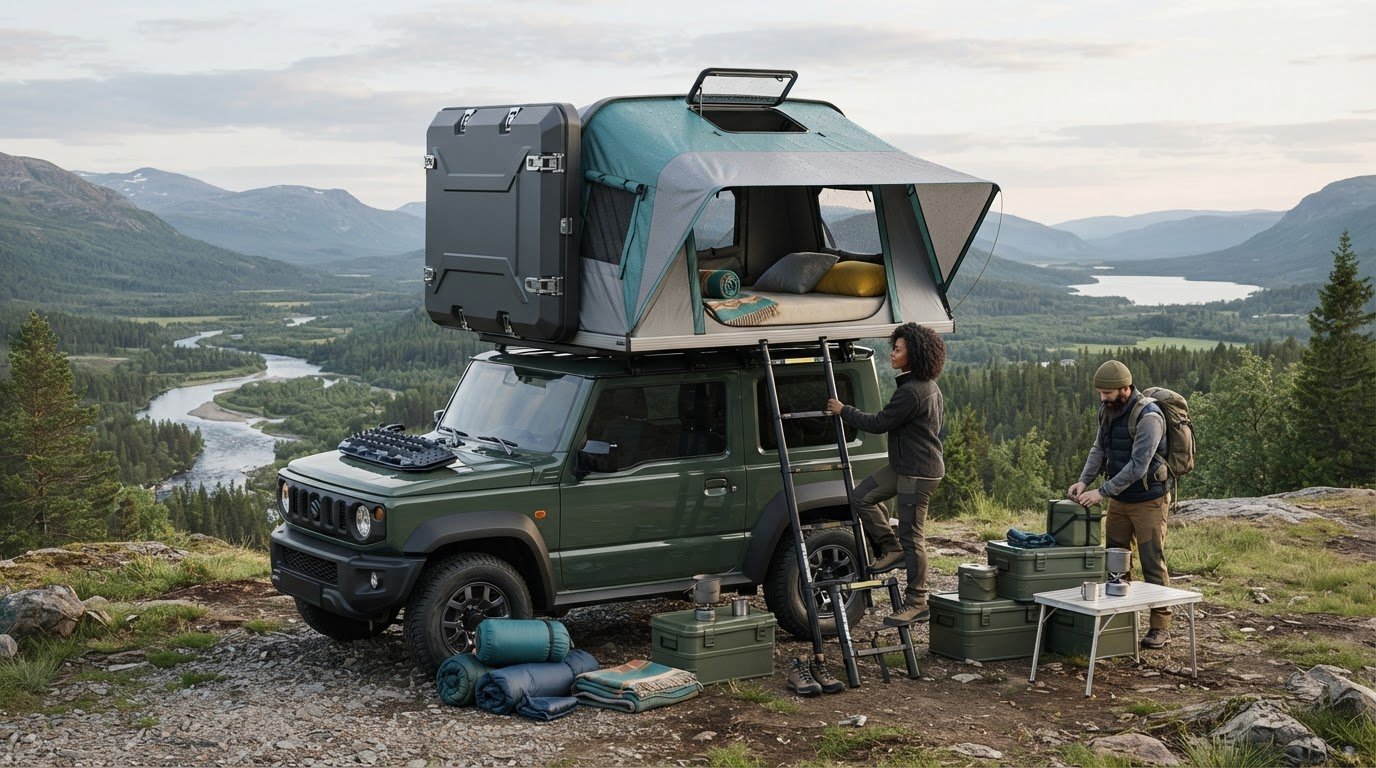
Rooftop tent rental for camping, rates and vehicle setup
Fred Agbator
October 22, 2026
Bedding can stay inside a rooftop tent only if there’s enough room when the tent is closed and its shell latches securely. With a rooftop tent rental for camping, bulky pillows or thick sleeping bags may need to come out before you pack up.
That detail can make a real difference when choosing a tent. Also consider whether its size and weight suit your vehicle, what accessories are included, and how the design handles ventilation and rain.
Rental rates depend on factors such as the rental period and destination, so compare what’s included as well as the cost. The sections ahead explain how to assess tent capacity and vehicle fit, what to expect from bedding and accessories, and which details matter for a comfortable night outdoors.
What is the size and weight?
Start with the sleeping area, not the number printed beside the tent. Capacity tells you how many people can fit, but not how much personal space they’ll have or how bedding and storage will fit. For a two-person trip, compare the usable sleeping surface with both campers’ width and sleeping bags. For an outdoor adventure with children, make sure there’s room for everyone to lie comfortably.
Model specifications give useful reference points. The iKamper Skycamp 3.0 sleeps four people, while the Thule Foothill 2 has a peak height of 37 inches. Those figures describe different things: sleeping capacity and interior height. Neither tells you the tent’s full footprint, so compare its listed sleeping dimensions with your group’s needs.
Weight matters as much as size. These examples show why model names alone aren’t enough. Compare the exact tent’s packaged weight with your vehicle and rack specifications before choosing.
Check height for sitting up, changing clothes, and moving around inside. The Thule Foothill 2’s peak height is 37 inches, a specific measurement that helps set expectations. Peak height doesn’t mean every part of the sleeping area has equal headroom. Look at the tent’s shape and sleeping layout, too.
Capacity is a useful starting point when choosing a rental. Tents sleeping three to four people tend to perform best as rentals, according to the market research author. Still, match capacity to your group: two adults may prefer more sleeping space, while a family may prioritize the number of sleeping spots.
A six-person camping tent offered for rental in Philadelphia sleeps six campers and fits two queen air mattresses. Its listed center height is 72, with no unit given. That example shows why capacity, mattress fit, and interior measurements should be considered together. If you plan to bring an air mattress, compare its dimensions with the tent’s sleeping floor.
Vehicle dimensions affect how the closed tent sits on the roof. Compare the tent’s closed length and width with the available roof space, then consider whether it could obstruct doors or other roof-mounted gear. A long tent on a short vehicle can limit usable roof area, even when its sleeping capacity suits your group.
Before booking, write down three details: camper count, mattress size, and vehicle roof dimensions. Then compare those against the tent’s capacity, sleeping area, and packed measurements. For example, a four-person label doesn’t prove that four people and bulky bedding will fit comfortably. The iKamper Skycamp 3.0’s four-person capacity gives you a reference, not a substitute for checking layout.
What if the tent won't install on my car when I arrive?
A rooftop tent rental requires a compatible vehicle, roof rack, and load rating. Ground tents don’t need roof mounting, while campervan rentals combine transport and sleeping space in one vehicle.
Campground and national park rules vary by location. In New York, place rooftop tent setups at campgrounds or on private property with permission, and follow local guidelines.
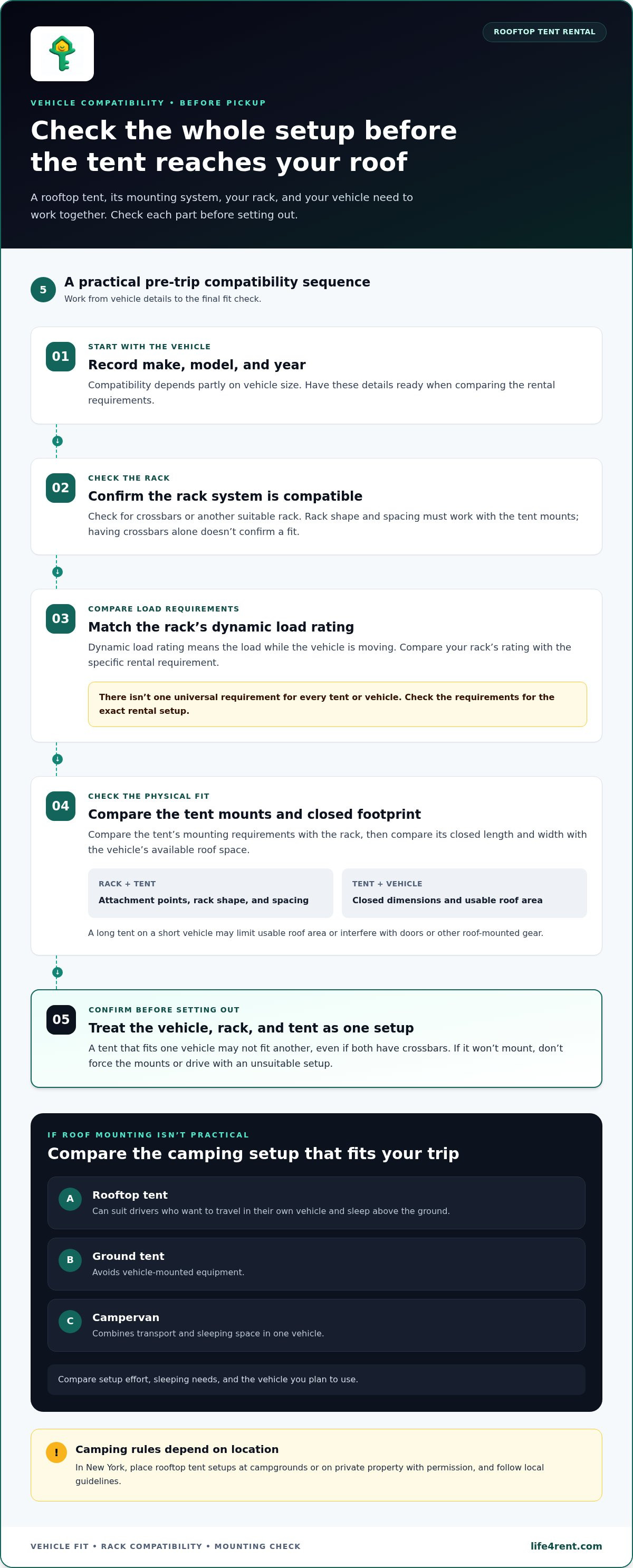
Before pickup, assess the vehicle, rack, and tent as one setup. Compatibility depends on roof capacity, rack design, and vehicle size. A tent that fits one vehicle may not fit another, even if both have crossbars. Brands and rack systems can use different attachment points, so check the tent’s mounting requirements.
Dynamic load rating refers to the load while the vehicle is moving. Don’t treat that figure as a universal requirement for every tent or vehicle. Match the specific rental requirements to your vehicle and rack.
Use this checklist before setting out:
- Identify your vehicle’s make, model, and year.
- Check whether it has crossbars or another compatible rack system.
- Compare the rack’s dynamic load rating with the rental requirement.
- Confirm that the rack’s shape and spacing work with the tent mounts.
- Consider the vehicle’s roof dimensions and the tent’s closed footprint.
A rooftop tent can suit drivers who want to travel in their own vehicle and sleep above the ground. A ground tent avoids vehicle-mounted equipment, while a campervan offers a different way to combine transport and sleeping space. Compare setup effort, sleeping needs, and the vehicle you plan to use.
Roof rack add-ons can change the total setup cost. These are market examples, not universal rates; rental duration and location affect the price.
If the tent won’t mount when you arrive, the rack or vehicle may not meet its requirements. Don’t force the mounts or drive with an unsuitable setup. Compare your vehicle details with the stated compatibility criteria before booking, and choose a ground tent if roof mounting isn’t practical for your trip.
Included tent accessories
A rooftop tent rental may include accessories, but the exact kit varies. Examples include a shoe bag and four leveling blocks. A six-person camping tent in Philadelphia comes with a rain fly, tent stakes, and a carry bag.
These items serve different purposes. A shoe bag keeps footwear separate from the sleeping area, while leveling blocks help stabilize a setup on uneven ground. Tent stakes secure ground-level components, and a carry bag makes the tent easier to transport and store.
Some rentals also include organization features. The Philadelphia six-person tent has a gear loft with a lantern hook and a wall organizer. These can keep small items off the floor and provide a designated place for a lantern, making the camping experience more comfortable after dark.
Don’t assume bedding, racks, or other gear come with the tent. Check the rental’s itemized list for sleeping bags, pillows, sheets, and a roof rack. A mattress may be part of the tent setup, but that doesn’t mean bedding is included.
Before packing, separate the kit into three groups:
- Tent components: confirm items such as the rain fly, stakes, and carry bag.
- Organization accessories: look for a shoe bag, gear loft, lantern hook, or wall organizer.
- Personal camping gear: plan bedding, clothing, food, and any cooking equipment your trip needs.
Bring bedding suited to the trip, including a sleeping bag or blanket and a pillow for each camper. If you plan to use an air mattress, compare its size with the tent’s sleeping area. A six-person tent in Philadelphia fits two queen air mattresses, but that example doesn’t establish fit for other models.
Pack a headlamp or lantern, even if the tent has a lantern hook. The hook provides a place to hang a light, not the light itself. Bring a small bag for footwear, too, if your rental doesn’t include the shoe bag listed with some tent setups.
At pickup, lay out each included item and compare it with the listing. Count the four leveling blocks if they’re part of the kit, and check for a rain fly and stakes when listed. This quick inventory helps you spot missing components before leaving, rather than discovering the gap at camp.
Finally, plan for the weather and campsite surface. A rain fly helps protect against wet weather, while stakes secure compatible ground-level parts. Keep bedding and spare clothing in a separate, accessible bag so you can reach them without unpacking every accessory at the campsite.
Rental season and nightly rates
Rates for a six-person camping tent in Philadelphia depend on rental duration and destination. Compare the full rental period and trip location instead of assuming one nightly rate applies everywhere. A shorter booking and a longer booking may be priced differently.
For a useful comparison, note your pickup location, destination, and planned return date before reviewing listings. Then compare options using the same trip details. A mountain campsite and a nearby campground are different destinations, so consider where the rental is going when comparing rates.
Seasonal suitability depends on the conditions you expect, not just the calendar. A spring trip in the mountains can bring different temperatures and rain from a summer weekend at a lower elevation. Check the tent’s stated weather capabilities and plan bedding and clothing for the campsite’s expected conditions.
“Season” labels can describe a tent’s intended range of conditions, but the label alone doesn’t tell you how warm or comfortable it will feel. Read the tent’s product details for weather protection, ventilation, and any stated limitations. Match those features to your route, overnight temperatures, and forecast.
Use these steps to compare rental options:
- Set your travel dates and destination before comparing rates.
- Compare the full rental duration, not just the nightly figure.
- Check which tent and weather features suit the expected conditions.
- Include any separate equipment rental in your trip budget.
- Review pickup and return arrangements against your itinerary.
A weekend trip and a multiweek road journey have different rental durations. Trip length can affect the total cost, while the destination can affect the quoted rate. A roof rack add-on may also be priced separately, so include the vehicle setup when comparing the full cost.
Don’t assume a rooftop tent provides the same protection as an insulated cabin. Pack bedding suited to the conditions, and consider how wind, rain, and overnight temperatures may affect comfort. A mountain campsite calls for more careful weather planning than a sheltered stop in mild conditions.
Before confirming a booking, make a simple comparison table with each option’s dates, destination, tent, included equipment, and total quote. This makes differences easier to see. If one rental includes a rack and another lists it separately, compare the complete setup rather than the headline nightly amount.
Finally, make sure the rental period covers your travel schedule. A late return or an added night can change the booking total. Clear dates and destination details make it easier to compare quotes and choose a tent suited to the season and your plans.
Ventilation and rain protection
Rain protection and airflow depend on the tent’s design and setup. A six-person camping tent offered in Philadelphia has a hooded fly designed to support ventilation in rainy conditions. Its large rear hooded window also allows cross ventilation.
Those features address two different needs: keeping rain off the tent and allowing air to move through it. Open the window and vents according to the tent’s instructions, and position the fly as designed. For a weekend getaway, pack clothing and bedding so you can keep them protected if damp weather arrives.
Wind, rain, and cold bring different risks. Strong wind can affect a rooftop setup, rain may enter through open or poorly secured areas, and cold can make sleep uncomfortable. Follow the tent’s setup guidance, secure the fly and mounts, and choose a sheltered campsite when conditions are poor.
Before leaving, check the forecast for the campsite rather than relying only on conditions at home. Mountain weather can change along a route, and rain or falling temperatures can affect comfort overnight. Pack suitable layers and keep bedding dry, even when the tent includes a rain fly.
Ventilation matters in wet weather because closing every opening can restrict airflow. The Philadelphia tent’s hooded fly is designed to provide ventilation in rainy conditions, and its rear hooded window supports cross ventilation. Use these features as intended while keeping rain protection in place.
Protection plans and deposits are separate from weather features. These are distinct rental terms, so read the applicable plan’s conditions before booking.
For a practical pre-trip check, inspect the tent fabric, fly, windows, and attachment points. Make sure the fly covers the intended areas, the windows open and close properly, and the setup is secure before sleeping. If rain starts during setup, keep bedding packed until the sleeping area is ready.
A clear listing should explain the tent’s ventilation and rain features, as well as the applicable protection terms. Compare those details with your route, expected weather, and comfort needs. For a weekend in changing conditions, look for a balance of reliable rain coverage and controlled airflow.
If you’re planning a trip, explore outdoor and sports rentals as part of your camping setup.
Life4Rent: Rent and list everyday items across 17 categories
Life4Rent gives people a place to list and rent everyday items, including outdoor and sports gear. If your camping plans call for equipment beyond the tent, browse the marketplace for relevant listings, such as outdoor gear or useful household items. Listings are created by users, so review each item’s details and rental terms before deciding.
It can also suit people who own items they don’t use every day and want to list them for rent. That’s separate from booking a rooftop tent, so focus on the specific gear your trip requires.
Visit life4rent.com to explore the marketplace or learn more about listing an item.
Plan your next night outdoors
Before booking, picture the trip itself: how you’ll travel, where you’ll sleep, and what would make the setup comfortable for your group. That simple plan can help you choose a rooftop tent rental for camping that suits how you actually travel, rather than one that only looks right in a listing.
Then make your next step a practical one. Keep your vehicle details and trip dates handy, and compare rental listings against your plans. If you need other everyday items for the journey, Life4Rent is a marketplace where people list and rent items across categories including outdoor and sports gear.
Explore Life4Rent’s rental marketplace when you’re ready to look for useful items or list something you own. A little planning now can leave more room to enjoy the route, the campsite, and the time away.
Frequently Asked Questions
Can I keep bedding inside while it is closed?
That depends on the tent’s internal storage space and how much bedding you’re packing. Before departure, try closing the tent with your planned bedding inside, then make sure the latches fasten without force. If the shell won’t close properly, carry the bedding in the vehicle instead. A quick test at home can prevent repacking at the campsite.
How does the tent mount to my car?
A rooftop tent mounts to a compatible roof rack using the tent’s mounting hardware. The brackets connect the tent to the rack, and the exact arrangement depends on the model. Follow the supplied instructions in order, and check that each connection is secure before driving. Don’t modify the hardware or improvise a mounting method if parts don’t align.
What comes with it?
The rental listing should identify the tent and any equipment supplied with it. Treat that list as the boundary between the rental kit and your own packing: don’t assume personal camping essentials are included. Before leaving, compare the items you’ve received against the listing and note anything missing. This makes it easier to resolve a mismatch before reaching your destination.
What if I don't have crossbars?
Without crossbars, you’ll need a compatible roof rack system before mounting a rooftop tent. Check whether the rental arrangement includes a suitable rack option, and make sure it works with both your vehicle and the tent’s mounting hardware. If you can’t create a compatible setup, choose a ground tent rather than trying to secure the rooftop tent to an unsuitable roof.
Where can I rent a rooftop tent for camping near me?
Search local rental listings for a rooftop tent rental for camping, then compare pickup location, dates, and vehicle compatibility. Life4Rent is a peer-to-peer marketplace where users list and rent daily items, including outdoor and sports gear. Availability depends on the listings in your area, so use the location and item details to judge whether a listing fits your trip.
What vehicle requirements and roof load limits apply to rooftop tent rentals?
Your vehicle needs a roof setup compatible with the tent, and its load limits must accommodate the installed equipment. Compare the vehicle and rack manufacturer’s specifications with the tent’s requirements. Pay attention to the rack’s dynamic load rating, which applies while driving, and consider the combined weight of the rack and tent. The vehicle’s size and roof layout also affect fit.
How do you install, open, and pack away a rented rooftop tent?
Follow the instructions for the specific tent, since opening and closing steps vary by model. Before installation, park securely and lay out the hardware so you can identify each part. Once open, check that the tent is stable before use. When packing up, follow the closing sequence, stow loose items, and secure the cover before driving.
What insurance, deposits, cancellation policies, and rental rules should I check?
Read the rental terms for damage responsibility, protection-plan limits, deposit timing, and cancellation deadlines. Also review eligibility rules, including any age or pet restrictions, before booking. Keep a copy of the terms and note the tent’s condition at pickup and return. These checks help you understand what the agreement covers and what responsibilities remain yours during the rental.
Related guides on Life4Rent
Ready to rent instead of buy? See all vehicles available to rent on Life4Rent →
Life4Rent
Rent it. Earn from it. Own less, access more.
Browse peer-to-peer rentals near you, or list what you own and start earning — all protected by Life4Rent Protect.
About the author
Fred Agbator
London, United Kingdom
Fred covers rental technology, app features, and platform mechanics for the Life4Rent Renting Academy. With a background in fintech journalism, he specialises in breaking down how digital rental platforms work — from payment protection and identity verification to smart pricing and booking management.