
Rental Platform Guide for Small Operators in 2026
August 13, 2026
Published by Life4Rent · Operated by Brohf Software OÜ
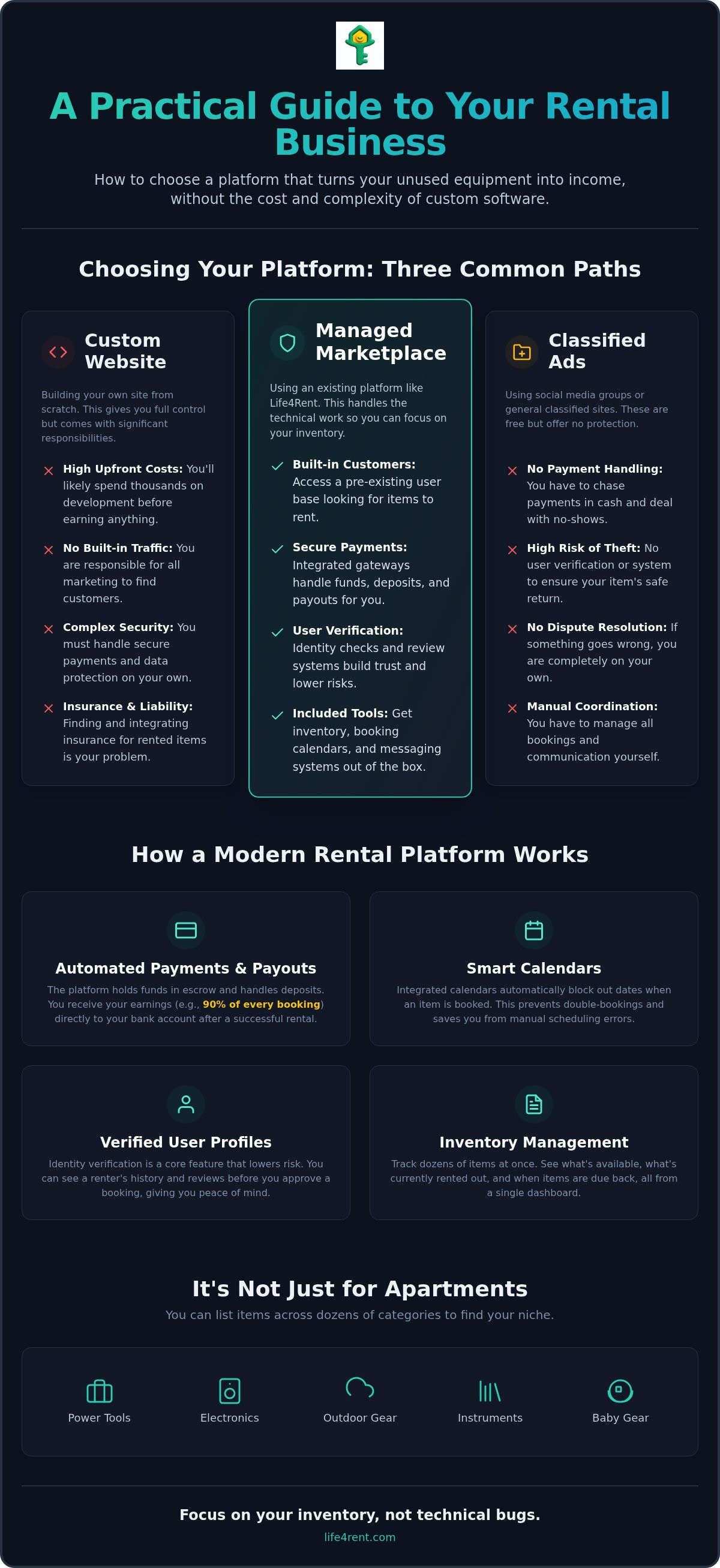
You don't need a five-figure budget or a team of developers to start a professional rental business in 2026. The choice of a rental business platform often feels like the biggest hurdle for small operators who just want to monetize their tools or electronics. It's frustrating to look at the high costs of building a custom website only to realize you still have to figure out secure payments and insurance on your own.
You're probably tired of looking at complex software that costs more than the items you're trying to rent. Most people start this journey wanting extra income but get stuck when they see the technical requirements for a secure checkout. It's a common trap to think you need a custom-built solution when a managed marketplace can do the job better for a fraction of the cost.
You'll learn how to pick a platform that handles the technical heavy lifting so you can start earning income from your equipment without the overhead of custom software. We'll look at the current landscape of managed marketplaces and the specific features you need to keep your items safe and visible to customers. This guide covers everything from fee structures to the new EU data-sharing regulations that affect every small operator this year.
The difference between property and general item rental business platforms
Most people think of real estate when they hear the word rental. While platforms for apartments and vacation homes dominate the headlines, a modern rental business platform allows you to monetize much more than just a spare room. You can list items across 17 different categories, including tools, electronics, and even baby gear. These specialized marketplaces handle the transaction and user verification for you—much like how AutoDream streamlines the market for smart cars across 15 different countries—so you don't have to worry about the technical details of running a shop.
The growth of the sharing economy has changed how we view our possessions. Many users now prefer access over ownership for expensive items they rarely use. If you have a professional camera or a heavy-duty power tool sitting in your garage, it's a wasted asset. You can turn that idle equipment into a steady stream of income without needing to build your own website from scratch.
Why peer to peer equipment rental is growing
People choose to rent instead of buy for several practical reasons. High-end equipment is expensive to purchase and maintain, especially if it's only needed for a single project. Shared resources also reduce the need for constant manufacturing and lower our collective environmental footprint. Inflation plays a role too, as renting out your personal gear is a realistic way to cover your own rising costs while helping others in your community.
How these platforms differ from classified ads
You might consider using classified ads or social media groups to list your items. However, these sites don't provide any protection for the owner or the renter. A dedicated platform offers a structured peer to peer equipment rental framework that keeps both parties safe. Classified sites don't handle payments, which often leaves you chasing customers for cash or dealing with no-shows.
Modern platforms include secure payment gateways that ensure funds are captured before the item leaves your hands. You also benefit from built-in review systems and verified user profiles that help build trust in the community. Identity verification is a core feature that significantly lowers the risk of theft or damage. You get to see the history of a user before you agree to hand over your equipment, giving you peace of mind that your gear is in good hands.
Life4Rent supports a wide range of niches beyond the usual suspects. You can list specialized camping gear, professional cleaning equipment, or even musical instruments. For those managing audio gear, staying connected to the scene through Doubleclap Radio can provide inspiration for the types of events your equipment serves. This diversity allows small operators to find their own specific market without competing against giant rental corporations. The platform manages the infrastructure so you can focus entirely on managing your inventory.
The mechanics of a modern rental business platform
A professional rental business platform works by automating the repetitive tasks that usually consume an owner's time. Inventory management tools let you track dozens of items simultaneously without losing sight of their current location or condition; for high-value equipment, integrating GPS solutions from shop.letstrack.com helps you keep a closer eye on your assets. You can see which power tools are currently out and which outdoor gear or electronics are due back this afternoon. This organization is helpful for those who want to grow their side project into a more serious income stream without hiring staff.
Calendar systems are vital for maintaining a smooth schedule and keeping customers happy. They prevent double-bookings by automatically blocking out dates once a reservation is confirmed, which removes the risk of human error. Communication tools also play a key role by keeping your personal phone number and email address private until you've actually agreed to a deal with a renter. You can discuss the specifics of a hand-over within the app, keeping all your business records in one place.
Automated payment and deposit systems
Payment gateways within a rental business platform handle the financial side so you don't have to deal with cash or bank transfers. The platform typically holds funds in escrow, which protects both the owner and the renter until the transaction is complete. Digital deposits are often managed through the system to cover minor damages or late returns without requiring a separate transaction.
You'll receive your earnings directly to your bank account after the platform takes its fee. For instance, some platforms allow you to keep 100% of every booking, making the math simple for your records. This setup is much more reliable than trying to collect payments on your own. If you want to see how this works in practice, you can set up a profile to explore the dashboard.
User verification and security protocols
Security is a primary concern for anyone lending out high-value assets. Identity checks are standard on these platforms to ensure that renters provide legitimate documentation before they can book anything. Review systems provide a transparent history of every user, so you can check if a potential renter has a habit of returning items late or in poor condition.
Insurance or protection plans are frequently integrated into the platform's service fee. This provides a safety net that is often difficult for individual operators to secure on their own. A clear understanding of consumer protection in the sharing economy is essential for staying compliant with local rules. These protocols help mitigate the inherent risks of lending out your equipment to strangers.
Stand-alone software versus existing marketplace platforms
The choice between building a private site and joining a marketplace is a major decision for any small operator. A custom rental business platform allows you to design every pixel to match your brand, but it also means you're responsible for every technical glitch. Most people don't realize that a custom site requires constant security updates and server maintenance. If you're just starting out, the complexity of managing a private server often outweighs the benefits of a unique URL.
Technical debt is a real concern for independent sites. When a payment gateway updates its protocol, your site might stop working until you pay a developer to fix it. A marketplace handles these updates in the background, so your business stays online without any effort from your side. This reliability is essential when you want to provide a professional experience for your customers.
The cost of building your own platform
A custom rental site can easily cost thousands of euros to develop from scratch. You'll need to pay for a secure hosting environment, SSL certificates, and integrated payment processors. These costs hit your wallet before you've even made your first ten euros in profit. Marketplaces are much more practical because they only charge a small percentage when you actually complete a booking. This pay-as-you-go model protects your cash flow while you're still testing the market for your items.
Visibility and the network effect
New websites often struggle to appear on the first page of search results for several years. You'd have to spend a significant amount on advertising just to get people to see your inventory. A tool on rent listing on an established marketplace benefits from the platform's existing SEO authority. Access to local customers who are already browsing the app specifically to find gear is a massive advantage. This network effect means your items are visible to thousands of users from the moment you hit the publish button.
Independent software also lacks a built-in trust system. You would have to build your own review database and verify every user manually to ensure your items are safe. Marketplace users already have profiles and ratings, which makes the initial hand-over much less stressful. You can rely on the community's history to decide who is a reliable person to borrow your gear.
Steps to list your first items and manage bookings
High-quality photos are the most important part of your listing on any rental business platform. You don't need a professional studio, but clear lighting and a neutral background help your items stand out. Take pictures from several angles and include close-ups of any existing wear or specific features. This transparency builds trust and reduces the chance of disputes later on.
Competitive pricing requires a bit of local research. Look at what other operators in your area charge for similar tools or electronics. If you're just starting, you might set your price slightly lower to gather your first few reviews. Once you have a history of successful rentals, you can adjust your rates to reflect the quality of your service.
Fast response times are a simple way to improve your visibility. Most platforms use algorithms that rank active, responsive owners higher in search results. You should aim to reply to inquiries within an hour or two. This reliability makes you a preferred choice for renters who are often looking for gear on a tight schedule.
How to write a helpful item description
You should always mention the specific model name and its primary capabilities. A clear list of what's included in the rental is essential for the user. Mention if you provide extras like batteries, charging cables, or protective cases. Avoid technical jargon that might confuse someone who is renting a piece of equipment for the first time. They just want to know if the tool will get their specific job done.
Setting your rental terms and availability
Decide on a minimum rental period that makes sense for your schedule. Some owners prefer a one-day minimum, while others only rent out gear for full weekends. You should set clear pick-up and drop-off times to avoid conflicts with your personal life. It's helpful to be specific about where the hand-over happens, such as a local landmark or your place of business.
Update your calendar regularly to reflect your true availability. You'll lose credibility if you have to decline multiple requests because you forgot to block out a holiday. Keeping your schedule accurate ensures that every booking request you receive is one you can actually fulfill. If you're ready to get started, you can list your first item today and see how easy the process is.
Why Life4Rent is a practical choice for your rental business
Life4Rent serves as a comprehensive rental business platform that removes the technical barriers for small operators. You can list items for free and you only pay a commission when you actually earn money from a booking. Owners keep 100% of every transaction, which makes it easy to calculate your potential profits. This model allows you to test the market for different items without any financial risk upfront.
It's a sensible way to start a side business whether you're an individual with a few tools or a small shop owner with a full warehouse. The platform handles all the underlying infrastructure, from secure payment processing to identity verification. You don't have to worry about building a database or managing server uptime. This managed approach means you can spend your time maintaining your gear and talking to customers instead of fixing website bugs.
You'll find that the system provides a level of professional stability that is usually only available to much larger companies. The interface is straightforward for both the owner and the renter, which reduces the friction of completing a deal. You can focus on growing your inventory while the software handles the logistics of the transaction.
The 17 categories of opportunity
You can manage a diverse portfolio of items from a single dashboard across 17 specific categories. Tools and home goods are consistent earners because people often need them for one-off weekend projects. Electronics and outdoor gear usually see a spike in demand during holidays and special events. You might list professional cleaning equipment alongside baby gear or camping sets—taking inspiration from professional fleets like Troyer's RV Rental—to ensure you have bookings regardless of the season.
A diverse inventory helps protect your income from seasonal dips. If your camping gear isn't moving in the winter, your indoor electronics or home tools can fill the gap. For operators specializing in hunting or outdoor activities, providing high-quality equipment from Eräkolmio can help build a reputation for reliability. The platform makes it easy to toggle listings on and off as your own needs for the items change.
When your electronics inventory needs an upgrade, you can also use Phones4cash LLC to sell back older smartphones, tablets, and computers, ensuring you always have the most current models available for your customers.
Support for the European rental market
The platform is based in the region and understands the specific needs of the local market. You can rent out your items in Tallinn or other major cities with the confidence that the system is optimized for local users; for those targeting the Finnish travel market, Parasta Tallinnassa provides an expert guide to the city's top spots. Local support is available to help you resolve any issues with your listings or payments quickly. This regional focus makes the platform more reliable than global giants that often ignore smaller European markets.
A rental business requires a partner that understands the local regulatory environment. The platform helps you stay compliant with rules while providing a secure environment for your transactions. You get the benefits of a global infrastructure with the personal touch of a regional service provider. This balance is what makes it a practical choice for anyone looking to grow their rental income in 2026.
Build your rental inventory with confidence
You now understand that a modern rental business platform removes the technical barriers that used to stop small operators from starting. You don't need a massive budget or a developer to get your tools and electronics in front of local customers. Focus on clear photos and honest descriptions to build a reputation that brings renters back. It's much more efficient to use an established network than to struggle with the technical debt of a custom-built website.
Your idle gear can become a consistent source of revenue when you use a system that handles the logistics for you. You'll benefit from secure payment handling and identity verification, which are essential for protecting your high-value items. With access to 17 item categories, you can manage a diverse portfolio that stays busy throughout every season of the year.
There are no upfront costs to list your items, so you only pay when your business actually succeeds. This low-barrier entry point is the most sensible way to join the sharing economy this year. Start your rental business on Life4Rent today and see how simple it is to turn your extra equipment into profit. Your items are waiting to work for you.
Frequently Asked Questions
Is it better to build my own rental site or use a platform?
A dedicated platform is usually better for small operators because it saves thousands in development costs. You get instant access to a built-in audience without having to spend years on search engine optimization. The platform handles server security and payment updates, so you don't have to worry about the technical debt of a custom-built website. It's a more practical way to start earning without high upfront risks.
How much do rental business platforms typically charge in fees?
Fees vary depending on the type of assets you list. Major property rental sites typically charge a host service fee of around 15.5% of the booking subtotal. General item platforms like Life4Rent are often more affordable, allowing owners to keep 100% of every booking. You should check for hidden listing fees, though many modern marketplaces let you list items for free and only take a commission when you actually earn money.
Can I rent out multiple types of items on one platform?
You can manage a diverse inventory from a single dashboard on most modern marketplaces. Life4Rent supports 17 different categories, which includes everything from baby gear and home goods to electronics and tools. This flexibility helps your business stay busy throughout the year. You can switch your focus to outdoor gear in the summer and indoor electronics during the winter months to maintain a steady income.
What happens if a renter damages my equipment?
Most platforms include security measures such as digital deposits and transparent review systems. You can check a renter's history and ratings before you agree to any booking. If damage occurs, you can use the deposit to cover repair costs. Many platforms also offer integrated protection plans within their service fee, which provides a safety net that is difficult for individual operators to secure on their own.
Do I need a business license to use a rental platform?
Requirements depend on your local laws and the total income you generate. In many European jurisdictions, you can start as an individual and list items as a peer-to-peer user. You'll likely need to register as a formal business once your earnings cross specific national thresholds. You should always check your local city regulations regarding short-term rentals and equipment lending to ensure you stay compliant with current rules.
How do I handle taxes for my rental income?
You are responsible for reporting your earnings to your national tax authority. New regulations like (EU) 2024/1028, which took effect on May 20, 2026, require platforms to share activity data with authorities. It's best to keep a clear log of your transactions and business expenses to simplify your filing process. This transparency helps you avoid penalties and ensures your small business remains in good standing with the law.
Can I use a rental platform for my existing small business?
A rental business platform is an excellent tool for brick-and-mortar shops that want to monetize their floor stock. You can reach local customers who prefer temporary access over a permanent purchase. The system provides a professional checkout experience and handles the logistics of the transaction without the need for you to build a custom e-commerce site. It's a low-cost way to add a new revenue stream to your existing shop.
What items are in the highest demand on rental marketplaces?
Tools and home goods are consistent earners because people often need them for one-off weekend projects. Electronics like projectors or professional cameras also see high demand for events and holidays, where they are often used alongside services found on forevents. Outdoor gear and baby equipment are popular during specific seasons when families want to avoid buying expensive items they'll only use once. By listing items in these categories, you can tap into the most active parts of the sharing economy.
Life4Rent
Rent it. Earn from it. Own less, access more.
Browse peer-to-peer rentals near you, or list what you own and start earning — all protected by Life4Rent Protect.
About the author
Amsterdam, Netherlands
Joshua writes about the financial side of renting and earning on Life4Rent. His guides focus on helping people understand the real cost of ownership, calculate rental income potential, and make smarter decisions about buying versus renting. He previously wrote on household economics and personal budgeting for a pan-European finance publication.