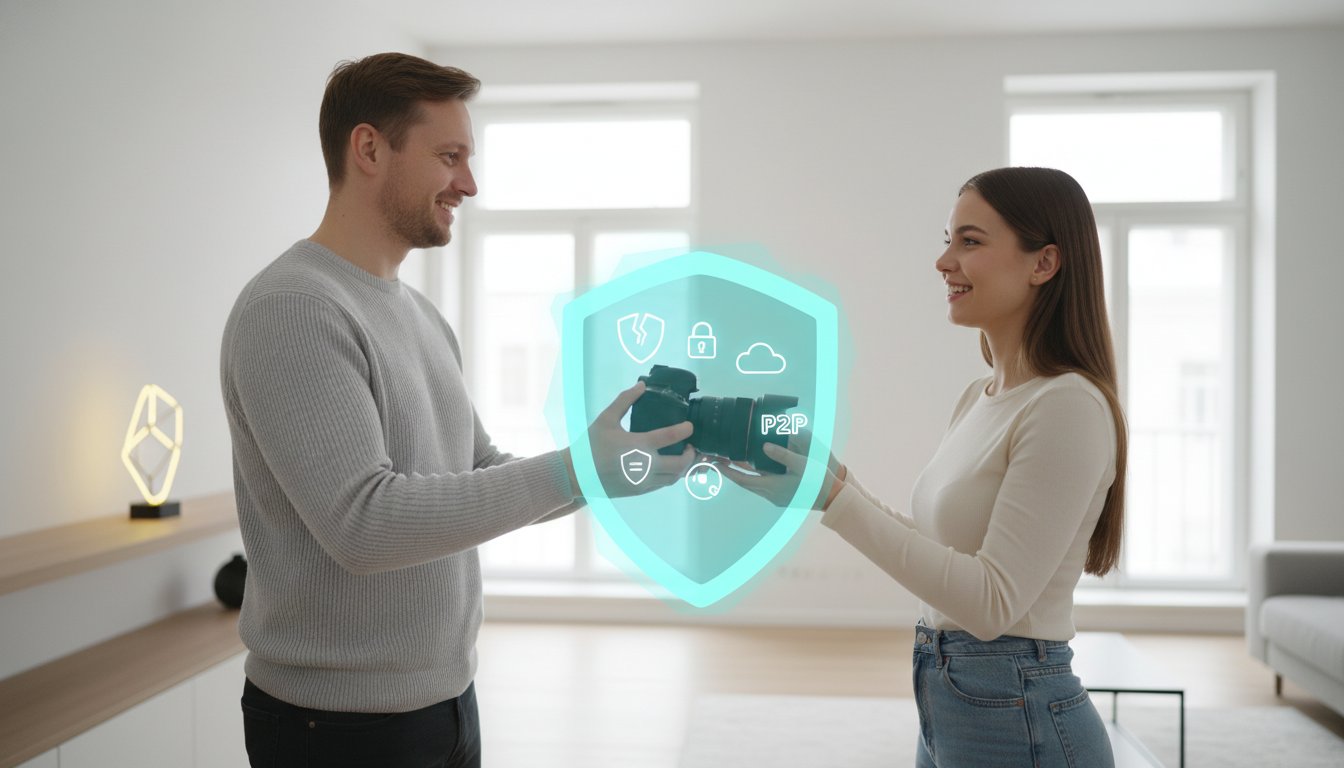
Rental Item Damage Protection: A Practical Guide for P2P Sharing in 2026
Joshua Price
May 1, 2026
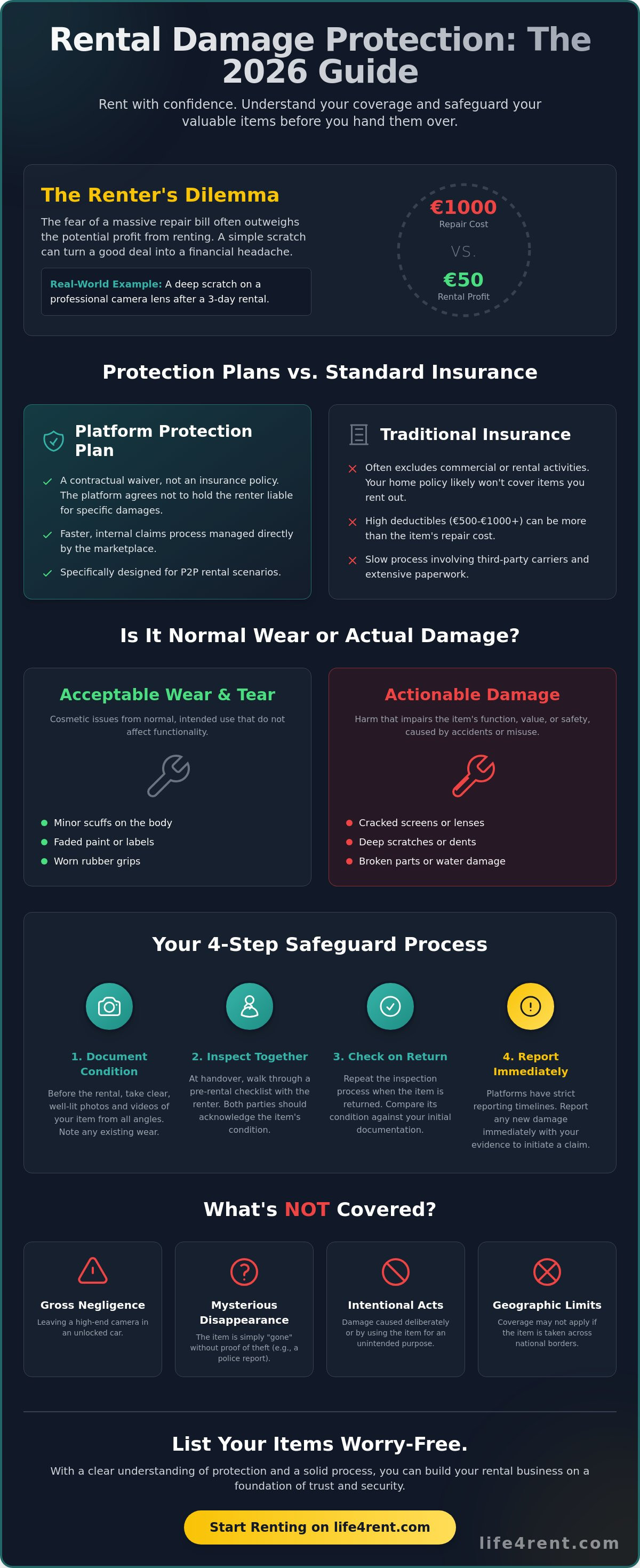
On October 14, 2025, a lender in Berlin discovered a deep scratch on a professional camera lens after a three-day rental period. Situations like this make many owners hesitate to list their gear, as the fear of a massive repair bill often outweighs the potential profit. You likely worry about who pays when something breaks or how to define the line between a used item and a broken one. Reliable rental item damage protection acts as a safety net, but it only works if you know the specific rules of the platform you use.
It's frustrating to read through pages of legal jargon just to find out if a cracked screen is covered. You want to feel confident when you hand over your equipment, knowing that your assets are actually secure. This guide explains how to safeguard your belongings and highlights the specific limits of protection plans in the 2026 market. We look at the practical steps for documenting condition, identifying legitimate wear and tear, and managing the dispute process without unnecessary stress. These steps ensure you can list high-value items with a clear understanding of your coverage.
Understanding the Basics of Rental Item Damage Protection
Rental item damage protection functions as a specific contractual agreement between the owner and the renter. You agree to limit your financial liability if an accident occurs during the rental period. This isn't a traditional insurance policy; it's a waiver where the platform or owner agrees not to hold the renter responsible for specific repair costs. Most of these agreements rest on the legal principle of bailment, which governs how property is handled when it's in someone else's possession.
To better understand this concept, watch this helpful video:
Trust is the foundation of any peer-to-peer exchange. Without a clear framework for damage, owners wouldn't feel comfortable sharing their assets with strangers. These protection plans provide a safety net that encourages people to list their items on marketplaces, making rental item damage protection a standard expectation in 2026. You'll find these plans applied to everything from heavy-duty power tools to expensive electronics.
Why standard homeowners insurance often fails
You might assume your personal home insurance covers items you rent out, but this is rarely the case. Most personal policies specifically exclude any property used for commercial or rental purposes. If you file a claim for a broken drone that you rented out for profit, the insurer will likely deny it. Deductibles present another hurdle. A standard homeowners policy might have a deductible of €500 or €1,000, which is often higher than the value of the rented item. Frequent claims for minor rental damage can also lead to your provider canceling your policy entirely.
The role of the marketplace in protection
Platforms like Life4Rent simplify the peer to peer equipment rental process by building protection directly into the transaction. They handle the verification of users to ensure everyone is who they say they are. This layer of security is vital for high-value exchanges. The marketplace manages the waiver fee and may hold a security deposit in escrow. This system ensures funds are available if a dispute arises. It creates a professional environment where both parties understand their financial risks before the exchange happens. Clear documentation and photos taken at the start of the rental serve as the baseline for any rental item damage protection claim.
How Protection Plans Differ from Standard Insurance
You might think a protection plan is just another name for insurance. It isn't. Most P2P platforms use these terms interchangeably, but they function differently under the hood. A protection plan is often a contractual agreement between the platform and the user, rather than a policy issued by a traditional carrier.
Loss Damage Waivers (LDW) vs. Insurance
An LDW is a simple agreement where the owner or platform agrees not to hold you responsible for specific types of damage. You aren't buying a policy; you're paying for the owner to waive their right to collect. This distinction matters because LDWs don't usually involve the long paperwork trails required by formal insurance claims. Platforms often resolve these issues in days because they control the process internally.
Traditional insurance involves a third-party payer and strict regulatory oversight. This can make the process slow and tedious for a simple repair. By using a framework for managing risks, platforms can separate minor accidents from major financial liabilities. This helps keep the community running without constant legal interference.
Common exclusions you should know
Rental item damage protection rarely covers every possible scenario. Most plans exclude damage caused by gross negligence or intentional acts. If you leave a high-end camera in an unlocked car, the platform likely won't cover the loss. "Mysterious disappearance" is another frequent exclusion. You'll almost always need a police report to prove theft; simply saying the item is gone won't suffice.
Geographic limits also apply to many plans. You might find that your coverage ends the moment you cross a national border. Check the fine print if you plan to take gear on a trip. Standard plans often focus on accidental damage like drops or spills, but they won't pay for normal wear and tear that happens over time.
Gap coverage is another concept to understand. This fills the space where your personal home or renters insurance stops. Most personal policies explicitly exclude commercial use or rentals. A protection plan acts as a primary shield so your personal premiums don't spike after a minor mishap. You can find more details about how these protections apply to specific gear on life4rent.com.
Cost-to-benefit ratios vary by the value of the equipment. For a $100 power tool, a $15 protection fee might seem high. For a $3,000 cinema lens, that same fee is a sensible precaution. High-value electronics often carry higher risks of internal sensor damage that isn't visible at first glance. You should weigh the daily rental price against the potential out-of-pocket replacement cost before you decline coverage.
Distinguishing Between Accidental Damage and Normal Wear
Normal wear and tear is the inevitable decline in an object's condition when a renter uses it correctly. You can't expect a power drill to look brand new after three separate projects. Owners must accept that every rental contributes to the natural aging process of their gear. This is a fundamental part of the peer-to-peer economy. If you want your items to stay in pristine condition, listing them for rent might not be the right choice for your assets.
Clear boundaries between aging and abuse are the key to a smooth rental experience. Your rental item damage protection usually covers the latter, while the former is simply the cost of doing business. You'll find that clear communication with your renter about how to handle the equipment can prevent many issues before they start. It's better to be realistic about how gear looks after several months of active use.
Examples of normal wear and tear
Small scratches or minor scuffs on the plastic casing of a tool on rent are standard results of a job well done. These marks don't affect the machine's performance or safety. You'll also notice that electronics lose battery capacity over time. A lithium-ion battery from 2024 will naturally hold less charge by 2026. This happens regardless of how carefully a renter treats the device during their booking.
Owners are responsible for replacing dull drill bits or worn-down sanding pads. These are consumable parts that expire through regular use. You shouldn't charge a renter for a bit that finally gave up after fifty holes. Maintenance is your responsibility as the provider of the service, and these costs should be factored into your listing price.
Identifying accidental damage
Accidental damage stems from a specific, avoidable event or blatant misuse. A cracked screen on a camera or a snapped handle on a heavy-duty lawnmower indicates a sudden impact. These aren't signs of slow aging. You might find an internal motor has burnt out because a renter used an incompatible power source or an extension cord that was too long. This is a clear case of negligence rather than wear.
Check for signs of forced entry on equipment cases or deep impact marks on the chassis. These indicators help you distinguish a genuine accident from regular use. Clear evidence makes it much easier to process a claim through your rental item damage protection. You'll need to document these specific points of failure to prove the damage wasn't present when the item left your hands.
Disputes often happen when the line between aging and damage feels blurry. You should take high-resolution photos before and after every transaction to provide objective proof. A 2023 study on European P2P marketplaces showed that 85% of disputes are resolved faster when both parties have visual documentation. Be reasonable with your expectations. A small paint chip on a metal frame is rarely worth the stress of a formal claim. Focus on functional damage that prevents the item from working as intended.
Practical Steps to Protect Your Items Before the Rental Starts
Preparation reduces the risk of disputes. You need to treat your listing as a legal record. High-quality photos from every angle show the item's true state before the rental begins. You should maintain a digital folder with original receipts and maintenance logs for expensive gear. These documents prove the item was in good condition and help determine its value if things go wrong. Most professional owners in Europe update their logs every six months to keep their records accurate.
You must perform a joint inspection with the renter during the hand-over. This process ensures both of you agree on the item's current state. You'll find that five minutes spent checking for scratches or loose parts saves hours of arguments later. Use the platform’s messaging system for every conversation. You create a reliable paper trail that helps the support team if you need to claim rental item damage protection. Avoid using private SMS or external chat apps for these details.
The pre-rental photo checklist
Take at least five clear photos of the item from different perspectives. You must include shots of the serial number and any small marks that are already there. A short video showing the item actually working is a smart move. You can record a car engine idling or a camera lens focusing. These time-stamped files provide the best evidence in a dispute because they show the exact condition at the moment of transfer. Data from 2025 shows that owners with time-stamped documentation resolve disputes 40% faster than those without it.
Communication and expectations
You should provide clear manuals or simple tips to help the renter avoid common mistakes. Ask the renter about their experience with the equipment. If they're new to a specific tool, a quick demonstration prevents misuse. You must confirm the return time and the expected condition in writing. This clarity helps everyone stay on the same page. You can list your high-value items on our platform to start sharing with confidence. Digital hand-overs are standard now, so make sure your phone is charged and ready to record the details for your rental item damage protection records.
How Marketplace Platforms Manage Damage Claims
Standard procedures for handling accidents are vital for maintaining trust in P2P sharing. Most platforms require you to report any issues within 24 to 48 hours after the rental ends. You must submit clear photos and a detailed description of the incident through the app to start the process. This strict timeline ensures that the rental item damage protection policy covers the specific incident rather than wear and tear that occurs later.
The platform's role is that of an objective mediator. They act as a middleman to ensure that neither party is treated unfairly during a dispute. Owners typically need to provide a formal repair estimate from a registered service center or mechanic. For instance, if you are renting out household appliances in the capital, Reparatur24 Berlin can provide the necessary technical documentation. Internal teams then verify these quotes against standard market rates to prevent inflated claims. Adjusters often use specialized software to calculate the depreciation of parts and labor costs. This ensures the payout reflects the actual value of the repair in the current market.
The final resolution phase begins once the repair costs are confirmed. Funds move from the renter's deposit or the platform's insurance provider directly to the owner. This automated system removes the need for direct financial negotiations between users, which often leads to unnecessary stress. Most platforms also keep a record of previous claims to identify patterns of behavior that might suggest fraud or negligence.
The dispute resolution process
Documentation serves as the primary evidence during any disagreement. Mediators look at the timestamps on pre-rental and post-rental photos to verify when the damage occurred. If a renter denies responsibility, the platform reviews the check-in logs and any communication sent through the official chat. European regulations often require a transparent process; typical cases finish within 10 to 20 business days.
Why Life4Rent is a secure choice
The Life4Rent system focuses on providing a balanced environment for both car owners and renters. It prioritizes factual evidence and professional repair assessments to reach fair outcomes. The platform also offers a dedicated support team that understands the specific needs of high-value vehicle owners. They guide you through the paperwork required by European insurers. This hands-on approach helps you get your car back on the road without the typical headaches of private insurance claims.
Your financial details remain encrypted and are never shared with the other party during a claim. Trust is built into the platform through these security layers. You can list your vehicle with confidence, knowing that the rental item damage protection tools are there to handle the logistics if something goes wrong. The goal is to make the sharing experience as predictable and safe as possible for everyone involved.
Managing Your Gear with Confidence
Effective rental item damage protection relies on clear documentation and honest communication between users. You should document the condition of your items with at least five high-resolution photos before every transaction begins. This simple step helps distinguish between normal wear and tear and actual accidental damage; these are common points of friction in the European sharing economy.
Marketplace platforms have evolved to handle these issues more effectively than private agreements. Life4Rent provides a clear dispute resolution framework that helps settle claims based on facts rather than opinions. Their system uses a verified user community and secure payment processing to ensure that both owners and renters remain protected throughout the process.
You can start building your own rental history today while keeping your assets safe. It's much easier to scale your side business when you have the right safeguards in place. Start renting or listing your items safely on Life4Rent to see how these practical tools work in a real-world setting. You'll find that peer-to-peer sharing is much more sustainable when everyone follows a standard set of rules.
Frequently Asked Questions
Is rental item damage protection the same as insurance?
No, it's a contractual waiver that limits your financial liability rather than a formal insurance policy. Insurance products are regulated by financial authorities and involve complex claims processes with third-party underwriters. Most P2P platforms use protection plans to simplify the process, though these agreements don't offer the same legal protections as a standard insurance contract.
Does the protection plan cover theft of the item?
Most plans don't cover theft if you leave the item unattended or if the borrower disappears with it. This is often classified as "voluntary parting" in European rental agreements, which is a common exclusion. You'll typically need to provide a police report and evidence of forced entry for a claim to be considered by the platform's support team.
Who decides if damage is "accidental" or just "wear and tear"?
Platform mediators use standardized guidelines to distinguish between usage marks and actual damage. Wear and tear usually includes minor scuffs under 5 centimeters or expected mechanical aging from regular use. Accidental damage refers to sudden events, such as a cracked screen or a broken hinge, that prevent the item from functioning as intended.
What should I do if I break an item I rented?
You should take clear photos of the damage and message the owner through the platform immediately. Most rental item damage protection policies require you to report the incident within 24 hours to remain eligible for coverage. You'll then need to wait for the platform to authorize a repair estimate from a qualified technician before any work begins.
How much does a typical damage protection plan cost?
Costs usually range from 10% to 25% of the daily rental price according to 2024 market data from the European Rental Association. The exact fee depends on the item's total value and the level of coverage you choose. Some platforms offer a basic tier with a higher deductible or a premium tier that reduces your out-of-pocket costs to zero.
Can I use my own business insurance instead of the platform plan?
You can often use a commercial policy if it includes specific coverage for hired-in equipment. You'll have to upload a valid certificate of insurance to the platform for manual verification before the rental starts. It's important to check that your policy's limit covers the full replacement value of the specific item you're borrowing.
What happens if an owner claims damage that was already there?
The platform will compare the timestamped photos from your check-in with the photos provided by the owner after the return. Statistics from major P2P marketplaces show that clear documentation resolves 92% of these disputes without further escalation. If you don't take photos at the start of the rental, it's very difficult to prove you weren't responsible for existing scratches.
Are there limits on the value of items covered by protection?
Yes, most rental item damage protection plans have a maximum coverage ceiling, which often sits at 50,000 euros for standard users. If you're renting specialized machinery or high-end cinema gear that exceeds this amount, you'll need to arrange a supplemental policy. Always verify the item's market value against the platform's limit to avoid being underinsured during the rental period.
Life4Rent
Rent it. Earn from it. Own less, access more.
Browse peer-to-peer rentals near you, or list what you own and start earning — all protected by Life4Rent Protect.
About the author
Joshua Price
Amsterdam, Netherlands
Joshua writes about the financial side of renting and earning on Life4Rent. His guides focus on helping people understand the real cost of ownership, calculate rental income potential, and make smarter decisions about buying versus renting. He previously wrote on household economics and personal budgeting for a pan-European finance publication.