Rent Camping Gear for a U.S. Road Trip
November 23, 2026
Published by Life4Rent · Operated by Brohf Software OÜ
Rent camping gear for a road trip near your destination, use it for the part of your journey when you’ll be camping, and return it before heading home. This can be more practical than buying equipment you may rarely use, especially if you’re flying in or traveling with limited space.
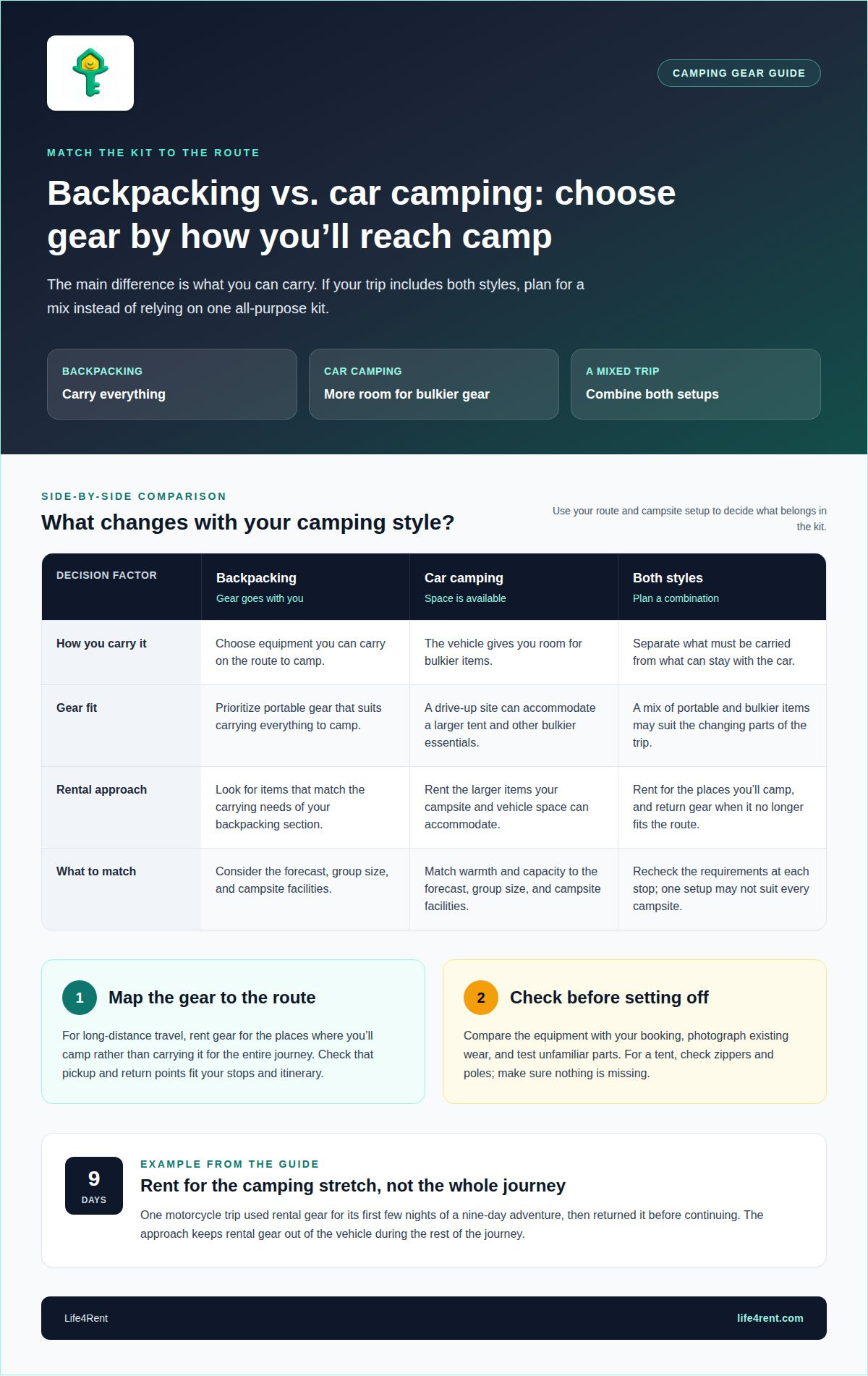
Choose gear to match how you’ll camp. Backpacking requires equipment you can carry, while car camping gives you space for bulkier items. If your road trip includes both, you may need a mix rather than one all-purpose kit.
This guide explains when destination rentals make sense, how to choose gear for backpacking, car camping, or a mix of both, and what to check before setting off. You’ll also find practical tips for inspecting equipment and returning it clean and dry, helping keep the rest of your trip on track.
Camping and hiking gear rental companies in the U.S.
U.S. rental options include national retailers, local outdoor outfitters, and peer-to-peer marketplaces. Destination pickup can save space on the journey and let you return gear before traveling home.
Gear Kits and Individual Rentals
National retailers, local outfitters, and peer-to-peer marketplaces offer different rental options, and inventory and terms vary. Choose a kit if you need several basics, or rent individual items to fill gaps, such as a sleeping bag or tent. Match warmth and capacity to the forecast, group size, and campsite facilities. Near Las Vegas airport, search around your arrival point; near Glacier National Park, look for pickup locations along your route.
Rental Policies and Return Locations
Before booking, read the terms for deposits, cancellations, cleaning, late returns, and damage. A security deposit may be required for high-value items, and damage-related charges may have separate terms. Clean and dry gear before returning it to help prevent mold in storage. If you need to drop it off somewhere different from where you picked it up, make sure the rental allows that. Destination pickup and return only help when both locations fit your route.
Reservations and Gear Checks
Once your dates, group size, and pickup point are set, reserve the gear. Peak-season demand can limit your choices, so booking earlier gives you more time to compare kits and individual items. Before leaving, photograph existing damage and test each item, including tent zippers, poles, and sleeping-bag closures. Compare the gear with your booking so missing pieces don’t go unnoticed until you reach camp. These checks also help document the equipment’s condition at pickup.
Benefits of renting instead of buying camping equipment
When you rent camping gear for a road trip, you can avoid buying equipment for a single outing. A tent, sleeping bag, pad, and stove all need storage after you get home. Renting also lets you choose only what your trip requires. For example, rent a stove if you already own suitable sleep gear.
Different destinations call for different setups. A mountain campsite may require warmer sleep equipment than a mild-weather stop, while a drive-up site can accommodate a larger tent. Renting lets you match the equipment to the forecast and campsite instead of buying one setup for every possible trip. That flexibility can be useful when plans change between seasons.
Travel logistics can also make renting practical. If you rent camping gear for a road trip that starts after a flight, picking it up at your destination can save you from transporting bulky equipment. Plan around what you need at camp rather than packing gear for every leg of the journey. The trade-off is fitting pickup and return into your itinerary.
Buying may suit you if you camp often, prefer familiar equipment, or want gear ready for spontaneous weekends. Renting is worth comparing for occasional trips, especially if a full kit would otherwise sit unused. Consider the rental period, pickup and return arrangements, and what you already own. Then compare the total with buying only the missing equipment, taking storage needs and expected future use into account.
Outdoor sport equipment rentals at your destination may be practical when carrying gear would complicate your route. Treat that as a starting point, then check whether the rental covers the particular items you need. Keep the comparison tied to your own plans: equipment already in your possession, the conditions at camp, and how long you will use the rented items. The practical value depends on whether the arrangement fits your itinerary.
For a fair comparison, consider the whole trip, not just the equipment. If renting at your destination suits your route, decide which pieces are essential and which you can leave out because you already have suitable gear. If plans change, revisit your list instead of assuming the same kit will work at every stop. This keeps your choice focused on the actual campsite setup and the effort of getting gear there and back. Renting remains an option to weigh against your own needs, rather than a rule for every camper.
Renting gear for long-distance travel
For a long route, rent gear for the places where you’ll camp, rather than for the entire journey. One motorcycle trip used rental gear for its first few nights of a nine-day adventure, then returned it before continuing.
Planning Rentals for Long-Distance Travel
Map each pickup and return point against your overnight stops. Destination rentals can work well when camping is limited to one part of the trip. You could collect gear near your first campsite, use it for several nights, then return it before moving on. This keeps rental gear out of your vehicle during the rest of the journey.
If your route includes several camping stops, check that the rental period covers the travel between them. A return deadline far from your final campsite can add a detour. Build pickup and return time into your itinerary, and keep the rental details accessible in case your plans change.
Packing and Transporting Gear by Car
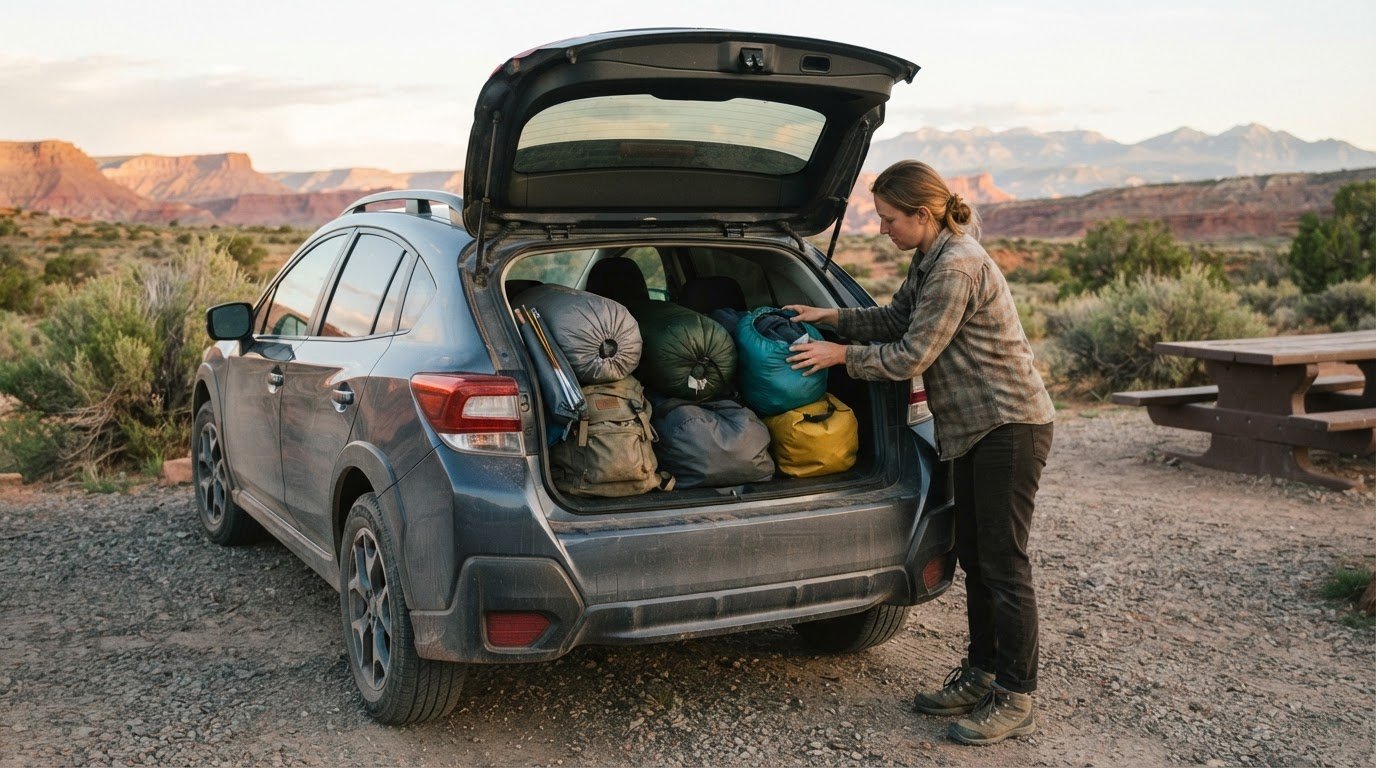
Pack sleeping gear and clothing in separate bags, and keep cooking equipment together. Place heavier items low in the trunk and gear you’ll need at the next stop near the top. Secure fragile or sharp items so they don’t shift during the drive. Leave enough room for luggage and clear visibility through the windows.
Before leaving the pickup point, compare the items with the rental list and photograph existing damage. Test unfamiliar parts, such as tent poles or stove controls, while you have room to lay everything out. If wet weather is possible, keep damp gear separate from dry bags during travel. When you return the equipment, clean and dry it to help prevent mold in storage.
Before your trip, test the camping gear so you know how to use it and can spot anything missing. Photograph existing damage before using the equipment. These checks help you start with gear you’ve inspected and understand.
Backpacking and car-camping gear packages
Choose a package around how you’ll reach camp. Backpacking means carrying everything, while car camping lets you leave bulkier gear in the vehicle. A trip with both styles may need a smaller kit for trail nights and separate equipment for drive-up sites.
For backpacking, focus on a tent, sleeping bag, sleeping pad, and compact cooking equipment. Check each item’s packed size and weight before reserving, since you’ll carry it along with food and water. A large family tent may work at a car campsite but take up too much room in a backpack. Add only what your route and campsite setup require.
Car-camping packages can include roomier shelters and cooking gear that would be awkward to carry on foot. For example, a group driving directly to a campsite may want extra sleeping space and a larger stove. Check that the package covers everyone’s basic needs, then identify any missing items individually. This helps avoid paying for duplicate equipment while leaving essentials out.
For mixed itineraries, divide your list by campsite type. Keep the backpacking kit compact for trail access, then add car-camping items for nights beside the vehicle. If rental listings offer individual items as well as packages, compare what each includes before booking.
- Backpacking: prioritize carry size, weight, and essential sleep items.
- Car camping: consider space, group needs, and cooking setup.
- Mixed route: separate shared essentials from location-specific gear.
Choose a rental around your route, not a generic checklist. The right package fits your group, storage space, and camping style without adding gear you won’t use.
Life4Rent
Life4Rent is a peer-to-peer rental marketplace for daily items, including camping gear and sports equipment. It can be a useful place to look when you need a specific item for a trip, rather than a complete kit.
Start with a short list of what you need, such as a tent or sleeping bag. Then consider whether renting individual items would fill gaps in the setup you already have. This keeps your choice focused on the gear that matters for your plans.
The marketplace also gives item owners a way to list belongings for rent. For example, someone with camping equipment that sits unused between trips can make it available to other people who need it temporarily.
Life4Rent includes categories beyond outdoor and sports gear, such as tools, electronics, homes, and baby products. That wider range can be useful when a trip involves other short-term needs, too.
For questions about using the marketplace, please contact Life4Rent.
Frequently Asked Questions
Where can I rent camping gear for a road trip in the United States?
Look for rentals near your first camping stop, including outdoor retailers, local outfitters, and peer-to-peer marketplaces. Picking up gear at your destination can be easier than transporting bulky equipment from home. If your route crosses several states, choose a pickup point that fits your itinerary and plan the return before booking. This helps avoid an unnecessary detour at the end of your trip.
What camping gear rental companies offer nationwide shipping or pickup locations?
Rental options include national retailers, online rental services, local outfitters, and peer-to-peer marketplaces, but pickup and delivery arrangements differ. A retailer may serve selected locations, while a local outfitter may be closer to a particular trail or park. Compare the pickup address, return point, and delivery area with your route. Don’t assume you can return a rental in another city.
How much does it cost to rent a tent, sleeping bag, sleeping pad, and camp stove?
The total depends on the items you rent, the rental period, and the pickup or delivery arrangements. A package may include several items together, while renting separately lets you leave out gear you already own. Compare the full total for your dates, including any deposit or damage-related charge, rather than judging by the price of one item alone.
Is renting camping gear cheaper than buying it for a one-time road trip?
For a single trip, renting may cost less than buying a full set of equipment you’ll rarely use. Compare the rental total with the purchase cost of the specific items you need, such as a tent, sleeping bag, and stove. Buying may make more sense if you camp regularly or want familiar gear for future trips. Storage space matters too.
What is usually included in a camping gear rental package, and what must I bring myself?
Package contents vary, so check the item list rather than relying on the word “complete.” A camping setup might include shelter, sleep equipment, or cooking gear, but clothing, food, and toiletries are separate trip needs. For example, check whether a tent package includes poles and stakes, and whether the cooking equipment has the pieces you expect to use.
Related guides on Life4Rent
Ready to rent instead of buy? See all camping gear available to rent on Life4Rent →
Life4Rent
Rent it. Earn from it. Own less, access more.
Browse peer-to-peer rentals near you, or list what you own and start earning — all protected by Life4Rent Protect.
About the author
London, United Kingdom
Fred covers rental technology, app features, and platform mechanics for the Life4Rent Renting Academy. With a background in fintech journalism, he specialises in breaking down how digital rental platforms work — from payment protection and identity verification to smart pricing and booking management.