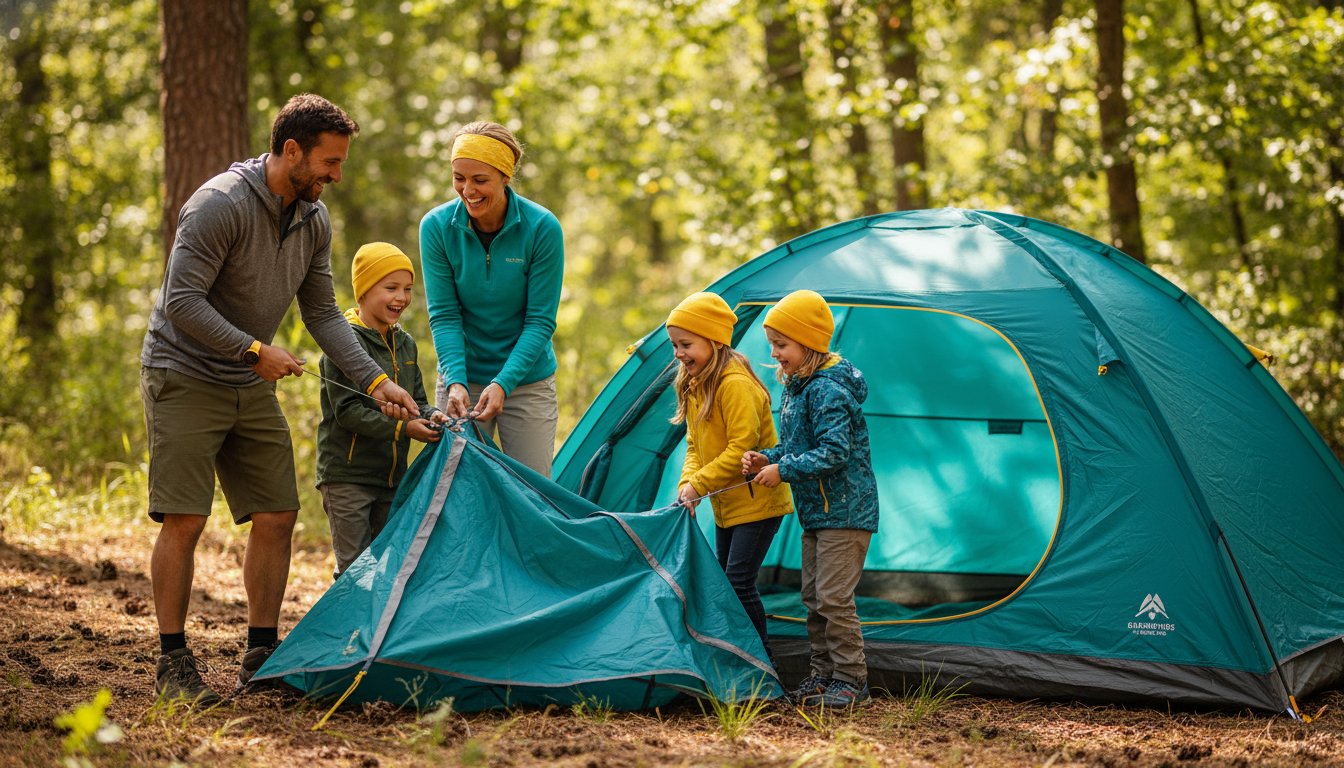
Rent a Tent for Family Camping: A Practical Guide to P2P Gear
Fred Agbator
June 13, 2026
The decision to buy a budget tent from a big-box store often feels like the safest financial move for a first family trip. However, that cheap bargain might leave you damp and frustrated when the first rain cloud appears. You don't have to choose between a leaky roof and a $500 investment when you can simply rent a tent for family camping from a local owner.
You can find reliable, 4-6 person tents through peer-to-peer marketplaces like Life4Rent without the high costs of buying or the hassle of shipping. This guide explains how to identify trustworthy local listings and provides practical advice for a stress-free setup. We'll look at how to verify gear quality and why local pickup is often the most sensible choice for a family getaway.
Why Rent a Tent for Family Camping Instead of Buying?
When you buy a high-quality 6-person tent, you're making a major financial commitment. These shelters often cost hundreds of dollars; a steep price for equipment you might only use once a year. When you choose to rent a tent for family camping, you're essentially bypassing the entry fee of high-end outdoor recreation.
Peer-to-peer platforms allow you to access premium brands at a fraction of their retail price. You can experiment with different types of tents, from spacious tunnel designs to sturdy domes, without the risk of buyer's remorse. This flexibility is especially helpful for growing families whose space needs change every season.
To better understand how a rental can transform your outdoor experience, watch this helpful video:
The Problem with Cheap Tents
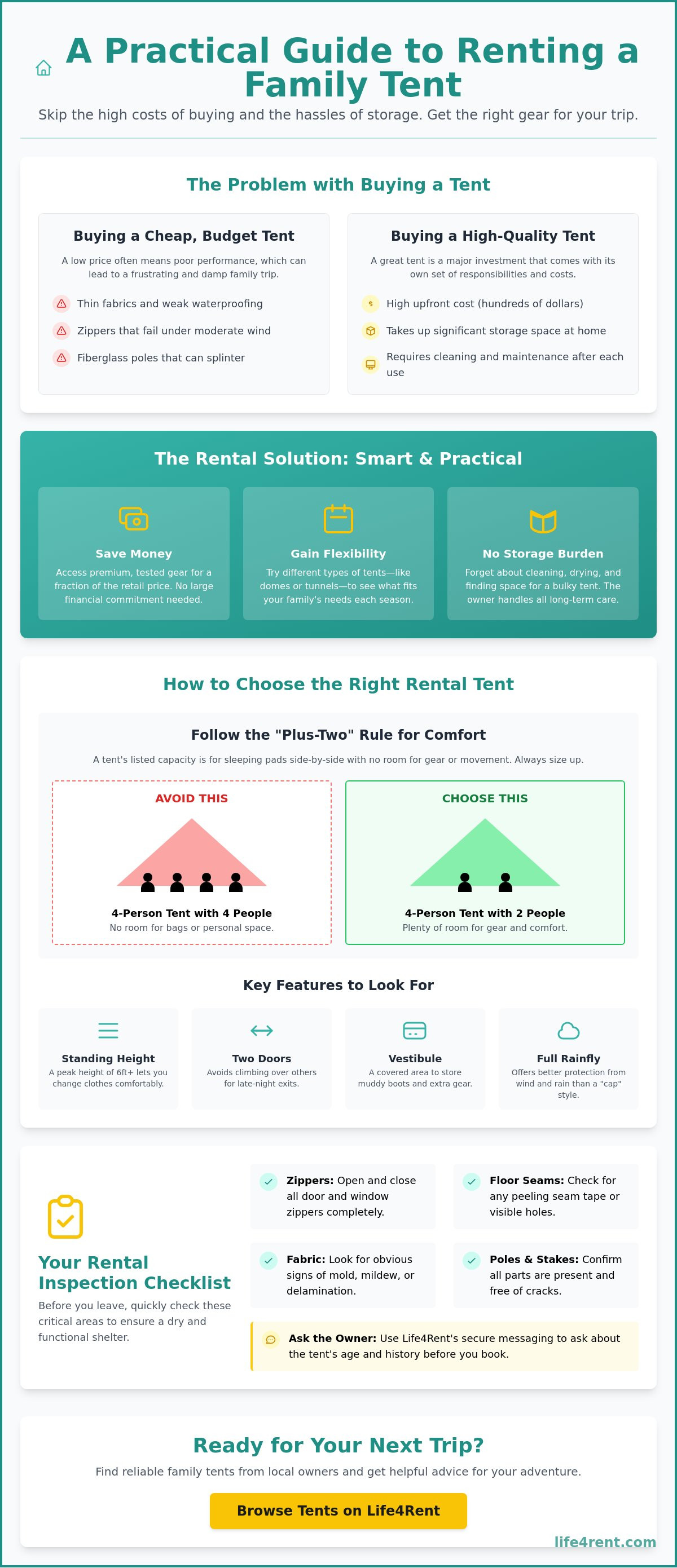
It's tempting to grab a budget tent from a local big-box store. These models usually feature thin fabrics and weak zippers that struggle to withstand moderate wind. Waterproofing on these entry-level units is frequently insufficient for a heavy downpour, which can quickly ruin a family vacation.
Rental items from experienced campers on Life4Rent are usually tried and tested in real-world conditions. These owners often invest in gear with higher denier fabrics and reinforced seams. You get the benefit of their experience and their investment in quality without having to pay the full retail price yourself.
The Storage and Maintenance Burden
Proper tent care is a time-consuming process. You must clean and dry the fabric thoroughly after every trip to prevent mold and mildew from destroying the material. If you live in a small apartment or a home with limited storage, finding space for a heavy 30-pound tent bag is a constant struggle.
Large family tents take up significant shelf space in garages or closets. If you rent a tent for family camping, you won't have to find a permanent home for a bulky gear bag. Owners on Life4Rent handle all the long-term maintenance and storage requirements so you don't have to worry about it.
How to Choose the Right Tent Size and Features
Manufacturers calculate tent capacity based on how many sleeping pads can fit side-by-side with zero gap. This layout leaves no room for bags, clothes, or personal space. If you plan to rent a tent for family camping, follow the "plus-two" rule for a decent experience.
Recent research on peer-to-peer rental markets shows that consumers value the ability to find these specific, high-capacity items from local owners. You can often find professional-grade equipment that traditional rental shops don't keep in their inventory. When selecting your gear, prioritize these practical features:
- Size up by at least two people for a comfortable family experience.
- Look for "standing height" ceilings if you want to change clothes comfortably.
- Verify the number of doors to avoid climbing over sleeping children at night.
- Select a model with a vestibule for storing muddy boots and extra gear.
Capacity vs. Comfort
A 4-person tent is usually the minimum requirement for two adults and one child. If you have two children, 6-person models provide the necessary room for double-height air mattresses and travel bags. You'll appreciate the extra floor space if you're stuck inside during a rainy afternoon. Always ask the owner for the specific interior dimensions if they aren't listed in the description.
You'll also want to check for "standing height" ceilings. Most family-style tents offer a peak height of 6 feet or more, which lets you change clothes comfortably. When you rent a tent for family camping, verify the number of doors on the model as well. Two entrances ensure you won't wake up the kids when you need to step outside at night.
Weather protection is non-negotiable for a successful trip. A full-coverage fly is better than a "cap" style fly because it shields the entire tent body from wind and rain. You should also look for a model with a vestibule. This covered area outside the main door is perfect for storing muddy boots and keeping the interior clean.
Weather Resistance Features
Aluminum poles are generally more durable and lighter than fiberglass alternatives, which can splinter in high winds. Bathtub-style floors are another critical feature. They prevent ground moisture from seeping into the sleeping area by moving the seams several inches up the walls. Mesh panels are also essential for ventilation. They allow airflow through the tent and prevent condensation from building up on the ceiling overnight.
You can check the specific features of local listings on Life4Rent to find a model that fits your family's needs.
Traditional Rental Shops vs. Peer-to-Peer Marketplaces
Traditional rental companies often require you to pay for expensive nationwide shipping, which adds a significant surcharge to your trip. When you rent a tent for family camping through a local marketplace, you eliminate these logistical costs entirely. You can drive a few blocks to pick up the gear instead of waiting for a courier to arrive at your door.
Local peer-to-peer transactions offer a level of convenience that large rental warehouses cannot match. You'll find that neighbors are often more flexible with pickup and drop-off times than a business with strict operating hours. This neighborly approach also reduces the environmental impact of purchasing new plastic gear that might only be used once or twice before being discarded.
Neighborhood sharing helps build a local circular economy. Every time you choose a local rental, you're supporting someone in your own community rather than a distant corporation. This strategy keeps resources within your town and ensures that high-quality equipment stays in use longer.
Supporting local, family-run enterprises is a value that extends to all areas of home life. For example, Sheepbridge Sofas & Beds is a family-operated retailer that brings this same commitment to quality when helping families choose long-lasting furniture.
The Hidden Cost of Shipping
Large nylon or heavy canvas tents are bulky and expensive to transport across the country. These shipping fees can sometimes double the total price of a weekend rental. You can learn more about neiyborly sharing to see how choosing local gear saves money and reduces your carbon footprint.
Local pickup provides a critical opportunity to inspect the gear before your rental period begins. You don't want to arrive at a campsite only to realize a pole is missing or a zipper is stuck. A face-to-face handoff allows you to verify the condition of the equipment in person, ensuring your family stays dry and comfortable throughout the weekend.
Access to Local Knowledge
Neighbors who camp in your area are a fantastic source of information. They can tell you which local campsites are best for families or which spots get too windy in the evenings. Trust within the community is a core benefit of the peer to peer equipment rental model.
Owners frequently offer extra items they know you'll need for specific local conditions. They might include heavy-duty stakes for rocky ground or a rubber mallet that isn't part of a standard rental package. These small additions can make a huge difference when you're setting up camp with children nearby. You're not just getting a piece of equipment; you're getting the benefit of a community member's practical experience.
Your Rental Inspection Checklist
When you get your gear from a neighbor, you still need to verify everything works before you drive to the woods. You don't want to discover a broken pole or a missing rainfly when the sun is going down. If you rent a tent for family camping, take ten minutes during the handoff to perform a thorough inspection with the owner present.
A few simple checks can prevent a weekend of frustration. You should start with the most common points of failure to ensure the shelter is actually weather-ready. Follow this practical list before you load the car:
- Zippers: Test every zipper on the doors and windows. They should move smoothly without snagging the fabric or separating behind the slider.
- Floor Condition: Hold the floor fabric up to the light to look for small tears or pinholes. These tiny gaps can let in ground moisture during a heavy rain.
- Hardware Count: The count of poles and stakes must match the manufacturer's list. You'll need every stake to properly tension the rainfly and keep the structure stable in the wind.
- Rainfly Integrity: Verify the rainfly is in the bag and check that the waterproof coating isn't peeling. If the fabric feels sticky or smells like old gym socks, the waterproofing might be failing.
- Fabric Scent: A quick smell of the interior will tell you if the tent was packed away damp. Mildew is difficult to remove and can trigger allergies for children.
The 5-Minute Setup Test
Ask the owner to show you the basic pole structure while you're still at their house. It's much easier to identify color-coded clips or specific pole sleeves when the person who knows the gear is right there. This quick demonstration can save you an hour of trial and error at the campsite.
You should also ensure you have the right footprint or ground tarp for that specific model. A properly sized footprint protects the tent floor from sharp rocks and adds an extra layer of moisture protection. If the owner doesn't have one, you might need to bring a heavy-duty tarp of your own.
Safety and Hygiene
Wipe down the interior with a damp cloth if anyone in your family has sensitive skin. You'll also want to check that the mesh panels are completely intact to keep mosquitoes and ticks outside. Tiny holes in the mesh can be patched with a bit of tape, but it's better to know about them before you arrive.
Photos of pre-existing damage are your best protection. If you find a small snag or a bent stake, report it to the owner immediately through the app. This creates a clear record of the condition and ensures you aren't held responsible for wear and tear that happened before your trip. You can find high-quality gear and start your next adventure by browsing the listings on Life4Rent.
Find Your Next Family Tent on Life4Rent
You can start your journey by exploring the outdoor and sports category on the Life4Rent marketplace. This is where local owners list everything from basic domes to expansive tunnel tents designed for larger groups. When you rent a tent for family camping through this platform, you're doing more than just picking up equipment. You're connecting with a neighbor who has likely used that gear in the same local parks you plan to visit.
Owners are often happy to share specific advice that you won't find on a standard e-commerce site. They might tell you if a specific 6-person model is difficult to pitch alone or if the rainfly is particularly loud in high winds. Use the secure messaging system to ask about the tent's history and any specific features not mentioned in the description. You can also check owner reviews to ensure you're working with a reliable and helpful member of the community. By avoiding retail prices and those hidden shipping fees mentioned earlier, you can put that saved money toward better campsite food or extra activities for the kids.
How to Start Your Search
Focus your search by filtering for listings within a short driving distance of your home. This makes the pickup and return process much easier and eliminates any need for couriers or logistics companies. Look for listings that provide photos of the tent fully set up in a backyard or a real campsite. These real-world images are much more helpful than manufacturer stock photos because they show the gear's actual condition. You can also read our guide on tool on rent for more general tips on how to manage peer-to-peer transactions safely and efficiently.
Listing Your Own Gear
You might already have a quality tent sitting in your garage or attic collecting dust. Peer-to-peer marketplaces aren't just for renters; they're an excellent way to turn your unused equipment into a source of extra income. By listing your gear, you help other local families enjoy the outdoors without the high entry costs of buying new professional equipment. The platform handles the payment logistics and provides a secure framework for the entire transaction. This allows you to focus on being a helpful host and sharing your passion for the outdoors with your neighborhood community.
Preparing for Your Next Outdoor Trip
High-quality camping equipment doesn't have to mean a permanent garage overhaul or a massive upfront investment. While temporary gear is ideal for seasonal adventures, permanent backyard features like the pool solutions from Basseinid.eu (Servicetrade OÜ) represent the kind of long-term investment homeowners might consider instead. It's often more practical to rent a tent for family camping so you can access better weather protection than cheap store-bought models provide. A thoughtful inspection and the right capacity choice are the only steps left between you and a successful weekend in the woods.
Peer-to-peer marketplaces make this process straightforward by connecting you with experienced neighbors who know their gear. Life4Rent offers 17 rental categories to cover all your gear needs, from cooking sets to sleeping bags. While these rentals handle your temporary needs, for permanent property upgrades like high-quality fencing, you can check out Pauresta to explore professional exterior solutions. You can also use the secure peer-to-peer messaging to ask specific questions and rely on verified user reviews to choose a reliable owner.
Find a local family tent for your next trip on Life4Rent and skip the hassle of retail prices. You'll find that camping is much more enjoyable when you don't have to worry about the logistics of owning and storing heavy gear. Enjoy the fresh air and the time with your family.
Frequently Asked Questions
Is it cheaper to rent or buy a camping tent for a one-week trip?
A rental is significantly cheaper for a one-week trip if you want a high-quality shelter. A professional-grade 6-person tent often retails for over $400, while a rental costs a small fraction of that price. You also save money because you don't have to purchase specialized cleaning supplies or storage bins for the off-season. It's a practical way to access premium gear without the long-term financial commitment of ownership.
What size tent do I need for a family of four?
You'll be much more comfortable in a 6-person tent if you have a family of four. Manufacturers measure capacity by the number of sleeping pads that fit on the floor, which leaves no room for bags or walking space. A larger model provides the extra square footage needed for air mattresses and keeping your gear dry. When you rent a tent for family camping, always size up by two people for the best experience.
How do I know if a rental tent is clean and waterproof?
User reviews on the platform allow you to verify the condition of a tent before you book. These ratings often mention if the gear was well-maintained and clean when it arrived. During the pickup, you should also perform a quick smell test for mildew and check the rainfly for any peeling waterproof coating. Honest communication with the owner through the secure messaging system is the best way to ensure the gear meets your standards.
Can I pick up a rental tent locally to avoid shipping costs?
Local pickup is a standard feature of peer-to-peer marketplaces and helps you avoid high shipping fees. You can filter your search by location to find owners within a short driving distance of your home. This face-to-face handoff also gives you the chance to ask the owner for specific tips about the gear before you leave for your trip. It's a more efficient and personal way to get the equipment you need.
What happens if a rental tent gets damaged during my family trip?
Photos of the gear's condition should be taken at the start of your trip to document any pre-existing damage. You must report new issues to the owner through the app immediately if something breaks during your stay. Most platforms have clear policies regarding wear and tear versus accidental damage. Honest communication helps resolve these situations quickly and fairly for both parties.
Are stakes and a rainfly usually included in a tent rental?
Most owners include stakes and a rainfly as part of the standard package, but you should verify this in the listing description. A complete rainfly is essential for keeping the interior dry during unexpected storms. You should count the stakes during your inspection to ensure you have enough to properly tension the fabric. Some owners might even include a mallet or a ground tarp if you ask them beforehand.
Can I rent other camping gear like sleeping bags on Life4Rent?
Life4Rent features a wide variety of outdoor equipment across 17 different categories. This includes sleeping bags, portable stoves, and even specialized hiking gear from local owners. For those who value the rugged durability of tactical gear in the wild, Catus-airsoft.eu provides a great example of professional-grade military-style equipment that can withstand tough conditions. It's an excellent way to get everything you need for a full camping setup without visiting multiple retail stores. You can build a complete kit for your trip by browsing the outdoor and sports section of the marketplace.
Is it difficult to set up a 6-person family tent alone?
Large family tents often require two people for a smooth setup because of the long pole structures and heavy fabric. You should ask the owner for a quick demonstration or a copy of the manual during the pickup. If you're camping alone with children, look for "instant" style tents that use pre-attached poles to simplify the process. When you rent a tent for family camping, knowing the setup difficulty helps you plan your arrival time at the campsite more accurately.
Related guides on Life4Rent
Ready to rent instead of buy? See all camping gear available to rent on Life4Rent →
Life4Rent
Rent it. Earn from it. Own less, access more.
Browse peer-to-peer rentals near you, or list what you own and start earning — all protected by Life4Rent Protect.
About the author
Fred Agbator
London, United Kingdom
Fred covers rental technology, app features, and platform mechanics for the Life4Rent Renting Academy. With a background in fintech journalism, he specialises in breaking down how digital rental platforms work — from payment protection and identity verification to smart pricing and booking management.