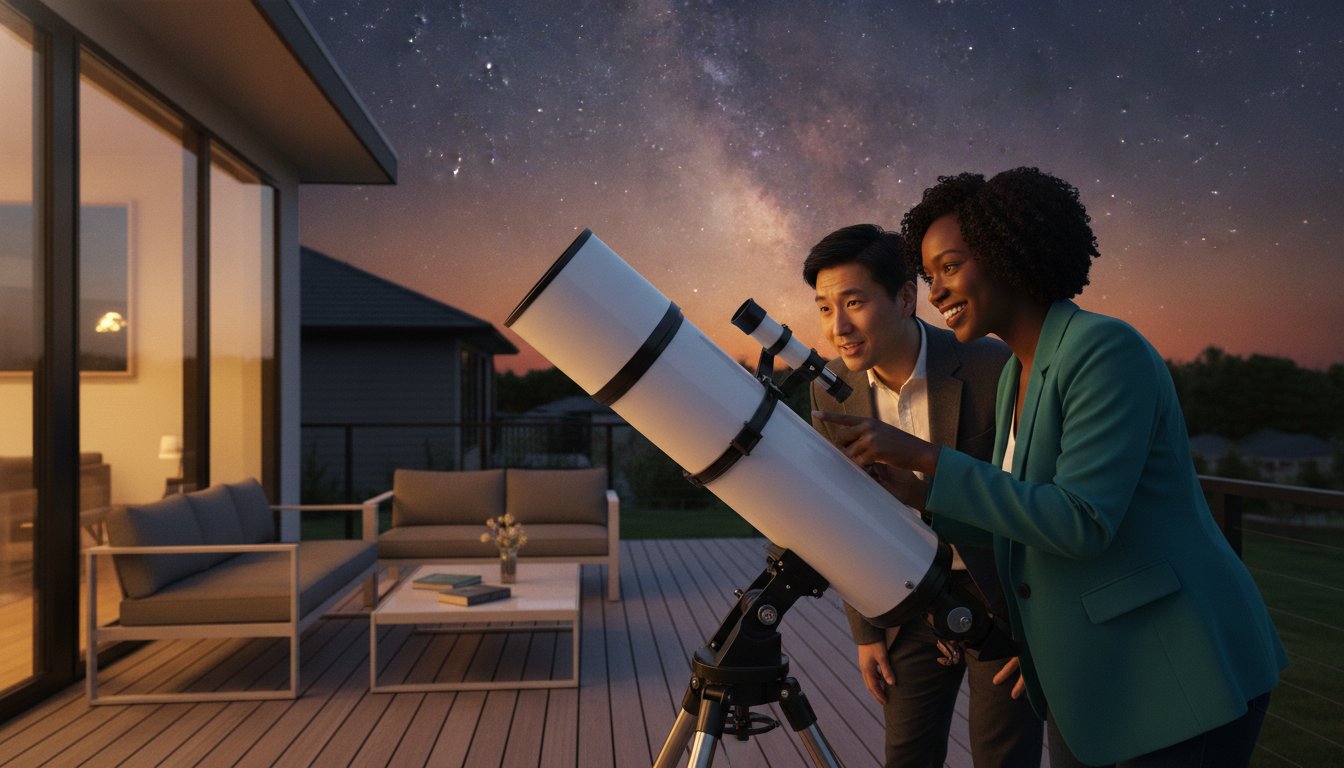
Rent a Telescope for Stargazing: A Practical 2026 Guide
June 19, 2026
Published by Life4Rent · Operated by Brohf Software OÜ
A rare planetary alignment is on the calendar for next weekend, but your local library has a six-month waitlist for its only decent lens. Most people think they have to spend over $1,000 on a high-end setup or settle for shaky binoculars that barely show the moon's craters. It's frustrating to miss a celestial event because professional gear is too bulky to store or too expensive to buy for a one-time hobby. You can rent a telescope for stargazing from a local owner instead of worrying about the risks of shipping fragile glass or the commitment of a permanent purchase.
Peer-to-peer marketplaces like Life4Rent make it easy to find quality optics right in your neighborhood. You'll discover how to access high-quality gear for a specific date without the long wait times or the high price tags of new equipment. We'll cover where to find these listings, what you should expect to pay for a nightly rental, and how to get a quick tutorial from an experienced owner so you don't spend your whole night fumbling with a tripod in the dark.
Why you should rent a telescope for stargazing instead of buying one
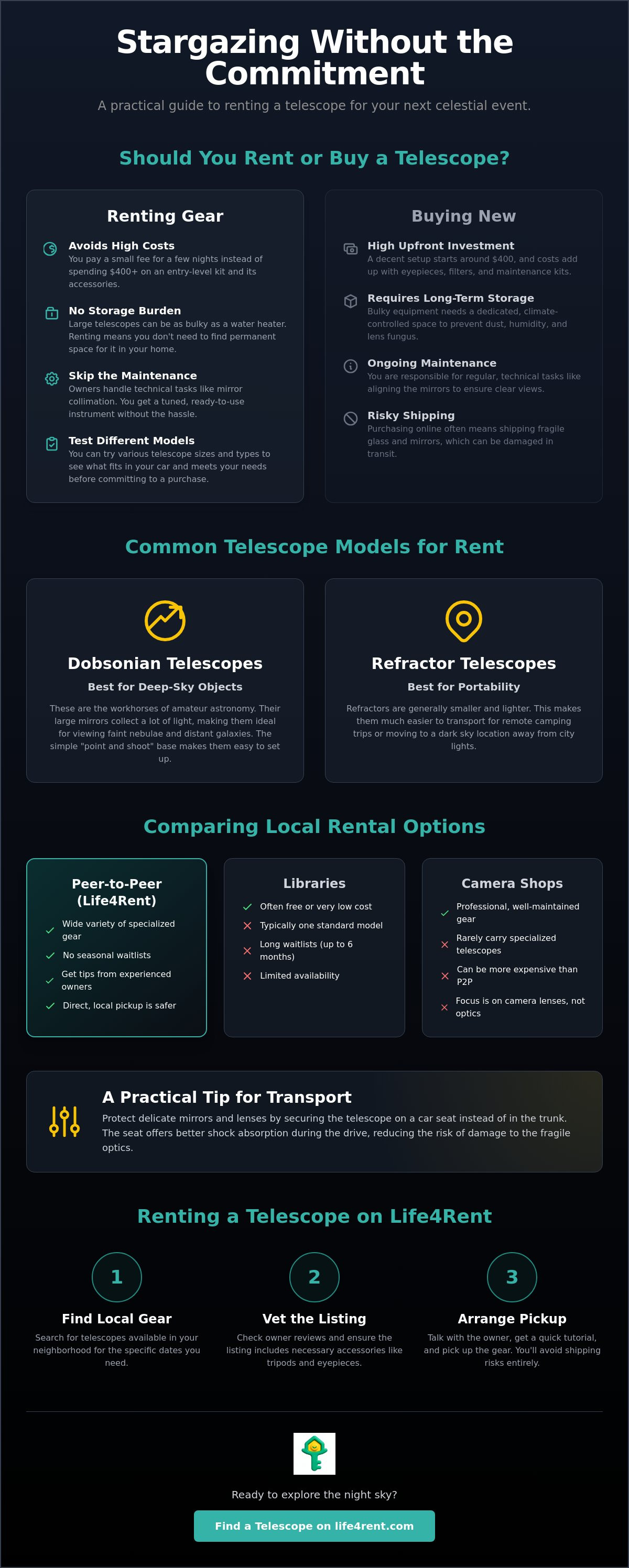
The purchase of a high-end Telescope sounds like a dream until the device starts taking up half your guest room. Most enthusiasts find that expensive optics often sit in closets for years without active use. You can rent a telescope for stargazing to avoid the clutter and the high upfront cost of a hobby you might only enjoy a few times a year.
Ownership isn't just about the initial price tag. You'll have to deal with consistent maintenance like mirror collimation and finding a spot that's safe from dust and humidity. This long-term commitment often outweighs the joy of the occasional clear night.
To better understand how modern rental models and technology are changing access to the stars, watch this helpful video:
Mirror collimation is a technical skill that requires patience and extra tools to align the mirrors accurately. If you don't keep up with this, your view of deep-sky objects will be disappointing. A local rental allows you to skip this chore, as owners typically provide gear that's already tuned and ready for a night under the stars.
A 10-inch Dobsonian telescope is roughly the size of a small water heater. It's often difficult to find a permanent home for such a bulky item in a standard apartment. When you choose a rental, you only have to deal with the storage burden for the few days you're actually using the equipment.
The purchase of online optics often involves shipping fragile glass through standard couriers, which is risky and expensive. You can use peer to peer equipment rental platforms to pick up gear directly from a neighbor. This eliminates the chance of a lens cracking in transit and gives you a chance to talk to a real user about their setup.
High costs and storage burdens of ownership
Decent entry-level setups usually start at $400, but that's rarely the final price. You'll likely need to buy maintenance kits, specialized eyepieces, and padded cases to keep the gear functional. Rental fees represent a much smaller investment, which is helpful if you're only planning to view a specific comet or planet alignment. Many owners also include accessories like star maps or red-light flashlights at no extra cost.
The benefit of testing before you buy
Large telescopes aren't just heavy; they're sensitive to their environment. You need a climate-controlled space to prevent lens fungus from developing during the off-season. Portability is the main reason people quit the hobby, so it's smart to test different sizes first. If you rent a telescope for stargazing, you can verify that the mount and tube actually fit in your car's back seat before spending thousands on your own kit.
Common telescope models available through neighborhood rentals
Local marketplaces offer a variety of optics for different goals, which is a major advantage over the Library Telescope Program. While libraries typically provide a single, standard model, peer-to-peer listings bridge the gap between basic loans and the expensive setups found in specialty shops. You can choose a tool that matches your specific curiosity, whether you're hunting for distant galaxies or just want a clear view of the moon's craters.
Dobsonian telescopes are the workhorses of the amateur astronomy world. These models use large mirrors to collect light, which is essential for viewing deep-sky objects. Most owners on Life4Rent list these because they're sturdy and provide a massive aperture without a massive rental fee. You'll likely get a set of eyepieces too, allowing you to swap between wide views and high-detail zooms depending on your target.
Dobsonians for deep sky observation
Large mirrors in these models capture more light, making them the best choice for viewing faint nebulae and distant star clusters. Setup is straightforward because they use a simple "point and shoot" wooden base that rotates and tilts. Owners often include a variety of eyepieces, such as a 25mm for wide views and a 10mm for closer inspection. This versatility makes them a favorite for backyard sessions where light pollution might be a factor.
Refractors for lunar and planetary viewing
Crisp images make these telescopes ideal for viewing Saturn’s rings or the bands of Jupiter. Refractors use glass lenses and are known for their durability during transport. Lenses are less sensitive to misalignment than mirrors, so you won't have to worry about the bumps of a long car ride. Tripods are usually adjustable, which is helpful for families where kids and adults need to share the view without straining their backs.
Beginners often appreciate computerized Go-To mounts. These systems use internal motors to automatically point the telescope at thousands of objects in the night sky. It's a helpful feature to look for when you rent a telescope for stargazing because it saves time. You won't have to hunt for faint targets manually with a star map, though you'll need to ensure the owner provides a portable power bank or fresh batteries for the motor.
Tabletop models are excellent for families with small children or limited vehicle space. They're compact enough to sit on a porch table but still powerful enough to show the moons of Jupiter. You can browse local telescope listings to see which size fits your travel plans and vehicle capacity. These smaller units often come with a built-in handle, making them the easiest option for a quick trip to a local park.
Comparison of local peer-to-peer options against libraries and shops
Local libraries provide a wonderful service, but their astronomical equipment is often booked months in advance. You'll find that peer-to-peer platforms offer a more reliable way to rent a telescope for stargazing when a specific celestial event is approaching. Professional rental houses usually focus on cinema cameras and lenses, meaning their telescope inventory is often limited or outdated.
The handoff process with a neighbor is much more personal than a retail transaction. Most owners are happy to provide a five-minute tutorial to show you how to align the finder scope or swap eyepieces. This short conversation can save you hours of frustration in the dark. It's a practical advantage you won't get from a standard shop or a library checkout counter.
Ways to avoid long library waitlists
Public programs are excellent for the community, but waitlists for telescopes can stretch across multiple seasons. If you want to see a specific meteor shower or a rare planetary alignment, you can't rely on a random queue. P2P platforms allow you to book a specific date in advance, ensuring the gear is in your hands when the sky is clear.
Expert advice on choosing a telescope often emphasizes that the best one is the one you actually use. When you book a specific date, you're more likely to follow through with your stargazing plans. This targeted approach is much more effective than waiting months for a library notification that might arrive during a week of heavy rain.
The risks of shipping fragile equipment
The cost of shipping a 20-pound optical tube and a heavy tripod is often prohibitive. Freight fees for astronomical gear can sometimes exceed the cost of the rental itself. Insurance claims for shipping damage are common with delicate glass, and the resolution process is usually slow and tedious.
Local pickup ensures you see the equipment in working order before you leave the driveway. You can check the lenses for scratches and verify that the tripod legs lock securely. A neighborhood rental also reduces the carbon footprint associated with long-distance logistics and excessive packaging materials. This face-to-face verification provides peace of mind that a box on a porch simply can't offer.
Practical advice for transporting and handling fragile optics
The transport of a telescope requires more care than a standard camera bag. Most owners on the Life4Rent marketplace provide padded cases for the optical tube and separate bags for the tripod. You should treat these items as if they're made of thin crystal because the internal mirrors are precisely aligned. A small jolt can knock the optics out of alignment, requiring a technical recalibration that ruins your night of observation.
The rear seat of your car is the safest place for the main tube. Car trunks are often too stiff and transmit every bump from the road directly to the optics. When you rent a telescope for stargazing, a horizontal placement across the back seat allows the upholstery to act as a secondary shock absorber. You'll find that the suspension in the middle of the vehicle is much more forgiving than the area over the rear axle.
Secure vehicle placement for heavy gear
Seatbelts aren't just for people; they're excellent for securing a large telescope tube to prevent it from rolling during sharp turns. You should store the tripod and counterweights on the floor of the vehicle. This keeps the center of gravity low and ensures that heavy metal parts don't slide into the delicate glass. Most hobbyist setups weigh between 15 and 24 pounds, so they can cause significant damage to your car's interior if they shift during a sudden stop.
Managing temperature and dew
Glass needs time to reach the ambient outside temperature before you get a clear image. If you move a telescope from a warm house to a cold field, the air inside the tube will shimmer and blur your view. You should leave the lens caps on for at least 30 minutes while the equipment acclimates to the night air. You'll find that the use of a lens cap between viewing sessions is the simplest way to prevent dew from forming on the optics.
Fingerprints on a lens can actually damage the specialized coatings over time. You must avoid the temptation to wipe the glass with a t-shirt or a paper towel. Most owners will include a small cleaning kit with a blower brush and microfiber cloth, but you should only use them if the owner gives you specific instructions. You can browse local telescope listings to find owners who provide these essential maintenance tools with their gear.
Sudden temperature changes can also cause physical stress on the mirror. If you're bringing the gear back inside a warm car after a freezing night, keep it in its case until the temperature stabilizes. This prevents condensation from forming on the internal surfaces, which can lead to long-term mold issues. If dew does form, a hairdryer on a low, cool setting can gently clear the fog if the owner permits it.
How to secure a telescope rental on the Life4Rent marketplace
You'll find the best selection by browsing the outdoor and electronics categories on the marketplace. It's a good idea to filter by your local area to simplify the pickup process and avoid the risks of courier transit mentioned earlier. When you rent a telescope for stargazing, you should message the owner to ask about the specific accessories included in the kit. Questions about tripod stability on soft ground and the focal length of provided eyepieces will help you determine if the gear matches your specific viewing goals for the night.
You should approach the rental with the mindset of using a high-precision tool on rent. These devices aren't toys, and they require a level of respect for the delicate engineering involved in their construction. Reliable handling protects the owner's investment and ensures you have a successful night without mechanical failures. Most owners appreciate it when you ask about their preferred method for packing the optical tube back into its case.
Verifying owner reputation and gear state
Reviews from previous renters provide honest feedback on the equipment's actual performance in the field. You can check if the owner is known for providing clean optics and organized carrying cases that make transport easier. Detailed photos in the listing are essential for verifying the condition of the lens coatings and the sturdiness of the mount. Quick responses to your initial messages indicate that the owner is active and will likely be available if you need help during setup.
Item protection and security deposits
Protection plans built into the platform offer a level of security that informal club loans or forum favors simply can't provide. You'll know the exact amount of the security deposit before you ever commit to the booking. These deposits are held securely by the marketplace and are returned once the owner confirms the equipment is back in its original state. This system removes the awkwardness of cash transactions and ensures a paper trail for your records.
Digital handoff forms allow you to photograph and note the gear's condition during the exchange. This documentation protects you from liability for pre-existing wear and tear on the tripod or the telescope body. It's a professional way to rent a telescope for stargazing while keeping the transaction transparent and safe for everyone involved. Clear records ensure that both parties are satisfied when the gear is returned after your weekend of observation.
Preparing for your next night under the stars
A backyard observation session shouldn't require a permanent storage unit or a technical degree in mirror maintenance. You've seen how local rentals provide a way to skip the multi-season library waitlists and the high costs of buying new gear. You can focus on the view instead of worrying about collimation or lens fungus. This practical approach allows you to access high-quality optics exactly when the weather is clear.
You'll find it's easier to rent a telescope for stargazing through a secure platform that offers item protection plans for every transaction. Life4Rent provides access to gear across 17 different categories, making it a reliable choice for finding specialized optics in your own neighborhood. This method lets you test different models like Dobsonians or refractors before you ever decide to make a major purchase.
It's a smart way to handle the logistics of a hobby that depends on clear weather and specific celestial dates. Find a telescope for rent near you on Life4Rent and get ready for your next trip to a dark-sky site. You'll have the right tools in hand without the long-term burdens of ownership. Enjoy the view and the quiet stillness of the night sky.
Frequently Asked Questions
How much does it cost to rent a telescope for a weekend?
Daily rates for a peer-to-peer rental often start around $30 for a mid-range model. A full weekend might cost between $60 and $90 depending on any weekly discounts the owner offers on the marketplace. Non-profit organizations sometimes charge $60 for the first night and $30 for each additional night. It's worth comparing local options when you rent a telescope for stargazing to find the best deal for your specific trip.
Can I see planets like Saturn and Jupiter with a rented telescope?
You can easily see the rings of Saturn and the cloud bands of Jupiter with most rented refractors or Dobsonians. A telescope with at least a 4-inch aperture is sufficient to reveal the four largest moons of Jupiter and the distinct separation of Saturn's rings. If you want to see higher detail, look for listings that include a 10mm eyepiece or a Barlow lens to increase the magnification of your view.
What happens if I accidentally damage the telescope during my rental?
Platform-wide protection plans usually cover accidental damage if you book through a secure marketplace like Life4Rent. You'll be responsible for the deductible or the security deposit defined in the listing. It's best to document the gear's condition with photos during the digital handoff to ensure there's a clear record of the state of the optics. This verification protects both you and the owner in the event of an unexpected mechanical failure or accident.
Do I need a special car to transport a large telescope?
Most hobbyist telescopes fit into a standard sedan or hatchback if you use the rear seat for the main tube. You don't need a truck or SUV unless you're renting a massive 12-inch Dobsonian or a full astrophotography rig with multiple heavy mounts. The rear seat provides better shock absorption than the trunk, so a standard passenger vehicle is actually the preferred choice for transporting fragile glass to your stargazing site.
Are eyepieces and accessories usually included in the rental price?
Owners typically include a basic set of eyepieces and a steady tripod as part of the standard rental package. You'll often find a 25mm eyepiece for wide views and a 10mm for closer inspection of the moon or planets. It's smart to message the owner before you rent a telescope for stargazing to confirm if they provide extra tools like a red-light flashlight, a portable power bank, or a star map for your session.
How do I find the best stargazing spots near my location?
Light pollution maps and local astronomy club websites are the best resources for finding dark-sky sites in your area. Many owners who list their gear are active hobbyists and can recommend quiet parks or overlooks with minimal light interference. You can also check for International Dark Sky designations, which identify areas specifically protected for high-quality astronomical viewing. These spots offer the best chance to see faint objects like nebulae and galaxies.
Is it difficult to set up a computerized Go-To telescope?
A computerized Go-To mount requires a basic alignment process that takes about ten minutes to complete. You'll need to level the tripod and point the tube at two or three bright stars so the internal computer can map the night sky. Most owners will give you a quick tutorial during the handoff, or you can find the specific model's manual online to review the steps. This system saves time by automatically finding thousands of celestial objects.
Can I use a rented telescope for astrophotography with my phone?
You can capture impressive lunar and planetary photos by using a simple smartphone adapter with the telescope's eyepiece. These adapters clamp onto the eyepiece and hold your phone's camera steady over the lens to prevent blurry images. While deep-sky photography of distant nebulae requires a more complex tracking mount, a basic rental is perfect for taking your first high-detail shots of the moon's craters or the moons of Jupiter during your stargazing trip.
Life4Rent
Rent it. Earn from it. Own less, access more.
Browse peer-to-peer rentals near you, or list what you own and start earning — all protected by Life4Rent Protect.
About the author
Stockholm, Sweden
Stella researches and writes about sustainable consumption and the circular economy for the Life4Rent Renting Academy. She previously worked at a Nordic sustainability research institute studying how access-over-ownership models reduce household CO₂ emissions, and translates that research into practical guides for everyday renters.