Rent a Pressure Washer for a Weekend: Costs and Timing
November 3, 2026
Published by Life4Rent · Operated by Brohf Software OÜ
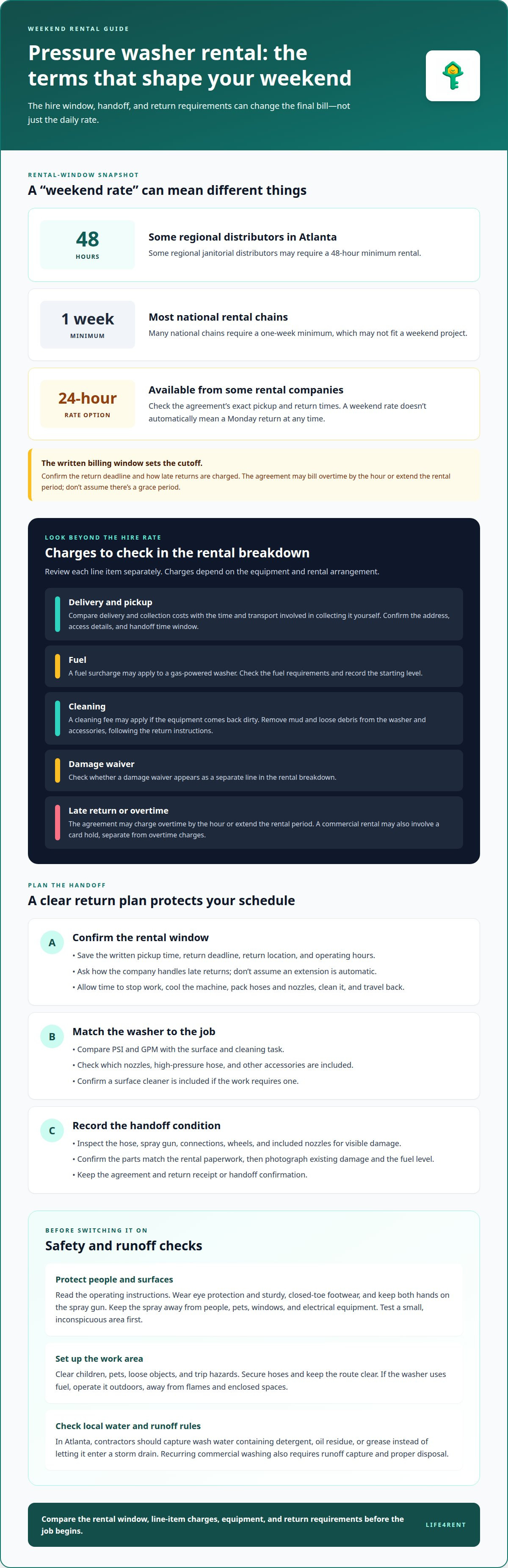
A weekend rental isn’t always priced as two daily rates. In Atlanta, some regional janitorial distributors may require 48 hours, while most national rental chains require a one-week minimum. Those terms matter if you plan to rent a pressure washer for a weekend.
It’s easy to focus on the hire period and overlook costs that affect the final bill. Delivery and pickup, fuel, cleaning, damage waivers, and late returns can add charges, so read the rental terms before booking.
Choose a washer to suit the job, not just the pickup slot. Compare PSI and GPM with your cleaning needs, plan the handoff, and account for safety and possible extra fees. A little preparation can help you rent a pressure washer for a weekend without paying for time or features you don’t need.
Late-return penalties and overtime charges
Yes, some rental companies offer weekend or 24-hour pressure washer rates. The rental agreement sets the billing window, so check the exact pickup and return times. A weekend rate doesn’t automatically mean you can return the machine any time Monday.
Before booking, find the written return deadline and check how the rental company handles late returns. The agreement may charge overtime by the hour or extend the rental period. These terms determine what happens if the project runs over schedule. Save a copy so the cutoff time and return instructions are easy to find.
Don’t assume there’s a grace period for late returns. If cleaning a driveway takes longer than planned, for example, the scheduled return time still applies. Allow time to stop work, prepare the machine, and travel to the return location. If a delay becomes unavoidable, notify the rental company promptly and follow its stated process.
Set a reminder before the deadline, then work backward from the return time. Allow time for cooling, packing hoses and nozzles, and removing loose dirt. A last-minute cleanup can take longer than expected, especially after a muddy job. Keep the return receipt or handoff confirmation with your agreement.
Commercial rentals may also involve a card hold. That hold is separate from overtime charges. Photograph the machine and accessories at pickup and return, and keep the rental paperwork.
Before accepting the washer, note the return location, its operating hours, and the stated deadline. If the project schedule changes, revise your plan early rather than assuming an extension is automatic. A clear record of the machine’s condition and handoff can also help resolve questions about its return.
Pressure washer safety
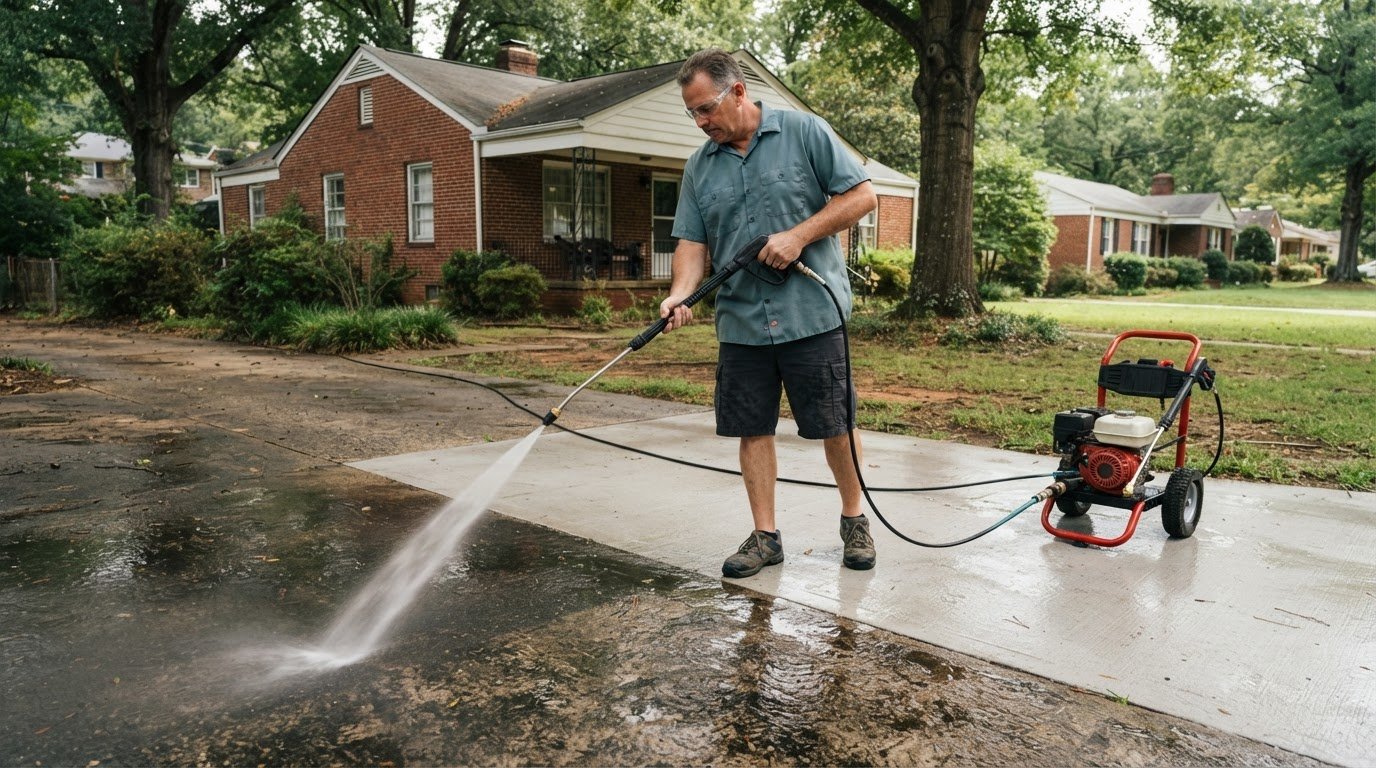
Before starting, read the machine’s operating instructions and identify its controls. Keep the spray pointed away from people, pets, windows, and electrical equipment. A concentrated jet can damage surfaces, so test a small, inconspicuous area before cleaning a deck or siding.
Wear eye protection and sturdy, closed-toe footwear, and keep both hands on the spray gun while operating it. Clear the work area of children, pets, loose objects, and trip hazards. If the machine uses fuel, operate it outdoors, away from flames and enclosed spaces.
Which accessories come with a pressure washer rental? The package may include several nozzles, a high-pressure hose, and, for some jobs, a surface cleaner. For basement waterproofing, make sure a surface cleaner is included if the work requires one.
What should you inspect before accepting the rental? Check the hose, spray gun, connections, wheels, and included nozzles for visible damage, then confirm the parts match the rental paperwork. Ask for operating instructions before leaving, and document any existing damage with clear photos.
Choose a nozzle suited to the surface, and keep it moving rather than holding the stream in one spot. Start at a distance, then adjust gradually after testing. Avoid spraying people, animals, or fragile materials, and never use an attachment unless you understand how it connects and operates.
Water and runoff need attention, too. Check local rules for water use and runoff management before you begin. In Atlanta, contractors should capture wash water containing detergent, oil residue, or grease instead of letting it enter a storm drain. Recurring commercial washing also requires runoff capture and proper disposal.
Plan the work area before switching on the machine: secure hoses, keep the route clear, and direct runoff away from storm drains. Stop if a connection leaks or a component appears damaged. A few minutes spent on setup can help prevent avoidable damage to the surface, equipment, or surrounding area.
Delivery, pickup, fuel, and cleaning fees
Extra charges can increase the total beyond the washer’s hire rate. Separate delivery, pickup, fuel, and cleaning costs before choosing your schedule.
Delivery and Pickup Fees
Delivery and pickup charges cover bringing the washer to your address and collecting it afterward. Compare those costs with the time and transport involved in collecting it yourself. For example, a distant delivery may affect your budget more than a nearby pickup. Schedule both handoffs around your work hours to limit downtime and keep the project moving.
Give the delivery address, access details, and preferred time window when arranging the booking. A blocked driveway or unclear drop-off point can complicate the handover. Keep pickup timing in mind, too: if cleaning runs late, the collection window may no longer suit your plan. A clear schedule helps coordinate the equipment with the work.
Fuel and Cleaning Fees
Fuel surcharges may apply to gas-powered pressure washers, while cleaning fees may apply if the equipment is returned dirty. Check the rental terms for fuel requirements before collecting the machine. At return, remove mud and loose debris from the washer and accessories. Keep fuel and cleaning requirements separate in your notes, since they relate to different parts of the handover.
Before work starts, record the washer’s visible condition and fuel level. At the end, follow the return instructions and take photos of the cleaned machine. These steps give you a useful record if the return condition is questioned. Don’t assume rinsing the exterior covers every cleaning requirement; dirt can remain around wheels, fittings, or accessories.
Review each charge in the rental breakdown rather than relying on a single total. Look for delivery, pickup, fuel surcharges, cleaning fees, and any damage waiver. These charges can depend on the equipment and rental arrangement. A line-by-line comparison helps show whether collecting the washer yourself or returning it clean changes the overall cost.
- Delivery: Confirm the drop-off address and time window.
- Pickup: Plan collection around the project’s finish and cleanup.
- Fuel: Note the starting level and return instructions.
- Cleaning: Remove dirt from the machine and included accessories.
Keep the booking details, condition photos, and return record together. These make it easier to track the washer’s handoff and any charges related to delivery, fuel, or cleaning.
PSI and GPM requirements
Choose a pressure washer by matching its ratings to the job. PSI measures water pressure; GPM measures water flow. PSI relates to the force applied to a surface, while GPM describes how much water the machine delivers. Both affect cleaning performance, so compare them together instead of choosing by one figure.
A 2,900 PSI gas pressure washer is listed in Atlanta. That figure describes a machine, not a universal target for every project. A higher rating isn’t automatically a better match: the surface, residue, and cleaning area all affect which setup makes sense.
Consider PSI in relation to the material and the dirt you need to remove. For example, stubborn grime on durable masonry may call for a different approach than light dust on a delicate finish. Choose for the toughest part of the job without assuming every area can handle the same pressure.
GPM helps you estimate how efficiently the washer can rinse loosened dirt across the work area. A larger surface may make water flow an important factor, while a small, isolated task may call for more control. Consider both the job’s size and the time available for cleaning.
Before comparing listings, write down the surfaces, the type of buildup, and the area involved. Then compare the stated PSI and GPM with those needs. If the job involves materials with different tolerances, plan how you’ll handle each rather than treating the entire project as one uniform surface.
- Pressure: Match PSI to the material and stubbornness of the residue.
- Flow: Consider GPM alongside the size of the area to rinse.
- Whole job: Choose a setup suited to the most demanding task.
This comparison helps narrow your options without chasing the highest rating. A well-matched washer can make the weekend project more manageable, while a poor match may waste time or put a finish at risk. Base your choice on the actual work, not a single impressive number.
Life4Rent: Life4Rent is a rental marketplace where users can list and rent daily items accross 17 categories ranging from tools, electronics, outdoor/sports, homes, baby etc
Life4Rent gives people a place to list and rent everyday items, including tools and home goods. Its marketplace spans 17 categories, so it can be useful when a project calls for borrowing equipment rather than buying it.
For a pressure-washing job, decide first what the machine must handle: the surface, cleaning task, suitable PSI and GPM, and any required attachments. Then explore rental listings and compare the details available for the item. The marketplace is a place to look, not a promise that a specific pressure washer or weekend booking will be available.
Life4Rent also lets owners list daily items for rent. That can suit someone with equipment to share, while renters can explore items for short-term needs across categories such as tools, electronics, and outdoor or sports gear.
Visit Life4Rent’s rental marketplace to explore the platform.
Set Up Your Weekend Project
Before booking, write down what you want to clean and what a successful finish would look like. That goal can help you decide whether a short rental suits the job or whether another approach makes more sense. If you decide to rent a pressure washer for a weekend, leave room in your plan for setup, breaks, and packing everything away.
Keep the project manageable. Choose one main area, prepare the space beforehand, and avoid adding last-minute tasks that could stretch your schedule. A clear plan makes it easier to use the equipment thoughtfully and finish without rushing.
Life4Rent is one place to explore for everyday rental items. If you’re ready to take the next step, visit Life4Rent to explore rental options.
With a focused task and a realistic schedule, you can get started with confidence.
Frequently Asked Questions
Where can I rent a pressure washer near me?
Start with rental listings that serve your area, then judge each option by its stated collection point and rental dates. A marketplace’s tools category can help you look for equipment, but the specific listing determines whether it suits your location and schedule. Check the handoff details before planning transport, especially if the washer is bulky or your vehicle has limited cargo space.
What pressure washer types and PSI ratings are available to rent?
Available types and ratings vary by machine, so use the model name and equipment label rather than relying on a broad category description. A listing should identify the washer’s power source and pressure rating. If those details aren’t clear in the description, compare them with the manufacturer’s operating information supplied with the machine. That helps you understand the unit you’re actually collecting.
What are the rental requirements, deposit, and late-return fees?
Requirements and charges depend on the rental agreement. Before booking, review what identification or payment details are needed, how any deposit is handled, and what the agreement says about returns. Save a copy of the terms and booking confirmation. If someone else will collect or return the washer, make sure the handoff arrangements and named renter follow the rental provider’s stated process.
How do I choose the right pressure washer for my cleaning project?
Break the job into stages before selecting a machine. For example, divide a long driveway into manageable sections and note where you’ll need to move the washer or hose. This helps you judge whether the setup will work across the whole project, not just at the starting point. Also list any surfaces that need a gentler approach so you can plan their order.
How do I safely use a rented pressure washer?
Follow the operating manual whenever you pause work, change an attachment, or restart the machine. Don’t loosen a hose or fitting while the system is pressurized. Keep unused accessories together so they don’t become trip hazards, and switch the washer off during longer breaks. If a control or connection behaves unexpectedly, stop and follow the manual’s instructions rather than improvising.
Related guides on Life4Rent
Ready to rent instead of buy? See all tools & equipment available to rent on Life4Rent →
Life4Rent
Rent it. Earn from it. Own less, access more.
Browse peer-to-peer rentals near you, or list what you own and start earning — all protected by Life4Rent Protect.
About the author
Tallinn, Estonia
Philip leads editorial at the Life4Rent Renting Academy, overseeing guides on peer-to-peer rental, platform safety, and consumer finance across 25 markets. He has spent over a decade covering the sharing economy and digital marketplaces, helping renters and owners navigate the shift from ownership to access.