
Rent a Pottery Wheel: Fees, Deposits and Return Terms
November 9, 2026
Published by Life4Rent · Operated by Brohf Software OÜ
When you rent a pottery wheel, the total cost and return terms depend on the individual listing. Review the rental price, any security deposit, payment terms, session length, size limits, return instructions, and cleanup requirements together before booking. A low rental price can still come with conditions that affect the overall cost or how you can use the wheel.
It makes sense to want the practical details upfront, especially when planning a project around valuable equipment. A refundable damage deposit may be part of the arrangement, and clear return instructions help avoid confusion about timing, condition, and cleaning. Size limits can determine whether the wheel fits your workspace or transport, while session rules set how long it is available.
Before booking, check the listed charges and conditions, including how deposits and payments work, how long the wheel is available, and what cleanup involves. Then compare those terms with your project, workspace, and schedule to decide whether the listing is a good fit.
Additional fees and size restrictions
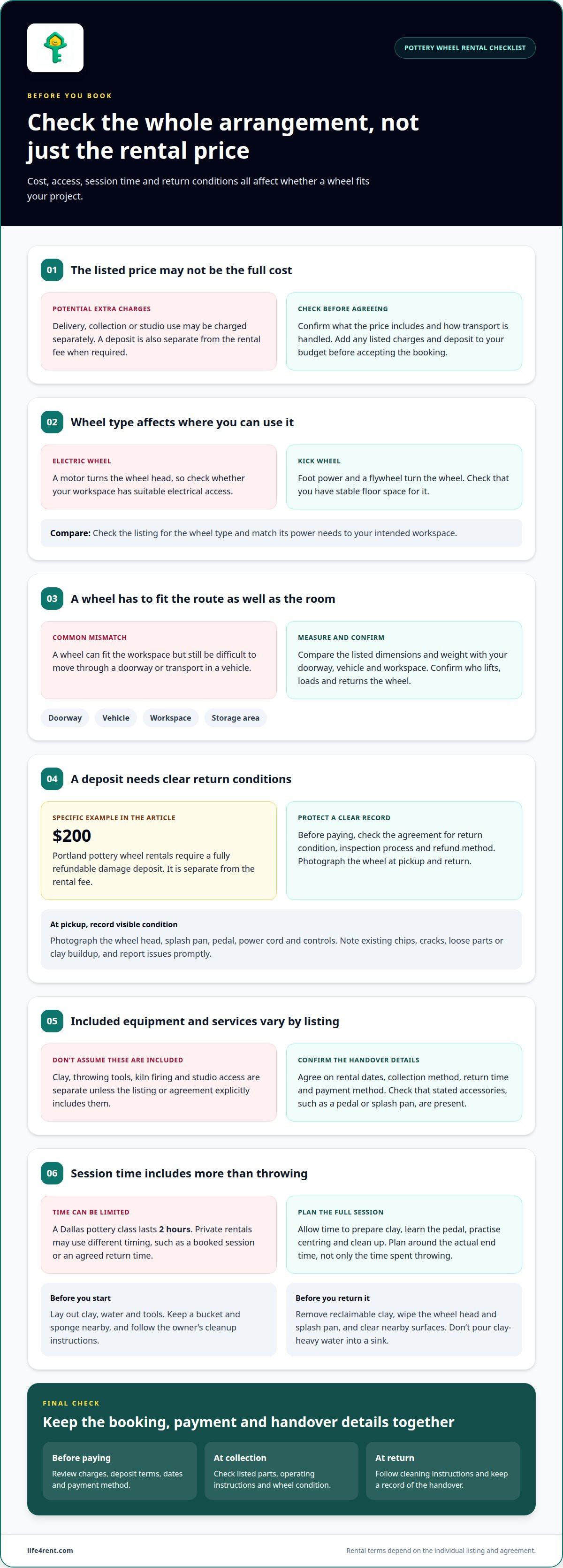
Before you rent a pottery wheel, compare the listed rental price with any delivery, collection, or studio-use charges. These depend on the arrangement, so check whether transport is included or handled separately. For example, collecting a wheel from a studio may avoid a delivery charge, but you’ll need suitable transport and lifting help. Confirm the total before agreeing to the booking.
Electric wheels and kick wheels are both options to consider. Electric models use a motor to turn the wheel head; kick wheels rely on foot power and a flywheel. Check the listing for the wheel type, since its power source affects where you can use it. A studio with suitable electrical access may work for an electric wheel, while a kick wheel needs stable floor space.
Size means more than the wheel’s footprint. Check the listed dimensions and weight, then compare them with your doorway, vehicle, and workspace. A pottery wheel may require help and suitable transport to move. Confirm whether the renter expects you to lift, load, or return the wheel yourself. Measure narrow doorways and storage areas before arranging pickup.
To find a wheel nearby, search local pottery studios, community art spaces, and peer-to-peer rental listings using your town or postcode. Compare the pickup location, delivery terms, wheel type, and dimensions. A nearby studio may offer on-site access, while a private rental may require you to transport the equipment. Before booking, choose a listing that gives you the dimensions and transport details you need.
Include that amount when comparing rental arrangements and transport options.
Refundable damage deposit
A refundable damage deposit is money held against damage during a rental. Portland pottery wheel rentals require a fully refundable $200 damage deposit. That amount is separate from the rental fee, so budget for both when arranging pickup. Before paying, read the agreement for the return condition, inspection process, and refund method. A clear record helps distinguish a new problem from a mark that was already present.
Inspect the wheel carefully before throwing. Photograph it from several angles, including the wheel head, splash pan, pedal, power cord, and visible controls. Note any existing chips, cracks, loose parts, or clay buildup, then share your observations through the agreed communication channel. If instructed, test the wheel briefly and report unusual noise or wobbling before shaping clay.
During use, keep clay and water away from electrical parts, and don’t force the pedal or wheel head. A small splash on the splash pan is different from a cracked component, but the rental terms determine how condition is assessed. Clean the equipment as instructed, remove your clay, and take return photos of the same areas you photographed at pickup.
- Keep the listing, payment record, and rental agreement together.
- Record any issue promptly, with a clear photo and brief description.
- At return, review the wheel with the owner and note its condition.
These steps give both sides a specific record if a deduction is proposed. For other everyday items, browse peer-to-peer rental listings and review the terms before booking.
Rental payment and return process
A pottery wheel rental includes the wheel and any extras named in the listing or agreement. Clay, throwing tools, kiln firing, and studio access are separate unless the terms explicitly include them. For example, a wheel collected from a private owner may not come with studio access or firing services.
Before paying, agree on the rental dates, collection method, return time, and payment method. Read the listing and rental agreement together to understand what the charge covers. If a deposit is required, make sure its amount and refund conditions are clear alongside the rental payment. Save the booking confirmation and payment receipt.
At collection, match the wheel to the listing and confirm that all stated accessories, such as a pedal or splash pan, are included. Ask for operating instructions if you haven’t used that model before. Keep the agreement and the owner’s return instructions accessible, especially if collection and return take place at different locations.
- Confirm the booking details and the agreed payment method.
- Collect the wheel and note any included parts or accessories.
- Clean the equipment as instructed and arrange its safe transport.
- Return it at the agreed time, then keep a record of the handover.
For example, if the wheel comes with a detachable pedal, return it with the machine. Follow the stated cleaning instructions rather than assuming every surface needs the same treatment. A handover record helps both parties track when the rental ended and whether all listed parts were returned. Keep messages about timing or changed arrangements with your booking records.
Session duration and cleanup requirements
Session length shapes how much time you have to centre clay, throw forms, and clean the wheel. A Dallas pottery class lasts 2 hours, giving participants a defined block for hands-on work. A private rental may follow different timing, such as a booked session or an agreed return time. Plan your project around the actual end time, not just the minutes spent throwing.
Pottery wheels can suit beginners, classes, and short-term projects when the rental period matches the plan. The Dallas class welcomes participants of all experience levels. For an independent session, allow time to learn the pedal, prepare clay, and practise centring before shaping a mug or bowl. Your first attempt may take more practice time than the finished piece suggests.
Before starting, lay out your clay, water, and tools so you don’t lose working time. Keep a bucket and sponge nearby for the wheel area, and follow the owner’s cleanup instructions. At the end, remove reclaimable clay, wipe the wheel head and splash pan, and clear clay from nearby surfaces. Don’t pour clay-heavy water into a sink, since settled clay can obstruct plumbing.
Set aside the final part of the session for cleanup instead of throwing until the last minute. Check the pedal, wheel head, and splash pan for leftover clay, then leave the work area tidy. If your piece needs firing, arrange that separately; firing isn’t automatically included in a wheel session. Clear timing and cleanup expectations help you return the equipment ready for its next use.
Planning a project that needs equipment? Browse daily-item listings and choose a rental period that fits your schedule.
Life4Rent
Life4Rent is a rental marketplace where users can list and rent daily items across 17 categories, including tools, electronics, outdoor and sports gear, homes, and baby products. This model can help people access items for a particular project without making every purchase a long-term commitment.
For a pottery project, consider what you need beyond the wheel: transport, workspace, clay, tools, or firing. The listing description and rental terms help you decide whether an item suits your setup. If you’re listing equipment, clear photos and an accurate description help renters understand what you’re offering.
The marketplace also includes everyday categories beyond pottery, from electronics to outdoor and sports gear. That range may help if your project calls for several different items, or if you have belongings sitting idle. List only what you can describe accurately, including its condition, included parts, collection arrangements, and expected return condition.
Start by defining your project dates and the space available for the equipment. Then use those practical needs to assess the listing details and rental terms. Life4Rent is a general rental marketplace, not a pottery studio or class provider. Its role is to connect people listing daily items with people looking to rent them. The equipment and its terms remain specific to each listing. If you need instruction, firing, or studio access, those are different requirements from borrowing a wheel for independent practice.
Contact Life4Rent if you’d like to learn more about using the marketplace.
Plan Your Next Pottery Project
If you plan to rent a pottery wheel, set a modest goal for your first session, such as centring clay or shaping a simple cylinder. A clear aim gives you something practical to focus on, without making a finished piece the only measure of progress.
Think about what you want to learn from the experience. You might discover that you’d like more practice, or that you simply enjoy making one piece by hand. Either way, your project can guide your choice of equipment and rental arrangement.
If you have questions about using the marketplace for a pottery-wheel rental, contact Life4Rent about your plans. Before booking, check the listing and rental terms to make sure they suit your project.
Frequently Asked Questions
Can you rent a pottery wheel for home use?
Yes, you can rent a wheel for home use if the listing allows off-site use and your space can accommodate it. Measure the route from your entrance to the work area, and leave room for a stool, clay, and water. For an electric model, check that the planned spot has a suitable outlet. A kick wheel needs clear floor space.
What are the requirements and rules for renting a pottery wheel?
Renters must provide a driver’s license or a utility bill showing their current address, then sign a rental contract and waiver. Read the agreement for permitted use, collection arrangements, the return deadline, and responsibility for damage. If you’re new to throwing, make sure the owner’s instructions cover basic operation before you start, rather than relying on guesswork.
How do pottery wheel rental deposits, insurance, and damage fees work?
Life4Rent Protect is optional on eligible listings, but it isn’t insurance, and reimbursement is discretionary. It shouldn’t be treated as an insurance policy or a guaranteed payment for damage. A deposit and damage charges are separate rental terms, not Life4Rent Protect; assess any protection option separately from the amount held against the equipment for the specific rental.
How do I book and pick up or get a pottery wheel delivered?
Choose a listing, agree on the rental dates and handover details, then complete payment through the available booking process. Life4Rent supports in-app payments through Stripe and PayPal, with funds held in escrow until the rental is completed. Pickup or delivery arrangements depend on the listing; the platform’s delivery service is coming soon to selected areas.
What should I check before renting a used or portable pottery wheel?
Ask the owner to demonstrate the wheel in operation, including whether the speed changes smoothly in response to the pedal. Check for cracks, unusual movement, loose controls, and missing accessories, then compare the wheel’s dimensions and weight with your transport plan. For a portable model, consider how to secure it during transit and whether your workspace suits its power source.
Life4Rent
Rent it. Earn from it. Own less, access more.
Browse peer-to-peer rentals near you, or list what you own and start earning — all protected by Life4Rent Protect.
About the author
London, United Kingdom
Fred covers rental technology, app features, and platform mechanics for the Life4Rent Renting Academy. With a background in fintech journalism, he specialises in breaking down how digital rental platforms work — from payment protection and identity verification to smart pricing and booking management.