Rent a Metal Detector: A Practical Guide to P2P Rentals in 2026
Joshua Price
June 15, 2026
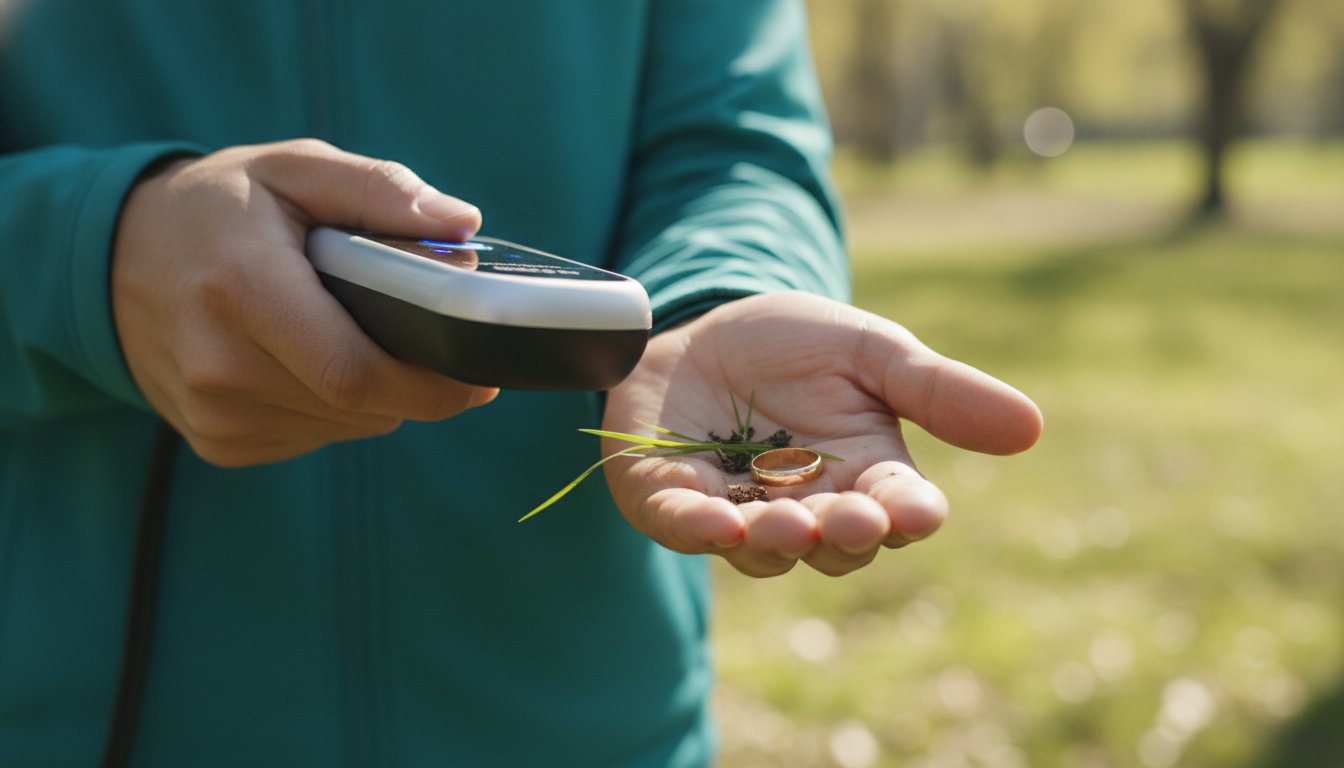
Why spend hundreds of euros on a professional machine you might only use once to find a lost wedding ring in the grass? Most people assume they have to buy expensive equipment to get real results, but that often leads to a high-end tool gathering dust in the garage. You don't need to own the gear to get the job done. If you want to find a specific item or just see if the hobby sticks, it's much smarter to rent a metal detector from a neighbor who already owns a reliable unit.
Technical terms like VLF and Pulse Induction determine whether you find a gold ring or just a pile of rusty nails. The right machine for your specific soil type keeps the process fast and prevents you from digging up the entire yard. Local platforms connect you with high-quality gear sitting in your own neighborhood. Owners often include necessary accessories like pinpointers or digging trowels, which ensures you have a complete kit for your search. This approach saves significant money while giving you access to the same hardware professionals use.
Common reasons to rent a metal detector instead of buying
Ownership isn't always the smartest path. Most people who look to rent a metal detector are facing a specific, immediate problem. Maybe a wedding ring slipped off while you were gardening, or your car keys vanished in a tall field of grass. These situations demand a high-quality tool for a few hours, not a permanent spot on your garage shelf.
Property maintenance is another major driver for short-term rentals. You might need to find buried metal boundary markers before a contractor arrives to install a new fence. Since these markers are often deep, a professional-grade machine is necessary. If you understand how metal detectors work, you'll know that high-frequency sensors are required to distinguish between a rusty nail and a steel property stake.
To see how a reliable machine performs without a massive price tag, watch this helpful video:
The "try before you buy" philosophy
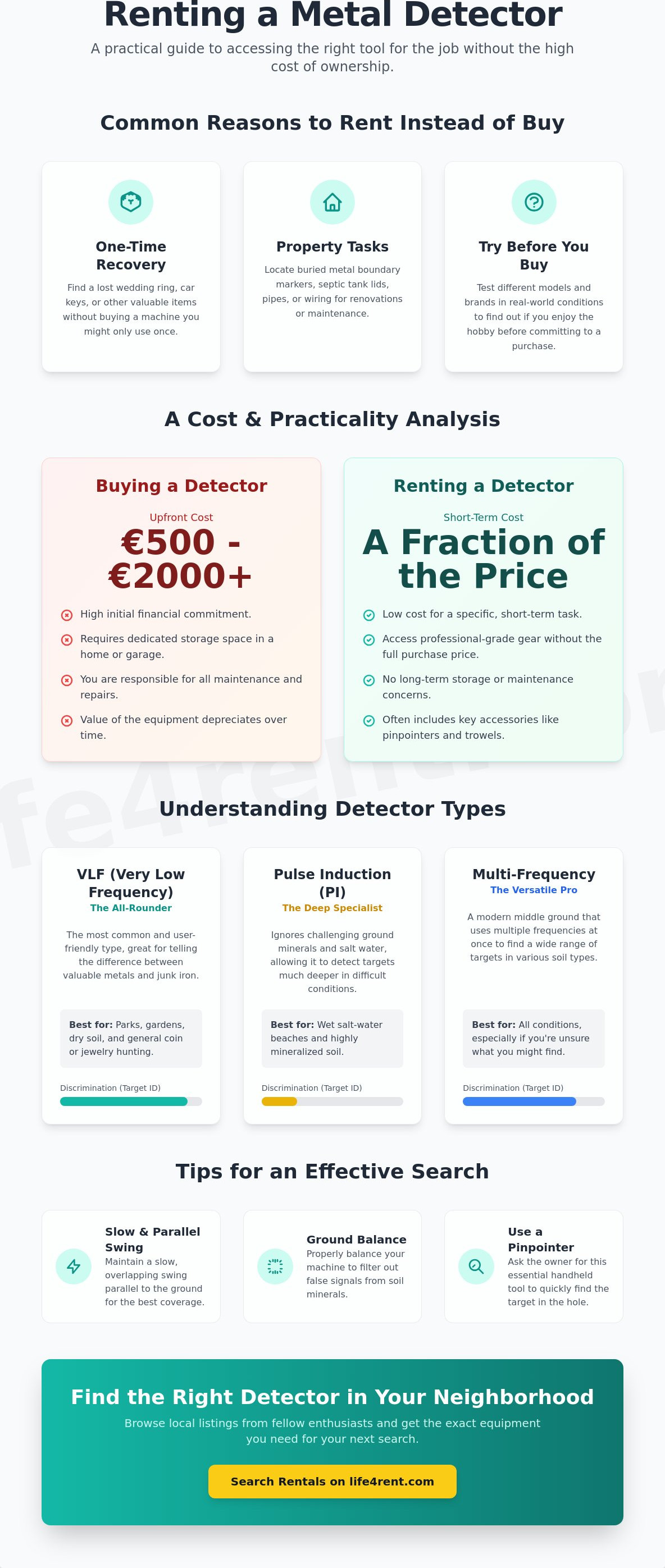
New detectors from reputable brands often cost hundreds or even thousands of euros. You shouldn't spend that much money without knowing if you'll actually enjoy the hobby. The choice to rent a metal detector for a weekend is the best way to gain hands-on experience without the financial commitment. Local listings on Life4Rent allow you to test multiple models and compare brands like Minelab or Garrett in real-world conditions. You'll get to feel the actual weight of the machine and see if the digital interface is intuitive for you. It's a low-risk way to determine if a permanent investment is the right move for your lifestyle.
One-time recovery missions
Lost jewelry remains the most frequent reason for a 24-hour rental. A wedding ring has immense sentimental value, but it doesn't justify buying a 500-euro machine that you'll never use again. Beyond jewelry, home renovations often require locating buried valves, pipes, or wiring behind walls or under floorboards. A rented unit helps you tackle these specialized tasks without the clutter of owning a tool that only comes out once every five years. It keeps your storage space clear and your budget intact. It's fast. It's affordable. It works.
Understanding the types of detectors available for rent
Technical jargon can be confusing if you're new to the hobby. You don't want to rent a metal detector that's designed for gold prospecting in the desert when you're actually looking for a set of keys in a muddy backyard. Most machines fall into two main categories, and picking the wrong one will result in a frustrating day of digging up iron nails and bottle caps.
VLF (Very Low Frequency) machines are the standard choice for most users. These detectors are great at telling the difference between high-conductivity metals like silver or copper and low-conductivity junk like iron. If you're searching a local park or a private garden, a VLF machine is your best bet because it's lightweight and easy to handle.
Pulse Induction (PI) detectors work differently. They ignore ground minerals and salt water, which often confuse VLF machines. If your search takes you to a wet salt-water beach, a PI detector will go much deeper than a standard unit. However, they don't discriminate well, so you'll likely dig up every piece of metal the coil passes over.
Multi-frequency technology is a popular middle ground in 2026. These machines send out multiple signals at once to catch everything from tiny gold earrings to large iron pipes. It's often worth the small extra cost to rent a metal detector with multi-frequency technology if you aren't sure exactly what you're looking for.
Don't forget to ask for a pinpointer. These small, handheld wands are essential for locating the exact spot of a find once you've dug a small hole. They save you from sifting through handfuls of dirt and keep your recovery process clean and fast.
VLF detectors for everyday use
These machines are the most common listings on peer to peer equipment rental platforms because they're user-friendly. Most models run on standard AA batteries or have a simple USB charging port. You'll find them perfect for locating lost jewelry or old coins in dry soil. They offer clear audio tones that help you identify the metal type before you ever touch a shovel.
Specialized gear for difficult terrain
Wet sand and highly mineralized soil require specific hardware. You must check if the search coil is waterproof if you plan to walk through shallow surf. Some models are fully submersible, while others only allow the coil to get wet. If you're hunting for larger objects buried more than 30 centimeters deep, look for a listing that includes a large deep-seeking coil. Always read the owner's description to ensure the equipment matches your specific environment. You can easily browse local listings to find a machine that fits these exact requirements.
Buying vs. Renting: A cost and practicality analysis
The decision to buy your own equipment or simply rent a metal detector usually depends on your long-term plans. Most hobbyists find that a high-quality detector spends about 90 percent of the year in storage. Owners are responsible for battery maintenance, firmware updates, and hardware repairs. These tasks can feel like a chore if you only want to search for a lost item or try the hobby for a few days. If you don't use the machine regularly, the lithium-ion batteries can degrade, leaving you with an expensive tool that won't hold a charge when you finally need it.
Space is a genuine issue for anyone living in a compact urban apartment. Metal detectors are long, awkward tools that don't fit easily into standard cupboards. You avoid this clutter when you rent a metal detector through a peer-to-peer platform like Life4Rent. This gives you access to the best 2026 technology without the headache of finding a permanent home for the gear. You get the benefit of a high-performance machine without the depreciation that hits new electronics the moment they leave the box.
Traditional rental shops often have strict business hours that make weekend trips difficult. People who list their gear on Life4Rent are typically more flexible with their schedules. You can often coordinate a pickup on your way out of town, which saves you from a stressful dash across the city during rush hour. This flexibility extends to the return process as well. Most owners understand that a beach trip might run late, so they're often willing to work around your arrival time rather than charging a stiff late fee for being ten minutes behind a commercial deadline.
The math behind a single weekend
Top-tier metal detectors in 2026 can cost thousands of dollars according to industry data. When you add the price of waterproof headphones and a sturdy sand scoop, the total investment becomes hard to justify for a single weekend. The choice to find a tool on rent lets you use this exact setup for a small daily fee. You'll save significant capital while still using professional gear that actually finds metal.
Access to expert knowledge
Enthusiasts who list their equipment often have years of experience with that specific model. They know the best settings for local mineralized soil and can explain the audio signals better than any manual. Commercial shops rarely offer this kind of personalized advice. A quick chat with the owner during pickup can give you the exact tip you need to find a lost ring or a buried pipe. It's a more personal way to start your search, and it ensures your machine is ready to go the moment you arrive at your site.
How to use your rented metal detector effectively
Success in the field starts with a few basic adjustments. You don't want to spend your entire rental period digging up rusty nails after you rent a metal detector for the weekend. The first step is always to perform a ground balance. This process tells the machine to ignore the natural minerals in the soil so it can focus on actual metal objects. Most modern machines have an automatic button for this, but you should check with the owner if you're unsure how it works.
Your physical technique determines how much ground you cover and how deep you can see. Keep the search coil parallel to the ground at all times. Many beginners make the mistake of swinging the detector like a pendulum, which lifts the coil away from the earth at the end of each stroke. This habit loses you several centimeters of depth. Instead, move the coil in a slow, wide arc as if you're mopping a floor, overlapping each pass slightly to ensure no spot is missed.
Audio feedback is your best guide. Listen for repeatable signals that sound the same every time the coil passes over them. If a tone is jumpy or only happens once, it's often just a piece of junk or a mineral hot rock. You can use the discrimination settings to filter out iron and foil, which saves your back from unnecessary digging. It's efficient. It's precise. It gets results.
Setup and initial testing
Check the battery levels before you leave the house. Most owners on Life4Rent provide a full charge, but it's always smart to verify. Adjust the shaft length until the machine feels balanced in your hand. You shouldn't have to hunch over while walking, as this leads to fatigue after just an hour. Test the detector with a coin on the surface of the ground first. This helps you recognize the "good" tone and ensures the sensitivity is set correctly for the area.
Etiquette and local laws
Proper etiquette keeps the hobby alive for everyone. Always fill your holes so the ground looks undisturbed when you leave. You should also check if you need a permit for local parks or public beaches. In some regions, like Delaware, permits are free for specific zones, while National Parks are strictly off-limits. Ask the owner if they can provide a digital copy of the manual or a quick-start guide. If you're ready to start your search, you can rent a metal detector today and find what you're looking for.
Finding the right detector on Life4Rent
The search for the right machine doesn't have to be complicated. Start by entering "metal detector" into the search bar and look through the tools or electronics categories. Life4Rent hosts items across 17 different categories, so you'll likely find several options ranging from basic models to professional units. Filter your results by location to see owners who live just a few blocks away. This makes the pickup process much faster and saves you a long drive across the city.
Reviews provide a clear picture of what to expect from a specific listing. Look for owners who have a history of providing well-maintained gear and clear instructions. If a previous renter mentions that the battery was fully charged and the machine was clean, that's a good sign. You want to rent a metal detector from someone who treats their equipment with care. Reliable gear means you can spend your time searching for treasure instead of troubleshooting a faulty sensor.
Message the owner directly before you finalize your booking. Ask them if the kit includes essential accessories like a pinpointer or a sturdy digging tool. Many enthusiasts have these items tucked away and will include them if you ask. It's much easier to carry a complete set of tools than to realize you're missing a shovel when you're already at the beach. Honest communication helps set expectations and ensures you have everything you need for a successful day.
Booking and item protection
Secure payments are handled entirely through the platform, so you don't need to carry cash for the transaction. Life4Rent Protect provides escrow payments and damage protection to keep the process transparent for both parties. You should follow the checklists for neighbor rentals to ensure a smooth hand-off. Take a quick photo of the detector when you pick it up to document its condition for your records. This simple step prevents misunderstandings and builds trust within the community.
Listing your own gear
You can turn your own equipment into a source of passive income when you aren't out in the field. Owners on the platform keep 100% of the booking fee, while the platform takes a 10% commission to cover support and protection services. This is a practical way to earn back the original cost of your machine over time. Provide a clear description that includes the depth capabilities and the battery life of your specific model. You'll help neighbors find their lost items while connecting with other local hobbyists who share your passion for discovery.
Start your search today
Professional results in the field don't require a massive upfront investment. A correct choice between VLF and PI sensors helps you find what you're looking for without digging unnecessary holes. You'll avoid the clutter of a large machine and the hit of depreciation by accessing gear from your own community. It's a practical way to recover a lost heirloom or test out a new hobby for a weekend.
The process to rent a metal detector remains straightforward and secure. Life4Rent provides verified user reviews and secure peer-to-peer payments so you can book with confidence. You'll find equipment across 17 categories of daily items, including the specific accessories needed for a productive day. Find a metal detector for rent near you on Life4Rent and start your search. Good luck with your discovery.
Frequently Asked Questions
How deep can a rented metal detector actually see?
Most hobbyist machines detect coin-sized objects at depths of 15 to 25 centimeters. Larger items like buried pipes or property markers can be found deeper, sometimes up to a meter, depending on the coil size and soil mineralization. Wet sand or high iron content in the ground can reduce these distances. It's best to keep the coil as close to the surface as possible for maximum depth.
Do I need a license to use a metal detector in public places?
Regulations vary by location, so you must check local municipal laws before you start your search. Many public parks and beaches require a specific permit, while National Parks and scheduled monuments are strictly off-limits. Always seek written permission if you plan to search on private land to avoid legal issues. This simple step keeps your hobby enjoyable and legal.
What happens if I accidentally break the rented equipment?
Protection plans on platforms like Life4Rent typically cover accidental damage during the rental period. You should report any issues to the owner immediately through the platform's messaging system. Document the condition with photos at pickup and return to simplify the dispute resolution process if something goes wrong. This protects both you and the owner from unfair claims or misunderstandings.
Can these machines find gold jewelry or only iron and steel?
Modern detectors easily find gold, silver, and copper jewelry by using specific frequency settings. You can use the discrimination feature to ignore iron trash like nails while focusing on high-value targets. If you specifically want to find gold, look for a VLF machine with a higher operating frequency. These units are much more sensitive to small, low-conductivity items like earrings or thin chains.
Is it difficult to learn how to use a professional metal detector?
You can learn the basics of a professional unit in about 20 minutes of practice. Most high-end machines feature "turn-on-and-go" modes that handle complex ground balancing settings automatically. It's helpful to watch a quick tutorial for your specific model to understand the different audio tones before you head out. This ensures you spend your time digging treasures rather than struggling with the interface.
Are batteries usually included in the rental price?
Owners usually provide a fully charged battery or a fresh set of disposables when you rent a metal detector. You should confirm this with the owner before pickup, especially for long weekend trips in remote areas. It's a good idea to bring a spare set of batteries or a power bank if the unit is USB-rechargeable. This ensures your search doesn't end early because of a dead battery.
Can I use a metal detector in the rain or underwater?
Most search coils are waterproof, but the control box at the top of the shaft often is not. You must verify if the specific model is fully submersible or just weather-resistant before you go out in a storm. If you plan to search in the surf, ensure the listing explicitly states the machine is rated for underwater use. Salt water requires specific Pulse Induction technology to work correctly.
What is the best time of year to rent a detector for beach hunting?
Winter and early spring are the best times for beach hunting because heavy storms shift the sand and reveal older buried items. High-traffic summer months are also productive for finding recently lost jewelry near the shoreline. You should aim for a search during low tide to access the areas where people usually swim. This maximizes your chances of finding rings lost in the shallow water.
Life4Rent
Rent it. Earn from it. Own less, access more.
Browse peer-to-peer rentals near you, or list what you own and start earning — all protected by Life4Rent Protect.
About the author
Joshua Price
Amsterdam, Netherlands
Joshua writes about the financial side of renting and earning on Life4Rent. His guides focus on helping people understand the real cost of ownership, calculate rental income potential, and make smarter decisions about buying versus renting. He previously wrote on household economics and personal budgeting for a pan-European finance publication.