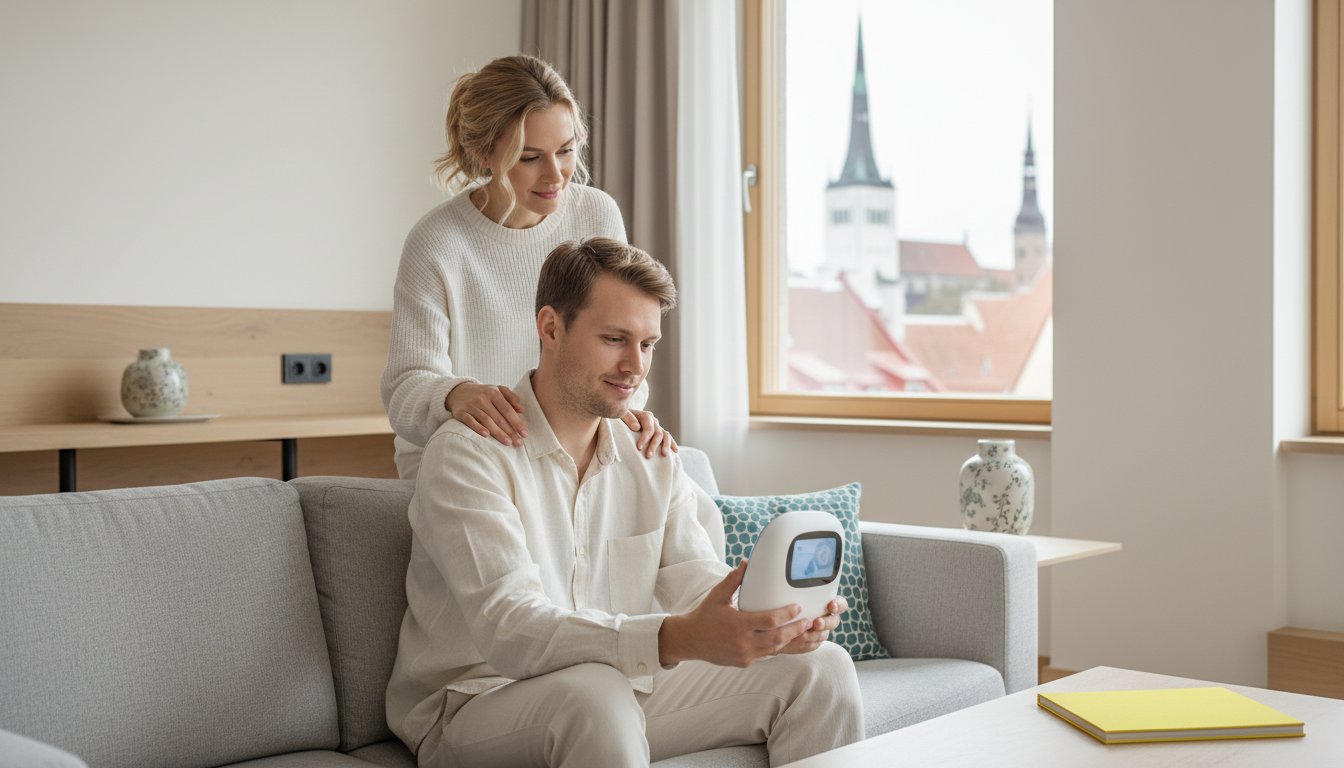
Rent a Baby Monitor for Travel: A Practical Buying Guide for 2026
May 8, 2026
Published by Life4Rent · Operated by Brohf Software OÜ
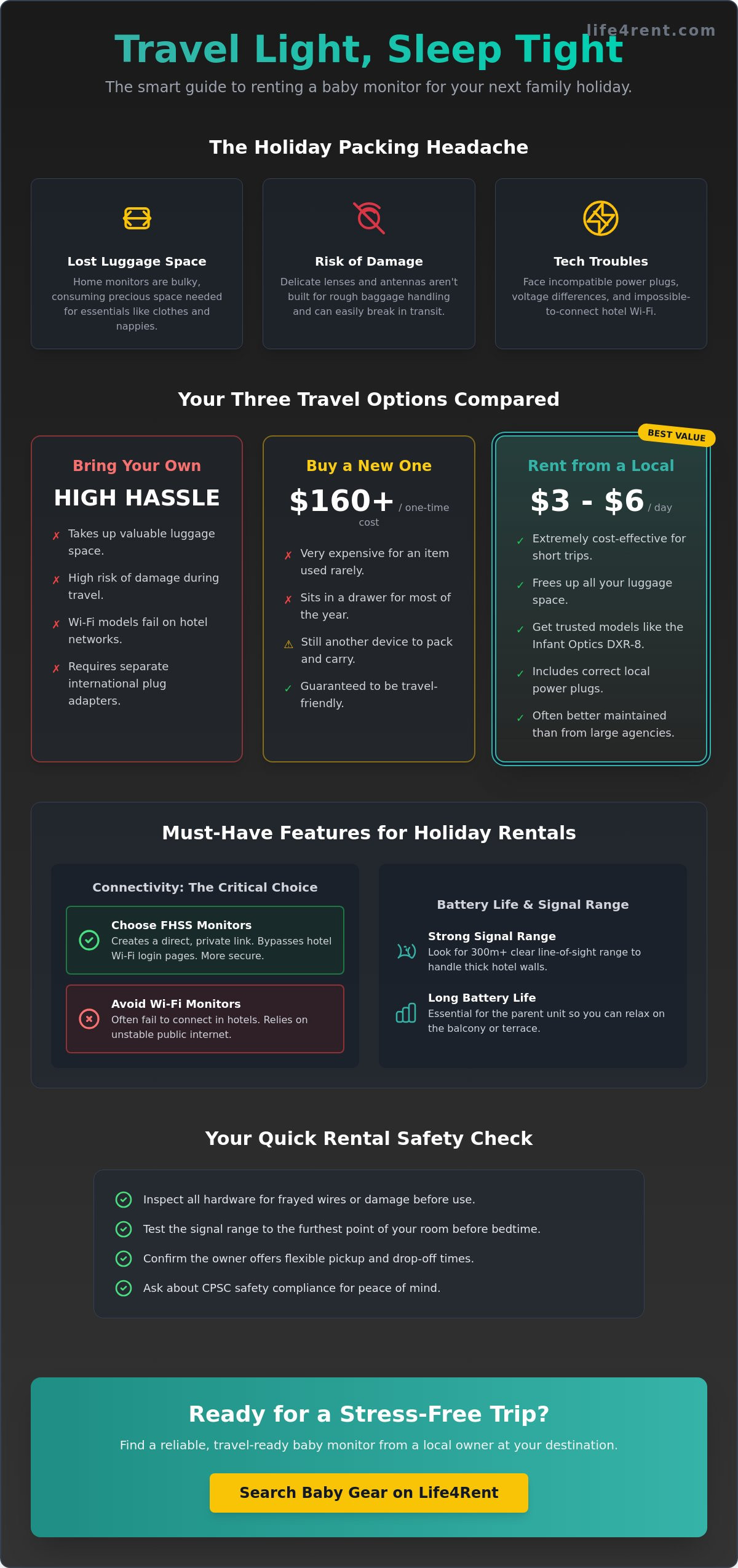
Your home baby monitor is likely the most frustrating item you could pack for a family holiday. You shouldn't have to choose between losing half a suitcase to bulky gear or spending $160 on a second travel-specific device. If you rent a baby monitor for travel, you can skip the anxiety of hotel Wi-Fi failures and incompatible power plugs. Most parents already feel the pressure of limited luggage space and simply want a reliable way to keep an eye on their child in a new environment.
You'll find that peer-to-peer marketplaces offer a practical middle ground, providing access to trusted models like the Infant Optics DXR-8 for about $3 to $6 per day. This guide helps you select a dependable monitor from local owners to ensure a safe sleep setup without the high costs of traditional agencies. You'll learn how to check for CPSC safety compliance and which features matter most when you're staying in a rental home or hotel room. Local owners provide quality tech that lets you travel light while maintaining total confidence that your baby is sleeping soundly in the next room.
The logic behind the choice to rent a baby monitor for travel
Luggage limits often force parents to make tough choices during the packing process. You'll likely prioritize nappies, clothes, and feeding equipment over bulky electronics that take up half a carry-on bag. If you rent a baby monitor for travel, you free up significant volume in your checked bags for items you can't easily source at your destination. This practical choice also protects your expensive home setup from the rough handling of airport baggage systems and the vibration of long-haul flights.
Home devices simply aren't built for the rigors of the road. Delicate camera lenses and antennas are prone to damage in overhead bins or cramped suitcases where they face constant pressure. You might find that a fixed wall mount or a thin, fragile wire doesn't survive a single transit cycle. Local owners in cities like Tallinn or Chicago provide units that are ready for immediate use. These devices usually feature the correct local power plugs, which saves you from buying expensive international adapters. A basic knowledge of baby monitor technology helps you realize that a standard unit from home might not even work well with different electrical frequencies or the thick stone walls common in European rentals.
To better understand this concept, watch this helpful video:
Space saving and gear protection
Standard monitors come with multiple power cables and base units that add unnecessary weight to your luggage. You don't want to carry extra international plug adapters just for one device when space is already limited. Local rentals eliminate this clutter and the risk of losing small parts in a hotel room. Peer-to-peer platforms like Life4Rent connect you with parents who have spare, travel-ready equipment. These units are often more durable or come in protective cases that individual owners have already tested for reliability in their own homes.
Cost benefits of the sharing economy
Daily rates on peer-to-peer platforms are usually much lower than the price of buying a dedicated travel unit. You can often find high-quality models for approximately $3 to $9 per day. This is a small fraction of the $160 or more you'd spend on a quality secondary monitor that sits in a drawer for most of the year. Owners frequently include helpful extras like longer charging cables for awkward hotel room layouts or spare batteries at no additional charge. A quick look at the 2026 guide to peer-to-peer equipment rental provides more details on how this approach saves money. This marketplace model also lets you test specific models you might want to buy later. A decision to rent a baby monitor for travel ensures your child stays safe without the logistical headache of transporting your own gear.
Technical specifications that matter for holiday stays
Technical requirements for a holiday monitor are quite different from what you use at home. Wi-Fi connectivity is often the biggest hurdle in professional hospitality settings. Most hotels utilize "splash pages" that require a user to accept terms in a web browser before the internet works. Standard smart monitors don't have built-in browsers, so they often fail to connect entirely in these environments.
FHSS models offer a more reliable alternative for travelers. These devices use Frequency Hopping Spread Spectrum to create a direct, encrypted link between the camera and the parent unit. You don't need a router, a password, or a stable internet connection for the system to function. This tech also provides better privacy, as the signal stays off the local hotel network where other guests might be active.
Battery performance on the parent unit is another critical factor. You'll likely want to sit on a balcony or a terrace while the baby sleeps in the room. A unit with poor battery life will force you to stay near a power outlet inside. Look for devices with at least 300 metres of clear-line-of-sight range. Real-world performance is usually lower due to thick hotel walls, so a higher base rating is a safer bet.
Wi-Fi vs. Non-Wi-Fi (FHSS) models
Night vision and audio sensitivity
Infrared night vision is a non-negotiable feature for unfamiliar rooms. You need to see clearly through the dark to determine if a baby is just moving in their sleep or needs attention. Two-way talk features are also helpful, as they let you soothe a restless child from another room without waking them up further. Sound-activated LED lights on the parent unit are a great addition for noisy environments like a restaurant or a busy patio. You can find many of these high-quality baby monitors listed by local owners who understand the needs of traveling parents.
P2P marketplaces vs. traditional rental companies
Traditional rental companies often operate like car rental agencies, with strict office hours and standardized fleets. If you rent a baby monitor for travel through a peer-to-peer marketplace like Life4Rent, you'll deal with real people who understand your schedule. Individual owners often allow for late-night pickups or early-morning drop-offs that corporate entities simply won't accommodate. This direct connection removes the friction of waiting in line at a rental desk after a long flight.
Corporate fleets frequently use older, heavily-used models that have been through hundreds of rental cycles. Standard rental agencies typically replace their inventory only every three to four years. This means you could end up with a monitor that has a dim screen or a speaker that crackles at high volumes. These units often suffer from poor battery retention, which is a major drawback if you're trying to monitor a nap from a hotel balcony. In contrast, P2P listings are typically the same units that the owners use for their own children. You're getting hardware that is well-maintained and technically sound because the owner relies on it too.
Flexibility and local insight
Owners can often coordinate with you to meet at the airport or a specific train station, saving you a trip across town. Local parents also provide a layer of insight that a corporate employee cannot offer. They can suggest the best baby-friendly cafes or quiet parks in their neighborhood while you're picking up the gear. You should read our guide on neighborhood peer-to-peer rentals to learn more about safe exchange practices and community standards.
The condition of the equipment
Photos on a marketplace listing usually show the actual item you'll receive, not a generic stock image. This transparency helps you verify the physical condition of the camera and parent unit before you commit. Owners have a personal incentive to keep their gear clean and functional to maintain their high ratings on the platform. Unlike a large company where a damaged unit might slip through the cracks, an individual owner takes pride in the technical state of their equipment. When you choose to rent a baby monitor for travel from another parent, you're often getting a unit that has been gently used rather than a piece of high-volume industrial inventory.
Direct communication allows you to ask specific questions about the device's history and performance. You can check if the unit has ever been dropped or if it struggles with specific types of walls. This neighborly sharing fosters a sense of community trust that large companies can't replicate. It transforms a simple transaction into a helpful interaction between two families who share similar needs and values.
Steps to verify a rental monitor before your first night
You should never wait until bedtime to set up your equipment. A quick inspection ensures that you don't encounter technical failures while your baby is trying to sleep in a new environment. When you rent a baby monitor for travel, you must verify the physical condition of the hardware as soon as you receive it from the owner.
Inspect the power cables for any signs of fraying or exposed wires immediately. Damaged insulation can cause short circuits or even fire hazards in older hotel rooms. You should also check that the charging ports are tight and don't disconnect if the unit is moved slightly. If the manual isn't in the box, ask the owner for a digital copy or a link to the manufacturer's website.
The range and signal test
Thick hotel walls or metal frames in modern holiday apartments can significantly reduce the effective range of the device. You should place the camera in the crib and walk to the furthest point of the room or balcony where you plan to spend your evening. Watch for any screen flickering or audio lag that indicates a weak connection. Interference from other electronics like microwaves or hotel Wi-Fi routers can also degrade the signal.
Confirm that the "out of range" alarm is turned on and audible on the parent unit. This feature is your safety net if you accidentally step too far away or if the signal drops suddenly. You'll feel much more relaxed on the terrace knowing the device will alert you the moment the link is broken.
Battery and power check
Confirm the battery health by unplugging the parent unit for at least thirty minutes during the day. A healthy battery should hold a charge for at least four hours to be useful for a full evening of monitoring. If the battery percentage drops rapidly during this short test, you'll know to keep the parent unit plugged in while you use it. You should also verify that both the camera and the parent unit have the correct local plugs for your destination city.
Check the camera angle and the mounting options provided by the owner before the sun goes down. Some owners include flexible tripod mounts or clips that make it easier to position the camera on a hotel headboard. You can find baby monitors for rent from local parents who often include these practical accessories to help other travelers. A quick setup test now prevents a stressful situation later when everyone is tired and ready for bed.
How to find a baby monitor on Life4Rent
Ratings and reviews are essential tools to ensure you rent from a reliable community member who values gear maintenance. You should look for owners with a history of positive feedback regarding the cleanliness and technical state of their hardware. If you're unsure about a specific feature, use the secure internal chat to discuss technical specs before you commit to the booking. This direct line of communication lets you ask the owner to confirm the battery health or the specific wireless technology used by the unit.
Simple search and booking
Filters allow you to narrow down results by brand or specific features like infrared night vision or video capability. This saves you from scrolling through hundreds of irrelevant listings when you have a specific technical requirement in mind. The platform handles the payment securely through an escrow system, so you don't need to carry extra cash or worry about exchange rates during the hand-off. You might also want to search for audio equipment rental if you need specialized sound monitoring solutions for a larger villa or a noisy environment.
Safety and protection plans
Owners can list their items with confidence because every member of the community is verified for safety. This verification process builds a foundation of trust that makes the sharing economy work for families who travel frequently. You'll benefit from transparent pricing that doesn't include the hidden fees or high markups often found in hotel equipment rentals. If a device doesn't meet the description provided in the listing, the direct feedback loop ensures that the platform remains a high-quality resource for everyone. When you rent a baby monitor for travel on Life4Rent, you're choosing a practical, community-driven solution that prioritizes your child's safety and your own peace of mind.
Secure your peace of mind for the next family holiday
You'll find a wide selection of tested equipment when you browse baby monitors for rent on Life4Rent, where secure peer-to-peer payments protect every transaction. The platform features verified local owners across 17 categories and a transparent community rating system to help you choose with confidence. You can easily coordinate a pickup that fits your travel schedule and spend your evenings relaxing on the balcony instead of worrying about signal range. Safe travels and enjoy the quiet moments of your trip.
Frequently Asked Questions
Can I use a Wi-Fi baby monitor in a hotel room?
You'll likely find it difficult to use a Wi-Fi monitor in a hotel because of splash pages that require a browser login. Most smart monitors don't have a built-in browser to accept these terms and conditions. It's much more reliable to use a non-Wi-Fi FHSS model that creates a direct, encrypted link between the camera and the parent unit without needing an internet connection.
What happens if the rental baby monitor stops working during my trip?
You should contact the owner immediately through the secure internal chat if the device fails. Marketplace platforms like Life4Rent use an escrow system that holds your payment until the rental period is complete. This protection ensures you have a path to a refund if the hardware doesn't function as described in the listing. Always test the device as soon as you receive it to catch any issues early.
Is it cheaper to rent a monitor or buy a cheap one for travel?
It's often better to rent a baby monitor for travel than to buy a low-quality budget model for a one-time trip. Cheap monitors frequently lack infrared night vision and have poor battery life that won't last through an evening. You get better reliability and safety features from a professional rental unit for a small fraction of the cost of buying a new one.
How do I know if the rental monitor is clean and safe for my baby?
You can verify the condition of the gear by checking the community rating system and reading reviews from previous renters. Individual owners on peer-to-peer platforms usually rent out the same equipment they use for their own children, so the items are typically well-maintained. You should also perform your own safety check by inspecting the power cables for any fraying or damage before you plug the unit in.
Does a baby monitor count as a carry-on item for flights?
A baby monitor must fit within your standard carry-on or personal item allowance; it doesn't count as an extra free item like a diaper bag might. You should keep the parent unit in the cabin because it contains a lithium-ion battery, which most airlines prohibit in checked luggage. The camera unit can go in either bag, but the cabin is safer to avoid the rough handling of the cargo hold.
What is the best type of baby monitor for a private holiday rental?
Smart Wi-Fi monitors are a practical choice for private villas or apartments because you usually have full access to the router. This setup allows you to use your phone as the parent unit, which is helpful if the property has multiple levels. If you decide to rent a baby monitor for travel, an FHSS unit remains the most reliable option for buildings with thick stone walls that might block a standard wireless signal.
How far in advance should I book a rental monitor for my holiday?
You should aim to book your equipment at least 14 to 21 days before your trip begins. This lead time gives the owner enough notice to prepare the item and ensures you have time to discuss pickup logistics. Popular travel destinations often see a spike in demand during the peak summer months, so early booking helps you secure the specific model you prefer.
Can I rent other baby gear like travel cots on the same platform?
You can find a variety of essential items including travel cots, strollers, and high chairs on the Life4Rent marketplace. The platform features 17 different categories of daily items to help you travel without the burden of heavy luggage. Many owners list multiple baby items, which allows you to coordinate a single pickup for all the gear you need for your stay.
Related guides on Life4Rent
Ready to rent instead of buy? See all baby & kids gear available to rent on Life4Rent →
Life4Rent
Rent it. Earn from it. Own less, access more.
Browse peer-to-peer rentals near you, or list what you own and start earning — all protected by Life4Rent Protect.
About the author
London, United Kingdom
Fred covers rental technology, app features, and platform mechanics for the Life4Rent Renting Academy. With a background in fintech journalism, he specialises in breaking down how digital rental platforms work — from payment protection and identity verification to smart pricing and booking management.