
Practical Tips for First-Time Renters of Items (2026)
April 30, 2026
Published by Life4Rent · Operated by Brohf Software OÜ
Why would you spend $1,200 on a high-end camera you'll only use for one weekend when your neighbor has the same model sitting in a drawer? Most people feel a bit nervous about borrowing gear from a stranger on a peer-to-peer marketplace. You probably worry about hidden fees or what happens if a piece of equipment stops working while you have it. These are valid concerns when you're looking for practical tips for first time renters of items to ensure you don't lose money on a bad deal.
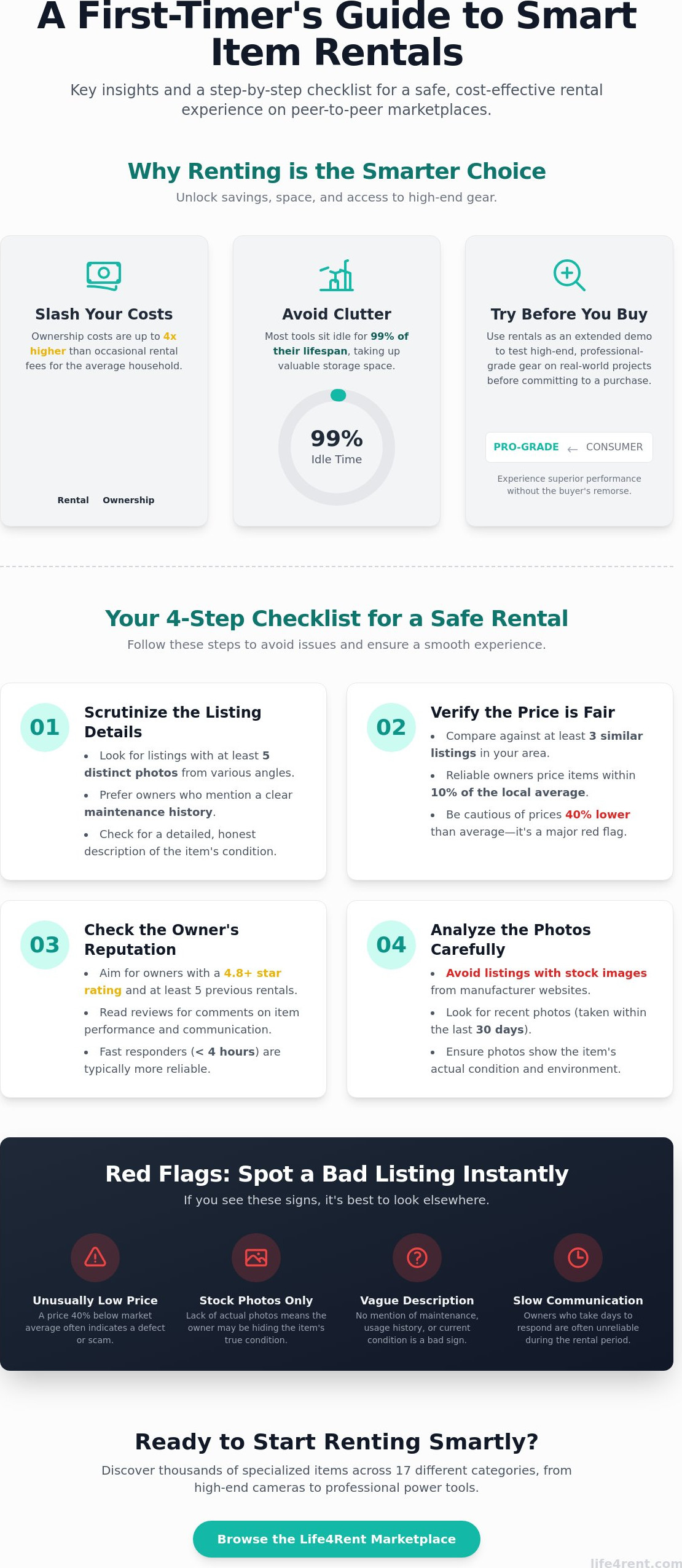
It's common to feel unsure about how insurance works or how to tell if a photo in a listing is current. A 2024 report on the circular economy noted that individual tool ownership costs are roughly four times higher than occasional rental fees for the average household. You'll learn how to navigate these platforms safely, evaluate the condition of items before you pay, and keep your project costs low. Effective communication with owners and a clear understanding of red flags in a description help ensure you get exactly what you need.
Why item rental is a practical choice for your home projects
Most home projects require specialized equipment that you might only use once or twice. You don't need to spend a large sum on a professional-grade tool for a single weekend repair. You can access high-quality gear without a heavy upfront investment.
This shift in how we access goods is a core part of the sharing economy, where utility matters more than ownership. It's a sensible approach for those seeking tips for first time renters of items who want to balance their budget and project quality.
To better understand this concept, watch this helpful video:
Avoid the clutter of unused tools
Most power tools sit idle for 99% of their lifespan. A 2023 study on consumer habits suggested that the average power drill is used for less than 20 minutes in its entire life. You'll find that renting is a great way to save garage space and keep your home organized.
You can rent items you only need for a single weekend project, such as a heavy-duty pressure washer or a tile cutter. This prevents your storage areas from becoming graveyards for expensive, dust-covered machinery. Storage space is a hidden cost of owning physical goods, especially when you consider the price per square meter in European cities. Many people choose this route for one-off DIY home repairs because it simplifies the logistics of the project.
Test high-end gear before you buy it
Professional equipment often performs better than entry-level consumer models. You might find that a pro-grade hammer drill handles concrete much faster than the cheap version you considered buying. You can rent a premium camera or specialized lens to see if it fits your creative needs before committing to a purchase.
Trial runs prevent expensive mistakes when you're building your personal toolkit. One of the best tips for first time renters of items is to treat the rental as an extended demo. You get to see how the item performs under real-world conditions without the risk of buyer's remorse. This practical approach ensures you only spend money on things you truly need and like. It's an honest way to try a product before buying it, giving you confidence in your eventual purchase.
How to evaluate a rental listing before you commit
You should scan every listing with a critical eye before you spend any money. High-quality listings include at least five distinct photos showing the item from various angles. If a description mentions a specific maintenance history, like a tool serviced in January 2025, it usually indicates a responsible owner. These are essential tips for first time renters of items who want to avoid technical issues during their rental period.
You'll find that owners who respond to messages within four hours are typically more reliable during the actual handover. Communication speed often correlates with how well the item is maintained. You can find helpful consumer advice on renting that explains how to read agreements and check for hidden fees. This logic applies to high-end cameras or power tools just as much as it does to vehicles.
Check at least three similar listings to see if the daily rate is realistic. A price that's 40% lower than the market average might suggest a hidden defect or a lack of proper insurance. Most reliable owners price their items within 10% of the local average to stay competitive while covering their own maintenance costs. If you want to see how a professional listing looks, you can browse available items on Life4Rent.
Check the owner reputation and reviews
Owners with a 4.8-star rating after at least five rentals usually provide a consistent experience. Previous renters often leave honest feedback about the item's actual condition versus its description. You should look for comments that specifically mention how the item performed under load. A history of successful rentals proves the owner understands the logistics of the platform and won't cancel at the last minute.
Verify the condition of the item through photos
Stock images from a manufacturer website are a red flag in the peer-to-peer market. You need to see the actual item in its current environment to judge its true state. Recent photos from the last 30 days are much better than old gallery shots. Look for signs of wear, such as frayed cables or scuffed housings, that might affect performance. If a listing is unclear, you should ask the owner for a specific photo of the serial number or the most used parts of the equipment.
Short descriptions are often a sign of a casual user who might not prioritize maintenance. Detailed listings that explain how to operate the item safely show that the owner cares about both the equipment and your experience. You'll have a better time if you choose owners who take the time to list every accessory included in the price.
Compare the costs of renting versus buying new equipment
The initial price tag on a high-end power tool or a professional camera rarely tells the whole story. You might pay €500 for a specialized piece of gear today, but its market value begins to drop immediately. Electronics and mechanical tools often lose 20% to 30% of their resale value within the first twelve months. This depreciation represents a significant hidden cost for owners who don't use their equipment daily.
Maintenance and repair expenses also accumulate over the years. Owners are responsible for every software update, battery replacement, and mechanical tune-up required to keep the item safe. On the Life4Rent platform, these logistical headaches belong to the item owner. You get access to gear for a predictable, transparent fee that covers the actual time of use.
- No sudden repair bills for broken internal components.
- No costs for annual safety inspections or specialized certifications.
- No need to buy expensive cleaning kits or industrial lubricants.
This approach helps you avoid the financial sting of a sudden breakdown mid-project. One of the most effective tips for first time renters of items is to view equipment as a service rather than a permanent possession. You pay for the utility of the item when it's needed, which keeps your capital liquid for other priorities.
Factor in maintenance and storage expenses
You don't just pay for the item itself; you pay for the space it occupies in your home. Large items like pressure washers or industrial vacuums require dedicated storage that many urban apartments lack. Owners must also manage the upkeep and periodic servicing of the gear to ensure it remains functional. Many tool on rent agreements through peer-to-peer platforms often include consumables like specialized blades or sandpaper. This means you won't have to buy extra accessories that you might never use again.
Look at the frequency of use
You should calculate how many times you will actually use an item before you commit to a purchase. A simple rule of thumb is to look at your schedule for the upcoming year. The decision to rent is almost always better if you use the item less than four times annually. Ownership only becomes cost-effective for items that you use every single week.
If a piece of equipment sits in a closet for 48 weeks out of the year, it's essentially a wasted investment. These tips for first time renters of items help you identify the "break-even" point where renting saves you more than just money. You also save the time spent on cleaning, fixing, and organizing gear that you rarely need.
Follow these steps to ensure a smooth rental experience
You shouldn't rush through the pickup process when you meet an owner. Take ten minutes to read the rental agreement and terms of service before you sign anything. Many users skip this part, but it defines your liability and the specific return conditions. These tips for first time renters of items ensure you don't get caught by surprise fees or strict return windows.
You must check the item for existing damage while the owner is still present. Look for scratches, dents, or worn parts that might be missed at first glance. A thorough check protects your deposit and sets a clear baseline for the condition of the gear. If you notice something, point it out immediately and make sure it's noted in the digital or paper log.
Check technical details like battery health or specific wear points if you're renting mechanical equipment. In a 2024 survey of peer-to-peer renters, 18% of issues were related to battery life that wasn't disclosed upfront. These tips for first time renters of items help you avoid paying for someone else's mistakes.
Ask the owner for a quick demonstration of the item. Even if you think you know how to operate the equipment, every model has its quirks. A two-minute walkthrough can prevent a breakdown or a frustrating call later in the day. Most owners are happy to show you the controls because it keeps their property safe.
Document the item when you pick it up
Clear photos are your best defense against unfair claims. Snap high-resolution images of all sides, including the underside and any sensitive components. Video recordings are even better because they capture the sound of a working motor or the responsiveness of a battery-powered device. You'll want to keep these files on your phone until the rental is officially closed and your deposit is returned.
Data from rental disputes in 2025 shows that users with timestamped media resolve conflicts 45% faster than those without evidence. Don't rely on memory or the owner's word alone. Your digital record is the only objective proof of the item's state at the start of the contract.
Communicate clearly with the item owner
You should always use the platform messaging system for your chats. This creates a paper trail that the support team can review if a conflict arises. Avoid moving the conversation to private SMS or external apps where logs can be deleted or altered. It's a simple step that provides an extra layer of security for both parties.
Confirm your pickup and return times exactly 24 hours in advance. This prevents wasted trips and ensures the owner is ready for you. Honesty about your experience level allows the owner to give you specific advice for your skill set. If you've never used a specific type of high-performance gear before, tell them. They can provide extra guidance that makes your experience safer and more enjoyable.
You can find a wide range of high-quality gear and vehicles by browsing the listings on life4rent.com today.
Start your first rental on the Life4Rent marketplace
Life4Rent provides access to 17 different categories of items to cover almost any household requirement. You can find everything from strollers and high chairs for visiting family to peer to peer equipment rental options for your home improvement projects. The platform connects you with people in your own neighborhood, which makes the handoff much simpler than waiting for a courier.
This principle also extends to the professional world, where corporate housing provides a flexible alternative to traditional leases. For those coordinating business travel in South America, you can explore Rentas Corporativas en Buenos Aires y Mendoza to secure strategically located, temporary accommodations that simplify the logistics of a corporate stay.
Local rentals significantly cut down on the environmental costs of modern consumption. Every time you borrow an item instead of buying it new, you prevent the carbon emissions created during factory production and long-distance transport. A 2023 study by the European Environment Agency noted that resource extraction and processing cause about 50% of total greenhouse gas emissions. You contribute to a circular economy when you choose a rental over a purchase.
Set up a profile that builds trust
Owners feel more comfortable when they see a complete profile. You should add a clear, recognizable photo of yourself to your account. This transparency helps build a sense of community and accountability between neighbors who are sharing their property.
You'll need to complete the verification steps to access the full features of the marketplace. This process protects everyone involved in the transaction by confirming identities. You can also mention your specific project in your bio or rental request. Owners usually prefer to help someone who explains they're working on a home repair or a creative hobby. These are useful tips for first time renters of items who want their requests approved quickly.
Make your first rental request today
You can begin by searching for the specific tool or piece of gear you need in your local area. Use the location filters to see what's available within a few kilometers of your home to save on travel time. You'll find a calendar on each listing page that shows which days the item is available for use.
You should check the dates carefully before sending a polite message to the owner. It's helpful to confirm the pickup and drop-off times in this initial conversation. Most owners are flexible, but they appreciate clear communication from the start of the process. Follow these tips for first time renters of items to ensure your first experience on the platform is a success.
Plan Your Next Project Using Local Resources
You can save significant money by comparing the daily rental rate to the total cost of buying a new tool. It's important to check the item's condition and the owner's response rate before you agree to a deal. These tips for first time renters of items help you navigate the process without unnecessary stress or wasted time.
A successful rental depends on clear communication and careful planning. You'll feel more confident once you've completed your first successful transaction and seen the savings in your budget. It's a practical way to get things done while meeting neighbors in your area.
Start browsing the Life4Rent marketplace for your next project
Frequently Asked Questions
Is it safe to rent items from a stranger?
It's generally safe when you use a platform that requires ID verification and keeps a history of user reviews. You can check a person's rating before you commit; for instance, 90% of users on major European P2P sites have a 4-star rating or higher.
You should always meet in a public place or use the platform's secure messaging to keep a clear record of your talk. This approach protects you from potential scams and ensures a professional interaction between both parties.
How much does a security deposit usually cost?
You'll find that security deposits usually range between 25% and 50% of the item's current market value. Some owners might ask for a flat fee instead, which is common for smaller tools or household goods.
Make sure you get a digital confirmation through the app so you have proof of payment. This money stays in an escrow account, which means the owner doesn't actually hold your cash during the rental period.
What happens if an item breaks during my rental?
You should contact the owner and the platform support team immediately if something breaks. If the damage comes from normal wear and tear, the owner typically covers the repair costs himself.
However, you'll likely be responsible for the bill if the damage happened because of a mistake or improper handling of the equipment. Most platforms require you to submit photos of the damage within 24 hours to start a claim.
Can I cancel a rental request after it has been accepted?
You can cancel a request, but the refund amount depends on how close you are to the start date. Most platforms offer a full refund if you cancel at least 48 hours before the rental begins.
If you wait until the last minute, you might lose your service fee or a portion of the rental price as a penalty. Always check the specific cancellation policy on the listing before you hit the book button.
Is there insurance for items rented through a P2P platform?
Most established P2P marketplaces include a basic insurance policy in the rental price to cover theft or major damage. You should read the specific terms because these policies often have a deductible that you must pay out of pocket.
In 2024, industry reports showed that standard P2P insurance covers up to 5,000 Euros for high-value items like cameras or e-bikes. This coverage gives you peace of mind while using someone else's property for your project.
How do I know if a tool is in good condition?
You should look at the photos in the listing and ask the owner for a quick demonstration when you pick the item up. These tips for first time renters of items help you avoid disputes later.
If the tool looks worn or makes strange noises during the test, you should take photos immediately and note the issues in the rental agreement. This simple step ensures you aren't blamed for pre-existing problems when you return it.
What should I do if the owner does not show up?
You should call the owner first to see if they're just running late. If they don't respond within 30 minutes, report the "no-show" through the app to start the refund process.
Platforms usually return your full payment within 3 to 5 business days if the owner fails to deliver the item as promised. You might also receive a small credit for your next rental to compensate for the trouble.
Can I extend my rental period if my project takes longer?
You can usually extend the rental if no one else has booked the item for the following days. You must send an extension request through the platform before your original time slot ends.
This ensures you stay covered by insurance and follow the tips for first time renters of items regarding the legal use of the services. Most owners are happy to agree to an extension because it means more income.
Life4Rent
Rent it. Earn from it. Own less, access more.
Browse peer-to-peer rentals near you, or list what you own and start earning — all protected by Life4Rent Protect.
About the author
Stockholm, Sweden
Stella researches and writes about sustainable consumption and the circular economy for the Life4Rent Renting Academy. She previously worked at a Nordic sustainability research institute studying how access-over-ownership models reduce household CO₂ emissions, and translates that research into practical guides for everyday renters.