Overlocker machine rental prices and terms for home sewers
November 8, 2026
Published by Life4Rent · Operated by Brohf Software OÜ
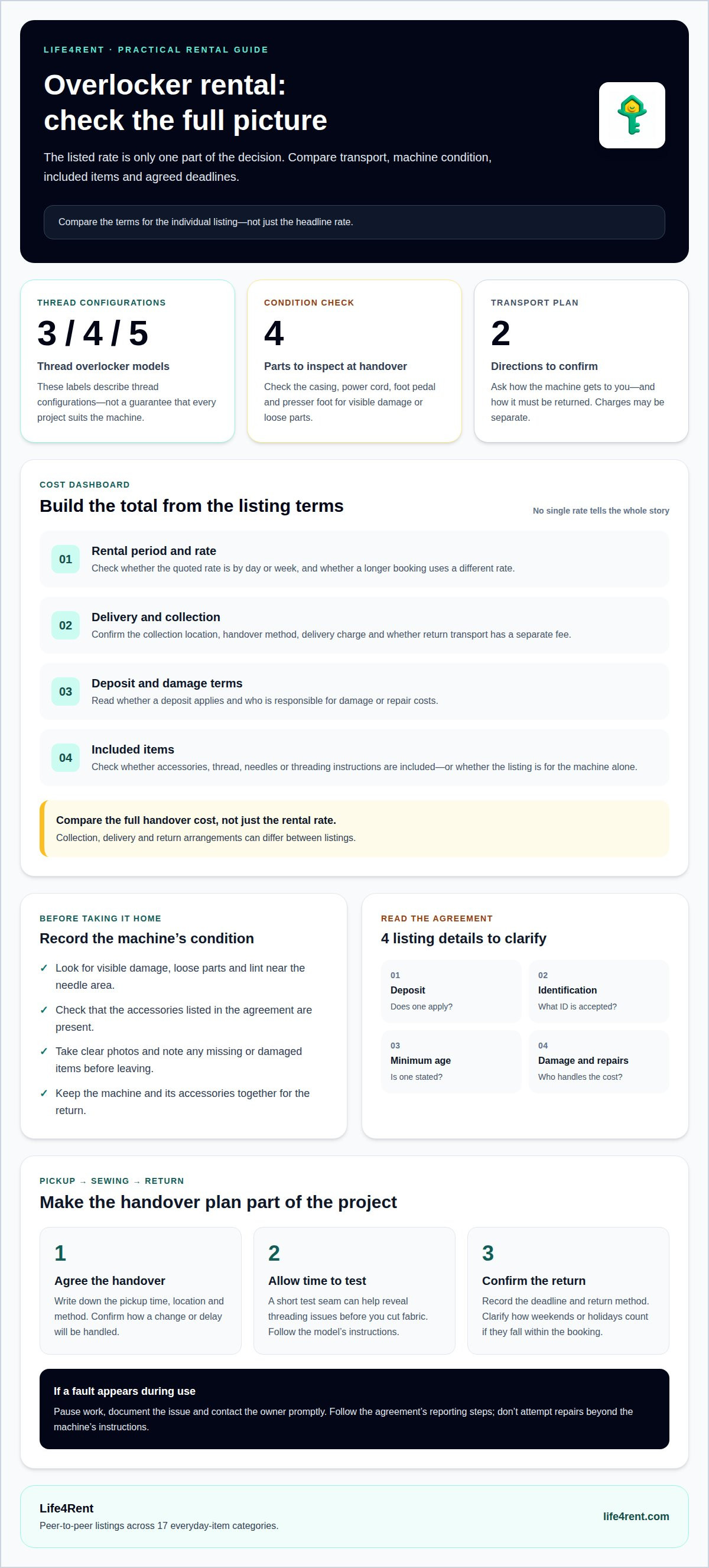
The rental rate is only part of the cost of an overlocker machine rental. Delivery or pickup fees, possible repair charges, and the agreed collection and return deadlines can also affect whether a rental suits your project.
Compare more than the headline rate. The total depends on the individual listing and its terms, so check the rental period, handover arrangements, included items, and how damage is handled before you book.
This guide explains how to assess the rate alongside delivery and pickup costs, what repair terms to look for, and how to avoid confusion over pickup and return times. You’ll also see how Life4Rent’s peer-to-peer marketplace can help people find or list everyday items for rent, including home equipment when available through its listings. That gives you a practical way to weigh the rental against the time and convenience it offers for your sewing plans.
Delivery and pickup fees
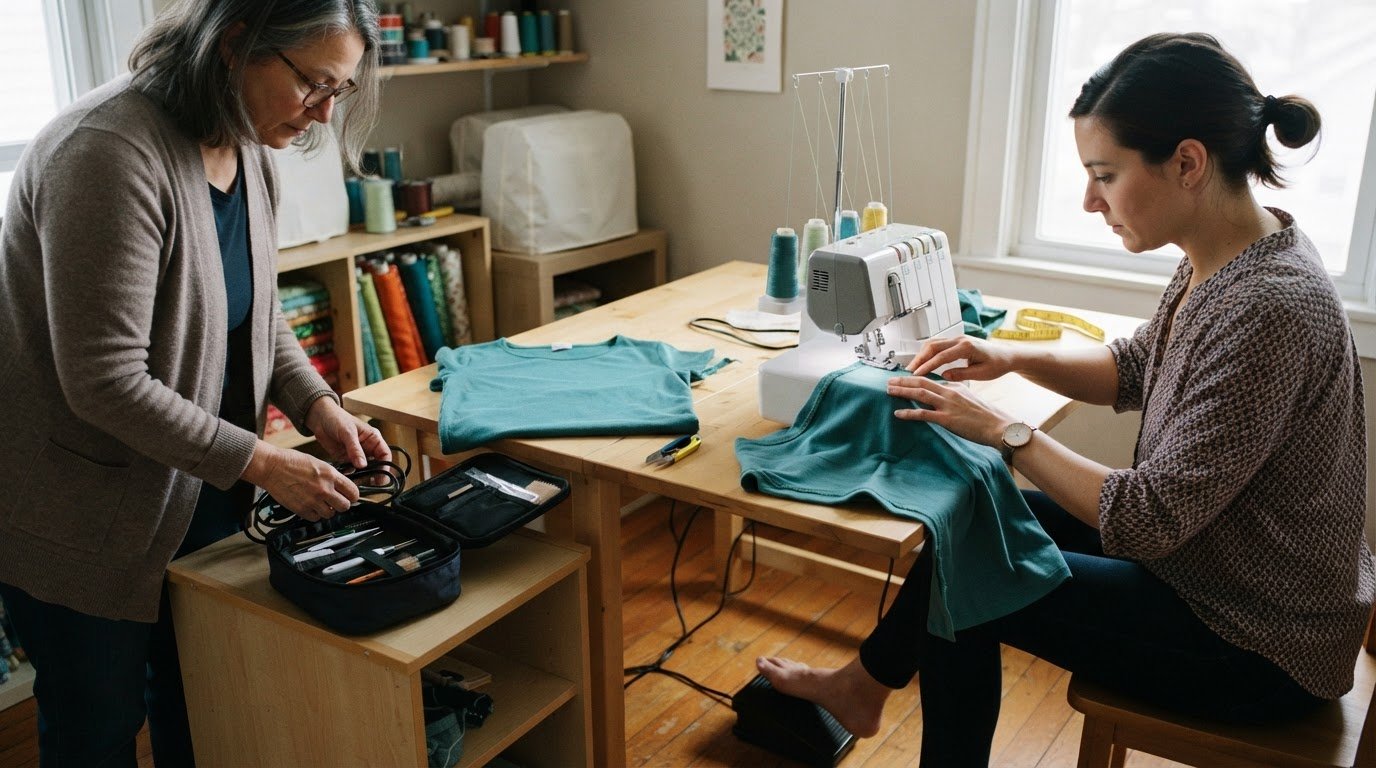
Delivery can change the total cost of an overlocker machine rental. A listing may offer collection, delivery, or both. Read the handover details before choosing a machine. Note whether delivery and return are priced separately. A single delivery charge may not cover collection. The listing or rental agreement should explain which arrangement applies.
Distance and transport usually shape the delivery arrangement. For example, a renter living nearby might collect the machine, while someone farther away may need delivery. These options can have different costs. Don’t assume delivery includes return transport. Confirm the return method and any associated fee before agreeing. Then compare the full handover cost, not just the rental rate.
Before booking, note the machine’s collection location, handover method, and return plan. Check whether the handover is at a specified address or an agreed meeting point. If a time window is involved, make sure it works with your schedule. Clear details help both people plan and avoid a missed handover disrupting a short sewing project.
For example, if you’re arranging to collect an overlocker, confirm who provides the machine and its accessories. At pickup, note the machine’s condition and included parts, and keep them together for the return. A written record of the agreed method and terms can prevent confusion later. Don’t treat an informal message as a complete agreement if key details remain unclear.
No specialist training is generally needed to use an overlocker, but basic sewing-machine familiarity helps. Follow the model’s instructions, especially for threading and adjustments. If you’re new to sergers, ask for a brief demonstration during handover. Before confirming the rental, compare collection and delivery options alongside the rental period. That gives you a clearer view of the total cost and practical effort.
Home serger rental rates
A home serger’s rental rate depends on the period and the machine offered. Check the quoted unit, such as a day or week, and whether a longer booking uses a different rate. See whether the listing includes accessories or only the machine. Listings for the same rental length give you a clearer view of the cost.
Deposit, ID, age, and liability terms come from each listing’s rental agreement. The agreement explains whether a deposit applies, what identification is accepted, and who pays for damage. Read those terms before accepting a booking. Don’t assume one renter’s requirements apply to another machine. Note any stated minimum age and the process for reporting a fault.
To find a serger nearby, look for local listings and collection locations. A nearby pickup may avoid transport arrangements, though travel still takes time. Fabric stores, maker spaces, and libraries may also offer access to machines, with terms that vary by venue. Check whether the machine can leave the premises, since on-site use won’t suit a project that needs sewing at home.
Included items vary by listing. One may include thread or needles; another may provide the machine alone. Check for threading instructions, accessories, and handover guidance in the listing. Clarify any missing items before booking so you can prepare supplies. If you’re new to an overlocker, basic sewing-machine experience helps. Follow the model’s instructions for threading and adjustments.
For home use, confirm that the rental terms allow the machine to leave the pickup location. Then compare the full period, included items, deposit, and transport charges. A short project may suit a shorter booking; several garments may need more time. Choose the overlocker machine rental whose terms fit your project, rather than relying on the lowest headline rate.
Machine condition and repair charges
Inspect the machine before sewing and record any existing damage. Clear notes help distinguish prior wear from problems that arise during the rental.
Condition and Accessories Checks
At handover, check the casing, power cord, foot pedal, and presser foot. Look for visible damage, loose parts, or lint around the needle area. Confirm that the accessories listed in the agreement are present, and take clear photos of the machine and included items. Record any missing pedal or accessory before taking the overlocker home.
Overlockers may be described as 3-thread, 4-thread, or 5-thread models. Those labels indicate thread configurations, not a guarantee that every project suits that machine. Choose based on the seam or finish you need. Before booking, check the listing’s model details and whether its included accessories match the stated configuration.
Repair Charges and Return Terms
Responsibility for repair costs depends on the rental agreement and the cause of the problem. Read how to report damage and who is responsible for repairs. If the machine stops stitching, pause work and contact the owner promptly. Don’t attempt repairs or adjustments beyond the machine’s instructions. A record of the issue and when it began can clarify what happened.
Read the return terms alongside the damage and repair clauses. Note the deadline, return method, and required condition. For example, remove fabric scraps and return the accessories with the machine. Keep handover messages and condition photos until the rental ends. If a fault appears during use, document it before returning the overlocker and follow the agreement’s reporting steps.
Machine pickup and return deadlines
Set pickup and return dates before planning your sewing sessions. Record the agreed collection time, location, and return deadline, then add both dates to your calendar. If a booking crosses a weekend or holiday, clarify how those days count. This helps prevent different assumptions about the rental period.
Allow time between collection and your first project. A short test seam can help you spot threading issues before cutting fabric. If pickup runs late, your planned sewing time may shrink. Agree in advance on how to handle a change to the handover time, and keep the details in writing.
Book ahead if you have a fixed sewing date. That gives you time to arrange handover and prepare materials. Bring your project fabric, suitable thread, and any pattern pieces you need. Don’t assume thread or other supplies come with the machine. Check the listing’s included items and terms before pickup.
At collection, confirm the return deadline and location again. A machine collected on Friday, for example, may have a different agreed return time from one collected midweek. Follow the specific booking terms rather than assuming a standard rental period. If travel or sewing takes longer than expected, contact the owner before the deadline to discuss the agreed options.
Before returning the overlocker, gather its accessories and pack them carefully. Remove fabric scraps, then compare the machine and included items with your pickup notes. Allow enough time for the agreed handover. A last-minute return can make it harder to resolve a missing accessory or report a change in condition.
For a planned project, browse rental listings and agree on clear pickup and return times before booking. A written schedule makes the rental period easier to plan around.
Life4Rent
Life4Rent is a rental marketplace where people list and rent everyday items across 17 categories. These include tools, electronics, outdoor and sports gear, homes, and baby items. For a project that needs equipment you don’t own, the marketplace provides a place to explore listings across everyday-item categories. Each listing has its own terms, so review the details before deciding whether it suits your needs.
Start by defining what you need to borrow and for how long. Then use listing details to understand what an item is, how its owner arranges the rental, and which terms apply. Compare those details with your plans, rather than relying on a brief description alone. That helps you decide whether renting through a peer-to-peer marketplace makes sense for your task.
Clear expectations matter in peer-to-peer rentals. Before booking, understand the rental period, handover arrangement, item condition, and return deadline. These details help you judge whether a listing fits your schedule and needs. If you’re listing an everyday item yourself, describe its condition and terms plainly so prospective renters can assess it accurately.
Life4Rent can be useful when you’re considering renting an everyday item for a specific task, or listing something you own for others to rent. Its categories cover a range of practical goods, from tools and electronics to outdoor and sports gear. The marketplace also gives item owners a way to make underused belongings available to renters. If you have a question about Life4Rent, contact the company.
Plan your next sewing project
A rental works best when the machine suits the job, not just the budget. Think about the seams you want to finish, the fabrics involved, and how much time you’ll need to practise. That gives you a clearer basis for choosing an overlocker machine rental and deciding whether borrowing suits this project.
If you’re still weighing your options, keep the next step simple. Consider whether you need equipment for a one-off task or have an everyday item you could list for someone else to rent. Life4Rent brings renters and item owners together through its peer-to-peer marketplace, making rental another practical option to consider.
A clear project plan is a good place to start. Life4Rent connects renters with item owners through its marketplace.
Frequently Asked Questions
How much does it cost to rent an overlocker by the hour, day, or week?
There’s no single hourly, daily, or weekly price: each listing sets its own rate. Check which time unit the quoted amount covers, then calculate the cost for the period you expect to use it. An hourly rate, for example, may not represent a full day’s cost. Also check for a minimum booking period before estimating your total.
What are the deposit, ID, age, and liability rules for overlocker rentals?
These rules vary by listing. Check the rental agreement for whether a deposit applies, accepted identification, any minimum age, and who pays for damage.
Life4Rent
Rent it. Earn from it. Own less, access more.
Browse peer-to-peer rentals near you, or list what you own and start earning — all protected by Life4Rent Protect.
About the author
London, United Kingdom
Fred covers rental technology, app features, and platform mechanics for the Life4Rent Renting Academy. With a background in fintech journalism, he specialises in breaking down how digital rental platforms work — from payment protection and identity verification to smart pricing and booking management.