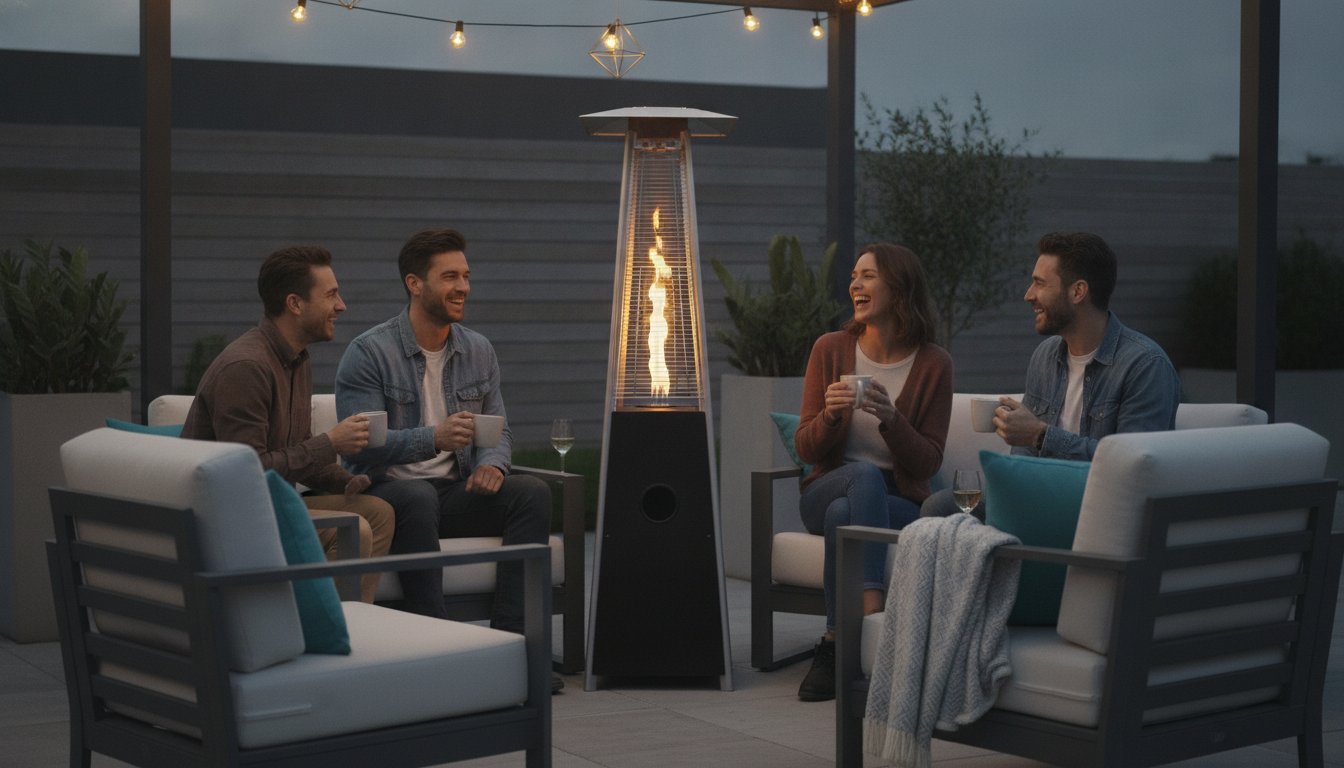
Outdoor Patio Heater Rental: A Practical Guide for 2026
June 27, 2026
Published by Life4Rent · Operated by Brohf Software OÜ
What if your terrace could maintain a sophisticated ambiance long after the summer heat fades? Most hosts want to keep the party outside, but they don't want to deal with the high cost or the storage headache of a bulky propane unit. An outdoor patio heater rental is a practical way to get that professional warmth without the permanent commitment of a heavy purchase.
It's common to feel unsure about whether a propane or electric model fits your specific layout. You want a setup that's safe for your guests and easy on your wallet. This guide explains how to pick a unit with the right BTU capacity for your space. You'll also learn to follow essential safety rules like the three-foot clearance requirement and find a local owner who can lend you their gear for a fraction of the retail price.
You'll understand the difference between various fuel types and how to handle the pickup and return process on a platform like Life4Rent. The details below cover why a 46,000 BTU heater is usually enough to warm an area up to 18 feet in diameter. It's about getting the warmth you need exactly when you need it.
Practical Benefits of Outdoor Patio Heater Rental for Homeowners
An outdoor patio heater rental is a smart choice if you value your time and garage space. Most homeowners find that they only need that extra warmth for a handful of weekend gatherings in late autumn or early spring. A high-quality Patio heater usually sits idle for 300 days a year if you choose to purchase one outright.
To better understand the various models and their specific features, watch this buyers guide:
Space and Storage Considerations
Patio heaters are notoriously bulky and difficult to move once they're assembled. Most freestanding models stand over seven feet tall and require a wide, weighted base to stay stable in the wind. This winter gear occupies prime storage real estate for eight months a year. Your rental unit goes back to the owner as soon as your party is over, so you don't have to worry about where to tuck it away.
Cost Savings for Occasional Use
High-quality 50,000 BTU heaters represent a large one-time investment that many families can't justify for just a few nights of use. Rental fees are a fraction of ownership costs, especially when you don't have to pay for long-term maintenance or specialized covers. Local rentals also eliminate the high shipping fees you'd pay for a heavy new unit. You'll keep your budget in check while still providing a comfortable environment for your guests.
Metal components frequently develop rust when stored in damp environments like sheds or basements. Spiders often build webs in the gas burners during the summer, which makes the unit difficult to light when you finally need it. You'll get a machine that's ready to work when you choose an outdoor patio heater rental. It's a sensible way to enjoy the evening without the burden of maintaining a heavy machine year-round.
Different Types of Patio Heaters You Can Find for Rent
You'll find that an outdoor patio heater rental offers more variety than just the standard metal poles seen at local pubs. Different spaces require specific solutions to stay comfortable when the temperature drops. You should understand the various types of patio heaters to avoid renting a unit that's either too weak for your garden or too dangerous for your balcony.
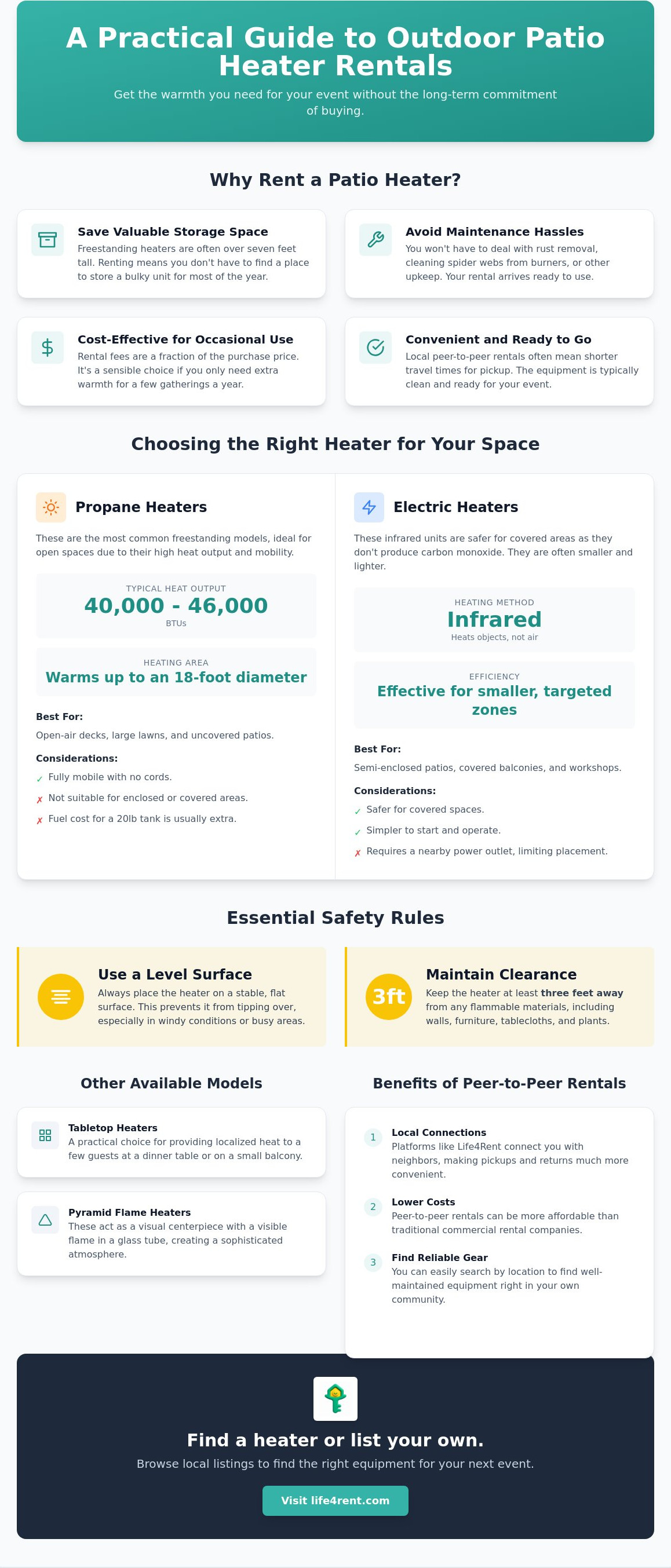
Propane dome heaters are the most common units you'll encounter on peer-to-peer platforms. These freestanding machines typically push out between 40,000 and 46,000 BTUs. This power level is enough to warm a circle about 18 feet wide, making them ideal for open-air decks or large lawns. They're completely mobile since the fuel source is tucked into the base, so you can move them wherever the crowd gathers.
Electric infrared heaters serve a different purpose, especially for those with semi-enclosed patios. Since they don't produce carbon monoxide, they're safer for covered areas where gas combustion is restricted. These units are often smaller and lighter, though they do require a reliable power outlet and a sturdy extension cord to operate safely.
Tabletop models are a practical choice for intimate dinners or small balconies where floor space is a luxury. They sit directly on your table and provide localized heat for a few guests. If you want something that looks more impressive, pyramid flame heaters use a glass tube to showcase a visible fire. They provide a steady heat source while acting as a visual centerpiece for evening events.
Propane vs. Electric: Which Fits Your Space?
Propane units give you total mobility because they don't rely on wires. A standard 20lb tank usually lasts between 4 and 8 hours depending on how high you turn the dial. You'll need to account for the cost of the fuel, which is often a separate charge from the rental itself. Electric models are simpler to start but require a nearby outlet, which can limit where you place your furniture.
Specialty Models for Specific Events
Pyramid heaters are often chosen for formal events because the dancing flame creates a sophisticated atmosphere. Tabletop units work best when you only need to keep a small group comfortable during a meal. High-output commercial units are better suited for large garden parties where you need to cover a wide area with consistent warmth. You can browse these various styles on Life4Rent to see what your neighbors have available for your next gathering.
A Comparison of Commercial Rental Companies and Peer-to-Peer Platforms
You'll find two main paths when you start looking for an outdoor patio heater rental. Most people think of large corporate rental hubs first because they have rows of identical, standardized machines. These firms offer a predictable experience, but they often come with a heavy price tag and rigid rules that don't always fit a casual backyard gathering or a last-minute dinner party.
Peer-to-peer marketplaces offer a more practical alternative by connecting you with people in your own zip code who have idle equipment. Instead of driving across town to a warehouse, you might find a high-quality heater just two streets away. This model of neiyborly sharing keeps money within your community and makes the logistics of transport much simpler for a one-night event. It's a sensible way to access premium gear without the corporate overhead.
Pricing and Availability Differences
Corporate rental contracts are notorious for small print and unexpected add-ons. You might see a low daily rate advertised, but the final bill often includes mandatory damage waivers, environmental fees, or steep refueling charges if the propane tank isn't returned full. P2P listings tend to be more transparent, showing the total daily price upfront. Since neighbor-owned items are already located in residential areas, they're often available on shorter notice during the busy autumn weeks when commercial companies are fully booked by large event planners.
Trust and Reliability in the Sharing Economy
You might worry about the condition of a neighbor's equipment compared to a commercial fleet. Platforms like Life4Rent use a robust review system to help you choose owners who maintain their gear to a high standard. Insurance and protection plans are usually built into the service, which gives you peace of mind if a minor accident happens during your event. Direct communication with the owner also lets you ask specific questions about the unit's height or heat radius before you commit to the outdoor patio heater rental.
Local owners often provide much more flexible pickup and return windows than a business with fixed office hours. A corporate warehouse might close at 5:00 PM on a Friday, but a neighbor is often happy to let you grab the heater on your way home from work. This level of personal service makes the entire process feel less like a transaction and more like a helpful exchange. You get the warmth you need for your guests while avoiding the logistical hurdles of traditional rental chains.
How to Safely Set Up and Operate Your Rented Heater
Most accidents happen because people rush the setup process after they bring their outdoor patio heater rental home. You need a flat, level surface like a concrete patio or a stable deck to prevent the unit from tipping during your event. A slight lean can cause the safety tilt switch to cut the gas flow, which is a common frustration for many first-time users. You should check that your unit has a tilt switch, as regulations like the California Fire Code require this feature to prevent fires if the machine is knocked over.
You must maintain at least three feet of clearance from all combustible materials at all times. This safety zone includes patio umbrellas, wooden railings, and low-hanging eaves or branches. The heat radiating from the top dish is intense enough to melt plastic or scorch wood over several hours of use. If you're hosting a larger group of 50 or more people, you should keep the heaters at least five feet away from any exits to comply with standard safety recommendations.
You should always check the propane connections before you strike the first match. A simple mixture of dish soap and water sprayed onto the hose fittings will reveal bubbles if gas is escaping. If you see any bubbles, you must tighten the connection and test it again before you light the pilot. You should never use a propane-powered unit inside a tent, garage, or enclosed porch because these machines release carbon monoxide, which can be fatal in confined spaces.
Propane Tank Handling and Runtime
A standard 20lb propane tank typically provides between 4 and 8 hours of heat depending on your chosen setting. You should open the tank valve very slowly to prevent the internal safety check valve from triggering and restricting the gas flow. Spare tanks must be stored upright in a well-ventilated outdoor area away from any heat sources. You can easily find a neighbor with a ready-to-use unit by browsing the listings on Life4Rent.
Transport and Assembly Tips
Most full-sized heaters require a vehicle with at least 89 inches of horizontal space if you plan to transport them in one piece. You can make the unit much easier to move by removing the top reflector dish, which is usually held on by three simple wing nuts. This also prevents the thin metal dish from getting bent or dented during the drive. You should ask the owner if the unit comes pre-assembled or if it's broken down into sections, as this will determine the type of vehicle you need for pickup.
Find the Right Heater or List Your Own on Life4Rent
You can find a local outdoor patio heater rental by using the location filters on the Life4Rent platform. This allows you to find equipment within a few miles of your home, which makes the pickup process much easier. It's a practical way to manage your event without the high costs of commercial delivery. You'll find that the peer-to-peer model offers a level of convenience that traditional warehouses simply can't match.
Check out the peer to peer equipment rental listings to see the variety of models available in your area. You'll find everything from basic propane units to more stylish pyramid models that we discussed earlier. The secure platform manages all the payment details and scheduling, so you can focus on your guests instead of logistics.
How to List Your Heater for Extra Cash
You can turn your idle gear into a source of income by listing it on the marketplace when you aren't using it. Take clear photos of the unit in a clean, outdoor setting so potential renters can see its condition. You should include the BTU rating and specific propane requirements in your description to help users decide if it fits their space. A well-written listing helps build trust with your neighbors and ensures the unit is used safely.
Set a competitive daily rate by looking at what other owners in your neighborhood are charging. You don't need to overcomplicate the pricing; just be honest about the unit's age and features. Passive income from a heater that would otherwise be gathering dust in your garage is a great way to offset your own outdoor heating costs. Most owners find that a few weekend rentals a year can quickly pay back the original cost of the machine.
Book Your First Rental
Check the availability calendar once you've found a heater that matches your needs. Message the owner directly to confirm the pickup details and ask if the propane tank is included or if you need to bring your own. This direct communication helps avoid any confusion on the day of your event. You can also review our tool on rent guide for more advice on how to make the most of the sharing economy.
The entire process is built on mutual respect and clear expectations. You get the warmth you need for a specific night, and a neighbor gets to keep their equipment in active use. It's a sensible solution that avoids the waste of individual ownership for seasonal items. Your outdoor patio heater rental is just a few clicks away, allowing you to enjoy your terrace deep into the colder months.
Extend Your Outdoor Season with Local Rentals
An outdoor patio heater rental is the most practical way to keep your terrace warm without cluttering your garage for most of the year. You now understand how to choose between propane and electric models while keeping your guests safe with a three-foot clearance zone. Local peer-to-peer rentals offer a more flexible and affordable path than big corporate chains.
Life4Rent makes this process straightforward with a secure peer-to-peer payment system and a community-based approach. You can browse through 17 different categories of items to find exactly what your home needs. It's a sensible way to access high-quality equipment while supporting people in your own neighborhood.
Find an outdoor patio heater rental near you on Life4Rent and start planning your next evening gathering. You'll enjoy the extra warmth and the peace of mind that comes with a simple, local arrangement. It's a great way to make the most of your outdoor space all year round.
Frequently Asked Questions
How much does it cost to rent an outdoor patio heater?
Prices for an outdoor patio heater rental vary based on the model and location. Peer-to-peer listings are often lower than commercial rates because there's less overhead. You should check individual listings on Life4Rent to see the current daily rates in your neighborhood. Most owners list the price per day clearly, and you don't usually face the hidden fees common with large corporate firms.
How long does a 20lb propane tank last in a patio heater?
A standard 20lb propane tank typically provides between 5 and 8 hours of continuous heat. This duration depends on your chosen heat setting. If you keep the dial on high, you'll drain the fuel much faster. It's a good idea to have a spare tank on hand if you plan a longer event to avoid a cold terrace halfway through the night.
Can I use a patio heater under a covered porch or tent?
You should never use a propane patio heater inside a tent or an enclosed porch due to the risk of carbon monoxide poisoning. These units require plenty of fresh air to operate safely. They must stay at least three feet away from any combustible materials like fabric or wood. If you have a semi-enclosed space, an electric infrared heater is a much safer alternative since it doesn't produce exhaust.
Do I need to provide my own propane tank when renting?
It depends on the specific listing. You should always message the owner to confirm the tank status before you book. Some people include a full tank with the outdoor patio heater rental, while others expect you to bring your own or pay an additional charge for the fuel. You'll find that peer-to-peer owners are usually quite flexible if you ask them about it in advance.
How much space does a patio heater actually warm up?
A standard 46,000 BTU heater can effectively warm an area up to 18 feet in diameter. This range provides a comfortable circle for about 6 to 10 guests to stand or sit around. You might need multiple units if your event space is larger or if the weather is particularly windy. Wind can blow the heat away from the target area very quickly.
Are electric patio heaters better than propane models?
Electric models are often better for smaller, covered spaces like balconies because they don't emit fumes. They're also easier to start with a simple switch and don't require heavy tank refills. However, propane heaters are generally more powerful and offer total mobility. They don't need a power cord, which makes them more practical for open gardens and larger crowds.
What should I do if the heater won’t light?
You should first check that the propane tank valve is open and that there's enough fuel in the tank. If it still won't light, ensure the tilt switch hasn't been triggered by an uneven surface. Sometimes you need to hold the control knob in for 30 to 60 seconds to purge air from the lines before the pilot light will stay lit.
Is it difficult to transport a patio heater in a standard car?
Most full-sized heaters won't fit in a small sedan unless you disassemble them into several pieces. You'll typically need a vehicle with at least 89 inches of horizontal space, like an SUV or a van, to move a fully assembled unit. It's often easier to remove the top reflector dish and the main pole to make the unit manageable for a standard trunk or backseat.
Related guides on Life4Rent
Ready to rent instead of buy? See all outdoor gear available to rent on Life4Rent →
Life4Rent
Rent it. Earn from it. Own less, access more.
Browse peer-to-peer rentals near you, or list what you own and start earning — all protected by Life4Rent Protect.
About the author
Tallinn, Estonia
Philip leads editorial at the Life4Rent Renting Academy, overseeing guides on peer-to-peer rental, platform safety, and consumer finance across 25 markets. He has spent over a decade covering the sharing economy and digital marketplaces, helping renters and owners navigate the shift from ownership to access.