How to Start a Party Rental Business and Estimate Startup Costs
November 14, 2026
Published by Life4Rent · Operated by Brohf Software OÜ
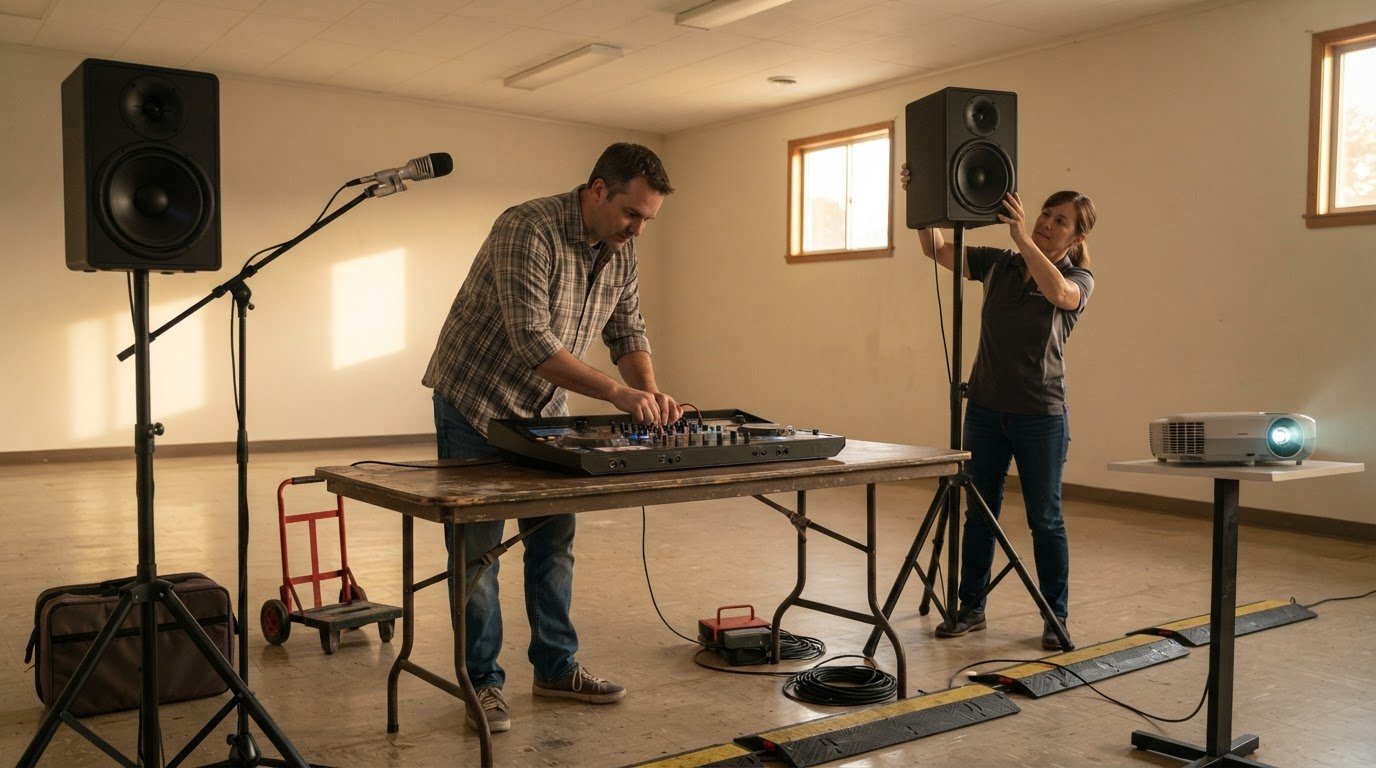
Inventory is only one part of a party rental business. To work out how to start a party rental business, plan for more than tables, chairs, or inflatables: storage, delivery, cleaning, repairs, insurance, and local permits can all affect your launch.
It’s natural to focus first on the items customers will rent. A smaller, carefully chosen inventory can be easier to store and maintain, while a wider range may attract more customers but also adds operational demands. Your location, delivery setup, and target events should guide your choices.
This guide shows how to estimate startup costs by identifying the expenses your plan needs to cover and choosing inventory that suits your space and customers. It also explains business registration, insurance, safety practices, and ways to test demand before expanding. Use these steps to build a realistic launch plan, not just a shopping list.
What is Required to Run a Party Rental Business?
A practical plan covers customer demand, equipment care, pricing, and marketing. These steps turn the question of how to start a party rental business into manageable decisions.
-
Research the Market and Plan the Business
Identify likely customers, such as wedding planners, schools, and families hosting backyard events. Compare local offers for tables and bounce houses, then note gaps you could fill. Account for storage, delivery, cleaning, insurance, and marketing. A clear niche helps you choose inventory that matches customer demand and your capacity.
Build referrals by sharing an inventory sheet with venues, caterers, and event planners. Follow up after each event.
-
Set Prices for Rentals and Services
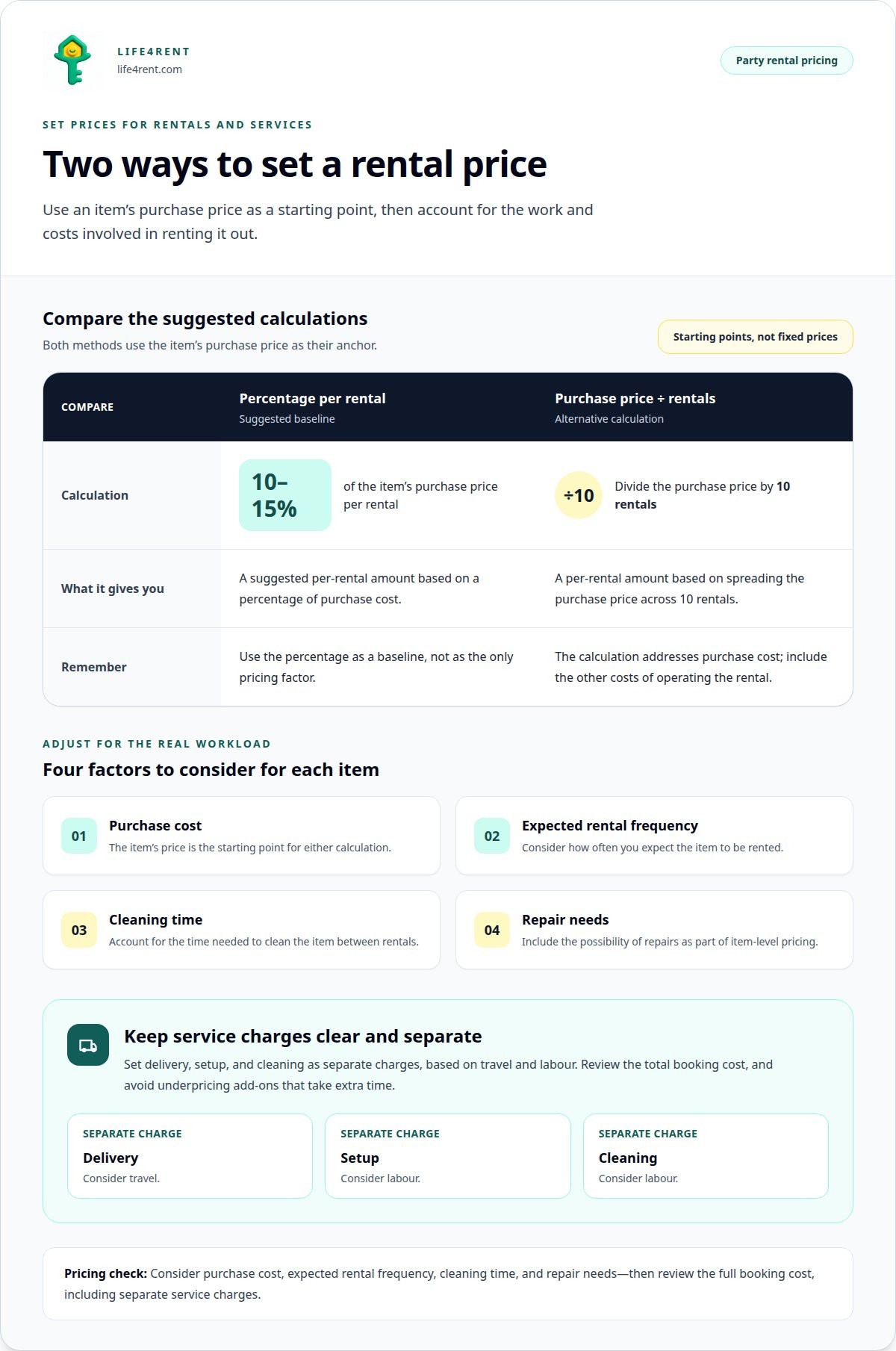
Price each item using its purchase cost, expected rental frequency, cleaning time, and repair needs. One suggested baseline is 10-15% of an item’s purchase price per rental; another method divides the purchase price by 10 rentals. Set delivery, setup, and cleaning as clear separate charges, based on travel and labour.
Review total booking costs and avoid underpricing time-consuming add-ons.
-
Manage Equipment Storage and Care
Choose storage that keeps inventory clean and dry, with enough room to load it efficiently. Group tables, chairs, linens, and bounce houses by type, and label containers so you can check contents quickly. Before accepting deliveries, plan vehicle capacity and loading order to avoid placing fragile items under heavy equipment.
When items return, inspect each one, clean it according to its material, record any damage, and schedule repairs before the next rental.
-
Set Contracts, Deposits, and Policies
Use written contracts that specify the inventory, event dates, delivery terms, payment conditions, cancellation rules, and responsibility for damage. Explain deposit timing and refund terms clearly. Photograph equipment before dispatch and after return, so any discussion about damage can refer to its documented condition.
For anyone deciding how to start a party rental business, clear written policies can reduce booking misunderstandings. Profit margins vary; party rental businesses typically report 10% to 40%.
Business licensing, insurance, and safety standards
Eligible rentals can offer optional protection; it is not insurance and reimbursement is discretionary. Requirements depend on your location and the equipment you provide.
-
Register the Business and Arrange Insurance
Start by researching state and local registration, business license, and permit requirements. A tent setup in a park or another public place may need a temporary permit, so account for the venue when planning.
Choose a business structure with care: a sole proprietorship may expose personal assets if the business is sued. Arrange insurance suited to your operations. One estimate puts annual liability, commercial vehicle, and property insurance at $300-1,200 per year; compare coverage and exclusions, not just premiums.
-
Review Insurance Coverage and Safety Standards
Consider general liability insurance for claims or lawsuits related to your operations. Compare coverage combinations and match each policy to your actual risks, including customer injuries, vehicle deliveries, and damage to stored equipment.
Create a written safety routine for every booking. Inspect chairs, tables, and other equipment before dispatch and after return, and remove damaged items from service. For inflatables, follow the manufacturer’s setup and operating instructions, secure the unit as directed, and explain safe use to the customer. Log inspections and maintenance. Keep payment and permit records with each booking so documents and safety checks are easy to retrieve.
Estimating startup costs and selecting core inventory
- Build a written plan around your service area, likely customers, inventory, and delivery setup. The U.S. Small Business Administration is a resource for creating a business plan. Estimate equipment, storage, cleaning supplies, insurance, permits, transport, and booking software separately. This makes the budget easier to adjust when an early estimate changes.
- Set a launch budget before buying rental items. Treat cost estimates as planning ranges, not a guaranteed total. Separate one-time purchases from recurring expenses.
- Choose inventory that suits your customers and storage space. Start with items that work for several event types.
- Compare purchase options against your cash flow before using savings or borrowing to fund inventory. Include cleaning supplies, repairs, delivery, and replacement costs alongside purchase prices. Reserve funds for operating expenses instead of spending the entire budget on equipment. Check your storage capacity before ordering bulky items.
- Track inquiries, bookings, cancellations, and how often each item is rented. Review the records regularly: repeated requests for a particular chair style may justify adding more, while idle stock ties up money and space. Expand based on booking patterns, not assumptions about what customers might want.
Party rental business startup
- Choose a business structure and keep business finances separate from personal spending. After forming an entity, apply to the IRS for an Employer Identification Number, then use it to open a business bank account. This gives you a dedicated way to track rental income and startup purchases.
- Set a delivery area your vehicle and schedule can support. Map likely event locations and account for travel time before accepting bookings farther afield.
- Prepare the basics customers need to find and book your business: available equipment, a website, and a Google Business Profile. A startup may receive its first booking 1-3 weeks after these are in place. Make sure the listed inventory and booking details match what you can provide.
- Plan your workload alongside your startup schedule. Some party rental business founders work 60-70 hours per week during the first year. Include time for enquiries, loading, delivery, returns, and equipment care when deciding how much work you can take on.
- Review your setup after your first bookings. Note which inquiries become rentals and where delays occur, then adjust your delivery area or workflow. Expanding before your current process is manageable is a common mistake. For anyone learning how to start a party rental business, a controlled launch can reveal operational issues before you take on more commitments.
Choosing an LLC may help separate business and personal assets, though that protection has limits. One party rental business owner says he started a small rental company at age 22.
Life4Rent
Life4Rent is a rental marketplace where users can list and rent everyday items across 17 categories, including tools, electronics, outdoor and sports items, homes, and baby items. It can be relevant if you want to explore peer-to-peer rentals alongside planning a party rental business.
For example, someone planning an outdoor gathering may look for useful items to rent rather than buy for one occasion. Someone with suitable everyday items can list them for others to rent. The platform’s broad categories make it relevant to rental activity beyond a single event-focused inventory.
Keep the distinction clear: a marketplace listing is not the same as running a dedicated party rental operation. Your own business plan still needs to account for event demand, equipment care, delivery arrangements, insurance, and booking terms. A peer-to-peer marketplace may be a practical option for listing or renting everyday items, while your event business remains focused on the services and equipment it can reliably manage.
Consider whether a particular item fits your needs before listing or renting it. A clear description helps people understand what the item is and how it may suit their plans. For party rental business owners, the marketplace can sit alongside other rental channels, rather than replace decisions about inventory, storage, and customer service.
If you have a question about using the marketplace, contact Life4Rent.
Frequently Asked Questions
What equipment should a party rental business offer when starting out?
Start with versatile items for common gatherings, such as folding tables, chairs, linens, and a small selection of event add-ons. Choose equipment that works for more than one event type and fits your storage and transport setup. Before adding specialist items, such as a photo booth or inflatable, consider setup and cleaning needs, along with whether local customers are asking for them.
How much does it cost to start a party rental business in the United States?
A lean launch with a narrow product range has different needs from a company handling large event orders. List equipment, storage, delivery, insurance, permits, and operating costs separately. Then use local quotes and your planned inventory to create a budget that fits your setup.
How to write a business plan and choose a niche for a party rental company?
Build your plan around a specific customer and event type, such as backyard birthdays, weddings, or school gatherings. Describe the equipment those customers need, your delivery area, storage approach, and how customers will book. Compare local competitors’ public offers and identify a service gap you can handle. The U.S. Small Business Administration is a resource for business planning.
What licenses, permits, and insurance does a party rental business need?
Requirements depend on your location and activities, so identify the relevant state and local registration, license, and permit rules. A tent in a public park, for example, may require a temporary permit. Consider general liability insurance and coverage for vehicles and property, matching policy details to your deliveries, stored equipment, and customer events. Keep license and insurance records accessible with your business documents.
Where to buy party rental inventory and how to compare new versus used equipment?
You can source new inventory from equipment manufacturers or established event-supply sellers; used items may be available through resale listings or rental operators reducing stock. Compare condition as well as asking price. Inspect joints, fabric, frames, and moving parts, and ask about maintenance history where available. Check access to replacement parts and transport requirements before choosing used equipment for frequent bookings.
How to find customers and market a party rental business locally?
Build local visibility through relationships with event venues, caterers, photographers, and planners who can refer customers. Create a Google Business Profile with accurate service details, then post clear inventory photos and availability updates on social media. After each completed event, invite the customer to leave an honest review. Respond professionally to feedback and use recurring questions to improve your listings and booking information.
Related guides on Life4Rent
Ready to rent instead of buy? See all party equipment available to rent on Life4Rent →
Life4Rent
Rent it. Earn from it. Own less, access more.
Browse peer-to-peer rentals near you, or list what you own and start earning — all protected by Life4Rent Protect.
About the author
London, United Kingdom
Fred covers rental technology, app features, and platform mechanics for the Life4Rent Renting Academy. With a background in fintech journalism, he specialises in breaking down how digital rental platforms work — from payment protection and identity verification to smart pricing and booking management.