How to Rent a Sewing Machine That Fits Your Project
November 7, 2026
Published by Life4Rent · Operated by Brohf Software OÜ
The machine with the most features isn’t always the right one for your project. To rent a sewing machine for a project, match its stitch options and accessories to the fabric and finish you need, then choose controls you can use comfortably. A simple machine with pre-set options can suit a beginner better than a highly customizable model.
It’s easy to focus on the machine and overlook rental details that matter: what’s included, how long you can use it, and what happens if it stops working. A little planning helps you avoid paying for features you won’t use or arriving without an essential accessory.
You’ll learn how to define your project needs, choose a machine that suits your experience, and assess a rental listing before booking. The guide also covers practical checks for pickup, use, and return, so you can start with a machine that fits the work ahead.
Assessing project needs and skill level
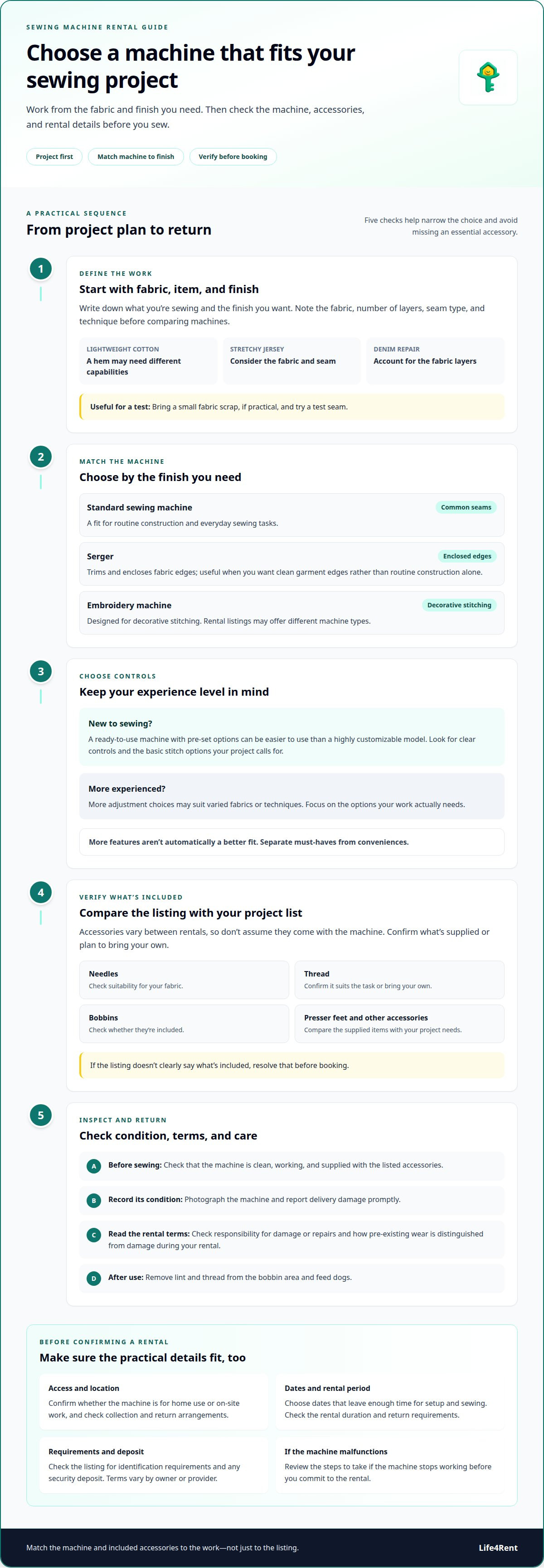
- Write down the fabric, finished item, and technique before choosing a machine. A hem on lightweight cotton needs different capabilities from joining stretchy jersey or repairing denim. Note the fabric layers, seam type, and finish you want. Bring a small fabric scrap for a test seam if practical. This list narrows your machine and accessory choices.
- Match the machine type to the finish: a standard sewing machine handles common seams, while a serger trims and encloses edges. Embroidery machines are designed for decorative stitching. Rental listings may include standard machines, sergers, or embroidery machines, depending on the listing. Choose a serger for clean garment edges, rather than routine construction alone.
- Choose controls that suit your experience. Beginners may find a pre-set machine, ready to use, easier than a highly customizable model. If you’re new to sewing, prioritize clear controls and the basic stitch options your project needs. Experienced sewists may prefer more adjustment choices when handling varied fabrics or techniques. Keep your current skills in mind.
- Check exactly what the rental includes before booking. Needles, thread, bobbins, presser feet, and other accessories can vary between listings, so don’t assume they come with the machine. Compare the included items with your project list. For example, confirm you have a suitable needle and thread for your fabric, or plan to bring your own.
- Inspect the machine before sewing. Check that it’s clean, working, and supplied with the listed accessories; photograph its condition and report delivery damage promptly. Review the rental terms for responsibility if damage or repairs arise, including how pre-existing wear is distinguished from damage during your rental. Remove lint and thread from the bobbin area and feed dogs after use.
Use your project requirements to compare rental options, not just as a checklist after choosing a machine. Separate must-haves from conveniences, then verify that the machine type and included accessories cover the essential tasks. If a listing is unclear about what’s included, resolve that before booking. This keeps your choice aligned with the project and reduces the chance that the machine won’t suit the work.
Booking and availability
To rent a sewing machine for a project, choose an option that fits your location and work setup. Confirm access, requirements, and dates before committing.
Find Local Rental Providers
- Search local libraries, makerspaces, fabric stores, and sewing studios for machine access. Compare the rental format, machine type, and booking process, not just distance. A sewing studio may offer hourly use, while another listing may let you take the machine home. Read reviews for practical details about pickup, instructions, and using the machine.
Confirm Rental Access Options
- Check whether the sewing machine is for home use or on-site work. Both formats are available, and the rental terms determine which applies. An on-site studio suits a project you can complete in its workspace; a take-home rental gives you room to work at home. Confirm collection and return arrangements, including where and when the machine changes hands.
Check Rental Requirements
- Read the rental terms for identification requirements, any security deposit, rental duration, and responsibility for damage or repairs. Requirements are set by the owner or provider, so check the listing rather than assuming every rental works alike. Note how any deposit is handled and the condition in which the machine must be returned. Keep the terms handy throughout the rental.
Arrange the Rental Booking
- If you plan to rent a sewing machine for a project, choose dates that leave enough time for setup and sewing. Check the calendar or booking process, then review pickup, return, included accessories, and the steps to take if the machine malfunctions. For fixed dates, make sure the booking is confirmed before planning your work. A peer-to-peer option is to browse a rental marketplace and assess each listing’s terms.
Where can I rent a sewing machine near me?
- Start with a location-based search for sewing machine rentals, then add your town or neighbourhood. Phrases such as “sewing machine rental near me” can surface nearby studios, libraries, makerspaces, and individual listings. Use a map or search tool to see which options are close enough for pickup or an on-site session.
- Look at libraries and makerspaces in your area, along with fabric stores and sewing studios. These places may offer machine access, workspace, or rental arrangements. Note whether you can take the machine home or must sew on-site. A library’s equipment programme, for example, may work differently from a studio booking.
- Compare travel time with how you plan to sew. An on-site sewing studio can suit a project you can finish during its available work sessions. A take-home rental may be more practical for fittings, several sewing sessions, or a large garment. Include the return trip when deciding whether a nearby option fits your schedule.
- Review each local listing for details that affect your trip and project. Check the machine type, included accessories, rental period, collection instructions, and return arrangements. A nearby standard machine may not suit a project that requires a serger, so match the listing to the finish you need before choosing by distance alone.
- Use customer reviews and previous renters’ advice to spot practical details. Look for comments about machine condition, clear instructions, and pickup coordination. Then compare suitable options by location, access format, machine type, and rental terms. A shortlist makes it easier to choose a local machine that fits both your sewing plan and transport.
Which libraries, makerspaces, fabric stores, and sewing studios offer sewing machine rentals?
- Search library listings for sewing machines, textile equipment, or community workspaces. A library may provide on-site access or equipment lending, so distinguish a machine you can take home from one you use there. Check the borrowing period and pickup details. A library workspace can suit a short task, while sewing at home requires take-home access.
- Look for makerspaces that list sewing equipment among their shared tools. Their setup may combine machine access with a communal work area, which suits projects that need space to lay out fabric. Check whether access requires membership, a booking slot, or a separate rental. Don’t assume shared equipment can leave the premises.
- Search fabric stores for machine hire, sewing workshops, or a workroom with rental access. A store may offer a place to sew alongside fabric supplies, but workshop attendance and machine rental are different arrangements. Read the listing carefully to see whether machine use is included, limited to a class, or available independently.
- Check sewing studios and sewing cafés for hourly machine use. These can be useful for a focused session, such as hemming trousers or finishing a small project. Compare the available time with each stage of your work, including setup and testing. An hourly studio session is not the same as taking a machine home.
- Compare the venue’s access format with the amount of sewing your project requires. Libraries, makerspaces, fabric stores, and studios can offer different arrangements, from shared workspaces to take-home rentals. Match the machine type and rental period to your task, then read reviews for comments on instructions, condition, and booking. This helps narrow local options without assuming every venue rents machines.
Look for libraries offering on-site access or equipment lending, makerspaces listing sewing machines among shared tools, fabric stores with machine hire or rental workrooms, and sewing studios or cafés offering hourly machine use. Availability and whether you can take a machine home vary by venue.
If you need a machine occasionally, consider sewing cafés or studios that rent machines by the hour. This can suit one-off projects when you don’t need regular access to a sewing machine.
Life4Rent: Life4Rent is a rental marketplace where users can list and rent daily items across 17 categories ranging from tools, electronics, outdoor/sports, homes, baby etc
Life4Rent is a peer-to-peer marketplace where people can list and rent everyday items. If you’re considering a sewing machine rental, it offers another place to explore alongside local studios, libraries, or makerspaces.
Start with your project needs, including the machine type, rental period, and whether you need to sew at home. Review the listing details and terms before deciding, since arrangements can differ between owners. Compare options based on how and where you plan to work.
For help with using Life4Rent, contact Life4Rent.
Make room for the project you want to sew
A rental can make sense when you need a machine for one defined project rather than regular sewing. Before booking, picture your first session: where you’ll set up, which pieces you’ll sew first, and how you’ll keep the fabric and instructions within reach. Planning your workspace helps you spend your time sewing instead of rearranging the room.
If you’re ready to rent a sewing machine for a project, choose an option that fits how and where you plan to work. Keep your project notes handy to make a considered choice and feel prepared when you begin.
For a peer-to-peer rental option, contact Life4Rent to discuss your rental. Then set up your workspace, take it one seam at a time, and enjoy seeing your idea take shape.
Frequently Asked Questions
Do I need to book ahead, take a class, or meet experience requirements to rent a sewing machine?
Book ahead if you need a particular machine or fixed work session, as studios and shared workspaces schedule access. A class isn’t always required, though a venue may link machine use to a workshop. Experience requirements also depend on the rental arrangement. If you’re new to sewing, a machine with pre-set options can make your first project easier to manage than one with many adjustments.
Life4Rent
Rent it. Earn from it. Own less, access more.
Browse peer-to-peer rentals near you, or list what you own and start earning — all protected by Life4Rent Protect.
About the author
Dublin, Ireland
Michael covers consumer rights, rental law, and EU platform regulation for the Life4Rent Renting Academy. He has reported on digital market policy and renter protections across Europe, and brings a clear, practical perspective to topics like deposit disputes, insurance, and the legal rights of renters and owners.