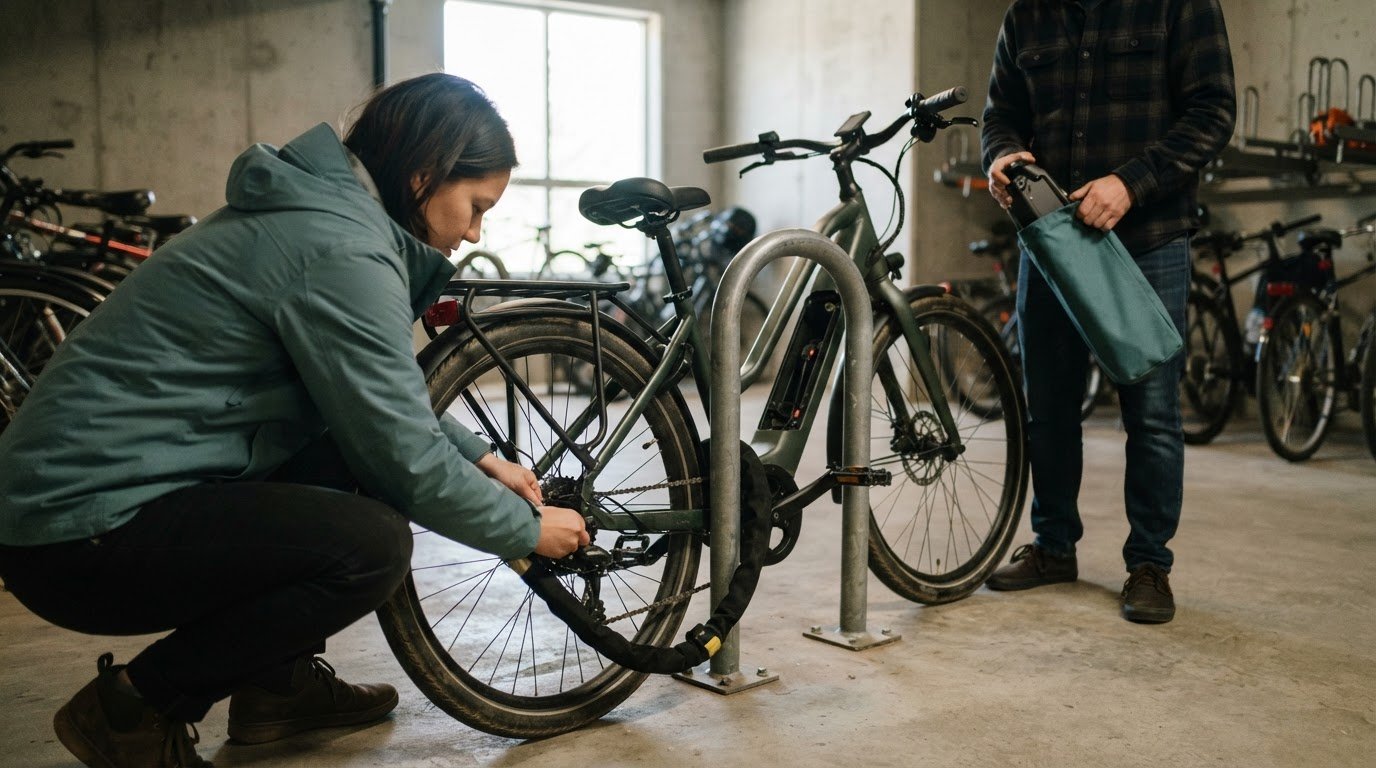
How to Prevent Theft on Rental Platforms and Handle Losses
November 28, 2026
Published by Life4Rent · Operated by Brohf Software OÜ
A rental platform’s protections may have limits, so renters and owners can still face financial responsibility if an item is stolen or damaged. A clear record can help prevent theft on rental platforms: document the item’s condition before handover, keep communication on the platform, and agree on how it should be stored and returned.
It’s understandable to expect a platform or insurance policy to cover a loss, but protections can be limited and policy details matter. A dated inventory, clear photos, and a written handover record can help establish what happened if an item goes missing. This guide covers practical ways to reduce theft risk, what to record before and during a rental, and how to respond with a police report, an insurance notification, or a platform claim.
How to Secure Rental Equipment Against Theft
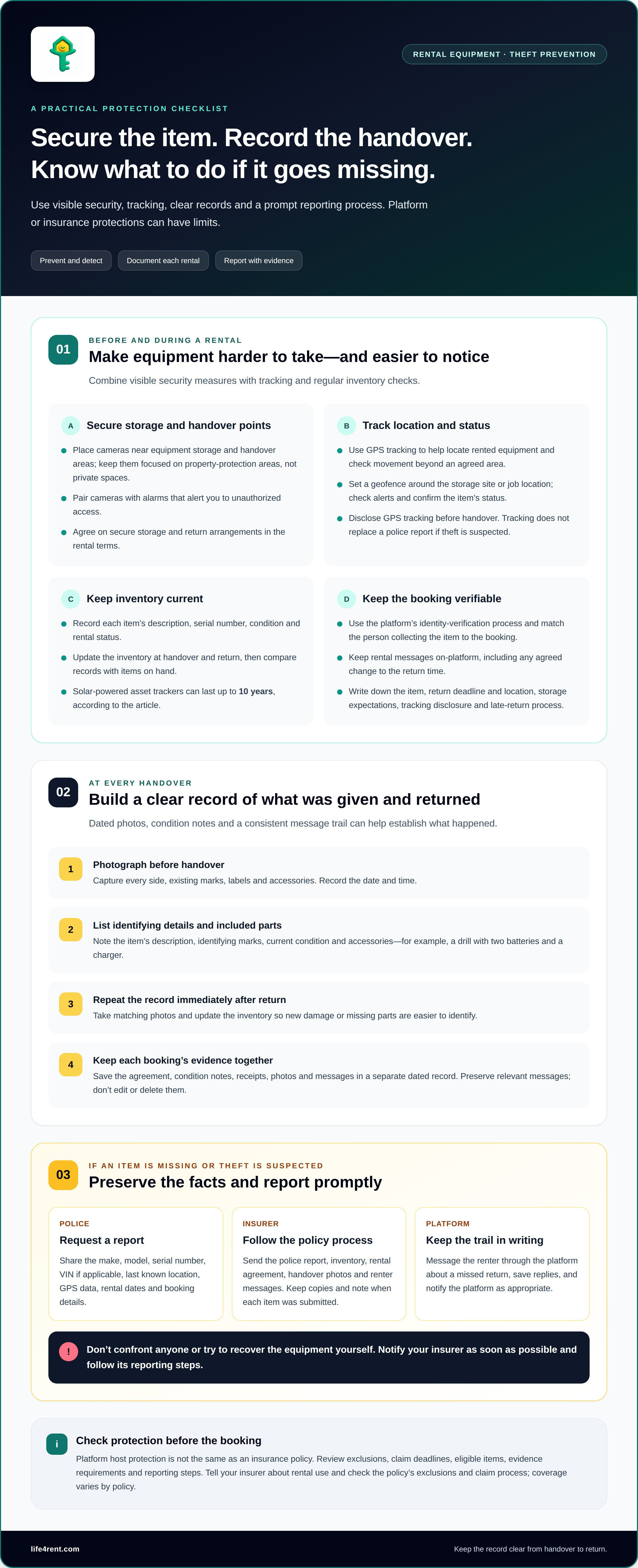
Place cameras near equipment storage and handover points, and pair them with alarms that alert you to unauthorized access. Visible cameras may deter opportunistic theft, while alarms prompt a timely check rather than leaving you to discover a missing tool later.
For owners asking how to prevent theft on rental platforms, GPS tracking can help locate rented equipment and show when it moves beyond an agreed area. Set a geofence around the storage site or job location, then respond to alerts by checking messages and confirming the item’s status. Tracking can also flag equipment that hasn’t returned by the agreed date, but it doesn’t replace a police report if theft is suspected.
Keep an inventory with each item’s description, serial number, condition, and rental status. Update it at handover and return, then audit the records against items on hand. If a drill is marked as returned but remains off-site, that discrepancy gives you a clear lead. Solar-powered asset trackers can last up to 10 years without battery-life concerns, making them useful for equipment that stays outdoors or is hard to access.
In the United States, privacy and renter-screening requirements can vary by state and situation. Disclose GPS tracking before handover, keep cameras focused on property-protection areas, and avoid recording private spaces.
Rental platforms can reduce fraud through identity checks. A practical way to prevent theft on rental platforms is to use the platform’s verification process, keep rental messages on-platform, and match the person collecting an item to the booking details.
Write rental terms that identify the item, set its return deadline and location, and explain secure storage, tracking disclosure, and how to report a late return or suspected theft. Clear terms give both sides a shared record if equipment isn’t returned.
Police Reports and Insurance Notifications
If you suspect equipment has been stolen, contact local police promptly and request a report. Provide the item’s make, model, serial number, VIN if applicable, last known location, and GPS data. Include the rental dates and booking details. Don’t confront anyone or try to recover the equipment yourself.
Notify your insurer as soon as possible and follow the reporting steps in your policy. Share the police report, inventory records, rental agreement, handover photos, and messages with the renter. Keep copies of each submission and note when you sent it. A clear timeline can help the insurer assess the claim.
The type of policy matters. Homeowners insurance is intended for an owner-occupied primary residence, not a rental property. Landlord policies may protect long-term rentals but often exclude short-term guests. Specialized short-term rental insurance may cover guest-related liability, theft, property damage, and income lost during downtime, but coverage varies by policy. Platform host-protection programs can also have limits and leave gaps.
Tell your insurer when you rent out a property, especially for short stays. If you haven’t disclosed the rental use, an insurer may deny a claim. Review the policy’s exclusions, reporting requirements, and claim process before a booking so you know which losses could leave you financially vulnerable.
The cost of theft protection varies across rental platforms. Fees and responsibility for a loss depend on the platform’s terms and applicable policy; a renter who causes theft can be financially liable. If an item isn’t returned, message the renter through the platform, document the missed return and any replies, then notify the platform, police, and insurer as appropriate. This evidence helps assess a claim against the agreement and policy.
Documenting Property and Guest Communications
Before each handover, photograph the item from every side and take close-ups of existing marks, labels, and accessories. Record the date and time, then take matching photos immediately after return. For a rented camera, show its lens, screen, battery, and case. Compare both sets to make new damage or missing parts easy to identify.
Keep booking messages in one place, preferably in the platform’s messaging system. Save the agreed collection time, return deadline, item description, and any changes. If a renter asks to extend the booking, reply in writing and record the revised return arrangement. A clear message trail can help establish whether an item was late, misplaced, or potentially stolen.
Create a simple inventory entry for each item, including its description, identifying marks, accessories, and current condition. Update it at collection and return, and attach the relevant photos to the booking. For example, note that a drill was handed over with two batteries and a charger. A short checklist keeps handovers consistent, even when someone else helps.
For multiple rentals, use a separate folder or record for each booking rather than mixing files. Keep the agreement, condition notes, receipts, and renter messages together, with dates in filenames. If an item goes missing, preserve the original messages and note when you first noticed the discrepancy. Don’t edit or delete relevant exchanges. Basic staff training can cover the same handover steps, so everyone records items consistently—a practice also standard for professional audiovisual providers like Straight Street Event Services when tracking high-value gear across live and hybrid environments.
Owners renting out a property short-term should document its condition and keep guest communication records and an inventory. A guest who causes damage or theft can be held financially liable, but recovering money from a transient or untraceable guest can be difficult without documentation and legal assistance.
Platform Host-Protection Limitations
A platform’s host-protection program isn’t the same as an insurance policy. Exclusions, claim deadlines, documentation requirements, or limits may leave some theft losses uncovered. Before a booking, read the current terms for eligible items, covered events, evidence requirements, and reporting steps.
Protections on major U.S. rental platforms depend on each platform’s terms, so don’t assume they handle theft the same way. Some programs may offer limited host protection, but a reliable platform-by-platform comparison isn’t possible here. Treat protection as one layer, not a substitute for understanding your own insurance policy. This distinction matters when deciding how to prevent theft on rental platforms.
Security deposits and damage protection aren’t interchangeable. A deposit may provide a way to seek payment under platform rules, while insurance responds according to its policy terms. Check what each option covers, how to submit a claim, and whether theft or nonreturn is treated differently from accidental damage.
If a rented phone, camera, or other device is stolen, notify the platform promptly through its booking or support process. Include the booking reference, device description, last known location, and a concise timeline. Attach relevant messages and records, then save the case number and every response. Don’t delete the listing or communication history.
For a missing phone, use the device maker’s lost-device controls if enabled, change important account passwords, and contact the mobile carrier about suspending service. Preserve location data for police and the platform, and don’t approach a suspected thief yourself. To prevent further loss on rental platforms, report the incident quickly and keep a record of each response.
Life4Rent
Life4Rent is a rental marketplace where people can list and rent everyday items across 17 categories. These include tools, electronics, outdoor and sports equipment, homes, and baby products. It can suit someone who needs an item for a limited period, or an owner looking to make everyday belongings available to others.
A marketplace helps people list or find items, but clear rental arrangements still matter. A listing alone doesn’t establish an item’s condition, explain return expectations, or determine how a loss will be handled. Agree on those details before a rental, especially for electronics, tools, or items that need particular care.
If you’re listing an item, describe it accurately and include identifying details and its condition. A power tool listing can specify which accessories are included, while an electronics listing can note any chargers or cases. Clear descriptions help both sides understand what’s being offered before agreeing to a rental.
Renters can use the categories to look for a suitable daily item instead of buying something they’ll use briefly. Owners can consider whether an item is practical to lend and describe handling or return expectations clearly. Keep agreed terms and relevant messages together, so booking details are easy to refer back to if questions arise.
Life4Rent provides a shared marketplace for these everyday exchanges. It doesn’t remove the need to document handovers, understand platform terms, or consider insurance separately. For questions about listing or renting daily items, contact Life4Rent.
Frequently Asked Questions
Can a renter be held liable for damages or theft?
A renter may be financially liable when the agreement and evidence support responsibility. A late return or missing item alone doesn’t establish theft or prove who took it. Keep the timeline factual: note the agreed return time, contact attempts, and last confirmed handover. For damage disputes, distinguish new damage from existing wear using the item’s recorded condition.
How Much Does Missing Equipment Cost?
These figures describe industry losses, not the value of every missing item. For an individual claim, replacement value depends on the item’s age, condition, and included accessories, so an industry average shouldn’t be treated as a fixed charge.
Why Does Rental Equipment Get Stolen?
Resale can make heavy equipment attractive to thieves: they can earn an average of about $29,000 for each stolen piece of equipment. The potential return creates an incentive beyond simply using the equipment. Items with clear identification and ownership records can be harder to pass off as someone else’s, though those records don’t remove the underlying resale motive.
What are the most effective ways to prevent theft on rental platforms?
Match precautions to where and how equipment is used. At a work site, keep equipment in an enclosed, well-lit area and limit access to authorized people. Before transport, confirm that the person collecting the item is authorized and has the relevant booking details. Clear responsibility for site access and collection addresses risks beyond the handover itself.
How can tracking devices or GPS help protect rented items, and what are the legal limits?
A tracker can provide a last reported location that helps narrow a search, but it can’t identify who took an item or prove theft on its own. Treat location data as one piece of information alongside booking and ownership records. In the United States, privacy rules can vary by state and situation, so disclose tracking and limit it to protecting the rented item.
What legal and privacy rules apply to renter screening and tracking in the United States?
Privacy and renter-screening requirements can vary by state and situation. Disclose GPS tracking before handover, focus cameras on property-protection areas, avoid recording private spaces, and use the platform’s verification process.
Life4Rent
Rent it. Earn from it. Own less, access more.
Browse peer-to-peer rentals near you, or list what you own and start earning — all protected by Life4Rent Protect.
About the author
Amsterdam, Netherlands
Joshua writes about the financial side of renting and earning on Life4Rent. His guides focus on helping people understand the real cost of ownership, calculate rental income potential, and make smarter decisions about buying versus renting. He previously wrote on household economics and personal budgeting for a pan-European finance publication.