
Concrete Mixer Rental: A Practical Guide to P2P Masonry Tools
July 31, 2026
Published by Life4Rent · Operated by Brohf Software OÜ
Why pay a corporate rental yard for a week of use when your neighbor has the exact machine you need sitting idle in their garage? Most DIY enthusiasts dread the logistics of a concrete mixer rental because of high transport fees and the pressure of a ticking clock. It's frustrating to deal with rigid pickup windows and the fear that a bulky machine might quit on you mid-pour.
You're right to want a better way to handle your backyard masonry work without overpaying for corporate overhead. You'll find out how to secure a reliable, local mixer for your project while avoiding hidden fees. We'll look at the technical differences between various models and how to navigate the Life4Rent marketplace effectively.
This guide covers how to choose between mortar and concrete machines, what to look for in a peer-to-peer listing, and how to finish your pour before the mix sets. You can get professional results using high-quality tools found right in your own neighborhood.
Understanding Peer-to-Peer Concrete Mixer Rental
A concrete mixer rental used to mean driving to an industrial park and waiting in line at a corporate desk. Peer-to-peer marketplaces change this by connecting you directly with neighbors who own equipment that usually sits idle. It's a practical way to get high-quality machinery without the retail markup or the rigid rules of a large chain.
You get more than just a tool when you rent from a local owner; you get a quick rundown of that specific machine's quirks. Most owners will show you exactly how to prime the engine or clean the drum to ensure your pour goes smoothly. If you're unsure about what a concrete mixer is or how it differs from a mortar mixer, this direct chat is invaluable.
To see how modern equipment is adapting to the needs of the rental market, watch this helpful video:
The Practicality of Neighborhood Sharing
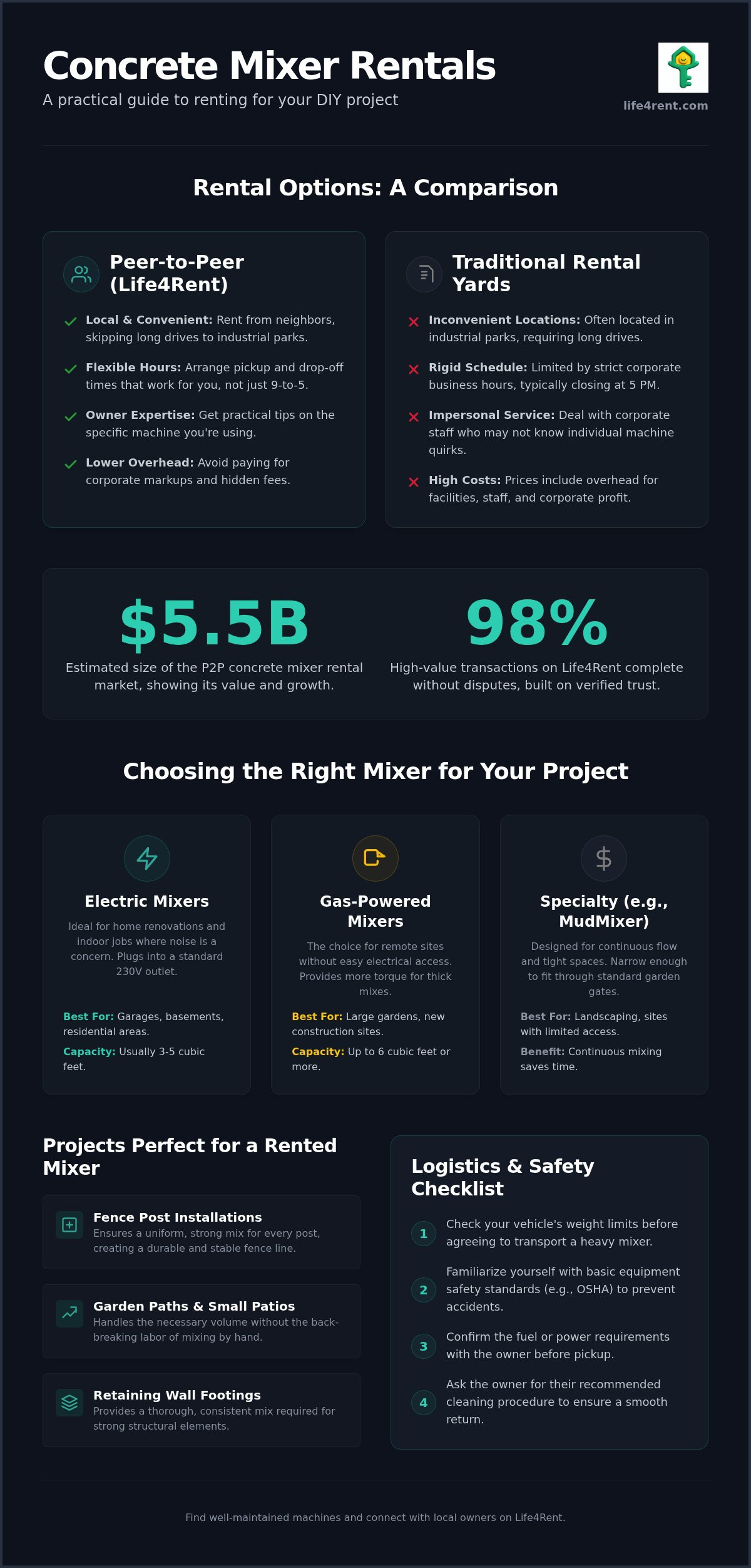
Local rentals significantly reduce the logistics of your construction project. You don't have to haul a heavy machine across the city, which lowers the carbon footprint of your build. Owners on Life4Rent are usually more flexible with pickup and drop-off times than a warehouse that closes at 5:00 PM. This direct communication ensures the machine is clean and ready for your specific mix before you even leave your driveway.
Projects Perfect for a Rented Mixer
A dedicated mixer is essential for projects where consistency matters. Manual mixing in a bucket often leads to weak spots, but a machine ensures every post is set in a uniform batch for fence post installations. Portable drum mixers handle the volume needed for garden paths and small patios without the back-breaking labor of a shovel. Structural elements like retaining wall footings require a thorough mix that only a mechanical drum provides reliably.
The P2P concrete mixer rental market has grown to an estimated $5.5 billion because people value this localized access. You aren't just a number in a database; you're a member of a community sharing resources. With 98% of high-value transactions on Life4Rent completing without disputes in early 2026, the system is built on verified trust and clear communication.
Choosing the Right Mixer for Your Masonry Project
Selection of the right concrete mixer rental depends on your project's location and the volume of material you need to pour. Most residential jobs fall into two categories: small repairs or larger structural pours. You don't want a machine that's too small to keep up with a three-person crew; you also don't want a massive towable unit for five fence posts. It's about finding the balance between drum capacity and the physical space available on your site.
Safety is a priority regardless of the power source you choose for your build. You should familiarize yourself with OSHA safety standards for concrete and masonry equipment to prevent accidents during operation. These regulations cover everything from machine guarding to the proper way to clear a skip. Compliance with these guidelines ensures you don't just finish the job quickly, but also safely.
Electric vs. Gas Powered Machines
Electric mixers are the standard choice for home renovations where noise is a concern. They typically plug into a standard 230V outlet, making them convenient for garage floors or indoor masonry work. Gas-powered models are a better choice for a concrete mixer rental if your project is at the far end of a large garden without easy electrical access. These engines provide the torque needed for high-slump, thick mixes that smaller electric motors might struggle to turn. Make sure to check the fuel requirements with the owner before the rental begins.
Drum size is another critical factor that dictates your workflow. A small 3-cubic foot mixer is perfect for a few fence posts, but larger patios require at least a 6-cubic foot drum to keep the pour moving before the concrete sets. Most portable mixers range from 3 to 5 cubic feet, which is usually enough for a weekend DIYer. Look for towable options in the listings if you don't have a van or a truck for transport.
Specialty Options Like the MudMixer
Traditional drum mixers aren't always the best fit for tight spaces or continuous work. You might find a mudmixer on the marketplace, which is a specialized tool that allows for a continuous flow of material. These machines are narrow enough to fit through standard garden gates, which is a common hurdle in residential landscaping. These portable units are particularly useful for sites with limited access where a truck cannot reach.
You'll also need the right concrete finishing tools to get a professional, smooth surface once the mix is poured. You can find both standard drums and specialty machines by checking the local listings on Life4Rent. Direct communication with local owners allows you to ask specific questions about the machine's history and performance before you commit to the rental.
P2P Marketplaces vs. Traditional Rental Yards
A concrete mixer rental from a neighbor is fundamentally different than a visit to a big-box store. Corporate yards maintain a fleet of identical machines that often see heavy, careless use by hundreds of different contractors. On a peer-to-peer marketplace, you'll find a broader range of brands and machine ages, often including well-maintained units that the owner relies on for their own work. This variety allows you to select a machine that fits your specific project needs rather than settling for whatever the warehouse has in stock.
You deal with a person who actually knows the machine's history instead of a revolving door of seasonal staff. Owners have a vested interest in keeping their equipment clean and functional, which means you're less likely to receive a drum with dried-on residue from the previous user. Corporate contracts often hide fine print regarding cleaning fees that can exceed the daily rental cost if you return the drum with even minor splashes of cement. Community reviews on these platforms act as a safeguard, ensuring that both the machine's reliability and the owner's honesty are verified by real users.
Cost Transparency and Savings
Daily rates for a tool on rent are typically lower on peer platforms because there's no massive storefront or corporate staff to pay for. You won't face the high-pressure "insurance upsell" common at commercial desks, where mandatory damage waivers can add 10% to 15% to your base bill. Instead, platforms like Life4Rent offer clear protection plans for a small 3% add-on fee, which covers damage, loss, and theft up to €2,500. Local owners are also much more likely to offer weekend deals or flexible single-day rates that don't include the automatic surcharges found at industrial yards.
Location and Availability Benefits
Machine searches within a short radius save you significant time and fuel costs. Large rental yards are often located in industrial districts far from residential neighborhoods, forcing you to spend hours in traffic with a heavy trailer. You can find a machine within a 5-mile radius of your home, making the logistics of a one-day pour much more manageable. Live availability calendars mean you can book a machine in minutes without waiting on hold for a clerk to check their physical stock. Local owners can even suggest where to find the best local sand or gravel suppliers, helping you avoid the high prices of pre-mixed bags at retail stores.
Logistics: Transporting and Operating Your Mixer
Concrete mixer weight can vary significantly based on the drum size and engine type. A portable 3.5 cubic foot electric unit often weighs around 50 kilograms, but a gas-powered 6 cubic foot model can easily double that. You must verify your vehicle's payload or towing capacity before you leave for pickup to ensure a safe journey. Most small cars can handle a portable unit in the boot, but larger machines require a van or a trailer with proper tie-down points.
Safety gear is non-negotiable for any masonry project, especially when handling heavy machinery. You need impact-resistant goggles and heavy-duty gloves to protect yourself from caustic dry cement and sharp gravel splashes. These simple precautions prevent common site injuries and allow you to focus on the quality of your pour. It's also wise to wear steel-toed boots to protect your feet from the heavy steel frame during loading and unloading.
Check the drum for any previous buildup before you start your first batch of the day. If you find hardened concrete from a previous user, document it immediately and inform the owner. This documentation avoids confusion later and ensures your specific mix doesn't get contaminated by old debris. A quick inspection of the engine oil and fuel levels on gas models is also a good practice before you begin the day's work.
Loading and Site Access
Ramps are essential if the concrete mixer rental isn't a towable model with its own wheels and hitch. You'll need a sturdy set of ramps and likely a second person to help guide the machine into your van or trailer safely. Position the mixer on firm, level ground once you arrive at your project site. An unlevel machine can "walk" or tip over as the weight shifts inside the rotating drum, which is particularly dangerous when the drum is at full capacity. Keep a pressurized water source within five meters of the machine at all times for both the mix and immediate cleanup.
Maintenance and Cleaning Responsibilities
A clear "clean-out" policy is usually established by the owner to prevent disputes over dried concrete residue. You should agree on the expected state of the drum before the rental begins to avoid unexpected cleaning fees. Wash the drum thoroughly with a high-pressure hose as soon as the last batch is poured. Avoid the urge to use hammers or chisels to knock dried concrete off the machine frame, as these tools leave dents that encourage more buildup in the future. Take clear photos of the machine's condition at the start of the rental to protect yourself from damage claims. You can find reliable equipment and transparent owners by checking the local tool listings on our platform today.
Booking Your First Mixer on Life4Rent
Life4Rent simplifies the process of finding a concrete mixer rental without the complexity of corporate account setups. You can browse the peer to peer equipment rental listings for your city to see exactly what's available in your neighborhood. It's a community-driven marketplace where your reputation as a renter helps you secure high-quality tools from local owners who care about their gear.
You should create a detailed profile to show owners that you're a responsible member of the community. Verified accounts and honest reviews from previous rentals build the trust necessary for these transactions to work well. Most owners prefer to rent their machinery to individuals who have a history of returning tools clean and on time. A thorough review of the feedback left by other renters will help you identify the most helpful and reliable owners in your area. You'll often see comments about how well the owner explained the machine's operation or the condition of the drum upon pickup.
Secure payment through the platform ensures that both you and the owner are protected throughout the process. Life4Rent manages the transaction and offers an optional protection plan for a 3% add-on fee. This plan is a practical choice for heavy masonry work, as it covers damage, loss, and theft up to €2,500. Payouts are handled efficiently, with owners receiving funds through PayPal or direct bank deposit once the rental is successfully completed.
Finding the Best Local Listings
Search filters allow you to sort results by distance so you can find the most convenient pickup point. This saves you from long drives to industrial districts and keeps your fuel costs low. You might find listings that include essential extras like wheelbarrows or shovels as part of the package. These bundles are an excellent way to save time on sourcing individual tools for a single weekend project. You can save your favorite owners to a shortlist, making it easier to find reliable equipment for future landscaping or construction projects.
Communicating with the Owner
The in-app messaging feature is the best tool for confirming the technical details of the machine. You should ask the owner if they can provide a brief demo of the engine or motor when you arrive for pickup. It's also important to confirm the exact times for pickup and return to avoid any misunderstandings or late fees. You can mention the specific details of your project to see if the owner has advice on whether their machine's drum capacity is the right fit for your pour.
Start Your Next Masonry Build Today
Peer-to-peer rentals offer a practical alternative to the high costs and logistical headaches of industrial warehouses. You can find the right machine for your project just a few streets away while supporting your local community. A localized concrete mixer rental ensures you spend your weekend working on your project rather than sitting in city traffic.
Life4Rent provides access to local tools across 17 different categories with community-vetted owners and reliable machines. You'll benefit from secure payments and transparent daily rates that don't include hidden warehouse surcharges. It's an honest way to get professional results on a DIY budget while dealing with people who value their equipment.
You can browse current listings and connect with neighbors who have exactly what you need for a successful pour. Find a concrete mixer for rent near you on Life4Rent and get your masonry project moving. Your backyard transformation is much easier to manage when you have the right tools and a supportive community behind you.
Frequently Asked Questions
Do I need a special trailer to transport a concrete mixer?
You don't always need a trailer, but it depends on the specific model you choose. Small 3.5 cubic foot electric mixers often fit in a standard hatchback or SUV boot if you fold the rear seats. Larger gas-powered units or those with heavy steel frames usually require a van or a dedicated trailer. If you rent a towable model, you'll just need a vehicle equipped with a standard tow ball.
How much concrete can a standard 3-cubic-foot mixer hold?
A 3-cubic-foot mixer typically handles about 1.5 to 2 bags of pre-mixed concrete per batch. You shouldn't fill the drum to its total volume because the material needs space to tumble and mix properly. Overfilling leads to poor consistency and puts unnecessary strain on the motor or engine. This size is perfect for small garden walls or setting a few fence posts in a single afternoon.
Is it okay to use a concrete mixer for mortar or plaster?
You can use a drum-style mixer for mortar, but it isn't the most efficient tool for fine plaster. Concrete mixers use a tumbling action that works best with coarse aggregates like gravel. Mortar and plaster are finer and often stick to the sides of a standard drum. For large masonry projects, a paddle mixer is usually better for achieving a smooth, creamy consistency in fine, stone-free mixes.
What happens if the mixer stops working in the middle of a pour?
You should immediately empty the drum manually if the motor fails during a pour. Concrete sets quickly, and a drum full of hardened material is almost impossible to clean without damaging the machine. Once the drum is clear, contact the owner through the Life4Rent app to report the issue. Most peer-to-peer owners are helpful and will work with you to resolve the situation or adjust the rental rate fairly.
How do I properly clean the mixer before returning it to the owner?
Wash the drum with a high-pressure hose while it is still rotating and the concrete is wet. You can add a few shovels of coarse gravel and some water to help scrub the internal paddles as the drum turns. Empty the slurry into a designated waste area and repeat the process until the water runs clear. Don't let residue sit, as dried concrete requires aggressive cleaning that can ruin the machine's finish.
Can I rent a concrete mixer for just a few hours?
Most owners on the platform set a minimum rental period of one day. While you might only need the machine for a two-hour pour, the logistics of pickup and drop-off usually make hourly rentals impractical for local owners. A daily rate for a concrete mixer rental is often quite affordable anyway. This gives you plenty of time to set up your site and clean the equipment thoroughly before the return.
Does a peer-to-peer rental include insurance for the machine?
Life4Rent offers an optional protection plan that covers damage, loss, and theft up to €2,500. This plan costs an additional 3% of the rental fee and provides peace of mind for both the owner and the renter. If you choose not to purchase this, you're generally responsible for any damage that occurs during your use. It's a good idea to discuss specific coverage details with the owner before you confirm your booking.
What is the difference between a drum mixer and a paddle mixer?
Drum mixers use gravity and internal fins to tumble ingredients together, which is ideal for heavy concrete with stones. Paddle mixers use rotating blades to stir materials, making them much better for thick mortar, plaster, or tile adhesive. If your project involves pouring a slab or a footing, stick with a drum mixer. For bricklaying or rendering, a paddle-style machine will give you a much more consistent and workable result.
Related guides on Life4Rent
Ready to rent instead of buy? See all tools & equipment available to rent on Life4Rent →
Life4Rent
Rent it. Earn from it. Own less, access more.
Browse peer-to-peer rentals near you, or list what you own and start earning — all protected by Life4Rent Protect.
About the author
Amsterdam, Netherlands
Joshua writes about the financial side of renting and earning on Life4Rent. His guides focus on helping people understand the real cost of ownership, calculate rental income potential, and make smarter decisions about buying versus renting. He previously wrote on household economics and personal budgeting for a pan-European finance publication.