
Compare rental platform insurance for rental income protection
November 29, 2026
Published by Life4Rent · Operated by Brohf Software OÜ
The rental platform with the best insurance depends on what you rent and how you earn from it. A long-term landlord policy is generally intended for a 12-month lease and may cover 12 months of fair rental value if a covered loss interrupts rent. The right comparison starts with your rental strategy, not a headline promise.
It makes sense to look for protection against lost income, but coverage differs for a home let on a long-term lease, a vacant property, and everyday items rented peer to peer. A policy for a rental home is not the same as protection for personal belongings or rented equipment.
This guide explains how protection varies by rental strategy and how to compare coverage for lost rental income, damage, theft, liability, and personal possessions. It offers a practical way to assess which option fits your situation and where item-rental platforms fit.
Which rental platforms in Europe offer the strongest insurance coverage?
No single platform or policy is best for every rental. Long-term landlords, renters, and people renting everyday items face different risks. Check what protection applies to your activity, including lost rent, property damage, liability, and belongings.
For a home rented under a 12-month lease, landlord insurance may be designed for that arrangement, but cover varies by country and policy. Some policies may cover 12 months of fair rental value after a covered loss interrupts income. Check the terms rather than assuming rent replacement is included.
Vacancy can affect cover, too. Some landlord policies restrict or suspend protection after a property has been vacant for 30 to 60 days, but the rules depend on the policy. Ask how a gap between tenants affects cover before relying on it.
Liability limits should reflect the landlord’s situation and local requirements. Limits such as €300,000 or €1,000,000 may appear in comparisons, but they aren’t universal European benchmarks. Check what applies to the property and your wider portfolio.
- Long-term home rental: Compare landlord policies for lease-related protection and fair rental value cover.
- Vacant property: Check how the policy treats an extended gap between tenants.
- Renting a home: A renter’s policy may cover personal possessions inside the home, but not the building itself.
- Renting everyday items: Check the platform’s stated protection against the item’s risks and the rental terms.
To make a practical shortlist, first match the policy to the type of rental. Then compare income protection, liability limits, vacancy terms, and exclusions. A platform’s protection may suit one owner but not a renter or someone renting a different kind of property.
There is no universally strongest platform. Landlord policies may suit long-term leases, renters’ policies can address possessions inside a home, and people renting everyday items should check platform protection against the item and rental terms.
Long-term landlords should compare lease-related protection and lost-rent cover. Renters should check protection for personal possessions, while people renting everyday items should weigh the platform’s stated protection against the item’s risks and rental terms.
Does rental platform protection cover damage, theft, liability, and personal belongings?
Coverage depends on the policy and what you’re renting. A renter’s policy generally covers the renter’s possessions inside a home, not the building itself. For example, belongings damaged in a fire are a different claim from damage to the building’s walls or structure.
Renters’ insurance may cover personal belongings damaged by events such as theft or fire. Coverage for flood damage depends on the policy. Review covered causes of loss, exclusions, and limits for the belongings you want to protect.
Liability is a separate category. It concerns claims that you’re responsible for injury or damage, while personal property coverage concerns your own possessions. A landlord’s policy, renter’s policy, and rental-platform protection may address different risks, so don’t treat one as a substitute for another.
For an item rental, consider the owner’s item and the renter’s belongings separately. Damage to a rented tool concerns the tool; theft of the renter’s phone concerns personal property. The relevant policy wording or platform terms determine which losses qualify.
- Damage: Identify whether the policy concerns the building, the rented item, or personal belongings.
- Theft: Check whether theft is a covered event and what property the coverage applies to.
- Liability: Look for protection addressing claims for injury or damage to someone else’s property.
- Personal belongings: Confirm which possessions and causes of loss are covered.
A lower premium can leave a costly gap. A policy saving $200 per year could still expose an investor to a five-figure loss if important coverage is excluded. Compare the exclusions and covered property, not just the premium, before deciding whether protection fits the rental.
What are the deductibles and out-of-pocket costs for rental platform insurance plans?
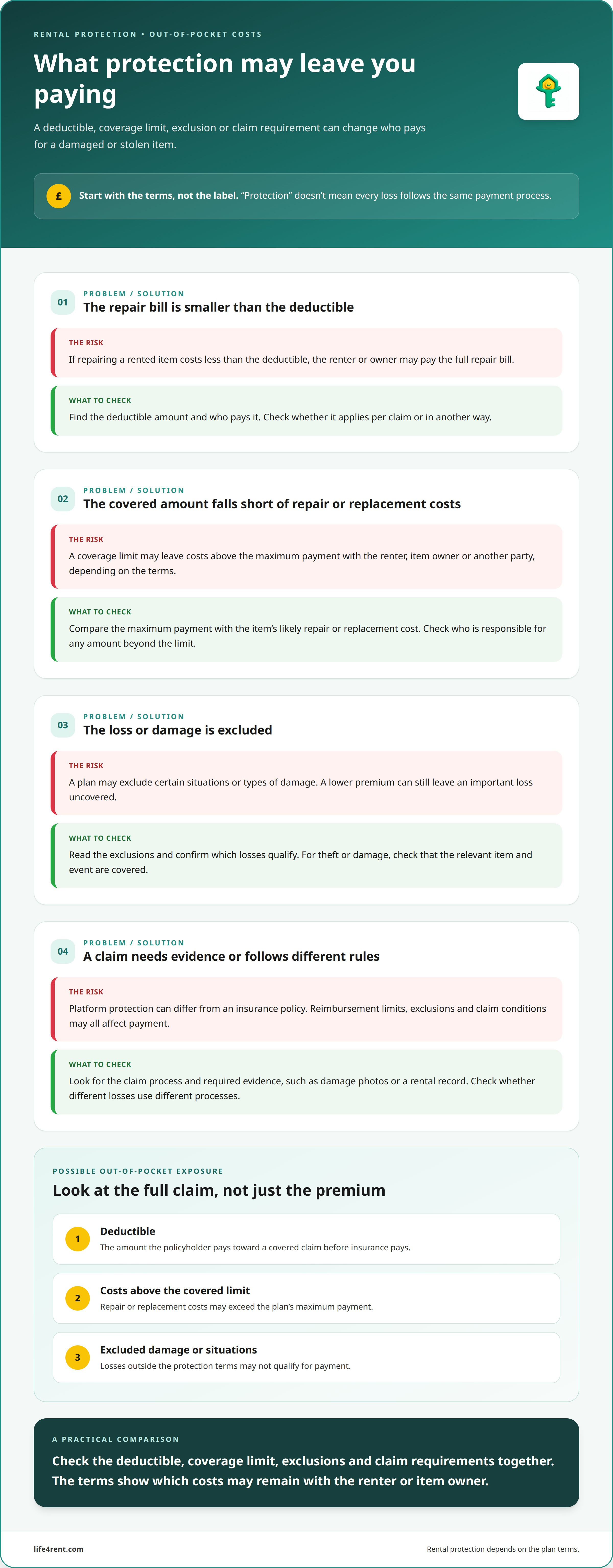
A deductible is the amount a policyholder pays toward a covered claim before insurance pays. If repairing a rented item costs less than the deductible, the renter or owner may pay the full repair bill. If repairs cost more, the deductible still affects the out-of-pocket amount.
Platform protection can differ from an insurance policy. Some arrangements may use a deductible, while others specify reimbursement limits, exclusions, or claim conditions. The terms determine which costs fall to the renter, item owner, or insurer. The word “protection” does not mean every loss follows the same payment process.
Separate the possible costs before comparing plans. A claim may involve a deductible, repair or replacement costs above the covered limit, and damage excluded from protection. A broken tool, for example, may require a repair assessment, while a stolen item may follow a different claims process.
Look for these details in each plan’s terms:
- Deductible: Identify who pays it and whether it applies per claim or another way.
- Coverage limit: Compare the maximum payment with the item’s likely repair or replacement cost.
- Exclusions: Note situations or types of damage the plan doesn’t cover.
- Claim requirements: Find out what evidence, such as damage photos or a rental record, supports a claim.
Out-of-pocket costs also depend on who owns the damaged property. A renter’s personal belongings and a rented item are separate losses, so protection for one does not automatically cover the other. Damage to rented sports equipment and theft of a renter’s phone, for instance, involve different property and potentially different coverage.
Compare the total potential claim cost, not just the deductible. A plan with a smaller deductible may still leave costs due to exclusions or low limits. For a fair comparison, use the same example, such as one damaged item, across each plan and note the deductible, eligible payment, and remaining amount owed.
How much do insurance add-ons cost on European rental platforms
There isn’t one add-on price across peer-to-peer rental platforms in Europe. The charge depends on the platform’s protection option and the rental transaction. A short booking and a longer one may have different totals, so compare the amount shown for the same rental period.
Start at checkout. Record the rental price with the add-on and compare it with the total without protection. The difference is the add-on’s cost for that booking. Don’t treat it as an annual insurance premium: a platform charge may apply to an individual transaction.
Price alone doesn’t tell you what protection includes. Compare the covered property, exclusions, claim conditions, and any deductible. For example, protection for a rented camera may address damage to the camera, while the renter’s own belongings are a separate concern. A higher charge doesn’t automatically mean broader coverage.
Use the same example across platform options for a fair comparison. For a rented power tool, note the displayed add-on price, eligible losses, deductible, and maximum payment. If one option excludes theft while another covers it, consider that difference when comparing prices.
- Booking total: Compare the same rental duration with and without the add-on.
- Coverage: Identify which property and events the option covers.
- Claim costs: Account for the deductible and losses outside the plan.
- Terms: Note documentation requirements and exclusions that could affect a claim.
For a landlord, a property insurance premium is a different cost from a rental-platform add-on. A landlord policy is generally intended for a 12-month lease, while an add-on may relate to a specific transaction. Keep those costs separate when comparing options in Europe.
Choose protection that matches the rental, not simply the lowest displayed charge. Reviewing the price and terms side by side makes the trade-off easier to assess.
Life4Rent: Life4Rent is a rental marketplace where users can list and rent daily items across 17 categories ranging from tools, electronics, outdoor/sports, homes, baby etc
Life4Rent is a rental marketplace for people looking to list or rent everyday items, rather than insure a long-term rental property. Its 17 categories include tools, electronics, outdoor and sports gear, homes, and baby products. That makes it relevant when your goal is to rent an item for a practical need or make an item available to others.
Keep the distinction clear: a rental marketplace and an insurance policy serve different purposes. If you are seeking protection for lost income from a residential property, focus on landlord coverage. If you want to rent an everyday item, compare the rental terms and understand what protection applies to that transaction before deciding.
For item rentals across tools, electronics, or outdoor gear, explore the options on Life4Rent. If you have a question, contact Life4Rent.
Make your next rental decision with a clear plan
Before your next rental, identify what a disruption would affect most: ongoing property income, an item’s condition, or your own belongings. That priority can guide which terms to review first and help prevent a low premium from becoming your only measure of value.
The rental platform with the best insurance for you is the one that fits how you rent and the loss you’re trying to manage. Tie your decision to your actual plans, rather than relying on a broad promise that may address a different kind of rental.
If your next step is renting or listing an everyday item, Life4Rent offers a peer-to-peer marketplace for daily rentals. Contact Life4Rent to discuss your needs, and move forward with a clearer sense of what you want from your rental experience.
Life4Rent
Rent it. Earn from it. Own less, access more.
Browse peer-to-peer rentals near you, or list what you own and start earning — all protected by Life4Rent Protect.
About the author
Tallinn, Estonia
Philip leads editorial at the Life4Rent Renting Academy, overseeing guides on peer-to-peer rental, platform safety, and consumer finance across 25 markets. He has spent over a decade covering the sharing economy and digital marketplaces, helping renters and owners navigate the shift from ownership to access.