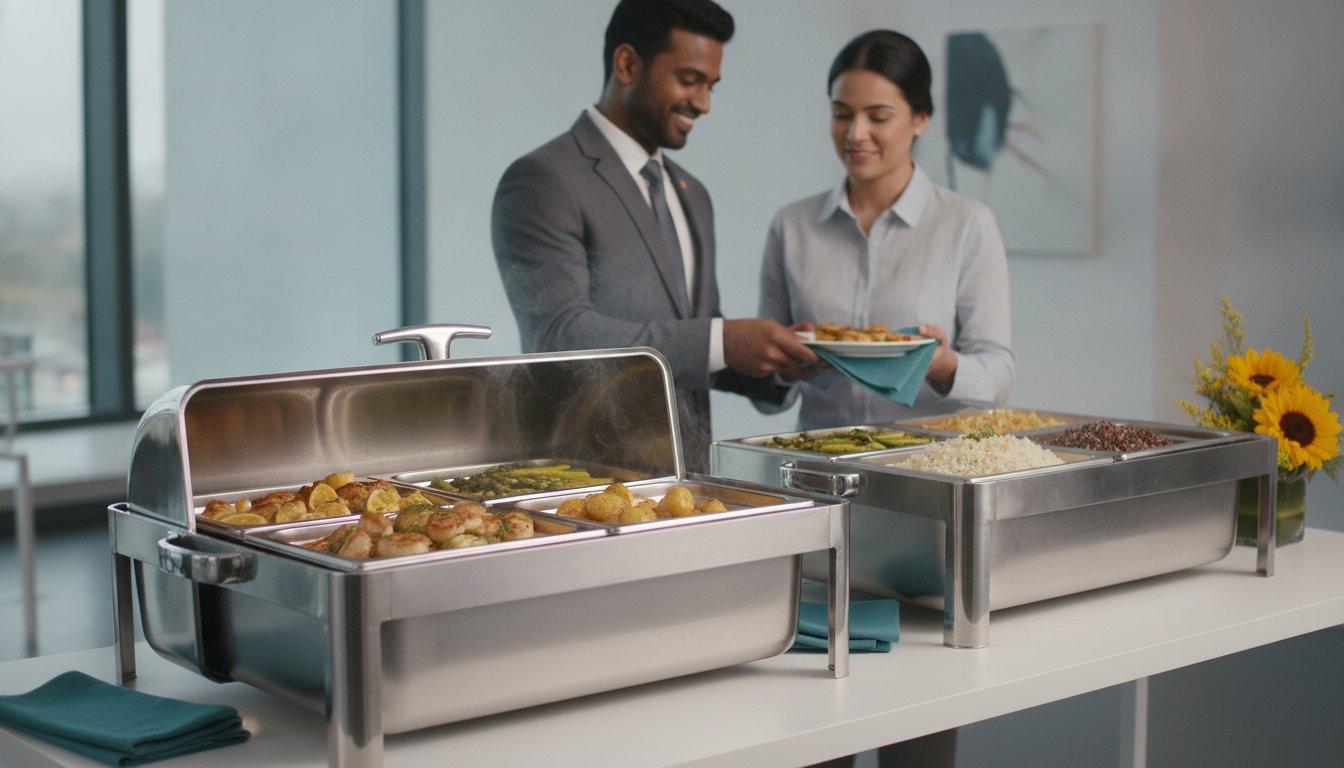
Commercial Grade Food Warmer Rental: A Practical Guide for 2026
July 3, 2026
Published by Life4Rent · Operated by Brohf Software OÜ
Last July, a host in Paris watched helplessly as the main course lost its heat while the toasts ran long. It's a moment of panic that every organizer fears. You likely agree that the high costs and rigid terms of a traditional commercial grade food warmer rental feel like a barrier to a great event. The 135°F safety standard is non-negotiable, but it shouldn't be stressful.
High-performance equipment should be a simple utility. However, uncertainty over power draw and industrial specs often creates unnecessary friction. You want equipment that performs with precision but doesn't require a professional technician to set up. High-quality, portable units exist that fit your venue perfectly without the typical overhead of a corporate rental house.
You'll learn how to select the right warming method for your specific menu and how to operate these units safely. Local peer-to-peer marketplaces offer reliable gear that keeps your dishes at the ideal temperature for hours. Clear knowledge of power requirements and the practical trade-offs of different warming styles ensures your next event stays on track.
Common types of commercial food warmers for rent
Your menu and venue layout dictate the equipment you need. You'll find that a commercial grade food warmer rental often involves picking between several specialized designs. A clear grasp of the different types of food warmers is the first step toward a successful service.
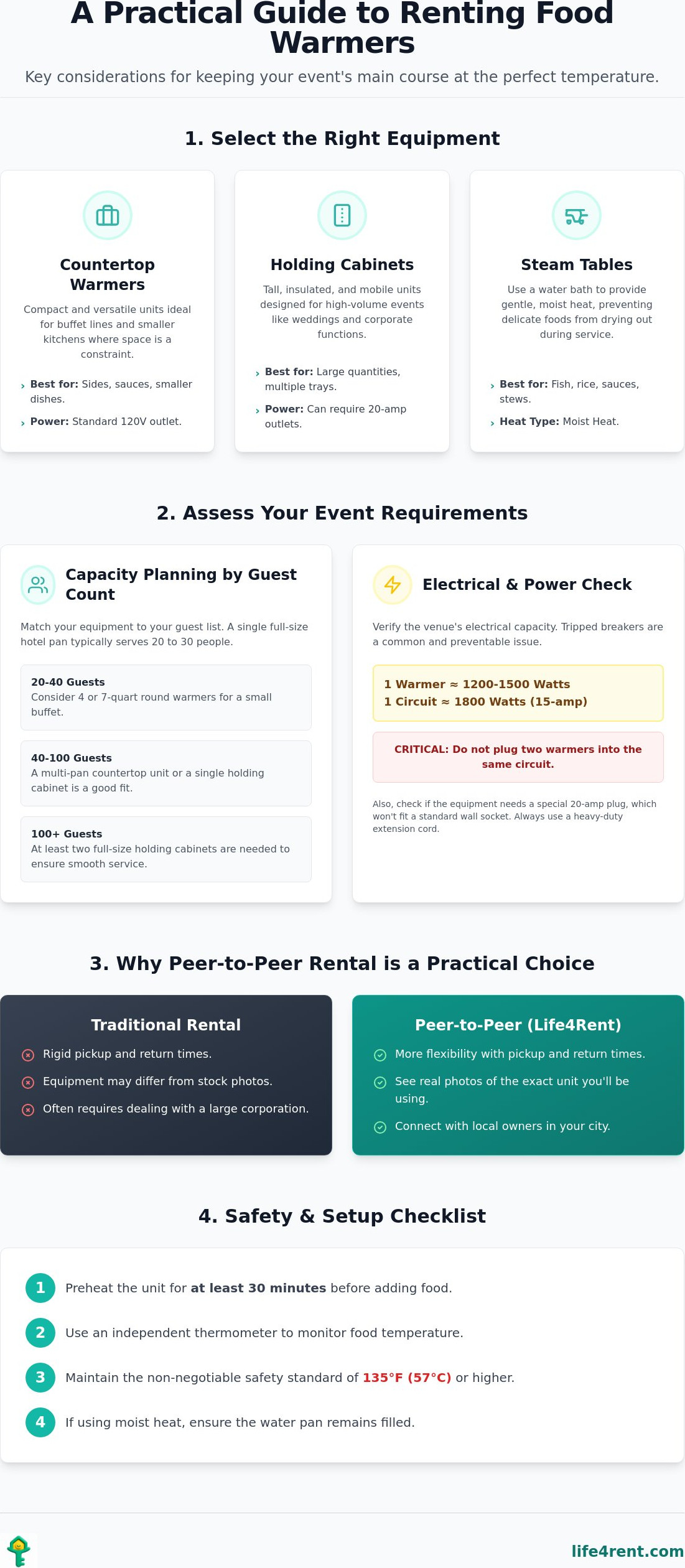
Countertop food warmers provide a compact solution for buffets and small kitchens where space is limited. These units are easy to place on any sturdy table and usually run on standard 120V power. They're practical for holding sides like mashed potatoes or vegetables in standard hotel pans. Most models feature adjustable dials so you can fine-tune the heat for specific ingredients.
To see how these units look in a professional setting, watch this helpful video:
Full-size holding cabinets accommodate large quantities of trays for weddings or corporate galas. These tall, upright units feature multiple racks and heavy insulation to maintain heat even when the doors open frequently. You'll need more floor space for these, but they're essential for high-volume meals. They often come with wheels, which makes them easier to reposition inside the kitchen or serving area.
Steam tables use water to create a gentle, moist heat that prevents food from drying out. They're ideal for delicate items like fish, rice, or sauces. Heat lamps and carving stations keep specific items warm while adding a visual element to the service. These are popular for roast meats where the chef slices portions directly in front of the guests.
Dry heat vs. moist heat options
Moist heat warmers use a water bath to keep sauces and stews at a consistent temperature. This prevents a crust from forming on the surface of your liquids. Dry heat units are better for fried foods or items that need to stay crisp. You should choose the method based on the moisture content of your primary menu items to ensure the best texture for your guests.
Portable units vs. stationary cabinets
Portable countertop units are easier to transport in a standard vehicle. You can move them by hand without any special equipment. Stationary holding cabinets require more floor space and often need a ramp for loading into a van. Owners on Life4Rent often list both types depending on their own catering history. You can usually find a variety of sizes that match the scale of your specific venue.
Assess your event requirements before you rent
Preparation for a professional dinner service involves more than just selecting a machine. You'll need to look at the specific constraints of your venue and the scale of your menu. A commercial grade food warmer rental provides the necessary heat, but only if your infrastructure supports it. It's helpful to walk through the service flow before you commit to any specific gear.
Electrical power and circuit limits
Circuit limits are the most common cause of equipment failure at temporary venues. Industrial warming units are power-heavy tools that typically draw between 1200 and 1500 watts each. A standard 15-amp circuit can usually handle about 1800 watts total. This means you don't want to plug two large warmers into the same outlet or you'll likely trip a breaker and lose heat during the most critical part of the night.
Ask the equipment owner about the specific plug type before you finalize the booking. Some high-capacity cabinets require 20-amp plugs that won't fit a standard home wall socket. You might need to bring your own heavy-duty extension cords if the owner doesn't provide them. A thin household cord creates a fire risk when used with a commercial warmer and can lead to voltage drops that prevent the unit from reaching its target temperature.
Capacity planning for different guest counts
Guest numbers dictate the volume of equipment you'll need for a smooth service. A single full-size hotel pan typically serves between 20 and 30 people depending on the portion size and the type of food. Events with over 100 guests usually require at least two full-size holding cabinets to keep up with demand. These large units allow you to store backup pans so the buffet line never runs dry.
Smaller gatherings of 20 to 40 people are often better served by 4-quart or 7-quart round warmers. These smaller units are much easier to place on a standard buffet table without taking up too much room. They also draw less power, which gives you more flexibility in where you place them. You can browse local listings to find a commercial grade food warmer rental that fits your specific guest count and floor plan.
Physical space is another factor that's easy to overlook when you're busy with catering logistics. Floor-standing cabinets require a clear path for loading and a flat surface to prevent tipping. Countertop units need heat-resistant surfaces to avoid damaging the venue's furniture. You should also think about the duration of your service as some warmers are designed for quick turnover while others hold food safely for several hours. A quick check of these details early saves you from last-minute stress on the day of the event.
Why peer-to-peer rental is a practical choice for 2026
Traditional rental houses often operate from industrial parks with rigid 9-to-5 hours. This makes a commercial grade food warmer rental difficult if your event setup happens on a Sunday morning or a late Friday night. Peer-to-peer marketplaces solve this by connecting you with owners who live and work in your city. Local owners are usually more willing to coordinate a pickup time that suits your actual timeline.
Marketplace platforms allow you to see real photos of the specific unit you're booking. Large catering companies often use stock photos, which means you don't know the condition of the gear until it arrives at your venue. When you rent from a neighbor, you can see the exact model and its current state before you pay. This transparency helps you plan your table layout and power needs with much more confidence.
Cost comparisons and budget benefits
Traditional rental houses often have a complex fee structure that includes high delivery minimums and mandatory cleaning surcharges. These extra costs can sometimes double the daily rate of a warming cabinet. Marketplace pricing is generally more straightforward since owners set their own rates based on local demand and item value. You can save a significant amount by choosing a peer to peer equipment rental rather than buying a unit you'll only use once.
Supporting the local sharing economy
A rental from a person in your area reduces the environmental footprint of your event. Most commercial kitchen gear is built to last for decades but often sits idle in storage for months at a time. The use of these existing assets means fewer new products need to be manufactured and shipped across the country. It's a practical way to access high-quality tools while being mindful of waste.
This model keeps your rental fees within the neighborhood, which helps local small business owners or fellow caterers earn extra income from their inventory. You'll often find a wider variety of specialized gear through a marketplace than at a standard warehouse. One owner might have a specific countertop warmer for delicate sauces, while another lists a heavy-duty cabinet for large trays. This variety allows you to mix and match equipment from different sources to create a setup that works for your menu.
Safety and setup checklist for rented warmers
Safety starts long before your guests arrive at the buffet line. You'll need a clear plan for both the physical setup of the gear and the thermal management of your dishes. A commercial grade food warmer rental is a high-performance tool, but it requires specific handling to be effective and safe. Proper preparation ensures that your food stays at the right quality and meets local health regulations.
Units need plenty of time to reach their operating temperature. You should preheat the unit for at least 30 to 45 minutes before you add any hot food. If you place hot trays into a cold cabinet, the internal temperature of the food will drop rapidly. This puts your menu at risk and forces the machine to work much harder to recover the lost heat.
Stability is a primary concern for heavy industrial equipment. You must place the warmer on a stable, heat-resistant surface away from any flammable materials. Countertop units generate significant heat on their exterior surfaces, so check that your table or countertop can handle the load. Keep the lids closed as much as possible during the event to maintain a consistent holding environment. Every time a lid stays open, you lose the moisture and heat necessary to keep the food appetizing.
Maintaining food safety standards
The 2022 FDA Food Code requires hot food to stay at a minimum internal temperature of 135°F. You might see older guides that still reference 140°F, but 135°F is the current verified standard for safety. Use an independent probe thermometer to verify the temperature of the food itself rather than relying solely on the unit's built-in dial. These dials often measure the air temperature or the heating element rather than the core of your dish.
You should never use a warmer to heat up cold food. These machines are designed only for holding items that have already been cooked to their proper temperature. If your food falls into the "danger zone" between 40°F and 135°F for more than two hours, it's no longer safe to serve. You'll need to discard any items that have spent too long at these middle temperatures to prevent illness.
Safe transport and handling
Steam tables and units with water wells are dangerous to move when they're full. Always empty the water pans completely before you attempt to relocate the unit. Scalding water is a common cause of injury in busy catering environments. You should also check for any frayed cords or loose plugs before you connect the device to a power source. Once the event is over, allow the heating elements to cool to room temperature before you pack the unit. You can rent a food warmer from a local owner who can walk you through the specific cleaning requirements for their machine.
How to find or list a food warmer on Life4Rent
A commercial grade food warmer rental is easy to find through a local marketplace. You'll find most of these tools under the kitchen or events categories on the platform. Local owners often have specialized gear that isn't available at standard rental shops, such as specific soup kettles or carving stations. Using these local resources helps you avoid the rigid contracts and high fees of traditional supply houses.
You should filter your search by location and date to see what gear is available in your immediate area. This saves on travel time and ensures the equipment is ready when you need it. Check the owner reviews to confirm that the equipment is well-maintained and that previous renters had a good experience. These honest accounts from other users provide a level of security you don't always get with corporate warehouses.
Locate the right warmer for your project
Direct communication with the owner is a vital step before you finalize a booking. You can ask for the exact dimensions of a warming cabinet to make sure it fits in your transport vehicle. It's also the best time to verify the power requirements we discussed earlier, such as the specific wattage or plug type. If you're planning a full event, you might also want to check out our guide on audio equipment rental for your sound needs.
Earn money by listing your equipment
You can list your own commercial gear if you have professional warmers that sit idle between your own events. This is a simple way to earn passive income from assets you already own. Start by taking clear photos of your food warmer from multiple angles, including the control panel and any internal racks. Clear images help potential renters understand the condition and capacity of the unit before they reach out.
Draft a detailed description that includes the model number and electrical requirements. Potential renters need to know if the unit requires a 20-amp circuit or a standard wall outlet to avoid technical issues at their venue. You should set a fair daily rate based on the condition of the machine and the current rates for similar items in your city. Offering a reliable commercial grade food warmer rental to your community is a practical way to support the local sharing economy.
Accurate listings build trust and help you secure more bookings over time. You don't need to be a professional rental company to participate in the sharing economy. Honest details about the unit's history and performance make the process easier for everyone involved. This collaborative approach ensures that high-quality tools stay in use rather than gathering dust in storage.
Prepare for a successful dinner service
Success in a dinner service is much easier to achieve when you have the right tools at your disposal. You now know how to match your menu to specific heat sources and why checking venue power limits prevents common service failures. A commercial grade food warmer rental through a local owner provides the technical flexibility you need without the high fees of traditional contracts. This approach ensures your dishes stay at the correct 135°F safety standard throughout the entire evening.
Marketplace platforms offer a practical way to access high-quality gear while supporting your local community. You can rely on transparent pricing and honest reviews to ensure the equipment meets your standards. This model reduces waste and keeps your event budget focused on the guest experience. Local owners often provide more flexible pickup times, which helps you stay on schedule during a busy setup phase.
Secure peer-to-peer transactions and local expertise make the process straightforward for any host. You'll find that sharing existing resources is a sustainable and cost-effective solution for modern event planning. Good luck with your upcoming catering project.
Find a commercial food warmer for your next event on Life4Rent and connect with equipment owners in your city today.
Frequently Asked Questions
How much does it cost to rent a commercial food warmer for a day?
Daily rates vary based on the unit's size, age, and local demand in your city. You'll find that owners on a peer-to-peer marketplace often set more competitive prices than traditional catering warehouses. A simple countertop unit is usually the most affordable option, while full-sized insulated cabinets represent the higher end of the scale. It's best to compare several local listings to find a rate that fits your event budget.
Do I need a special electrical outlet for a commercial food warmer?
Most portable units run on a standard 120V household outlet, but high-capacity cabinets often require a 20-amp circuit. You should check the plug type on the listing before you book a commercial grade food warmer rental. Standard home outlets won't accept a 20-amp plug, which has one horizontal blade. Always confirm with the owner if you'll need to use a specific heavy-duty extension cord for the unit.
Can I use a commercial food warmer to cook raw food?
No, these machines are designed specifically to hold pre-cooked food at a safe temperature. They don't have the heating power to bring raw ingredients through the danger zone quickly enough to prevent bacterial growth. You must ensure your food is already fully cooked and reaches at least 135°F before you place it into the warming unit. This keeps your guests safe and maintains the machine's efficiency.
What is the difference between a chafing dish and a commercial food warmer?
Chafing dishes typically rely on sterno fuel or candles, which provide inconsistent heat and are sensitive to wind. A commercial grade food warmer rental uses electric elements to maintain a precise, steady temperature for several hours. This makes electric units much more reliable for outdoor events or professional catering where you need to meet strict health standards. They also offer better insulation to keep the heat inside the cabinet.
How do I keep the food from drying out while it is in the warmer?
You can prevent drying by using moist heat settings or adding a small amount of liquid to the pans. Keeping the lids closed as much as possible is the most effective way to trap moisture inside the unit. For items like pasta or rice, a light splash of stock or water before service helps maintain the right texture. Steam tables are particularly good for this because they use a water bath to create gentle heat.
Is it safe to leave a food warmer running for eight hours or more?
Industrial units are built for long-term use and can safely run for entire shifts if they are monitored correctly. You must check the water levels in steam-based units every few hours to prevent the heating elements from burning out. While the machine stays safe, the quality of some foods like fried items or delicate sauces will degrade over long periods. Most professional organizers limit holding times to four hours for peak flavor.
Who is responsible for cleaning the equipment after the rental period?
Renters are generally responsible for returning the gear in the same clean condition it was received. You should follow the owner's specific instructions, as some commercial surfaces require non-abrasive cleaners to avoid damage. Always wait for the unit to cool completely before you begin the cleaning process. Some owners might offer a cleaning service for an additional fee, so it's helpful to clarify this in your initial messages.
What happens if the food warmer stops working during my event?
You should contact the equipment owner immediately through the marketplace platform to troubleshoot the issue. Check the venue's circuit breaker first, as these machines often trip standard circuits if other appliances are running. If the unit has a mechanical failure, the Life4Rent Protect program provides escrow payments and damage protection to help resolve the situation. It's always a good idea to have a backup plan for temperature control at large events.
Life4Rent
Rent it. Earn from it. Own less, access more.
Browse peer-to-peer rentals near you, or list what you own and start earning — all protected by Life4Rent Protect.
About the author
Dublin, Ireland
Michael covers consumer rights, rental law, and EU platform regulation for the Life4Rent Renting Academy. He has reported on digital market policy and renter protections across Europe, and brings a clear, practical perspective to topics like deposit disputes, insurance, and the legal rights of renters and owners.