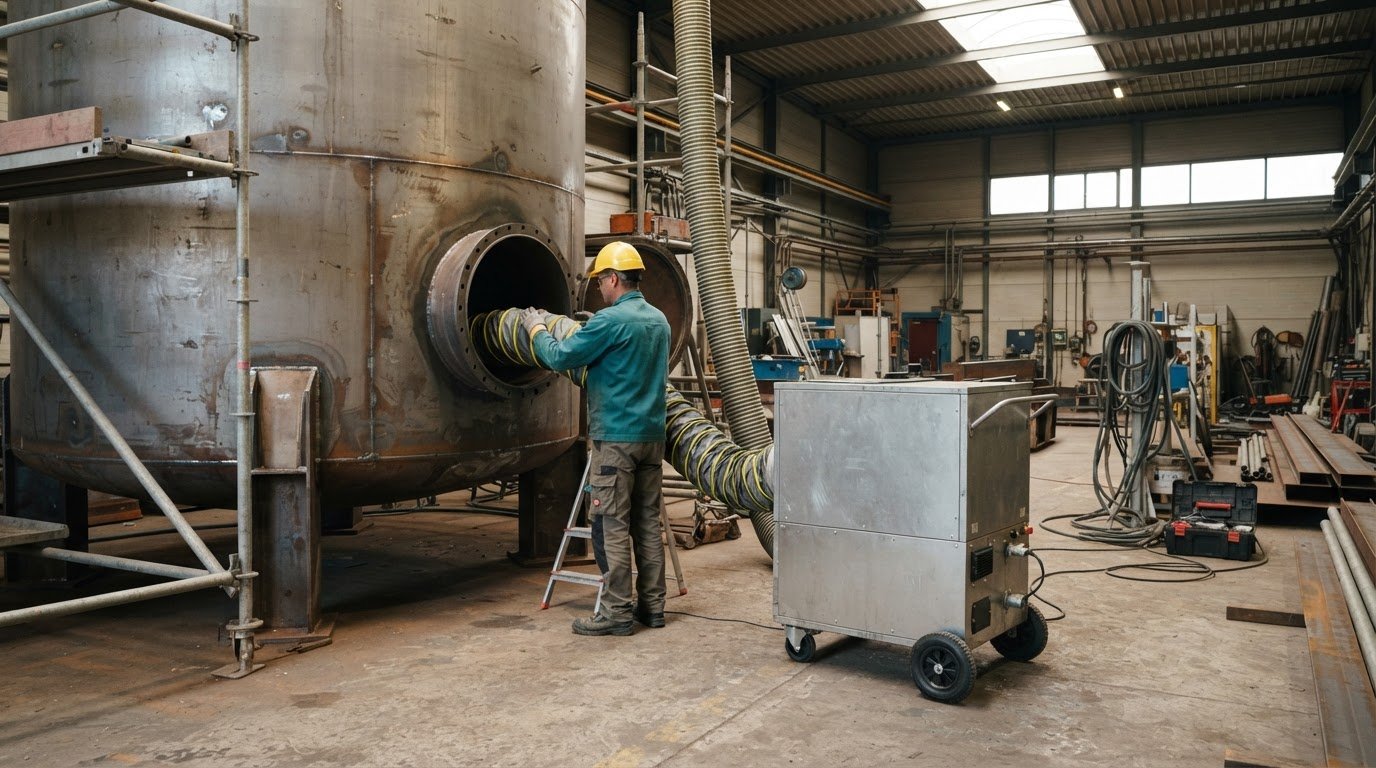
Commercial dehumidifier rental pricing by jobsite ZIP code and duration
November 1, 2026
Published by Life4Rent · Operated by Brohf Software OÜ
A commercial dehumidifier rental quote depends on the jobsite ZIP code, rental duration, equipment requirements, and any delivery, setup, or monitoring needs. A longer rental isn’t the only factor: location and the work the equipment must do also shape the total.
It’s reasonable to want a clear figure before planning a drying project. Start by identifying the details that affect the quote, then compare the rental period and service needs with the job schedule.
This guide explains how location and duration affect pricing, what delivery and setup can involve, and how equipment features and dewpoint controls fit into the decision. It also covers when monitoring or removal may matter and how to assess whether a rental arrangement suits the site.
Delivery, installation, monitoring, and removal
Before delivery, provide the rental team with the jobsite ZIP code, access instructions, and a clear drop-off point. Identify the affected rooms, available power, drainage route, and any loading restrictions. For example, a machine placed behind a locked gate needs an agreed access plan. On arrival, inspect the unit and record any existing damage before positioning it. Keep the route to the work area clear for setup and eventual removal.
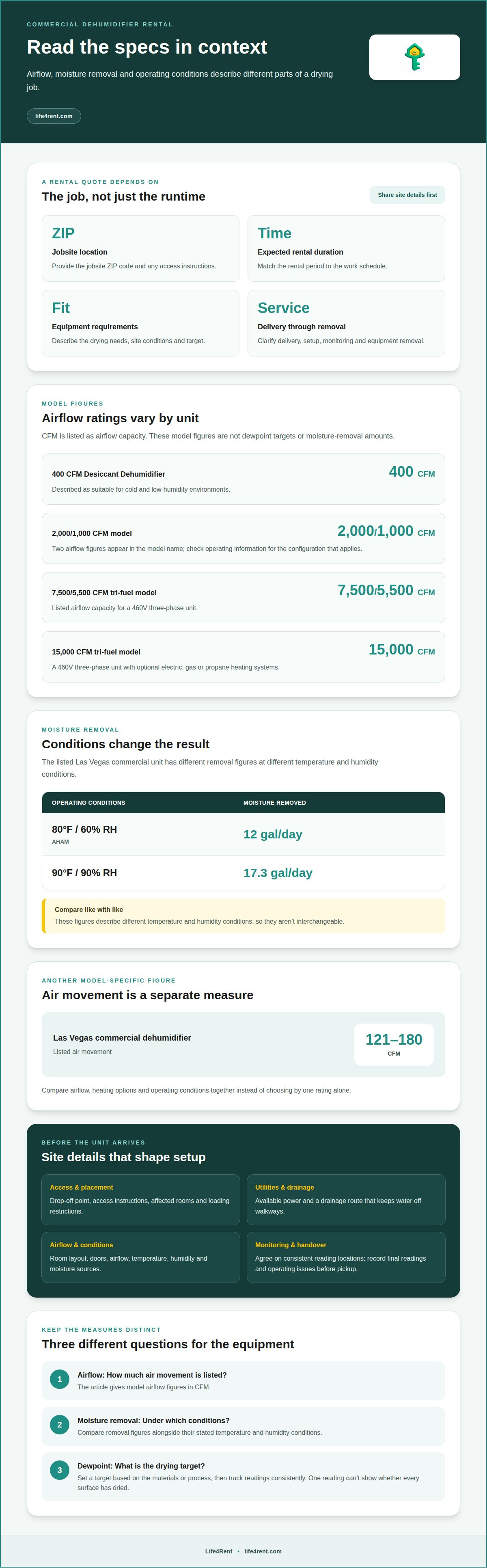
Capacity depends on operating conditions, not just the machine’s headline rating. A commercial dehumidifier listed for rental in Las Vegas removes 12 gal/day at 80°F / 60% RH (AHAM), and 17.3 gal/day at 90°F / 90% RH. These figures describe different temperature and humidity conditions, so they aren’t interchangeable. Some units use a chemical desiccant mechanism to pull moisture from air without creating condensation. That design changes how moisture is handled, so plan drainage and collection around the specific equipment.
How should you operate and maintain a rented commercial dehumidifier safely? Follow the unit’s operating instructions, keep air inlets and outlets clear, and route the drain hose so water cannot pool across walkways. During each site inspection, check the hose, power connection, and displayed readings.
What are common risks or limitations during water damage restoration? A blocked drain can cause water to collect, while poor airflow or changing site conditions can slow drying. A dehumidifier won’t remove standing water or repair the source of a leak; those tasks require separate action.
Agree on a monitoring plan before starting the unit. Record humidity or dewpoint readings at consistent locations and compare them over time; one reading won’t show the full drying trend. If readings stall, check airflow, drainage, and whether the equipment suits the room’s conditions. Before pickup, switch off the unit as instructed, secure loose hoses, and clear the removal path. Note the final readings and any operating issues for handover.
Humidity control in commercial and industrial settings
Start with the process or material that needs protection, not the largest machine available. A warehouse storing paper goods has different humidity concerns from a food-processing room or a construction site drying wet walls. List the affected areas, sensitive materials, moisture sources, and normal work activity. This gives the rental team a practical picture of the environment and helps define a useful control goal.
Map how air moves through the space before positioning equipment. A partitioned production floor, a loading bay with frequent door openings, and a sealed storage room each behave differently. Open doors can bring in outside air, while machinery and people can add heat and moisture. Note these changes during the workday. If one corner stays damp while the main floor dries, the problem may be airflow or room layout, not simply insufficient runtime.
Choose monitoring points that represent the space rather than relying on one convenient spot. In a warehouse, readings near an exterior wall may differ from those beside the central aisle. In a workshop, compare the work area with a spot near the moisture source. Keep locations consistent, record readings at regular intervals, and note events such as ventilation changes or wet cleaning. This record helps distinguish a genuine drying trend from short-term fluctuations.
Coordinate humidity control with the work happening onsite. A contractor drying a renovated office may need to keep equipment clear of access routes and coordinate operation with painting or flooring work. A facility manager protecting stored materials can plan around receiving schedules and open loading doors. These examples show why site access, airflow, and moisture sources belong in the operating plan.
Reassess when conditions change. If new water enters, a temporary partition is removed, or production restarts, the original setup may no longer suit the room. Review readings, airflow, and the affected area together before changing equipment placement or operating settings. Clear notes help each shift follow the same plan and give the next technician useful context. For a commercial dehumidifier rental, the right setup follows the building’s actual conditions, not a generic room label.
Product features and dewpoint settings
Match equipment features to the room temperature, moisture load, and drying target. Dewpoint is the temperature at which airborne moisture condenses, adding useful context alongside relative humidity. Set a target based on the materials or process, then track readings consistently. One reading can’t show whether every surface has dried.
The 400 CFM Desiccant Dehumidifier Rental is described as suitable for cold and low-humidity environments. That stated use makes temperature an important selection factor. For larger settings, the 15,000 CFM 460V Three-Phase Tri-Fuel Desiccant Dehumidifier Rental has optional electric, gas, or propane heating systems. Compare these options with the site’s conditions and available setup.
Model ratings can also guide equipment comparisons. The listed 2,000/1,000 CFM 460V Three-Phase Desiccant Dehumidifier Rental has two airflow figures in its name. Treat those figures as model-specific ratings, not as a dewpoint target. Check the equipment’s operating information to understand which configuration applies to the planned work.
Airflow and moisture capacity describe different aspects of performance. The listed 7,500/5,500 CFM 460V Three-Phase Tri-Fuel Desiccant Dehumidifier Rental has an airflow capacity of 7,500/5,500 CFM and can remove up to 735 gal per day of moisture from the air. Use those specifications to frame the unit’s scale, then consider the site conditions.
A commercial dehumidifier listed for rental in Las Vegas has air movement of 121-180 CFM. Compare that figure with the larger model’s stated airflow capacity in context. Review airflow, heating options, and operating conditions together instead of choosing by one rating alone.
For dewpoint control, record readings at consistent locations and times. For example, compare a reading near a cold exterior wall with one in the central work area. If readings differ, review equipment placement and the target before changing settings. Keep observations in the site log so each shift can follow the same plan.
Rental pricing by jobsite ZIP code and duration
A jobsite ZIP code helps determine delivery distance, access needs, and whether the location is within the rental service area. Rental duration matters too: the quoted period should match the drying schedule, with a clear plan if the equipment needs to stay longer. When requesting a quote, share the ZIP code, expected start and return dates, equipment needs, and site access details.
Is renting or buying more cost-effective for your project? Renting often suits a temporary job, such as drying one renovated office, while buying may make more sense for repeated use across ongoing projects. Compare the full rental period with ownership costs, including storage, maintenance, and how often the machine will be used.
What rental terms, deposits, insurance, and damage fees should you expect? Read the agreement for the rental period, extension process, deposit requirements, insurance responsibilities, and how damage charges are assessed. Photograph the equipment at delivery and return, and keep the handover records with the agreement.
Where can you rent a commercial dehumidifier near you? Enter the jobsite ZIP code in a location-based rental search or quote form, then compare delivery arrangements and rental duration for that address. A ZIP code alone doesn’t establish the full job cost; equipment capacity, access, setup, monitoring, and removal can also affect the quote.
The price depends on the job and is provided after a quote request. Cost factors include the jobsite ZIP code, rental duration, equipment type, delivery distance, setup requirements, monitoring, and removal. For example, a site with restricted loading access may need a different delivery plan from a ground-level workspace. A changing drying schedule can also affect the rental period required.
Before agreeing, align the return date with the project schedule and note how extensions are handled. Keep delivery and pickup arrangements, equipment condition, and responsibility for damage in one written record. For other everyday project items, browse tools and rental items through Life4Rent’s marketplace.
Life4Rent: Life4Rent is a rental marketplace where users can list and rent daily items across 17 categories ranging from tools, electronics, outdoor/sports, homes, baby etc
Life4Rent connects people who have everyday items with people who need them temporarily. For a home repair, you might rent a tool rather than buy one for a single task; for a family visit, a short-term household or baby item could be useful.
Owners can also list belongings they’re not using, giving others a chance to rent them when needed. This can be a practical option for everyday project and household needs beyond specialist drying equipment.
Visit life4rent.com to explore the marketplace and see whether it suits your next everyday rental need.
Make the next step fit the job
Before arranging a commercial dehumidifier rental, decide who will manage the drying plan onsite. One person can keep the schedule, readings, and handover notes together, helping the team respond to changes instead of relying on informal updates. A clear point of contact also makes it easier to coordinate access and equipment return.
Separate specialist drying equipment from everyday project needs. A commercial drying job calls for equipment selected for its moisture-control requirements; smaller, occasional tasks may need ordinary tools or household items instead. Distinguishing these needs helps you choose a practical rental route without expecting one marketplace to cover every type of equipment.
Life4Rent is useful for everyday rentals beyond specialist drying machinery, whether you need a tool for a repair or an item for temporary use. Browse the marketplace when another part of your project calls for something you’d rather rent than buy.
Explore everyday rental options and plan the next step with confidence.
Frequently Asked Questions
How much does it cost to rent a commercial dehumidifier per day, week, or month?
Rental costs depend on the equipment, rental period, jobsite ZIP code, and delivery or service needs. Requesting a quote is the practical way to get a project-specific total. Compare the full rental period rather than multiplying a daily rate alone, since weekly or monthly terms may be structured differently. Include setup, monitoring, pickup, and possible extensions when estimating the overall expense.
What types of commercial dehumidifiers are available for rent, such as refrigerant and desiccant models?
Common options include refrigerant and desiccant models, selected according to site conditions and the drying goal. Refrigerant units cool air so moisture condenses for collection or drainage. Desiccant equipment uses a moisture-absorbing material, making it useful in cold or low-humidity environments. For example, a cold storage area may need different equipment from a warm room with wet building materials.
How do I choose the right dehumidifier capacity for a commercial space or water-damage job?
Choose capacity by considering room volume, water load, temperature, humidity, airflow, and the materials being dried. A compact office with a localized leak differs from a large open warehouse or several connected rooms. Map the affected area and note barriers that restrict airflow. Then compare equipment ratings under conditions close to those at the jobsite, rather than relying on a single capacity figure.
Which rental companies offer commercial dehumidifiers, and what are their delivery and pickup fees?
Commercial equipment rental businesses and restoration-equipment suppliers are common sources, but local options and charges vary by jobsite. Delivery and pickup costs can depend on distance, access, equipment size, and handling requirements. Request a full quote breakdown covering transport, installation, monitoring, removal, and any extension terms. A single rental rate may not represent the complete project cost.
What power supply and drainage setup does a rented commercial dehumidifier require?
Power requirements depend on the model: some larger units are specified for 460V three-phase power, so match the equipment to the site’s electrical supply. Condensate-producing units may need a drain hose routed to a suitable collection or discharge point. Desiccant models use a different moisture-removal process. Review the unit’s operating instructions and plan cable and hose routes away from walkways.
Are commercial dehumidifier rentals available for emergency or same-day delivery?
Emergency and same-day delivery depend on the jobsite ZIP code, local inventory, dispatch timing, and equipment size. When arranging a commercial dehumidifier rental, share the site address, access details, required capacity, and delivery window. For an urgent water-damage response, identify who can receive the equipment and where it can be placed. These details help determine whether the delivery schedule fits the site’s needs.
Life4Rent
Rent it. Earn from it. Own less, access more.
Browse peer-to-peer rentals near you, or list what you own and start earning — all protected by Life4Rent Protect.
About the author
Dublin, Ireland
Michael covers consumer rights, rental law, and EU platform regulation for the Life4Rent Renting Academy. He has reported on digital market policy and renter protections across Europe, and brings a clear, practical perspective to topics like deposit disputes, insurance, and the legal rights of renters and owners.