Cargo Trailer Rental for Moving: How to Choose the Right Setup
September 29, 2026
Published by Life4Rent · Operated by Brohf Software OÜ
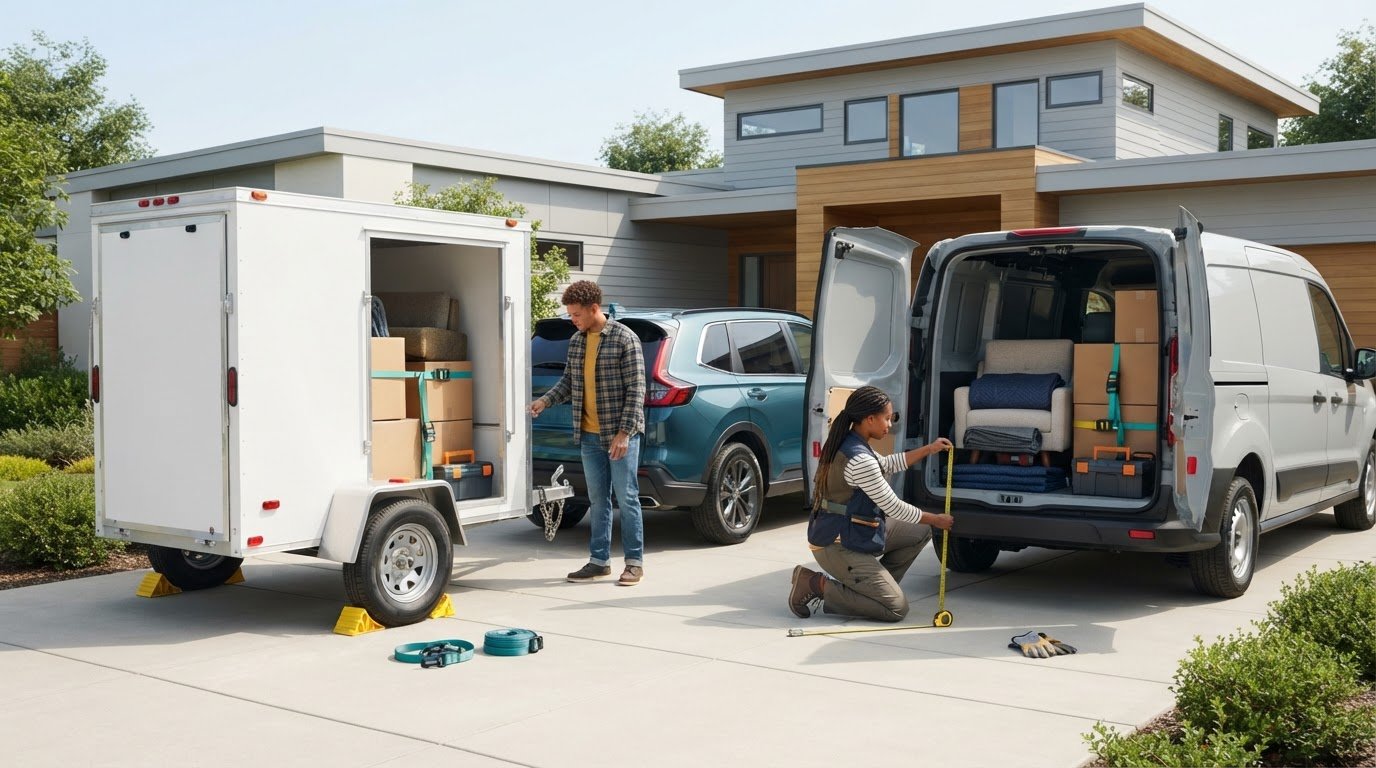
The trailer that seems easiest to book may be the wrong fit if your vehicle can’t tow it. If you don’t have a suitable tow vehicle, a cargo van may work better. A cargo trailer rental for moving makes sense when the vehicle, load, and route all line up, but a listing title alone won’t tell you that.
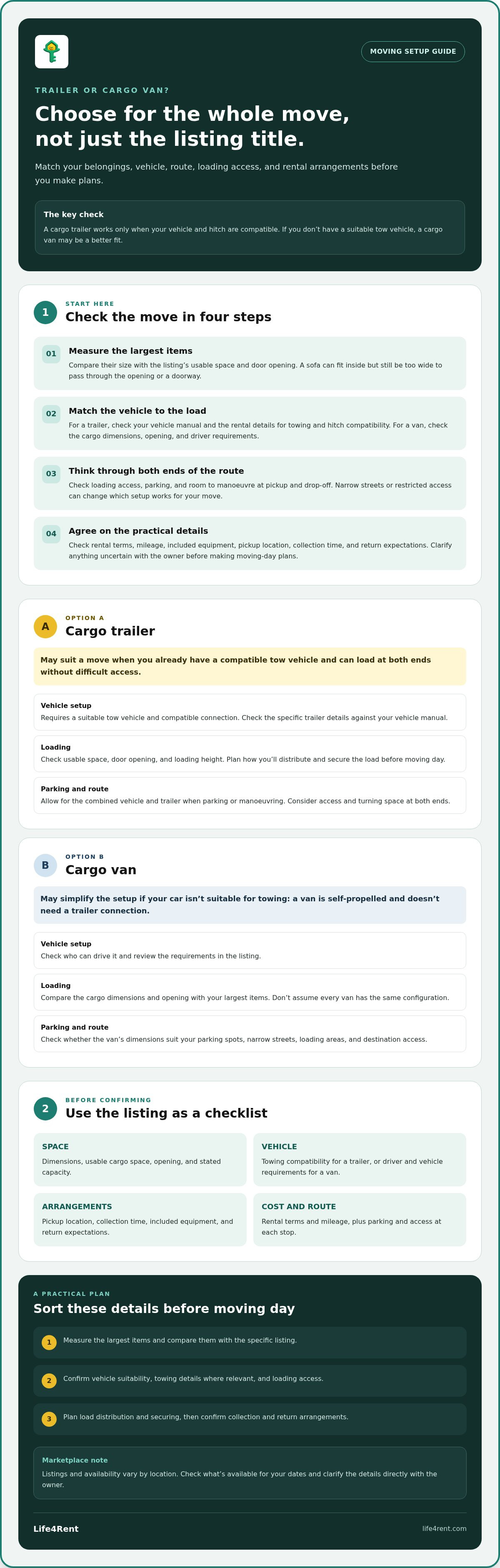
Start by checking whether your belongings will fit, then compare usable space, rental terms, mileage, and pickup and return arrangements. You’ll also need to confirm that your vehicle and hitch are compatible with the trailer. Plan how you’ll distribute and secure the load before moving day, rather than leaving those decisions until pickup.
The right setup depends on the details of your move. Compare a trailer with a cargo van, check the listing and towing details, and agree on the handover and return before you commit. Life4Rent connects renters with individual owners, but suitable listings depend on location, so confirm availability and arrangements directly.
Cargo trailer rental for moving: when it fits a small move
A cargo trailer is towed behind a suitable car or other vehicle. Some trailers are enclosed, but layouts and specifications vary by listing. Since a trailer has no engine of its own, you’ll need to match it to a tow vehicle. For an overview of trailer types, see Trailer (vehicle).
A cargo trailer rental for moving may suit you if you already have a compatible tow vehicle and can load at both ends without difficult access. Don’t choose based on a title such as “small” or “moving trailer.” Measure your largest items, then compare those measurements with the trailer’s usable space and door opening.
This video shows one example of an enclosed trailer rental and its size:
When a trailer may suit a small move
A trailer may be practical for a few bulky items, boxes, or furniture if your tow vehicle and loading access are already sorted. Don’t assess the load by volume alone. A sofa may fit inside the trailer but still be too wide to pass through its opening or a doorway. Consider loading height, steps, space to stage belongings, and where you can park at each stop.
A short local trip with familiar roads may be straightforward, while a longer route or restricted drop-off point can add complications. Check parking and manoeuvring space at both ends before deciding that the listed capacity or dimensions will work for your move.
When a cargo van may be the better fit
A cargo van is self-propelled, so it doesn’t require a tow vehicle or trailer connection. That may simplify the setup if your car isn’t suitable for towing, though you’ll still need to check loading access. Compare the van’s cargo dimensions and opening with your largest items.
Passengers, parking, and route can also affect your choice. A van may be easier where towing would make parking difficult. A trailer may work if you have a suitable vehicle and enough room to manoeuvre. For a cargo van rental for a small move, confirm the listed cargo space and passenger arrangements instead of assuming every van is configured the same way.
On a peer-to-peer marketplace, availability and listing details can vary. Compare the specific trailer or van, then clarify dimensions, vehicle suitability, and collection arrangements with the owner before making moving-day plans.
Cargo trailer vs. cargo van: compare the setup before you book
Choose based on the whole move, not just the amount of space shown in a listing. A cargo trailer needs a suitable tow vehicle and compatible connection. A cargo van is driven on its own. Either may work, but the trade-offs depend on your belongings, drivers, pickup plans, and route.
Use this comparison to narrow your options, then check the specifications for the individual listing. Capacity and usable space vary, so don’t rely on a general label.
| Factor | Cargo trailer | Cargo van |
|---|---|---|
| Towing | Requires a suitable tow vehicle and compatible connection. | No trailer towing required. |
| Loading access | Check the door opening, loading height, and usable space. | Check the cargo opening and interior dimensions. |
| Vehicle requirements | Compare the trailer details with your vehicle manual. | Check driver eligibility and the listing’s requirements. |
| Parking | Allow for the combined vehicle and trailer when parking or manoeuvring. | Check whether the van’s dimensions suit your parking spots. |
| Route planning | Consider access and turning space at both ends. | Check narrow streets, loading areas, and destination access. |
Which option fits your vehicle and driving experience?
For a trailer, check your vehicle manual and the specific trailer’s supplied details before booking. Don’t assume a vehicle suitable for one trailer will suit another. For a van, confirm who can drive it, review its dimensions, and check any requirements in the listing.
Ask the owner about unclear compatibility, collection time, and handover arrangements before you confirm. Trailer safety and best practices offers general trailer-safety context, but it doesn’t replace checking your vehicle manual and the rental details.
Which option fits your belongings and route?
Measure the longest, widest, and tallest items, then compare them with the listed usable space and access points. Identify fragile, heavy, and awkward items as you estimate the load. Furniture may fit inside on paper but still be difficult to move through a narrow hallway or trailer opening.
Account for passengers, parking, and pickup logistics too. A trailer may suit you if you already have a compatible tow vehicle and room to manoeuvre. A van may be easier if towing or parking with a trailer would complicate the trip. To compare options, browse local rental listings, then check whether suitable items are listed for your dates and confirm details with the owner.
What to check in a cargo trailer rental listing
A useful listing should help you decide whether the trailer suits your move and your vehicle. Look for internal and external dimensions, stated capacity, included equipment, pickup location, and return expectations. If a detail is missing, ask before booking rather than assuming it’s standard.
Photos can show visible wear, general layout, and access points. They can’t confirm exact measurements, capacity, included equipment, or vehicle compatibility. Use the description and supplied specifications, and ask the owner to clarify anything that could affect your plans.
Questions to ask the trailer owner
Ask about the specific listing. Confirm the trailer’s specifications and vehicle requirements, then check what equipment is included. Don’t assume moving blankets, straps, or other securing equipment are provided. Ask whether you need to bring your own.
Agree on practical details before planning your moving schedule around the rental:
- Where and when will collection take place, and what should you expect at handover?
- What condition should you note at pickup, and how should you report any concerns?
- Where and when should you return the trailer, and what condition is expected?
- How should you contact the owner if your timing or plans change?
Clear answers can reveal a mismatch early, such as a pickup point that doesn’t work with your tow vehicle or an unclear return arrangement. For a broader overview of direct rentals, see this peer-to-peer equipment rental guide.
How to compare listings without guessing
Compare stated measurements and requirements, not broad labels such as “large” or “ideal for moving.” Check each listing against your plan: will your largest item fit through the opening, is the stated capacity suitable for your load, and does the pickup location work with your route? For a cargo trailer rental for moving, these details are more useful than a polished photo or short headline.
Use the same checklist for each option. If a listing leaves out a key detail, treat it as unanswered rather than assuming it’s included. Message the owner and confirm the important points before you make plans.
Plan the move: loading, towing, and return checks
Preparation can help prevent a mismatch from becoming a moving-day problem. For a cargo trailer rental for moving, work through the key details in order: check the load, confirm the setup, inspect the rental at handover, and agree on the return process.
Before pickup: confirm fit and arrangements
Start with your belongings. Compare bulky items with the listing’s stated usable space and access points, then consider whether there’s room to load and unload at both addresses.
- Match the setup: If you’re towing, check your vehicle manual and the trailer’s supplied specifications and requirements. Don’t guess about compatibility or assume a different trailer has the same requirements.
- Confirm the handover: Agree with the owner on pickup time and location, return expectations, and how to get in touch if plans change.
- Pack for the load: Identify fragile, heavy, and awkward items. Check whether suitable securing equipment is included or whether you need to bring your own.
Moving equipment may help with a one-off job, but check what you’ll actually need before arranging anything extra. This tool rental guide offers broader advice on renting equipment for occasional projects.
At pickup and during the move
At handover, review the trailer or van’s visible condition with the owner and follow the agreed procedure for recording it. If the item, equipment, or vehicle requirements don’t match what you confirmed, pause and resolve the difference before setting off.
- Load with care: Follow the vehicle or trailer instructions for distributing and securing belongings. Protect fragile items and make sure heavy or awkward pieces are stable before travel.
- Recheck before departure: Confirm doors and closures are secure and the load is held in place according to the supplied instructions.
- Return as agreed: Allow time to unload, check the rental’s condition, and follow the owner’s return instructions. Contact them promptly if your timing or plans change.
Return arrangements matter as much as pickup. If you’re comparing locally listed items, check rental listings for your move and confirm availability and handover details directly with the owner before making plans.
Find a cargo trailer rental for moving through a local marketplace
A local marketplace can show whether a cargo trailer rental for moving is listed near you, but a search result is only a starting point. Life4Rent connects individual owners and renters across 17 categories of everyday items. It isn’t a guaranteed source of trailers or vans, so check whether a suitable listing appears for your location and dates before planning around one.
Begin with the details that can rule out a listing quickly: where you need to collect the item, when you need it, and whether you have a suitable tow vehicle. If location or date filters are available, use them. Then read the listing and confirm arrangements with the owner before making moving-day commitments.
A practical checklist for choosing a listing
- Match the location and dates. Check that collection works for your route and that the listing appears available for the dates you need. Confirm timing directly with the owner.
- Review the specifications. Compare stated dimensions and capacity with your belongings, and check vehicle requirements if you plan to tow. Look for details about included equipment rather than assuming it comes with the rental.
- Check the handover plan. Confirm where and when to collect and return the item, what condition to expect, and how you’ll contact the owner if plans change.
- Ask about gaps. If a key detail is missing or unclear, message the owner before deciding whether the listing fits your move.
Listings with similar titles may differ in dimensions, requirements, or pickup arrangements. Compare each option with your checklist. A photo or broad label can’t replace specifications and clear answers.
What to do if no suitable trailer appears
If no trailer fits your dates, location, and vehicle, check whether a cargo van listing could work instead. A van doesn’t require towing, but you’ll still need to confirm its dimensions, driver requirements, pickup details, and suitability for your belongings.
You could adjust your dates or search area if that genuinely works for your move. Don’t stretch the plan just to fit a listing or assume another vehicle or equipment category is a suitable substitute. If nothing matches, keep comparing local rental options rather than committing while an important detail remains unresolved.
Browse the Life4Rent marketplace to see what, if anything, is listed near you. Availability can vary by location, so confirm the listing details and handover directly with the owner before making plans.
Choose your setup, then check what’s available
Choose your moving setup based on your vehicle, belongings, and route. A cargo trailer rental for moving may suit you if your vehicle and the specific trailer are compatible. A cargo van may be a better match if towing isn’t practical. For either option, check the listing’s dimensions and requirements, and confirm unclear details with the owner before committing.
Plan the handover as carefully as the drive. Confirm pickup and return arrangements, check the rental’s condition at collection, and follow the vehicle or trailer instructions for loading and securing your belongings. A few checks in advance can help avoid last-minute surprises.
Life4Rent is a peer-to-peer marketplace connecting item owners with renters, with listings across 17 everyday-item categories. A trailer or van may not be listed in your area, so check local availability and compare the details before making plans.
Search Life4Rent for listings in your area and see whether an option fits your move. Before you book, confirm that the load, vehicle, and rental arrangements work together.
Frequently Asked Questions
Is a cargo trailer or cargo van better for a small move?
Neither is always better. Choose based on your vehicle, belongings, route, and pickup arrangements. A trailer may suit you if you have a suitable tow vehicle and enough room to load and manoeuvre. A van may be a better fit if you can’t tow or expect tight parking. Compare each listing’s dimensions and requirements, and account for passengers and access at both addresses.
Can I tow a rental cargo trailer with my car?
Possibly, but check your car’s manual and the specific trailer’s requirements before booking. Confirm that the vehicle and trailer are compatible, including any connection or equipment requirements stated by the owner. Don’t assume your car can tow a trailer based on its size or because it has towed something else. If a specification is unclear, ask the owner and consult your vehicle information before collection.
How do I choose the right cargo trailer size for moving?
Measure your belongings and compare their dimensions with the listing’s stated usable space and access opening. Pay particular attention to your largest items. A sofa or table might fit by volume but not through the door. Check the listed capacity too, and don’t rely on labels such as “large” or “moving trailer.” The right size is one that fits your actual load and can be loaded at both locations.
What should I check before renting a cargo trailer?
Check the trailer’s dimensions, stated capacity, vehicle requirements, included equipment, pickup location, and return expectations. Confirm the collection time, handover condition, and how you and the owner will handle changes to plans. Photos can help you assess visible condition, but they don’t confirm measurements or compatibility. Before committing, ask about missing details, including whether you need to bring your own equipment to secure belongings.
How much does it cost to rent a cargo trailer for moving?
Cost depends on the location, rental period, trailer, and terms of the individual listing. Check current local options rather than relying on a general estimate. Compare the total stated cost and ask whether equipment or other charges are separate. For a fair comparison with a van, check how mileage and rental time are priced too. Confirm the full terms with the owner before agreeing to the rental.
Does Life4Rent have cargo trailers available near me?
Availability depends on your area and dates, and Life4Rent doesn’t guarantee that cargo trailers or vans will be listed nearby. It’s a peer-to-peer rental marketplace connecting item owners and renters, with listings across 17 everyday-item categories. Search using your location and dates, then review relevant results. Before making plans, confirm listing details and collection arrangements directly with the owner.
What should I do if I can’t find a suitable trailer for my move?
Check whether a cargo van listing suits your belongings and route, especially if you don’t have a suitable tow vehicle. You can adjust your dates or search area if those changes genuinely work for your move. Don’t assume another vehicle or equipment category will be a suitable substitute. If no listing fits, keep looking through local rental options and confirm details before changing your plans.
Related guides on Life4Rent
Ready to rent instead of buy? See all vehicles available to rent on Life4Rent →
Life4Rent
Rent it. Earn from it. Own less, access more.
Browse peer-to-peer rentals near you, or list what you own and start earning — all protected by Life4Rent Protect.
About the author
London, United Kingdom
Fred covers rental technology, app features, and platform mechanics for the Life4Rent Renting Academy. With a background in fintech journalism, he specialises in breaking down how digital rental platforms work — from payment protection and identity verification to smart pricing and booking management.