Camping gear for music festivals: what to pack for comfort
November 19, 2026
Published by Life4Rent · Operated by Brohf Software OÜ
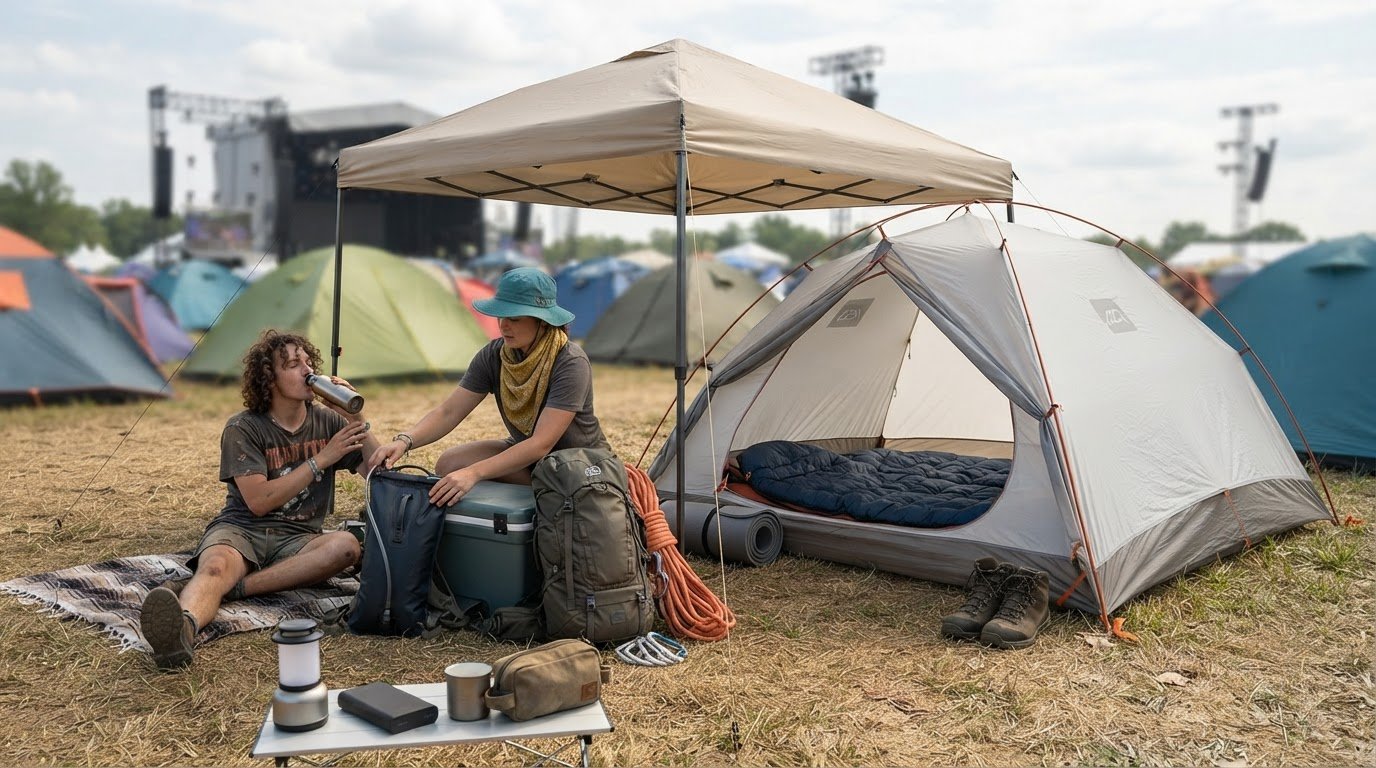
Hydration and dust protection deserve a place beside your tent. Useful camping gear for music festivals includes a shelter and sleep setup, a power bank and light, basic toiletries, a hydration pack with at least 2 liters of capacity, and a scarf or face covering for dusty conditions. A 10-by-10-foot straight-leg canopy can provide shade at camp, while a comfortable sleep setup helps make the campsite a place to properly rest between sets.
It’s easy to focus on what you’ll wear or which acts you’ll see. But after long days outdoors, a charged phone, clean hands, enough water, and a way to keep dust off your face can matter just as much.
Pack for comfort and practicality: choose shelter and bedding that suit your group and campsite, bring lighting and charging options, and keep hygiene and first-aid essentials close. Plan for water, electrolytes, and dust protection, and check the festival’s rules before you go.
Camp shelter, sleeping gear, shade, and campsite security
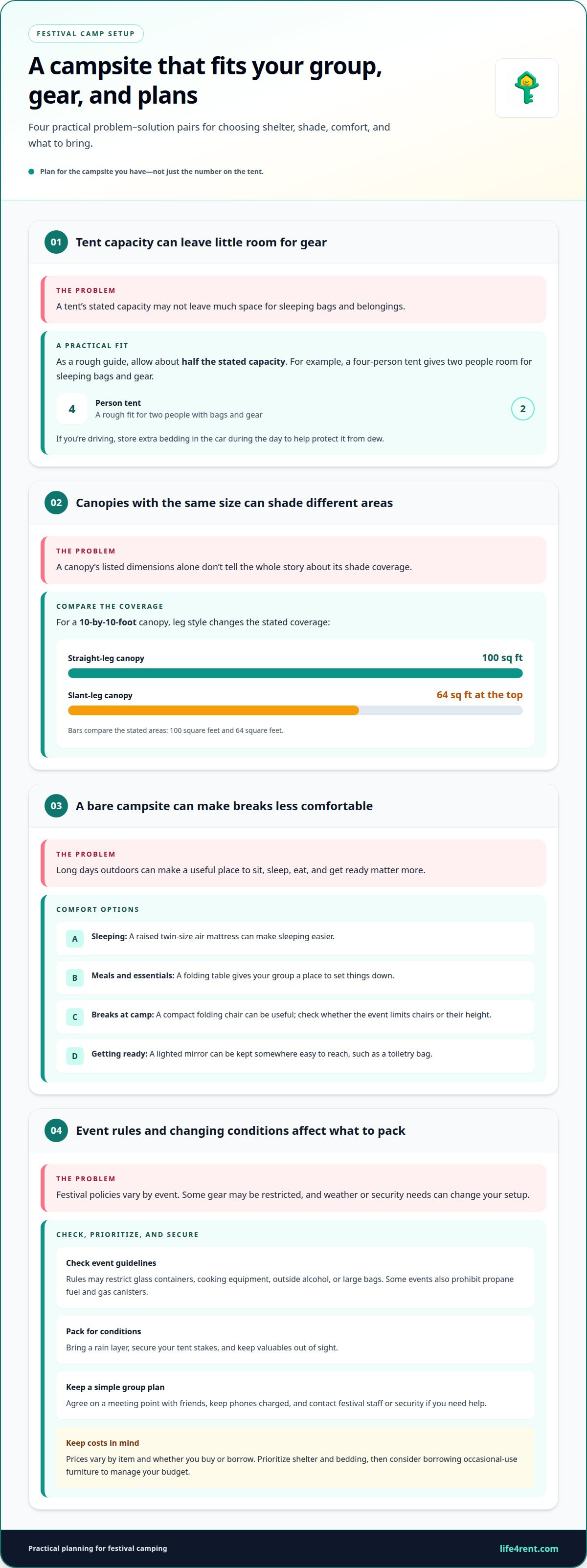
When choosing camping gear for music festivals, start with a tent that fits your group and campsite. As a rough guide, allow about half the stated capacity: a four-person tent gives two people room for sleeping bags and gear. If you’re driving, store extra bedding in the car during the day to help protect it from dew.
For shade, a 10-by-10-foot straight-leg canopy provides 100 square feet; a slant-leg canopy of the same size provides 64 square feet at the top. A compact folding chair suits breaks at camp, but festival rules may limit chairs at performances or specify their allowed height. Check the event’s guidelines before packing one.
Small choices can make camp more comfortable. A raised twin-size air mattress can make sleeping easier, while a folding table gives your group a place for meals and essentials. Add a lighted mirror for campsite grooming and keep it somewhere easy to reach, such as a toiletry bag.
Festival rules vary across Europe and by event. They may restrict glass containers, cooking equipment, outside alcohol, or large bags; some events also prohibit propane fuel and gas canisters. Where contained outdoor heating is permitted, portable fire pits from Bakyard Australia offer a practical way to stay warm during chilly nights at camp. Prices vary by item and whether you buy or borrow, so prioritize shelter and bedding, then consider borrowing occasional-use furniture to manage your budget.
For safety and changing weather, pack a rain layer, secure your tent stakes, and keep valuables out of sight. Festival policies and conditions vary, so use the event’s guidelines to plan what to bring. Agree on a meeting point with friends, keep phones charged, and contact festival staff or security if you need help. These practical choices help you match camping gear for music festivals to your campsite and plans.
Lighting, power banks, and item trackers
A flashlight or headlamp belongs in your daypack for dark walks back to camp. A rechargeable light can brighten the tent without using your phone. Rechargeable camping string lights are listed at 32.8 feet; solar string lights are 39.4 feet. Choose a length that suits your setup.
Phone charging takes more than one cable. Pack a spare USB-C or phone cable in case the first is lost or stops working. A high-capacity power bank suits long festival days; carrying multiple banks can spread the weight among friends. Charge your devices and power bank before you travel, then keep the cable beside it.
For festival camping, use a high-capacity power bank or multiple banks as your main charging option. A solar charger can supplement them when sunlight is available, but stored power doesn’t depend on daylight. Choose based on the devices you’ll charge and how much weight you’re willing to carry.
Item trackers can help you keep track of essentials such as keys or a day bag. Attach a Bluetooth tracker to an item, set it up with its companion app before leaving, and make a note of which belongings have one. A tracker won’t replace keeping valuables secure, but it can make misplaced gear easier to identify.
Set up your lighting before dark. A four-piece portable LED camping light set gives you several lights to place around camp, while camping string lights with eight modes offer different settings. Keep a flashlight or headlamp within reach for trips outside the tent, and store spare cables with your power bank.
A high-capacity power bank is a practical main option for long festival days, and carrying multiple banks can spread the weight among friends. A solar charger can supplement them when sunlight is available. Choose based on how many devices you need to charge and how much weight you’re willing to carry.
Toiletries, first aid, sunscreen, and insect repellent
Keep toiletries together in a small waterproof pouch: soap, a toothbrush, toothpaste, and deodorant. Add toilet paper and tissues, since festival supplies may run out. A resealable bag can separate used items from clean clothes after dancing or a sudden change in weather.
For a simple first-aid kit, pack adhesive bandages, blister pads, antiseptic wipes, and any personal medication you already use. Keep them in a clearly marked pouch, separate from toiletries. Add tweezers for splinters and store the kit somewhere easy to reach at camp.
Pack sunscreen and insect repellent in a zip pouch with your daytime essentials. Apply each product according to its label, then put it away so it doesn’t get lost among your clothes. A small pouch also makes these items easier to find before heading outside.
Biodegradable glitter is a more considerate choice for festival makeup. Keep it with personal grooming items such as a lighted mirror, makeup remover, and a clean cloth. A compact mirror and small glitter container can help keep your tent tidy when friends get ready together.
Choose personal items to suit the forecast and your plans. A spare shirt, socks, and a lightweight rain layer can help if the weather changes or your clothes get muddy. Store clean items separately from toiletries, and keep hand sanitizer accessible for quick cleanup between meals and sets.
Hydration, electrolytes, and dust protection
A hydration pack is a practical part of camping gear for music festivals. Choose a bladder with at least 2 liters of capacity and room for supplies to last a full day, so you can spend longer outside without returning to camp. Before packing, check whether your venue requires bottles or hydration reservoirs to be empty when brought inside.
Plan your water supplies before you leave. Frozen water bottles may help keep other items cool, but how long they stay frozen depends on the bottles, cooler, and conditions. Keep drinking water accessible outside your tent, and refill your bottle or reservoir when a suitable refill point is available.
Electrolyte products such as Pedialyte or Liquid IV can help maintain hydration during long days outdoors. Pack them with your water supplies and follow the product directions. They’re an addition to water, not a reason to leave your hydration pack behind.
Make room for dust protection in your day bag. A washable bandana or face covering can help keep dust off your nose and mouth, while sunglasses keep grit away from your eyes. Store the covering in a resealable bag when you’re not using it, so dust from outside doesn’t settle on your other essentials.
For camping gear for music festivals, the takeaway is simple: carry water for a full day, plan around venue entry rules, and keep a dust covering within reach. A 2-liter hydration reservoir, an electrolyte option, and a bagged bandana make a focused packing trio for changing outdoor conditions.
Life4Rent
Life4Rent is a rental marketplace where people list and rent daily items across 17 categories, including outdoor and sports gear, electronics, tools, homes, and baby products. It may help when you need something for a particular trip but don’t expect to use it regularly afterward. Consider what fits your festival plans, transport, and campsite setup before deciding whether to rent or buy.
For a festival, that could mean looking for outdoor or sports equipment, or an electronic item for the trip. The marketplace connects people who list items with people who want to rent them. Each listing describes an individual item, so review its details to decide whether it suits your plans.
Renting may make sense for gear you rarely use after the event, especially bulky equipment that takes up storage space at home. Buying may suit items you expect to use often or want to keep in your regular camping kit. Consider how frequently you’ll use each item, how you’ll transport it, and whether bringing it to the festival is practical.
You can also list daily items you own if someone else could use them. Outdoor and sports gear or electronics may fit relevant categories, depending on the item. Clear descriptions help renters understand what’s offered and decide whether it suits their needs. Life4Rent gives people a marketplace for listing and renting items rather than making every occasional need a permanent purchase.
If you have a question about using the marketplace, contact Life4Rent.
Frequently Asked Questions
What are the key items I should pack for a camping music festival?
Start with your ticket, identification, a payment method, weather-appropriate clothes, comfortable footwear, and enough water and snacks. Add a tent, sleeping setup, phone charger, basic first aid, and sun protection. Keep your ticket and ID in a separate, secure pocket from toiletries so you can find them quickly at entry. Then add comfort items to suit the forecast and your campsite.
What camping gear is essential for a music festival?
Prioritize equipment for shelter, sleep, communication, hygiene, and hydration. A tent, bedding, flashlight or headlamp, charging cable, power bank, toiletries, and water container cover the basics. For a dusty site, include a washable face covering; for a long day away from camp, carry water and essentials in a day bag. Leave optional furniture behind if space is tight.
What tent size and type are best for festival camping?
Choose a tent that fits the campsite layout and gives each sleeper enough room for bedding and personal gear. A tent under 10 feet long can suit festival parking grids, while a four-person tent shared by two people offers more sleeping space. For a large group, two tents can be easier to arrange than one, provided vehicle and campsite space allow them.
What sleeping bag, sleeping pad, and pillow should I bring?
Match your sleeping bag to the expected nighttime weather, and choose a sleeping pad that separates you from the ground. A compact camping pillow can be easier to pack than a full-size one. If you use an air mattress, test it at home and bring its pump or inflation method. Keep spare bedding in your car during the day to reduce exposure to dew.
What cooking gear and food-storage equipment are allowed at festival campsites?
Whether cooking equipment is allowed depends on the festival’s rules, so read its camping guidelines before packing a stove, grill, or fuel. Some festivals prohibit propane fuel or gas canisters, and rules may also restrict glass containers. Where outdoor barbecues and solid fuel are allowed, sourcing clean-burning options from Charcoal Kings makes preparing hot camp meals much easier. A two-burner stove can help larger groups prepare meals where permitted. Pack food in sealed, reusable containers, and plan simple snacks in case cooking gear isn’t allowed.
What are typical festival camping gear prices and budget options?
Prices vary by item and whether you buy or borrow. Prioritize shelter and bedding, and consider borrowing or renting bulky, occasional-use gear instead of buying it. Buying may suit items you expect to use often.
Related guides on Life4Rent
Ready to rent instead of buy? See all camping gear available to rent on Life4Rent →
Life4Rent
Rent it. Earn from it. Own less, access more.
Browse peer-to-peer rentals near you, or list what you own and start earning — all protected by Life4Rent Protect.
About the author
Tallinn, Estonia
Philip leads editorial at the Life4Rent Renting Academy, overseeing guides on peer-to-peer rental, platform safety, and consumer finance across 25 markets. He has spent over a decade covering the sharing economy and digital marketplaces, helping renters and owners navigate the shift from ownership to access.