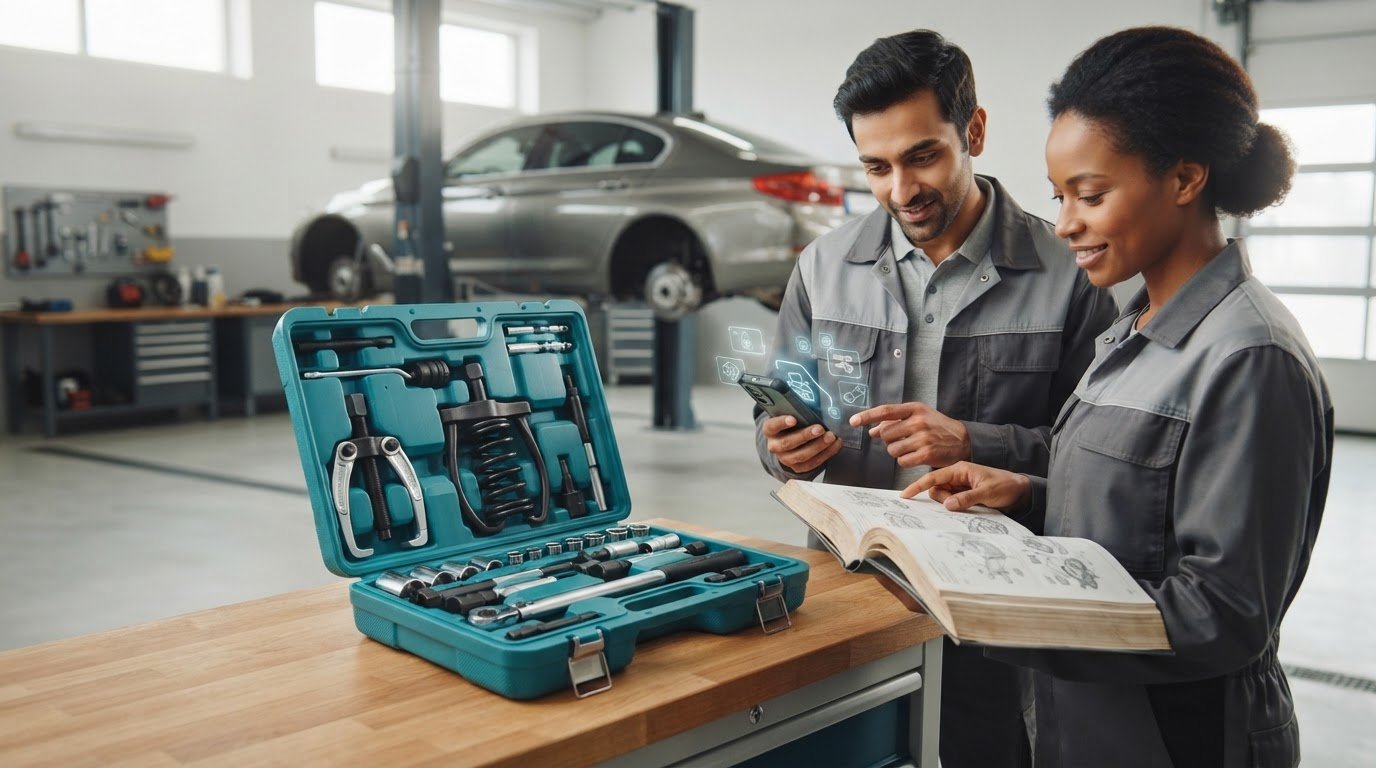
Automotive Tool Rental: How to Choose the Right Tool
September 27, 2026
Published by Life4Rent · Operated by Brohf Software OÜ
What if the hardest part of an automotive tool rental isn’t finding a tool, but confirming it matches your repair and vehicle? A puller, compressor, or other specialist tool can look right in a listing and still be the wrong fit. You also need to know when you can collect it, what condition it’s in, and when it must be returned.
Before comparing rental options, check the repair instructions and the details of your vehicle. A parts-store loaner program may work differently from a paid rental, while a peer-to-peer marketplace such as Life4Rent is one place to check for locally listed tools. Specific automotive tools and locations aren’t guaranteed, so confirm availability before making plans.
This guide explains how to identify the tool your repair calls for, compare the full rental arrangement, and ask useful questions before you commit. You’ll also learn what to check at pickup and return so the tool’s condition and the agreed terms are clear to both sides.
Automotive tool rental: start with the repair, not the tool name
Automotive tool rental gives you short-term access to equipment for a vehicle task instead of buying a tool you may rarely use. The right choice depends on the repair procedure, not just a familiar-sounding name in a listing. A tool that fits one vehicle or repair step may not suit another.
Start by identifying the job. Is the tool needed to diagnose a fault, remove a component, install a replacement, or reassemble parts? Each step may have different requirements. General workshop tools, such as hand tools, can be useful for many jobs, while specialist automotive tools are designed for specific tasks. Neither category guarantees a fit for your vehicle.
Shared access is one way to get equipment for a short-term job. The Tool library concept offers background on borrowing tools through a shared resource. A peer-to-peer rental marketplace works through listings from individual owners, so you’ll need to check the specific tool and its availability.
Which repair are you trying to complete?
Write down the repair step before searching. Diagnosis, disassembly, replacement, and reassembly can each require different tools, even within the same repair. A listing’s tool name alone doesn’t confirm that it’s suitable. Compare its description with the procedure you plan to follow, and clarify any uncertainty before arranging a rental.
What vehicle details should you check first?
Have the vehicle’s make, model, and year to hand, along with any relevant component details. The repair procedure may distinguish between versions of a vehicle, so check the service information for the exact vehicle and the tool requirements it specifies. Share those details with the owner and ask whether the tool fits before arranging pickup.
Compare the listing with the repair instructions. Confirm the tool’s intended use and any stated compatibility details. A similar name, photo, or general category isn’t enough to establish a match. If the listing doesn’t provide the information you need, ask the owner rather than guessing.
Rule of thumb: confirm the vehicle and repair before reserving a tool. This helps you focus on equipment that suits the task and avoid planning around a tool that may not work for your vehicle.
How to Match Rental Tools to Your Vehicle and Repair
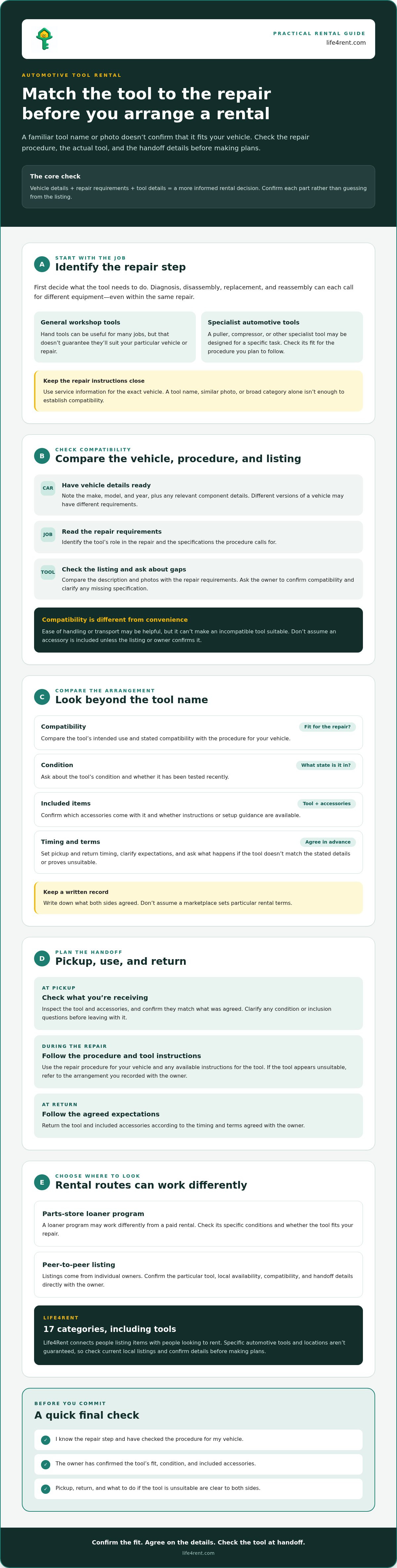
A good match comes from comparing the repair requirements with the actual tool, not choosing the closest-sounding listing. Requirements can vary by vehicle and procedure, so use this sequence before you reserve:
- Define the repair: Identify the step you need to complete and the tool’s role in it.
- Check specifications: Use a reliable procedure for your vehicle to identify the relevant tool requirements.
- Verify fit: Compare those requirements with the listing description and photos, then ask the owner about anything unclear.
- Confirm rental details: Agree on included accessories, pickup and return timing, and what to do if the tool proves unsuitable.
Keep compatibility separate from convenience. The tool must fit the job and vehicle. Features that make it easier to handle or transport may be helpful, but they can’t make an incompatible tool suitable. Don’t assume an accessory is included unless the listing or owner confirms it.
A simple compatibility check before you reserve
Read the repair instructions alongside the listing, and check whether the photos show the parts or accessories the procedure requires. Ask the owner to confirm that those items are included. If the listing doesn’t identify a specification you need to verify, request clarification instead of assuming the tool will fit.
Questions to ask the tool owner
Keep your questions direct. What condition is the tool in, and has it been tested recently? Are instructions or setup guidance available? Which accessories come with it? Agree on pickup and return timing, and ask what happens if the tool doesn’t match the stated details or proves unsuitable for the repair.
Keep a written record of the arrangements so both sides can refer back to what was agreed. Don’t assume the marketplace sets particular rental terms. For broader context on repair estimates and consumer rights in auto repair, the Federal Trade Commission’s guide can help if you’re weighing a DIY job against professional service.
Life4Rent connects people listing items with people looking to rent across 17 categories, including tools, though specific automotive listings aren’t guaranteed. Its tool listings are one part of a search. Confirm the exact fit and handoff details with the owner.
Compare automotive tool rental options without overlooking the terms
A nearby listing isn’t automatically the best option. Compare a peer-to-peer rental with other locally available options using the same checks: Does the tool suit the repair? What condition is it in? What’s included? Will the pickup and return arrangements work for you? The right choice depends on verified availability, fit, and terms, not just the listing title.
Use a simple comparison before committing. Fill in the details for each option, and leave anything unconfirmed until you’ve checked it with the provider or owner.
| What to compare | Option A | Option B |
|---|---|---|
| Tool match | Does the description match the repair? | Does the description match the repair? |
| Condition details | What’s stated or confirmed? | What’s stated or confirmed? |
| Included accessories | Which parts are included? | Which parts are included? |
| Timing | Pickup, rental period, and return | Pickup, rental period, and return |
| Agreed terms | Disclosed charges and conditions | Disclosed charges and conditions |
What should a rental comparison include?
Check that the listing describes the tool clearly and that it suits the planned task. Compare pickup distance, rental period, and return arrangements. Record all disclosed charges, including any deposit or other stated amount. Ask what happens if plans change or the tool proves unsuitable. If a term is unclear, get it clarified before agreeing rather than relying on assumptions.
When is peer-to-peer rental a practical option?
A peer-to-peer listing may suit a one-off repair if the tool is local, available when you need it, and confirmed to fit. The trade-off is coordination: you’ll need to communicate with the owner and agree on the handoff and terms. For more context on access through sharing, read this peer-to-peer equipment rental guide.
For readers in California, the Bureau of Automotive Repair provides consumer information about repair shops and repair-related concerns. It isn’t a rental comparison service, but it may be a useful reference if you’re also weighing whether to handle the repair yourself or seek professional help.
Prepare for pickup, use, and return of a rented automotive tool
A clear handoff helps prevent misunderstandings about what you collected and what you agreed to return. Before using a rented tool, check its condition, confirm the included parts, and review the return plan with the owner.
What to check at pickup
Compare the item with the listing and your messages. Confirm that it’s the tool you agreed on and that the expected accessories are present. If you notice visible damage or a missing part, tell the owner before use and agree on what to do next.
- Tool and accessories: Check the item against the description and the parts you agreed would be included.
- Visible condition: Look for damage or anything that could affect safe or intended use. Raise concerns with the owner before you begin.
- Handoff details: Confirm the return time and location, and how you’ll contact each other if plans change.
- Agreed terms: Review any conditions discussed for using and returning the tool.
A brief written note or photos of the tool and accessories can help both sides refer back to the pickup condition. Keep the record factual, and share any concerns with the owner at the handoff.
How to use and return the tool responsibly
Follow the repair procedure for your vehicle and the tool maker’s instructions. Don’t improvise if the tool doesn’t fit, behaves unexpectedly, or appears damaged. Stop, set it aside, and contact the owner before continuing.
As you work, keep track of the parts that came with the tool so they’re ready for return. Use the tool only for the task and in the way its instructions describe. If you’re unsure how to set it up, ask the owner whether guidance is available rather than guessing. Renting a tool doesn’t replace the vehicle-specific repair information you need to complete the job.
Before returning it, check that you have the agreed item and accessories together. Follow the agreed timing and handoff plan, then confirm with the owner that the return is complete. If a delay or problem comes up, contact them promptly and refer to the terms you both agreed on.
For an automotive tool rental, a careful handoff is part of choosing well. Life4Rent tool listings may include items for short-term jobs. Listings vary, so confirm the item, condition, accessories, and return expectations directly with the owner before making plans.
Find or list automotive tools through Life4Rent
Life4Rent is a peer-to-peer marketplace where people list everyday items for others to rent. Tools are one of its 17 categories, but a particular automotive tool may not be listed near you or available for your dates. Treat it as one place to check, then confirm the listing and arrangements directly before planning a repair around them.
How to look for a suitable listing
Search current listings using the repair task and the tool description you’ve confirmed is suitable. A broad search may bring up items that aren’t right for your vehicle, so compare each description with the repair procedure rather than relying on the title alone.
- Location and availability: Check where the item is and whether its availability fits your schedule.
- Item details: Review the description, condition information, photos, and any listed accessories.
- Rental terms: Clarify the rental period, pickup and return arrangements, and any disclosed charges with the owner.
- Compatibility: Share the relevant vehicle and repair details, and ask the owner to clarify anything the listing doesn’t establish.
Don’t make pickup plans until you’ve confirmed the tool’s fit and the handoff details. A nearby listing may be convenient for a one-off repair, but coordinating with an owner takes time and availability can change.
When listing an automotive tool makes sense
If you own a tool you’re comfortable making available, a clear, factual listing can help someone judge whether it suits their task. Describe its known specifications and condition, and say what’s included. Add useful photos and state the pickup and return expectations plainly so people can decide whether the arrangement works for them.
A prospective renter may ask about vehicle compatibility, condition, or included accessories. Answer only what you can confirm. If you’re unsure whether the tool fits, say so rather than promising it will work. Make the timing and any agreed terms clear before arranging a handoff.
For general advice on borrowing tools for a project, read the tool rental guide. If you’re considering an automotive tool rental, checking current local listings is a reasonable first step. Verify availability and details with the owner before committing your time to the job.
Choose the right tool, then plan the handoff
A sound automotive tool rental starts with the repair procedure and your vehicle details, not just a tool name. Check that the listing matches the job, confirm compatibility with the owner, and compare the full arrangement, including condition, accessories, pickup, return, and any disclosed charges.
Before using the tool, check its condition and included parts, then follow the repair procedure and the tool maker’s instructions. If it appears damaged or doesn’t fit, stop and contact the owner. Clear expectations at pickup and return help both sides understand what was agreed.
Life4Rent is a peer-to-peer marketplace connecting item owners with people seeking rentals. Tools are among its 17 categories, though specific automotive tools and local availability can vary. Check current listings and confirm the details directly before making plans.
Checking the details upfront can help you decide what to do next, whether you’re tackling the repair yourself or seeking help. Start with the right information and make a plan that suits the job.
Frequently Asked Questions
Can I rent automotive tools from a peer-to-peer marketplace?
Yes. A peer-to-peer marketplace can connect you with an individual listing an item for rent. Life4Rent has 17 categories, including tools, but specific automotive tools, locations, and availability aren’t confirmed. Check current listings and contact the owner to verify that the item is available, suits your repair, and can be collected and returned at a time that works for both of you.
How do I know which automotive tool I need for my repair?
Use the repair procedure for your exact vehicle to identify the tool required at each step. Diagnosis, removal, replacement, and reassembly may call for different equipment. Gather the vehicle’s make, model, and year, then compare the stated requirements with the tool description. If the procedure or listing leaves a key detail unclear, ask a qualified repair professional or the tool owner before reserving.
What should I check before renting an automotive tool?
Confirm that the tool matches the repair and vehicle, then check its condition and which accessories are included. Compare pickup location, rental period, return time, and any disclosed charges or other agreed terms. Ask the owner to clarify anything missing from the listing. At pickup, compare the item with the description and raise visible condition concerns before using it.
Is it safe to rent automotive tools from an individual owner?
You can’t determine safety just from the fact that an item is rented or listed by an individual. Ask about its condition, whether it has been tested, and whether instructions are available. Check the tool and accessories at pickup, and follow the tool maker’s guidance and vehicle repair procedure. If it appears damaged, doesn’t fit, or you’re unsure how to use it, stop and contact the owner.
How much does automotive tool rental cost?
There isn’t one standard cost. The amount depends on the specific listing and the terms agreed with the owner or rental provider. Before committing, ask about all disclosed charges, including any deposit or additional stated costs, and check the rental period and return conditions. Compare the full arrangement rather than focusing on one figure. Check the specific Life4Rent listing for its price and terms.
Can I rent a tool if I’m not sure it fits my car?
Don’t reserve it until you’ve checked compatibility. Compare the repair procedure with the listing details, using your vehicle’s make, model, and year and any relevant component information. Send those details to the owner and ask whether the tool fits the task. If neither the listing nor the owner can confirm the match, keep looking or get advice before arranging pickup.
What should I do if a rented tool is damaged or does not work?
Stop using it if it appears damaged, doesn’t fit, or fails to work as expected. Don’t force it or continue the repair with an unsuitable tool. Contact the owner promptly, explain what you observed, and refer to the condition and terms you agreed on. Keep the tool and included accessories together while you clarify next steps, and don’t assume damage coverage or technical support is included.
Related guides on Life4Rent
Ready to rent instead of buy? See all tools & equipment available to rent on Life4Rent →
Life4Rent
Rent it. Earn from it. Own less, access more.
Browse peer-to-peer rentals near you, or list what you own and start earning — all protected by Life4Rent Protect.
About the author
Dublin, Ireland
Michael covers consumer rights, rental law, and EU platform regulation for the Life4Rent Renting Academy. He has reported on digital market policy and renter protections across Europe, and brings a clear, practical perspective to topics like deposit disputes, insurance, and the legal rights of renters and owners.