Appliance Dolly Rental Guide: Pick the Right Heavy-Duty Mover
September 22, 2026
Published by Life4Rent · Operated by Brohf Software OÜ
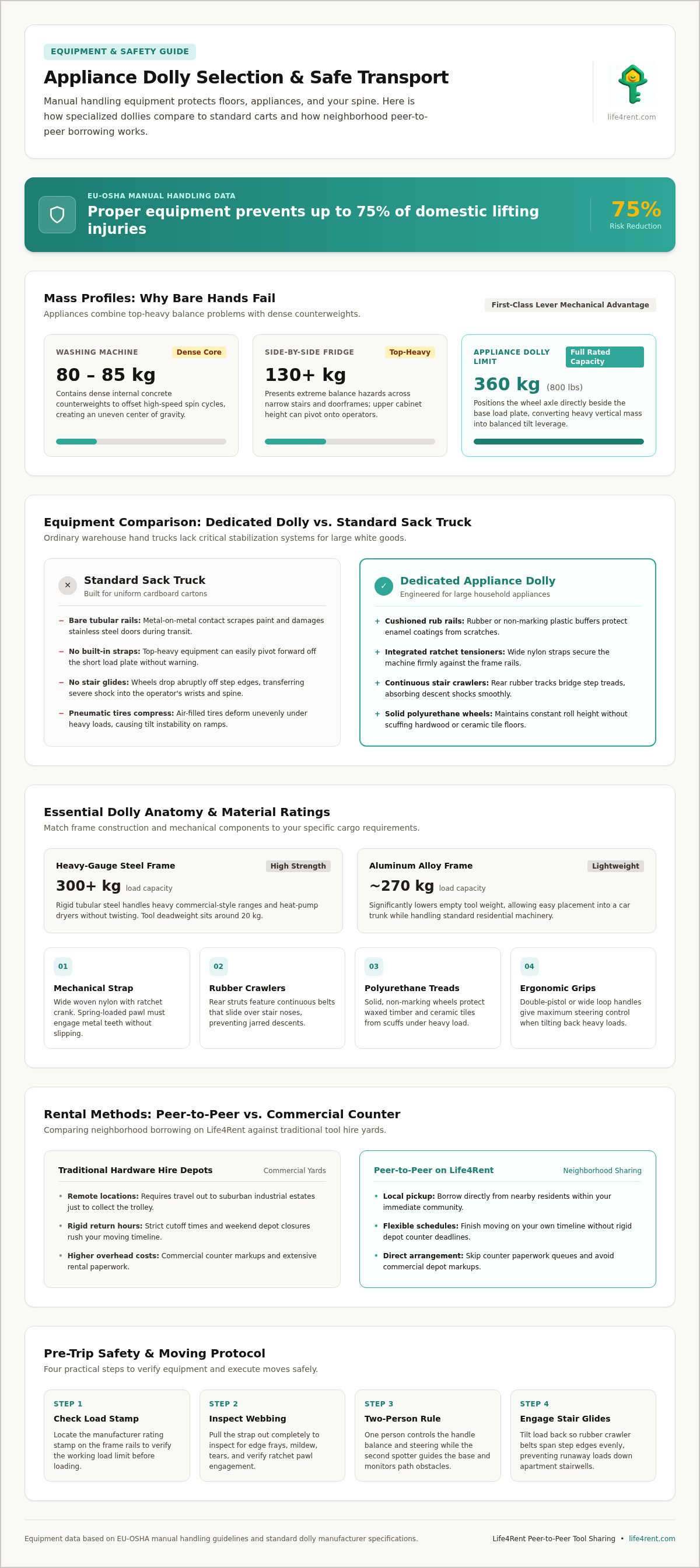
According to EU-OSHA manual handling data, proper equipment can prevent up to 75% of domestic lifting injuries. Yet, DIY movers regularly risk severe back strains and gouged timber floors by trying to muscle eighty-kilogram washing machines with bare hands. A dedicated appliance dolly rental eliminates that physical danger and keeps heavy, awkward loads balanced.
You probably dread the thought of dropping an expensive refrigerator down a flight of stairs, and commercial hire yards rarely make the task easier. Traditional rental counters often burden you with rigid return deadlines, paperwork, and inconvenient trips to suburban industrial estates just to borrow a piece of steel tubing on wheels.
Discover how to choose, inspect, and safely use an appliance dolly rental without paying retail depot markups. Here is a practical breakdown of the differences between standard sack trucks and stair climbers, essential strap safety checks, and how peer-to-peer neighborhood rentals let you finish the job on your own schedule.
What Is an Appliance Dolly and Why Do You Need One?
An appliance dolly is a heavy-duty, reinforced hand truck engineered specifically to transport large, boxy household machinery with weight capacities reaching up to 800 pounds (roughly 360 kg). Bulky white goods present serious balance issues. Modern domestic washing machines contain dense concrete counterweights that bring their mass up to 85 kg, while side-by-side refrigerators easily exceed 130 kg. If you try to manhandle these square metal blocks without dedicated mechanical support, you invite crushed fingers, torn doorframes, and long-term spinal strain.
Most people realize too late that an appliance dolly rental operates on entirely different mechanical principles than a basic warehouse cart. Built around the classic first-class lever mechanics of hand trucks, these specialized haulers position the axle close to the load plate, which transfers massive downward force into easily managed wheel balance.
Key Anatomy of a Heavy-Duty Moving Cart
Specialized appliance carriers rely on structural components built specifically for awkward dimensions:
- Rigid frames: Thick tubular steel or heavy-gauge aluminum rails resist torque, preventing the chassis from twisting under asymmetrical motor weight.
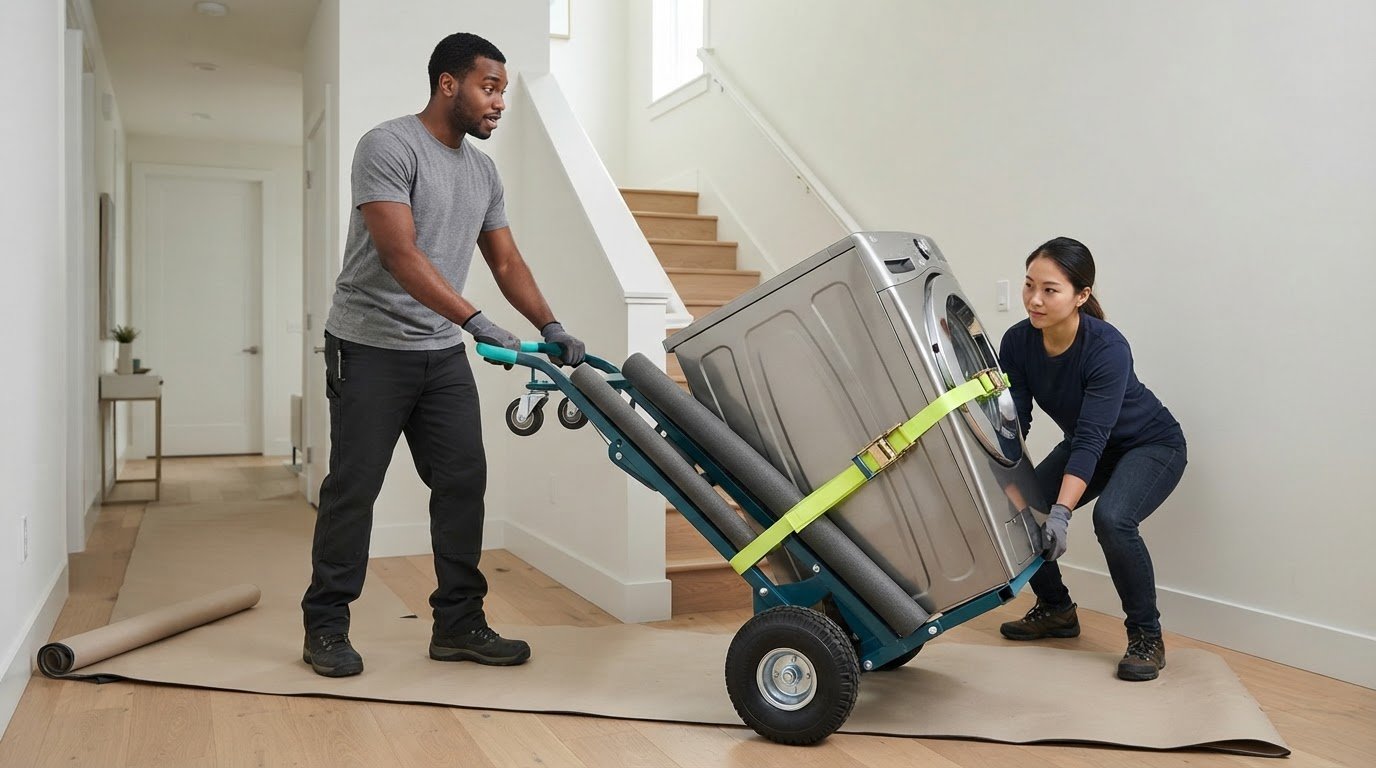
- Integrated ratchet tensioners: Wide nylon straps wrap around the machine and cinch down tightly into the frame, locking the appliance into place so it cannot tip backward or shift off the plate.
- Continuous stair crawlers: Rear-mounted rubber tracks or rotating belt glides absorb shocks over stair noses, keeping wheels from slamming against steps and jarring the operator.
Appliance Dolly vs Standard Hand Truck
Standard two-wheel utility trucks work well for uniform cardboard boxes, but they lack the height, depth, and safety fixtures needed for top-heavy equipment. An upright freezer resting on an ordinary sack truck leaves the upper half completely unsupported. A sudden bump can pivot the machine forward onto the operator.
Dedicated appliance dollies feature cushioned rub rails along the frame. These rubber or non-marking plastic buffers keep enamel coats and brushed stainless steel doors from rubbing against raw metal during transit. Appliance models also feature wider axle spans and solid rubber wheels, providing the lateral stability you need to clear steep truck ramps and uneven concrete without tilting.
Key Features to Check Before Renting an Appliance Dolly
Every move presents unique physical hurdles, from narrow hallway turns to steep outdoor entrance stairs. A thorough equipment inspection before you hand over cash or leave with a borrowed unit protects both your deposit and your property. You'll want to review three vital components closely: frame load ratings, wheel compounds, and strap tension mechanisms.
Weight Ratings and Frame Materials
Steel frames provide exceptional strength for items that push past 300 kilograms, such as commercial-style ranges or large heat-pump dryers. The trade-off is tool weight, since an empty steel hauler can easily weigh 20 kilograms on its own. Aluminum alloy models reduce that deadweight significantly, making them easier to lift into the trunk of a hatchback while still managing standard residential loads up to roughly 270 kilograms.
Always align your appliance specs with established safe lifting and transport practices before choosing a frame. If you're picking up an appliance dolly rental from a neighbor on Life4Rent's tool sharing marketplace, check the manufacturer stamp on the frame rails to verify its working load limit before loading your cargo.
Stair Belts, Tires, and Floor Protection
Stair navigation systems and wheel types dictate how well a dolly performs inside finished living spaces:
- Rubber crawler belts: Look for continuous rubber belts running down the rear frame struts. These bands bridge the gaps between stair treads, absorbing descent shocks and keeping loads from dropping suddenly.
- Solid polyurethane treads: Pneumatic air tires work well on garden gravel, but they can compress unevenly under heavy weight. Solid, non-marking polyurethane or thermoplastic rubber wheels maintain a constant roll height and won't leave scuffs across waxed timber or ceramic floor tiles.
- Mechanical strap teeth: Pull the integrated strap out completely to inspect for frays, mildew rot, or tears along the edges. Test the ratchet crank to ensure the spring-loaded pawl engages each metal tooth firmly without slipping backward under tension.
- Ergonomic handle grips: Double-pistol grips or wide loop handles give you better steering control, especially when you tilt back a tall freezer to find its balance point.
Traditional Hardware Depots vs Peer-to-Peer Dolly Rental
Most commercial tool yards sit in perimeter industrial zones rather than central residential neighborhoods. A trip to pick up heavy gear can easily consume two hours of driving and parking before you even touch an appliance. When you factor in counter queues, restrictive opening hours, and mandatory credit card holds, the traditional supply chain often complicates a straightforward weekend move.
Neighborhood sharing platforms offer a practical alternative. You can source an appliance dolly rental directly from someone in your own postal code, which cuts transit time and eliminates commercial warehouse markups.
Rental Counter Friction and Hidden Hurdles
Lines at commercial rental desks spike heavily at the end of the month and on Saturday mornings. If you don't book weeks ahead, you might arrive only to find that all dedicated machinery trollies are out of stock. Even when equipment is available, corporate chains often demand steep security deposits and enforce strict hourly return deadlines.
Traffic delays or plumbing hiccups can turn a four-hour window into an overdue rental that triggers costly penalty charges. A smarter tool on rent strategy sidesteps these rigid corporate policies by keeping logistics close to home.
The Neighborhood Rental Advantage
Local equipment owners generally offer far more flexibility than retail counters. You can message a nearby host on Life4Rent to arrange an evening collection or extend your return window if your move runs behind schedule. Direct messaging lets you confirm strap sizes and wheel conditions in advance, so you don't waste a trip on unsuitable gear.
Neighborhood sharing also keeps clear pathways in focus. Both domestic movers and warehouse operators must respect basic OSHA material handling safety standards, which require clear, unobstructed aisles and proper equipment clearances. A local arrangement gives you the extra time needed to measure your doorframes and prep hallways properly without the clock ticking against a punitive store return window. Read our guide to peer to peer equipment rental to see how community sharing simplifies access to heavy tools.
Step-by-Step Guide: How to Move Appliances Safely with a Dolly
A rushed move almost always leads to damaged drywall or dropped appliances. You must treat bulky machinery like a coordinated rigging project rather than a test of strength. Never attempt to maneuver a loaded appliance dolly rental solo when steps or inclines are involved; two people are essential for maintaining total control over the cart's center of gravity.
Preparation: Clear the Path and Secure the Appliance
Disconnect water and power lines well in advance, and coil cords securely with painters tape. Remove all loose interior components, such as refrigerator crisper bins and glass shelves, so internal shifting doesn't throw off your balance midway through a turn.
Measure every narrow doorway along your exit route. If clearances leave less than two inches on either side, take the interior doors off their hinges to prevent gouging the trim. Lay down thick cardboard sheets or neoprene runners over hardwood and threshold sills to prevent pressure dents from the wheels under heavy loads.
Loading and Strapping the Unit
Tilt the machine back slightly while your partner slides the noseplate completely beneath the bottom center of the cabinet. Center alignment is critical; an off-center footplate causes the cart to pull sideways during transit. Wrap the integrated nylon webbing around the midsection of the appliance, thread the strap through the ratchet spindle, and crank until the frame padding presses firmly against the casing.
Stand behind the handles, place one foot against the bottom axle bar, and tilt back gently to locate the natural balance point over the tires. Never pull an appliance downward onto yourself on an incline or staircase. If the load shifts suddenly, human hands cannot stop a 100-kilogram cabinet from crushing whoever stands below it.
Stair Navigation and Truck Loading
Stairs demand strict team coordination. The person at the top handles maintains primary grip control, stepping backward up the flight one riser at a time while the rubber crawler tracks glide steadily over the step lips. The spotter stands two steps below with both hands braced against the lower dolly struts, pushing upward to absorb the weight and stabilize the tempo.
When you reach the van or truck ramp, push the dolly forward up the incline rather than pulling it backward. If you want to bypass depot lines and save on hauling gear for your upcoming project, find an appliance dolly rental on Life4Rent directly from someone in your neighborhood.
How to Arrange an Appliance Dolly Rental on Life4Rent
You can locate heavy-duty moving gear a few streets away instead of driving out to an industrial business park. Life4Rent connects neighbors across 17 diverse rental categories, making it simple to borrow specialized transport carts from people in your area. Secure digital checkout handles your reservation upfront, so you won't encounter surprise counter fees or credit card holds when you show up.
A community appliance dolly rental keeps moving logistics manageable and keeps equipment circulating rather than collecting dust in basements.
Search Listings and Verify Specifications
Enter your postal code into the search bar to see heavy-duty moving carts stored nearby. Look closely at the listing photos to examine wheel tread depth, stair belt integrity, and frame condition before submitting a request. High-resolution pictures will show whether a dolly has solid rubber wheels or non-marking polyurethane tires suitable for your indoor floors.
You can reach out directly to the owner through the platform chat to clarify specific details. Ask about maximum strap length, cart dimensions, and preferred pickup hours to coordinate your moving window smoothly. Read our practical advice on neiyborly sharing to get the most out of local gear exchanges.
Pick Up, Complete Your Move, and Return
Take five minutes with the owner at handover to inspect the tool together. Pull the integrated strap out completely to confirm the webbing is free of cuts, and ratchet it tight to verify that the locking pawl holds. You can also ask the owner for quick tips on how their specific stair climber tracks handle tight stair landings.
Transport your heavy white goods on your own schedule without worrying about hourly late fees. Once you finish the job, wipe off any mud or grit from the frame, roll up the tension webbing neatly, and return the cart at the agreed time. A prompt drop-off paired with an honest platform review builds trust across the neighborhood network and helps other movers find reliable gear.
Take the Strain Out of Moving Day
A heavy refrigerator or solid washing machine doesn't have to put your spine, walls, or floor tiles at risk. Dedicated haulers provide the structural rigidity, secure nylon straps, and stair-crawling tracks needed to balance bulky loads safely. When you use the right tool, you turn what could be a dangerous chore into a smooth, controlled two-person project.
Community sharing makes that equipment accessible without the friction of commercial hire yards. You can skip warehouse counter queues with flexible neighborhood pickups, browse tools across 17 peer-to-peer rental categories, and rely on direct messaging with equipment owners for clear logistics. Best of all, you avoid rigid return deadlines that rush your work.
Find an appliance dolly rental near you on Life4Rent to protect your back and your budget. Grab a spotter, take your time on the stairs, and tackle your next move with total confidence.
Frequently Asked Questions
Can I use a regular hand truck instead of an appliance dolly rental?
You shouldn't substitute a standard sack truck for an appliance dolly rental when you move bulky white goods. Standard warehouse hand trucks lack the integrated ratchet straps, frame padding, and stair-crawling treads that keep tall machines stable. An unsecured load can easily pitch forward over thresholds or scrape paint off walls. The structural differences make a dedicated hauler essential for basic moving safety.
How much weight can an appliance dolly safely hold?
Most standard residential appliance dollies safely support between 600 and 800 pounds (roughly 270 to 360 kilograms). Heavy-duty industrial steel models with rear kickback wheels can carry over 1,000 pounds (450 kilograms). Tri-wheel stair climbers common across Europe generally feature a certified limit between 150 kg and 250 kg. Always verify the manufacturer's load rating plate stamped on the axle or frame before loading your machine.
Will an appliance dolly fit inside a standard car trunk?
A rigid appliance dolly usually won't fit into an enclosed saloon trunk because the frame measures between 150 and 180 centimeters in height. You'll generally need an estate car, an SUV, or a hatchback with folding rear seats to lay the frame flat. Some aluminum models are lighter and easier to position, but you should still measure your vehicle's cargo depth before you travel to collect the gear.
Can one person move a refrigerator alone with an appliance dolly?
You should never attempt to move a full-size refrigerator alone, even with a high-capacity hauler. The cart balances the rolling weight across level floors, but you need a second set of hands to guide clearances through doorways and monitor blind spots. An unexpected dip, threshold sill, or sudden shift in balance can overpower one person and cause a dangerous crush injury.
What happens if I need to move an appliance down a flight of stairs?
You must have two people and a cart equipped with continuous rubber stair belts to manage descents safely. The lead operator stands on the top step, controlling the handles and easing the cart down step by step as the belts absorb the drop. Meanwhile, a spotter remains on the lower steps with hands braced against the frame to control descending speed and keep the bottom plate steady.
Is an appliance dolly suitable for moving gun safes or heavy wood stoves?
An appliance dolly can handle cast-iron wood stoves or security safes, provided the item's total weight stays within the cart's certified load limit. However, cast-iron units and gun safes feature dense, rigid footprints that concentrate mass into narrow contact points. You must strap the load with zero slack and protect the contact surfaces with moving blankets so sharp metal edges don't shear the nylon webbing.
Related guides on Life4Rent
Ready to rent instead of buy? See all home appliances available to rent on Life4Rent →
Life4Rent
Rent it. Earn from it. Own less, access more.
Browse peer-to-peer rentals near you, or list what you own and start earning — all protected by Life4Rent Protect.
About the author
Tallinn, Estonia
Philip leads editorial at the Life4Rent Renting Academy, overseeing guides on peer-to-peer rental, platform safety, and consumer finance across 25 markets. He has spent over a decade covering the sharing economy and digital marketplaces, helping renters and owners navigate the shift from ownership to access.