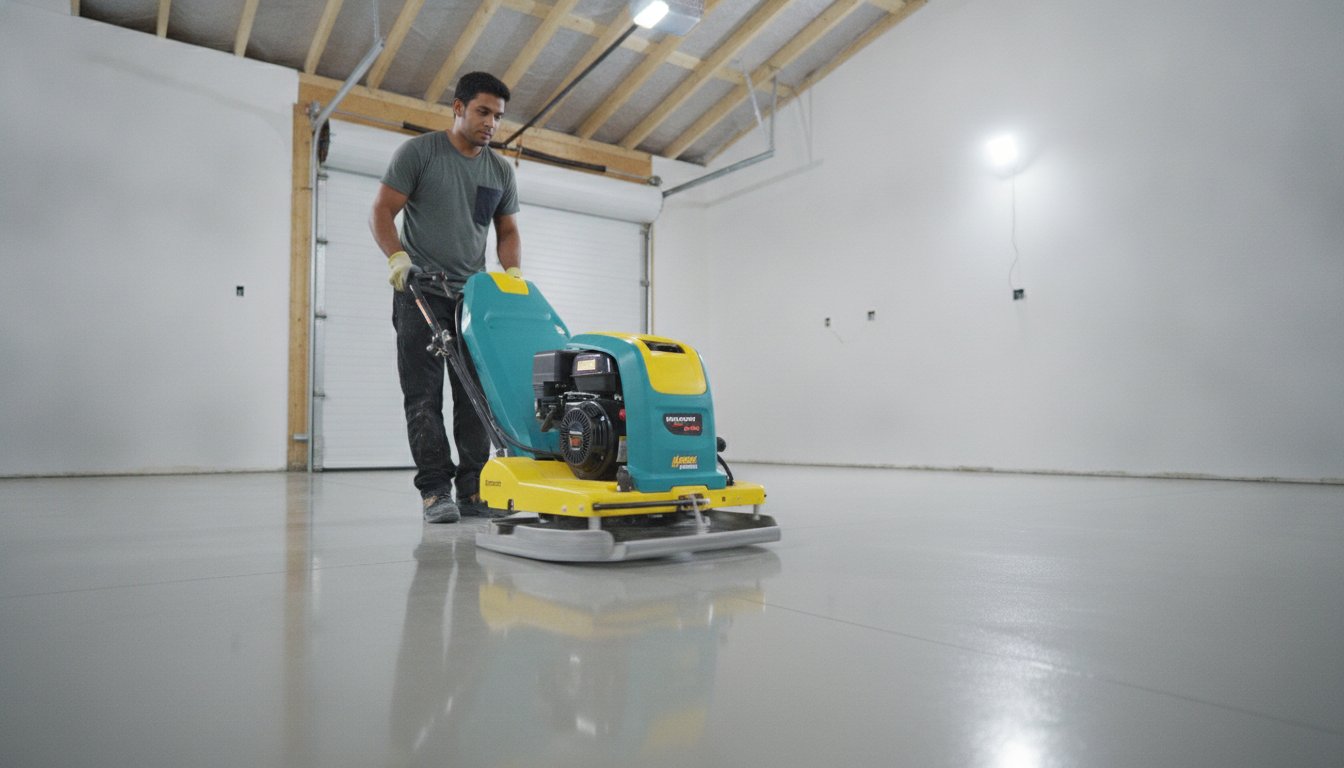
A Renter's Guide to Concrete Finishing Tools for 2026
August 4, 2026
Published by Life4Rent · Operated by Brohf Software OÜ
You don't need to own a few thousand dollars' worth of machinery to get a professional, smooth concrete floor in your garage or workshop. Most people look at the retail price of industrial finishing gear and decide to settle for a wavy, hand-troweled surface instead. It's frustrating to know the right equipment exists but remains out of reach because of high costs and the lack of storage space in your home.
We agree that the quality of your project shouldn't be limited by your tool budget or your shelf space. You'll find that a local power trowel rental through a peer-to-peer marketplace like Life4Rent solves these problems by giving you access to professional gear without the long-term commitment. You'll learn which tools are actually necessary for a high-quality finish and how to save money by renting from neighbors.
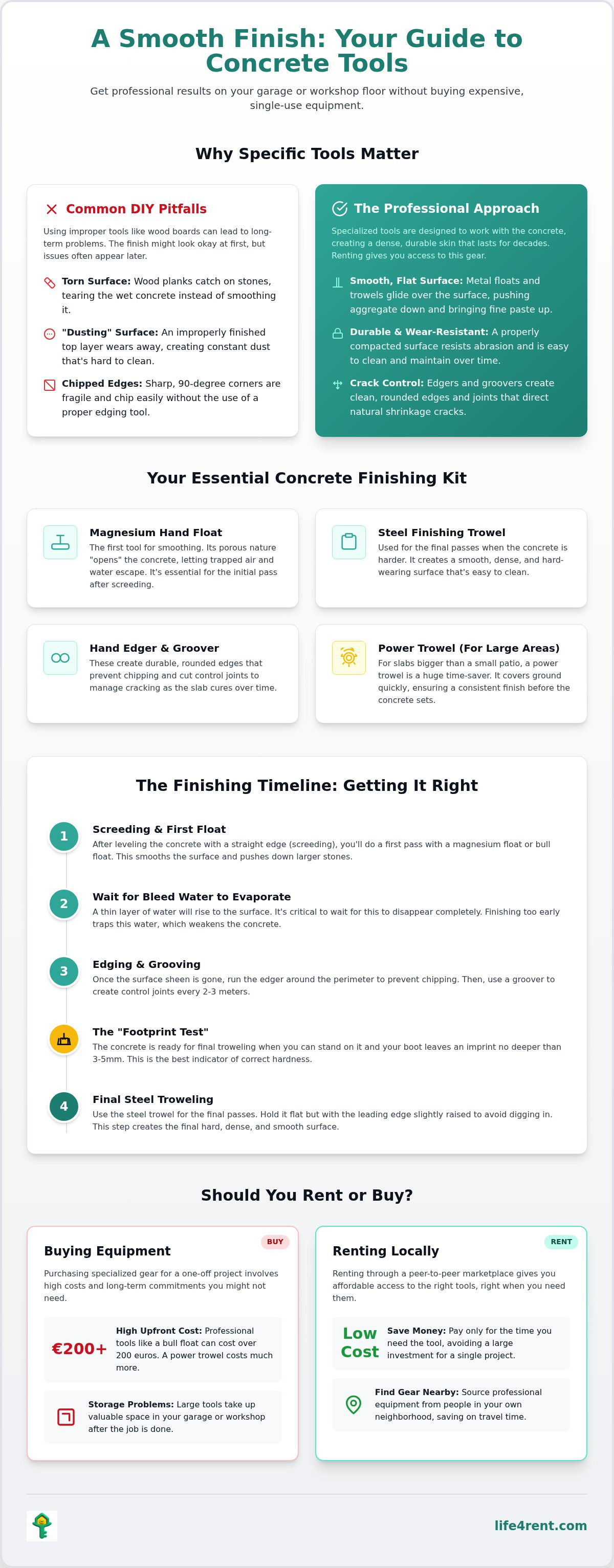
This guide identifies the essential kit for 2026, explains the practical differences between magnesium and steel tools, and maps out the finishing timeline. We've focused on how to get those professional results while keeping your project costs low and your workspace organized.
Why You Need Specific Concrete Finishing Tools
Concrete sets based on local temperature and humidity, leaving you with a narrow window to get the surface right. You might think a straight piece of timber is enough for a small DIY project, but wood often catches on the aggregate and tears the surface instead of smoothing it. Professional tools have rounded or beveled edges that glide over the mix. This precision is why many people look into a power trowel rental when they have more than a few square meters to cover, as the machinery handles the timing far better than manual labor.
These specialized tools do more than just make the floor look flat. They help the "cream"-the fine cement paste-rise to the top while pushing larger stones down into the slab. This layer creates a dense, durable skin that resists wear and tear. If you skip these steps or use the wrong gear, your floor might start "dusting" within a year. This means a fine powder constantly rubs off the surface, making your garage or workshop impossible to keep clean.
The Difference Between Screeding and Finishing
The act of screeding is the first step where you pull a straight edge across the wet concrete to get a level height. It's hard work, but it only sets the stage for the final look. The finishing process begins once the "bleed water" (the thin layer of water that rises to the top) disappears. You must wait for this moment because trapping moisture under the surface causes the concrete to scale or flake off later. Proper finishing compacts the top layer and ensures the slab stays structurally sound for decades.
Common Materials: Magnesium vs. Steel
You'll notice that professional tools come in different metals for specific reasons. Magnesium floats are the standard for the first pass because the metal is slightly porous. It "opens" the surface of the concrete, allowing air and water to escape. If you used a steel trowel too early, you'd seal the surface prematurely and trap moisture inside, leading to bubbles or weak spots.
Steel trowels are reserved for the very last stage when the concrete is hard enough to walk on. This final pass creates a smooth, hard-pressed finish that's easy to clean and maintain. You can find different types of trowels made from bronze or stainless steel too. Bronze is a popular choice for hand edgers because it's heavy and holds its shape well against the abrasive sand in the mix. For large indoor floors, a power trowel rental provides the weight and speed needed to achieve a dense result that hand tools simply can't match.
Essential Concrete Hand Tools for a Smooth Surface
A magnesium hand float is the first tool you'll need after you finish the initial screeding. It's a lightweight tool that smooths out the ridges left by the straightedge and keeps the surface open for moisture to escape. While a power trowel rental is the right choice for large slabs, these hand tools are essential for reaching tight corners where a machine cannot go. You should also have a 16-inch finishing trowel ready for the later stages since this size is standard and easy to control for beginners who aren't used to the weight of industrial gear.
Hand edgers and groovers are just as important for the long-term health of your concrete. Edgers create a small radius on the slab's perimeter, which prevents the concrete from chipping once you remove the wooden forms. This rounded edge is far more durable than a sharp 90-degree corner and looks much cleaner on a finished driveway or patio. Groovers are used to create control joints that tell the concrete where to crack as it shrinks during the curing process, preventing random spiderweb cracks from ruining the slab.
How to Use Floats and Trowels
You must get the schedule right when you move from floating to troweling. You must wait for the bleed water to evaporate completely before you start the final pass. The surface is ready when you can stand on it and your boots leave an indentation no deeper than 3 to 5 millimeters. You should hold the tool flat against the wet concrete but always lift the leading edge slightly to avoid digging in and creating extra work for yourself. This technique is often called the "footprint test" and it's the most reliable way to judge the moisture level.
The Role of Edgers and Groovers
You should run your edger along the perimeter forms immediately after floating to separate the concrete from the wood. This creates a clean line and prevents the edges from breaking off when the forms are pulled away. Control joints should be placed every 2 to 3 meters to manage expansion and contraction effectively over the years. You must clean your tools with water frequently during the process to prevent concrete buildup on the blades. A dirty tool will leave streaks and scratches that are very difficult to fix once the concrete starts to harden.
Dried concrete buildup on the blade will scratch your finish and make the work much harder than it needs to be. If you don't want to buy a full set of professional gear for a one-off project, you can check local tool listings to see what your neighbors have available. It's often cheaper to rent a high-quality magnesium float than to buy a low-grade version from a hardware store. You'll get better results with gear that has already been broken in by a professional.
Bull Floats and Power Trowel Rental: Managing Large Slabs
Large pours like a double driveway or a full garage floor require tools that can span several meters. A bull float is the first line of defense for these projects. It features a long, telescopic handle that lets you reach the center of the pour without stepping into the wet mix. While hand tools are great for the edges, you need the reach of a bull float to keep the entire slab level.
A power trowel rental provides a level of compaction that manual tools simply cannot match. These machines use heavy, rotating blades to press the aggregate down and bring the cement paste to the surface. This mechanical pressure creates a much denser and more wear-resistant floor than you could ever achieve by hand. It's the standard choice for professional-grade workshops and indoor spaces where a flat, dust-free surface is a priority.
When to Use a Bull Float
You should use a bull float immediately after you've finished screeding the surface. The goal is to knock down any high ridges and fill in small valleys left by the straightedge. This tool is physically demanding because of the leverage required, so it's helpful to have a second person to watch the edges while you work. For outdoor projects like driveways, a bull float is often a better choice than a power unit because it's lighter and won't sink into the slab if your timing is slightly off.
The Benefits of a Power Trowel Rental
Large indoor slabs are where a power trowel rental becomes indispensable. These machines allow you to finish massive areas quickly before the concrete sets too hard to work. You can cover hundreds of square meters in a fraction of the time it would take with hand tools. Always check if your rental includes both float blades and finish blades before you leave the shop. Float blades are used first to level the surface, while finish blades are pitched at an angle later to create a hard, smooth surface.
Should You Rent or Buy Your Finishing Equipment?
Professional concrete tools represent a significant investment that most homeowners only use once or twice. A high-quality bull float can easily cost over 200 euros at retail, and that's before you add the necessary handles and brackets. If you choose a power trowel rental, you get access to that same industrial-grade performance for a small fraction of the purchase price. It's a practical way to ensure your garage floor looks professional without overspending on gear that will just collect dust later.
Storage is another factor that people often overlook until the project is finished. Bull floats come with long, awkward handles that take up a lot of space in a standard shed. Heavy machinery like a power trowel is even harder to store and maintain properly. A power trowel rental solves this by letting you return the equipment as soon as the work is done. It's a simple fix for a space problem. It's also a more sustainable approach because it keeps existing tools in use rather than requiring the manufacture of new ones for every single DIY project.
Cost Breakdown for Single-Use Projects
You should compare the daily rental rate against the total cost of ownership before you reach for your credit card. Retail prices for professional floats don't usually include specialty accessories like handle adapters or pitch-control brackets. These small parts can add another 50 to 80 euros to your bill very quickly. It's a steep climb. You also have to consider the time spent cleaning and oiling the metal to prevent rust during storage. When you choose a tool on rent, these components are typically included in the package, and the owner handles the long-term maintenance. You'll save money by only paying for the 24 or 48 hours you actually need the equipment on-site.
Quality vs. Price Trade-offs
Cheap tools from a local hardware store might seem like a good compromise, but they often have rough surfaces or flimsy handles. These imperfections leave marks on your wet concrete that are nearly impossible to buff out later. Professional rental tools are usually well-maintained and "broken in," meaning the edges are already smooth and ready for a clean glide. A new steel trowel often has sharp edges that dig into the mix until you've used it for several hours. The look of your permanent slab shouldn't be sacrificed to save a few euros. Local listings often let you find professional rental gear in your own neighborhood that offers better results than anything you'll find in the bargain aisle.
Use Life4Rent to Find Professional Gear Locally
Life4Rent connects you with local owners who have professional construction tools sitting idle in their garages or workshops. You can search for concrete finishing gear in your specific neighborhood to save travel time and avoid the hassle of large rental chains. The platform handles the payment and ensures a secure transaction for both parties. A power trowel rental through this peer to peer equipment rental model supports your local economy and keeps high-quality tools accessible without the high retail price.
Local rentals mean you don't have to worry about the logistics of long-distance transport for heavy machinery. You can often find owners who are experienced DIYers themselves and can offer practical advice on how to handle the gear. This community aspect makes the process much more approachable for someone tackling their first major concrete pour. It's a straightforward way to get professional results while building connections within your own town.
The marketplace includes 17 specific categories, so you can find everything from construction tools to baby gear in one place. A local platform reduces the need for constant manufacturing of new equipment that only gets used once a year. This is a more sensible approach to home improvement that prioritizes access over ownership. You'll find that many owners list professional brands that are much more durable than the entry-level options found in big-box stores.
How to Rent from Neighbors
Take a look at the listings to see photos and descriptions of the available tools. You should check the owner's reviews to ensure the equipment is well-maintained and reliable. It's helpful to message the owner directly to ask about specific blade sizes or handle lengths before you confirm your power trowel rental. Most owners are happy to provide extra details to ensure their equipment is the right fit for your project.
The availability calendar is the best way to plan your pour around the weather. You can coordinate the pickup time to match your delivery of wet concrete, ensuring the tools are on-site exactly when you need them. If you're unsure about which float to use, the direct messaging feature allows you to clarify technical specs before any money changes hands. This transparency helps avoid mistakes and ensures you have the right kit for a smooth finish.
Safety and Protection Plans
You should review the item protection plan details before you finalize your rental to understand how the gear is covered. Ensure you have the right transport for long items, as bull float handles can be difficult to fit in a standard car. You'll need to clean the tools thoroughly with water before you return them to the owner. This ensures the equipment stays in good shape for the next user and keeps your reputation as a reliable renter high. Proper care prevents the concrete from hardening on the blades, which is essential for maintaining the tool's performance.
Professional Concrete Results with Local Rental Gear
A smooth, durable slab depends on the tools you use during those critical hours of curing. You've seen how specialized edgers and magnesium floats prevent long-term damage like dusting or chipping. By opting for a power trowel rental instead of buying expensive gear, you can focus your budget on the quality of the concrete itself rather than equipment that will only sit in your shed afterward. These professional machines provide the weight and compaction needed for a dense, wear-resistant surface that hand tools simply don't match.
You can find affordable concrete tools for rent on Life4Rent and connect with neighbors who already own the professional equipment you need. This secure marketplace makes it easy to rent high-quality gear for a fraction of the retail price while supporting sustainable sharing in your local community. It's a sensible way to tackle your next home improvement project with confidence and keep your workspace clutter-free. You'll get the results of an experienced contractor without the permanent overhead of a full tool kit.
Frequently Asked Questions
How long should I wait before using a concrete trowel?
You should wait until the bleed water has completely evaporated and the slab is firm enough to support your weight. The standard test is to step onto the concrete; if your boot leaves an indentation between 3 and 5 millimeters deep, it's ready. If you start too early, you risk trapping moisture under the surface, which leads to flaking and scaling later in the slab's life.
What is the difference between a concrete float and a trowel?
A float is designed to level the surface while keeping the pores open so moisture can escape. Trowels are used much later in the process to compress the surface and create a hard, polished finish. You'll usually start with a magnesium float immediately after screeding and finish with a steel trowel once the concrete has begun to set.
Do I need a bull float for a small sidewalk project?
You don't necessarily need a bull float for a narrow sidewalk since you can reach the middle from the sides. A magnesium hand float is often enough for projects less than 1.5 meters wide. Bull floats are mostly for driveways or large slabs where you can't reach the center without a long, telescopic handle.
Can I use a wooden board instead of a magnesium float?
You can use a wooden board for the initial screeding, but you shouldn't use it for finishing. Wood has a high friction level that tears the surface and catches on the stones in the mix. Magnesium is a much better choice because it glides smoothly and helps the fine cement paste rise to the top for a professional look.
How do I prevent my concrete tools from sticking to the surface?
You can prevent sticking by keeping your blades clean and tilting the leading edge upward during each pass. If the metal digs in, it's usually because the blade is too flat or the concrete is still too wet. You should keep a bucket of water nearby to rinse off any buildup every few minutes to maintain a smooth glide.
What tools are needed for a broom finish on concrete?
You'll need a magnesium float, an edger, and a specific concrete broom with soft bristles. After you've smoothed the surface with the float, you pull the broom across the slab in one continuous motion. This creates a slip-resistant texture that's essential for outdoor steps, ramps, and public walkways where grip is a safety priority.
Is it better to rent a power trowel or do it by hand?
A power trowel rental is the superior choice for any indoor floor larger than a single car garage. The machine provides a level of compaction and density that you simply can't achieve with manual labor. While you can finish a small patio by hand, the machine ensures a perfectly level surface and a much harder wear layer for workshops or warehouses.
How do I clean concrete tools after they have dried?
You should use a wire brush or a putty knife to scrape off the largest pieces of dried concrete. If the residue is thin, a firm scrub with a stiff-bristled brush and water usually does the trick. You should avoid using heavy hammers to knock concrete off, as this can bend the metal blades and ruin the tool's ability to create a flat finish.
Related guides on Life4Rent
Ready to rent instead of buy? See all tools & equipment available to rent on Life4Rent →
Life4Rent
Rent it. Earn from it. Own less, access more.
Browse peer-to-peer rentals near you, or list what you own and start earning — all protected by Life4Rent Protect.
About the author
Dublin, Ireland
Michael covers consumer rights, rental law, and EU platform regulation for the Life4Rent Renting Academy. He has reported on digital market policy and renter protections across Europe, and brings a clear, practical perspective to topics like deposit disputes, insurance, and the legal rights of renters and owners.