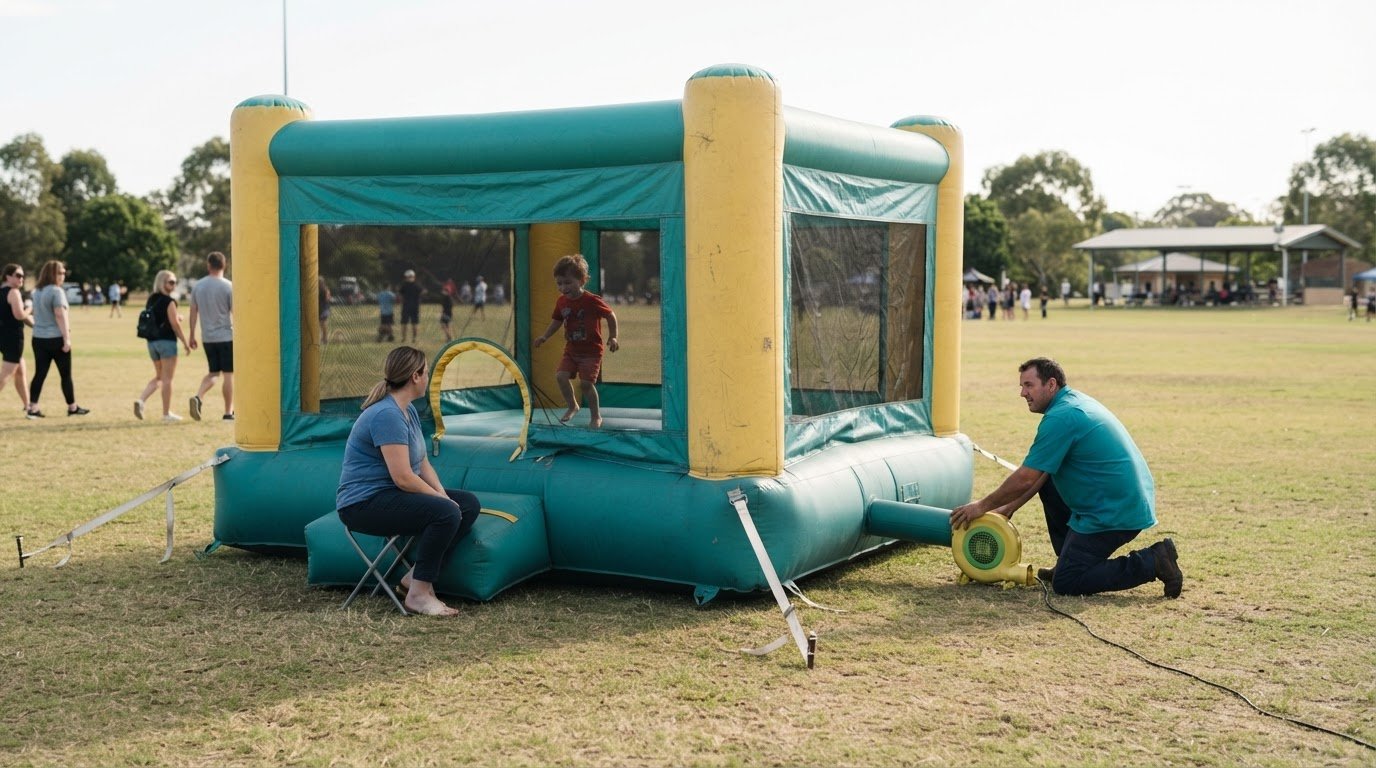
4 Ways to Assess Bounce House Rental Business Profitability
November 15, 2026
Published by Life4Rent · Operated by Brohf Software OÜ
Profit comes from the bookings that remain worthwhile after equipment is delivered, set up, cleaned, and maintained. A bounce house rental business can be profitable, but whether it is depends on booking consistency and how well the operator controls costs, not on revenue alone.
A full calendar can still leave little profit if travel, labor, repairs, storage, and slow periods eat into each booking. Rental rates vary by inflatable type and location, so a standard bounce house, water slide, and obstacle course can each contribute differently to your bottom line.
To assess whether a bounce house rental business is profitable, examine revenue drivers and operating costs, training and day-to-day handling, profit margins, and rental rates across different inflatables. Consider these factors together to decide whether the business fits the equipment and service area you have in mind.
1. How Do Operators Generate Six-Figure Revenue and What Are Real Costs?
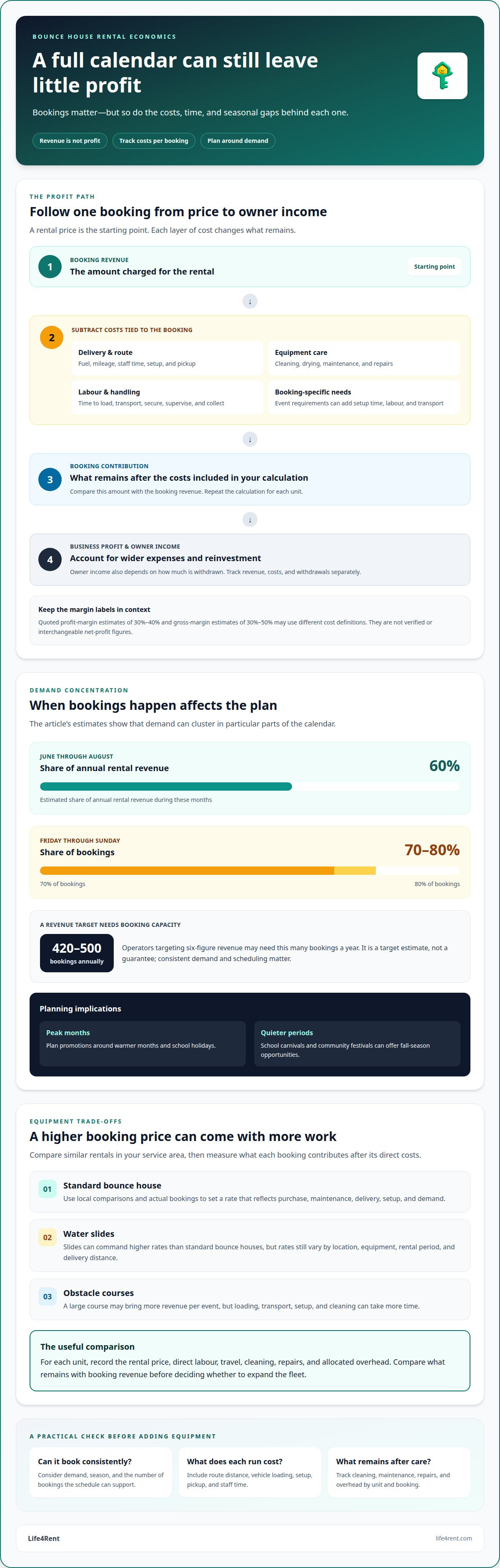
Operators targeting six-figure revenue may need 420–500 bookings annually, so demand and consistent scheduling matter alongside equipment capacity. A larger fleet can serve overlapping parties, but it also increases storage, maintenance, and transport costs.
Equipment costs vary with quality and fleet size. Compare estimates by unit and package, since they may describe different purchasing scopes rather than directly comparable options.
Insurance and overhead also shape the budget. Set aside a reserve for repairs, cleaning, storage, and equipment wear.
Give marketing its own line in the startup plan. Track which campaigns generate inquiries and confirmed bookings, since clicks alone do not show whether marketing is paying off.
Transport can be a substantial cost. Include fuel, mileage, staff time, setup, and pickup when estimating each route’s contribution. Follow local rules for inflatable use and the manufacturer’s setup and supervision instructions. Injuries and property damage can lead to liability claims, so insurance helps address that exposure.
2. Do I need special training to use the inflatable?
Practical training helps operators manage setup, supervision, and daily inspections safely. SIOTO-certified operator training covers these areas, including emergency response. Operators also need to learn how to transport, roll, unroll, secure, clean, and maintain inflatables. Marketing and customer communication are separate skills, but both affect how smoothly bookings become revenue.
Build a consistent maintenance routine around every rental. Inspect the inflatable before setup and after pickup, and record any damage or wear before returning it to inventory. Clean and dry equipment before storage, and track repairs by unit. For combo units, inspect every attached feature rather than treating the inflatable as one simple surface.
Route planning directly affects daily operations. Group nearby bookings when schedules allow, and account for vehicle loading, travel time, setup, and pickup when planning each run. A distant booking may look attractive, but extra mileage and staff time can reduce its contribution. Clear arrival updates also help customers prepare the site and prevent delays.
Demand changes with the calendar. June through August account for an estimated 60% of annual rental revenue, while Friday through Sunday bookings account for 70–80%. Plan social media posts and local promotions around warmer months, school holidays, and weekend events. School carnivals and community festivals can offer fall-season opportunities when summer demand eases, while indoor entertainment centers like Cool Springz capture consistent year-round demand for family and group jump activities.
Good service can support repeat bookings: communicate arrival details, explain setup expectations, and respond professionally if plans change. Track inquiries, completed bookings, and repeat customers by marketing channel; this shows whether social posts or local partnerships bring actual business. For other everyday rental needs, a daily-item rental marketplace offers another option alongside buying.
3. Inflatable rental profitability and profit margins
Figures such as annual income of $15,000 to over $250,000 are sometimes quoted for inflatable rental businesses, but without a defined market or supporting data, they’re not a reliable guide to typical earnings. Actual results depend on marketing, advertising, and management. To assess whether a bounce house rental business is profitable, separate revenue from costs and owner income.
A rental price is revenue, not profit. Delivery, setup, labor, cleaning, maintenance, and overhead all affect what remains. Track these costs for each booking and inflatable so a busy unit does not appear more profitable than it is.
Profit-margin estimates of 30% to 40% and gross-margin estimates of 30–50% per booking are also quoted, but their basis and included costs may differ. Don’t treat them as verified or interchangeable net-profit figures. Gross margin shows what remains after included costs; net profit also reflects broader business expenses.
For a useful comparison, record the rental price, direct labor, travel, cleaning, repairs, and allocated overhead for each booking. Compare the remaining amount with the booking revenue. Repeat the calculation for standard units and higher-priced inflatables, since a larger booking total can also involve higher delivery and labor costs.
Corporate events may bring in larger bookings, but their requirements can add labor, setup time, and transport. Owner income depends on the profit left after operating expenses and reinvestment, as well as the amount the owner withdraws. A simple monthly record of revenue, costs, and withdrawals makes the difference clear. Review the figures by season, too: a profitable summer may not reflect the full year.
4. Rental rates for bounce houses, water slides, and obstacle courses
Rental rates vary by location, equipment type, rental period, and delivery distance. Treat any figures as market estimates, not guaranteed local prices.
Slides can command higher rates than standard bounce houses. Broad price ranges reflect different equipment and event needs, so comparing categories alone will not establish a reliable rate.
Set your rate by considering the inflatable’s purchase and maintenance costs, delivery and setup time, and local demand. Compare similar rental options in your service area, then record actual bookings. A large obstacle course may bring in more revenue per event, but loading, transport, setup, and cleaning can take more time, too. Calculate its contribution after direct costs before expanding your inventory.
Delivery can change the final booking value. Don’t use a $50–$200 delivery-fee range unless local records support it. Businesses may use delivery fees or minimum orders for customers farther away. Make the terms clear before confirming a booking. Covering a wider area can attract more customers, but fuel, mileage, and staff time affect the return.
For a practical rate test, compare the same inflatable across weekday and weekend inquiries, then track confirmed bookings and direct costs. Adjust only when records show a clear pattern, rather than reacting to one slow week. If you’re looking to rent or list other everyday items, explore daily-item rentals on Life4Rent.
Life4Rent: Life4Rent is a rental marketplace where users can list and rent daily items across 17 categories ranging from tools, electronics, outdoor/sports, homes, baby etc
Life4Rent is a rental marketplace for people who want to list or rent everyday items. Its 17 categories include tools, electronics, outdoor and sports gear, homes, and baby products. After weighing the costs and demand involved in an inflatable rental business, the platform may be useful for other everyday rental needs, such as borrowing equipment rather than buying it or listing items you already own.
Peer-to-peer renting can be practical when you need an item for occasional use, while listing can help put an underused belonging to work. The right choice depends on what you need and what you’re comfortable making available to others. For questions about using the marketplace, contact Life4Rent.
Set Clear Priorities
Before committing more money or time, decide what a workable business would look like for you. Set personal targets for bookings, owner hours, and how much you are willing to reinvest. Use those priorities to guide decisions about adding inventory, adjusting your service area, or keeping the operation small.
Whether a bounce house rental business is profitable for you depends on how its demands fit your goals, not just on gross revenue. Review your records regularly and change one part of the plan at a time. That makes it easier to tell whether a new route, event type, or marketing effort is helping.
If you’re also considering renting or listing everyday items, browse Life4Rent’s peer-to-peer marketplace to compare available items and review listing details before making a decision.
Frequently Asked Questions
What Revenue Streams Drive Bounce House Rental Business Profit?
Equipment rentals provide most of the revenue, with different inflatables serving different event needs. Standard bounce houses, water slides, and obstacle courses can appeal to distinct customer groups, while delivery fees may add revenue to bookings. Schools, churches, and community organizations can also create larger or recurring event opportunities. Track income by equipment type and event source to see which bookings contribute most after delivery and labor.
Do I need any kind of special training to operate the inflatable?
Special training can help, although there is no single certification requirement for every operator. SIOTO-certified operator training covers setup, supervision, emergency response, and daily inspections. Practical preparation should also include transporting, securing, cleaning, and maintaining inflatables. For example, operators should know how to inspect a unit before it leaves storage and record damage after pickup.
How Do Operators Generate Six-Figure Revenue and What Are Real Costs?
Six-figure revenue depends on booking volume, equipment capacity, and the share of inquiries that become paid rentals. A useful planning target is 420–500 bookings annually, but revenue is not the same as owner income. Include working capital of $5,000–$10,000 in the startup plan, then track fuel, labor, repairs, and storage against actual bookings. A bounce house rental business is profitable only when revenue exceeds these operating and startup costs.
Scaling usually means building demand and operational capacity before adding more equipment. A suggested starting inventory is three units, with an 8–12-unit fleet identified as a potential basis for six-figure revenue. Consistent bookings, reliable delivery processes, and repeat customers help support growth. One industry estimate places the timeline for consistent six-figure revenue at 3–5 years, so treat expansion as a staged plan rather than an immediate outcome.
How do I know when it's time to buy another inflatable?
Consider adding a unit when existing equipment is frequently booked, customers are turned away because dates are unavailable, or people repeatedly request a type you do not offer. Compare those missed opportunities with the new unit’s purchase, storage, maintenance, and delivery demands. Repeated requests for water slides, for example, may justify researching that category, while occasional inquiries alone may not support expanding inventory.
How many units can I start with?
Three units are a suggested starting point for a bounce house rental business. A small fleet can help test local demand across different event needs without requiring the operational capacity of a larger inventory. Choose a mix you can transport, store, inspect, and maintain reliably. Review booking records before expanding, especially if one unit stays idle while another regularly creates scheduling conflicts.
Life4Rent
Rent it. Earn from it. Own less, access more.
Browse peer-to-peer rentals near you, or list what you own and start earning — all protected by Life4Rent Protect.
About the author
Dublin, Ireland
Michael covers consumer rights, rental law, and EU platform regulation for the Life4Rent Renting Academy. He has reported on digital market policy and renter protections across Europe, and brings a clear, practical perspective to topics like deposit disputes, insurance, and the legal rights of renters and owners.