4 risks of renting out your tools, from delays to repairs
November 27, 2026
Published by Life4Rent · Operated by Brohf Software OÜ
A tool can come back late, damaged, or less reliable than before. The risks of renting out your tools include delays, breakdowns, unclear responsibilities, damage or loss, and depreciation that can bring unexpected repair costs. Each may disrupt your plans and reduce the tool’s future usefulness.
Rental income can be appealing, especially when a tool sits unused. But renting it out also means planning for late returns, agreeing who handles maintenance, and deciding what to do if it is damaged or goes missing. Clear terms and a record of the tool’s condition are a good starting point for managing these risks. Prepare for delays, define responsibilities, plan how to respond to damage or loss, and compare wear and repair needs with potential income. These steps help you decide which tools to rent out and what to plan for.
Planning for equipment breakdowns and delivery delays
A late return can disrupt another booking, especially when a project depends on that tool. Set a clear return time and leave a buffer before booking it again. If the tool breaks down, document the fault, stop further use, and agree on a fallback plan. An alternative rental or a rescheduled project may keep things moving, but requires extra coordination.
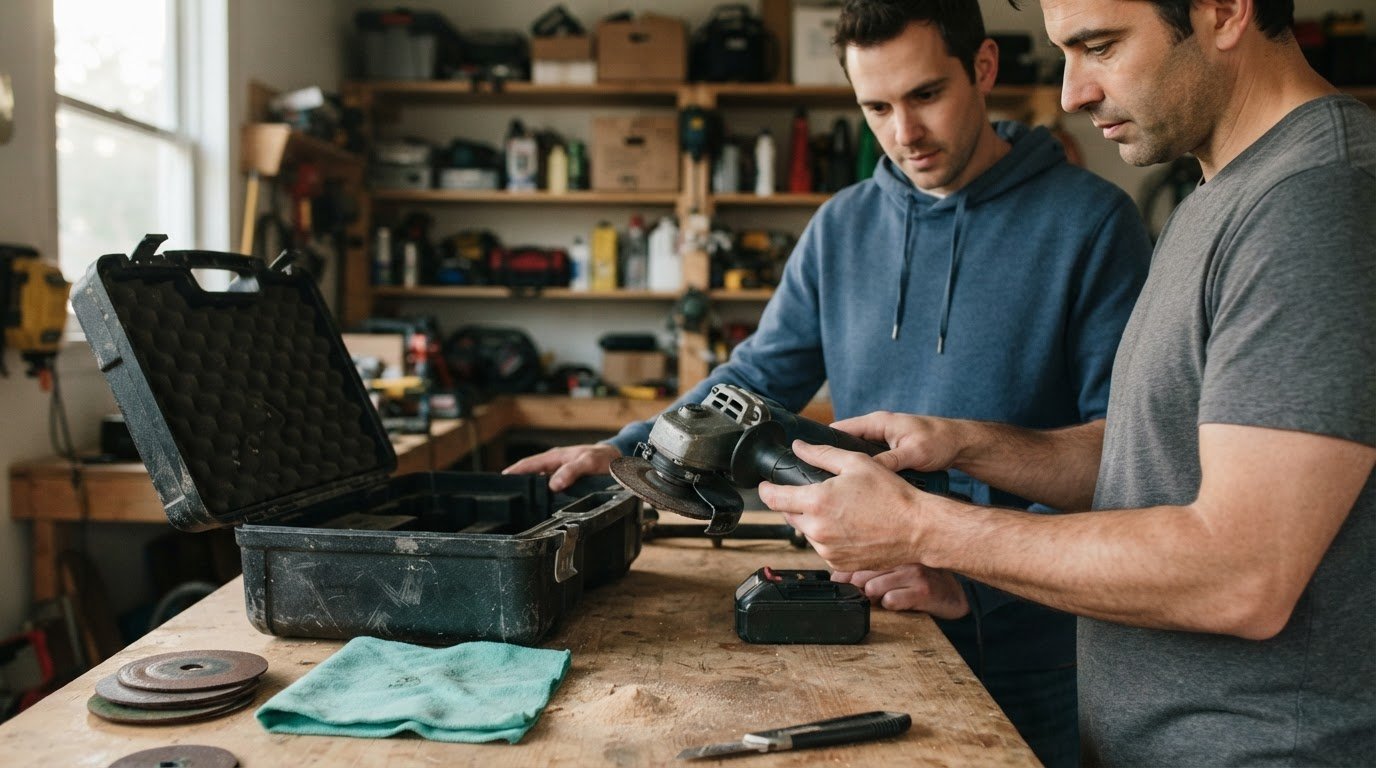
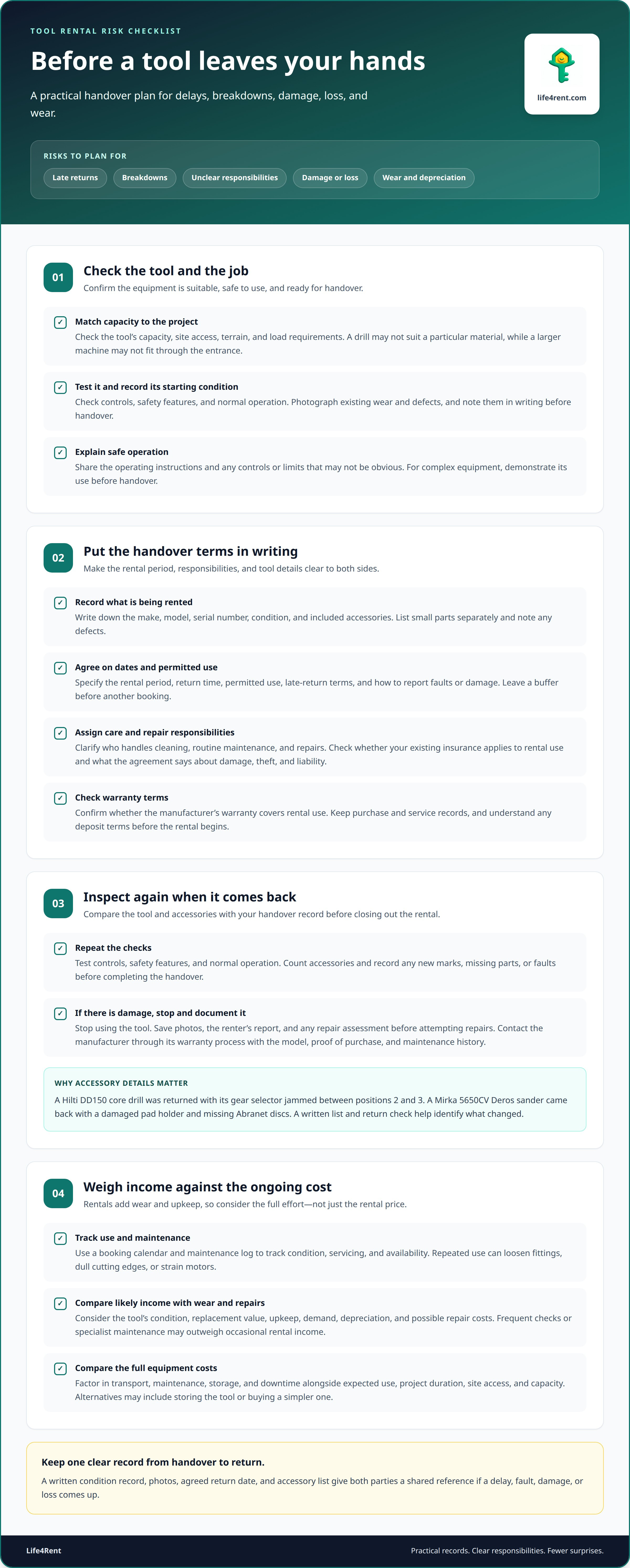
Before handover, test the tool and photograph existing wear, controls, and accessories. Check that its condition matches the listing, then note any defects in writing so both parties have a shared record. Confirm that the model suits the job: a drill may not have enough capacity for a particular material, while a larger machine may not fit through a site entrance. Check access, terrain, and load requirements before arranging equipment rental.
Unfamiliar equipment carries extra risk, even if it looks like a tool the renter already knows. Share the operating instructions and explain any controls or limits that may not be obvious. If the renter does not understand the tool, incorrect use could cause injury or property damage. For complex equipment, a brief demonstration can clarify safe operation before handover.
Use a handover checklist, maintenance log, and booking calendar to manage equipment more easily. These records help track condition, servicing, and availability without relying on memory. If a tool needs frequent checks or specialist upkeep, weigh the effort against the occasional rental income and alternatives such as storing it or buying a simpler tool.
Do tool rental owners need a business licence or sales tax permit? There is no single answer for every owner: requirements depend on location and how local rules treat rental activity. Check the relevant local licensing and tax requirements before accepting rentals regularly.
Rental agreements, insurance, and maintenance responsibilities
A written agreement can prevent confusion if a tool needs servicing or stops working. Specify the rental period, permitted use, condition at handover, included accessories, and how to report faults. For machinery used near people or property, record its safety features and maintenance before each rental. Clear terms also explain who handles cleaning, routine upkeep, and repairs.
Read the full agreement before accepting a booking. Rental terms may set a minimum period or renew monthly. Note the end date, renewal process, late-return terms, and how to report damage. For specialized equipment, describe the intended job and relevant hazards, then confirm the tool’s capacity and setup suit the project.
Insurance also needs attention. Check whether your existing cover applies when someone else rents and uses your tools, and understand what the agreement says about damage, theft, and liability. An owner may face exposure if equipment is poorly maintained or handed over without safety features. Keep service records and document the tool’s condition at each handover.
Before choosing between renting, buying, or leasing, compare the full costs, including transport, maintenance, storage, and downtime, against how often you expect to use the equipment. Consider the project’s duration, site access, and capacity requirements before choosing machinery. Compare rental terms, equipment condition, support, and customer reviews, rather than focusing on the rental price alone.
Set a rental price by considering the tool’s condition, replacement value, upkeep, demand, and how quickly use may wear it down. If you require a deposit, base it on potential damage or loss and explain clearly how it will be handled. Keep the amount and terms proportionate to the tool and the risks of its use.
Managing warranty claims, damage, and loss
Create a written handover record for every rental. Include the tool’s make, model, serial number, accessories, and condition. Photos of a cracked casing or worn cable can show whether the damage was present beforehand. These records help manage the risks of renting out your tools by establishing a clear timeline if a claim arises.
Examples show why details matter. A borrowed Hilti DD150 core drill came back with its gear selector jammed between positions 2 and 3. A Mirka 5650CV Deros sander was returned with a damaged pad holder and missing Abranet discs. List small parts separately, then compare them at return.
To reduce the risks of theft, damage, and non-return, record the agreed return date, the tool’s identifying details, and every included accessory. Use written rental terms that explain late returns and how to report damage. Before renting out equipment, check whether the manufacturer’s warranty covers rental use, and keep purchase and service records in case of a claim.
Inspect tools before and after every rental. Before handover, test the controls, safety features, and normal operation, then photograph and record any defects. On return, repeat the checks, count the accessories, and note any new marks or faults before completing the handover.
If damage occurs, stop using the tool and document the fault before attempting repairs. Save photos, the renter’s report, and any repair assessment. Contact the manufacturer through its warranty process with the model, proof of purchase, and maintenance history. A clogged filter on a CT26 dust extractor, for example, may need a different response than a damaged housing. These steps help address the risks of renting out your tools and distinguish ordinary wear from accidental damage.
Depreciation and unexpected repairs
Every rental can add wear, lower a tool’s resale value, and shorten its useful life. Repeated use may loosen fittings, dull cutting edges, or strain motors. Track rentals and maintenance in a simple log to identify tools that need attention more often. The record helps you compare rental income with depreciation and future repair costs.
Renters may not care for equipment as carefully as its owner. A gas-engine power washer, for example, can seize if the user skips the required oil mix. Explain the fuel requirements and provide the manufacturer’s instructions before handover. After return, check for unusual noise, leaks, or signs of incorrect use before booking it again.
Heavy equipment brings different maintenance concerns. An excavator working on rough ground may wear faster than one used on a clear, level site. Match the machine to the terrain and load, then follow its maintenance schedule. A breakdown can mean repairs and downtime, so account for both when deciding whether rental income makes sense.
Preventive maintenance can reduce service and scrap costs and limit the need to keep spare parts. Clean tools after use, replace worn components, and record each service date. A clogged filter or damaged cable found between rentals, for example, may be easier to address than a failure during someone else’s project.
Set aside some rental proceeds for repairs and eventual replacement instead of treating every payment as profit. If a tool’s condition declines quickly, shorten rental periods or pause bookings while it is serviced. Careful maintenance helps keep it working, but cannot prevent every fault. Factor that uncertainty into your decision to keep renting it out.
Life4Rent
Life4Rent is a rental marketplace where people can list and rent daily items across 17 categories, including tools, electronics, outdoor and sports gear, homes, and baby products. It can suit owners with useful equipment that sits unused, as well as people who need a tool for a specific task rather than ongoing use.
If you’re considering listing a tool, the earlier checks still matter: describe its condition accurately, set clear rental terms, and account for maintenance and possible repairs. A marketplace gives people a place to list and find items, but it doesn’t remove the owner’s responsibility to prepare equipment and communicate its limits. Think about whether the expected rental income is worth the time and wear involved.
For renters, the range of categories can be useful when a project calls for an item you don’t own. You can look for tools or outdoor and sports equipment for a particular need, while avoiding a purchase for something you may use only occasionally. The right choice depends on the task, the equipment’s condition, and whether rental terms suit your plans.
Before listing or renting, weigh the practical trade-offs as well as the convenience. Owners should be prepared to manage handovers, keep tools in working order, and address damage or late returns. Renters should choose equipment that fits the job and understand the agreed rental period. Clear communication helps both sides set expectations.
Life4Rent may be a useful next step if you want to make an idle item available to others or find a daily item for a short-term need. Take a measured approach, and list or rent only when the arrangement makes sense for you.
Contact Life4Rent if you’d like to discuss the marketplace.
Frequently Asked Questions
What are the most common risks of renting out personal tools?
The main risks include tools being returned late, damaged, lost, or used incorrectly. A less obvious problem is a missing accessory: a saw returned without its guide or charger may be difficult to rent again. Keep an inventory of parts and record the tool’s condition before handover. Also consider whether frequent use could wear it down faster than rental income can cover maintenance and replacement.
Who is liable if a rented tool causes injury or property damage?
Liability depends on what caused an incident and the circumstances of the rental. A renter’s misuse is different from an injury involving a tool with a known defect or missing safety feature. Keep maintenance records, operating instructions, and written handover details. If an incident occurs, preserve messages and photos, record what happened, and avoid assumptions about responsibility until the facts are clear.
Does homeowners or renters insurance cover tools rented to others?
Do not assume a standard homeowners or renters policy covers a tool while someone else uses it for a paid rental. Policy terms may distinguish personal use from rental activity, and exclusions can apply to damage, theft, or injury claims. Read the policy wording for these situations and ask your insurer how it treats the specific tool and rental arrangement before listing it.
What insurance coverage is recommended for renting out tools?
Consider cover for damage to the tool itself and liability claims involving injury or property damage. Suitable options depend on the tool, how it will be used, and the terms of your existing policy. A ladder used at a worksite, for example, presents different exposure from a small household drill. Ask your insurer about rental use and relevant exclusions.
What should a tool rental agreement include?
Include the tool’s identity, condition, accessories, rental dates, permitted use, and return arrangements. Explain how the renter should report a fault, what happens if the tool is late, and how damage or missing parts will be assessed. For specialist tools, add operating limits and required safety instructions. Clear terms give both parties a shared reference if a disagreement arises.
How does renting tools through an online marketplace affect liability and fees?
A marketplace can connect tool owners and renters, but listing there doesn’t automatically settle responsibility for damage or injury. Read the platform’s terms alongside your rental agreement. On Life4Rent, owners pay 0% commission on rental earnings; renters pay a 10% fee, with a minimum of 1 in the listing currency. Optional Life4Rent Protect isn’t insurance, and reimbursement is discretionary.
Related guides on Life4Rent
Ready to rent instead of buy? See all tools & equipment available to rent on Life4Rent →
Life4Rent
Rent it. Earn from it. Own less, access more.
Browse peer-to-peer rentals near you, or list what you own and start earning — all protected by Life4Rent Protect.
About the author
Amsterdam, Netherlands
Joshua writes about the financial side of renting and earning on Life4Rent. His guides focus on helping people understand the real cost of ownership, calculate rental income potential, and make smarter decisions about buying versus renting. He previously wrote on household economics and personal budgeting for a pan-European finance publication.