
2quip vs General Peer to Peer Rental: Which Marketplace Should You Use?
October 10, 2026
Published by Life4Rent · Operated by Brohf Software OÜ
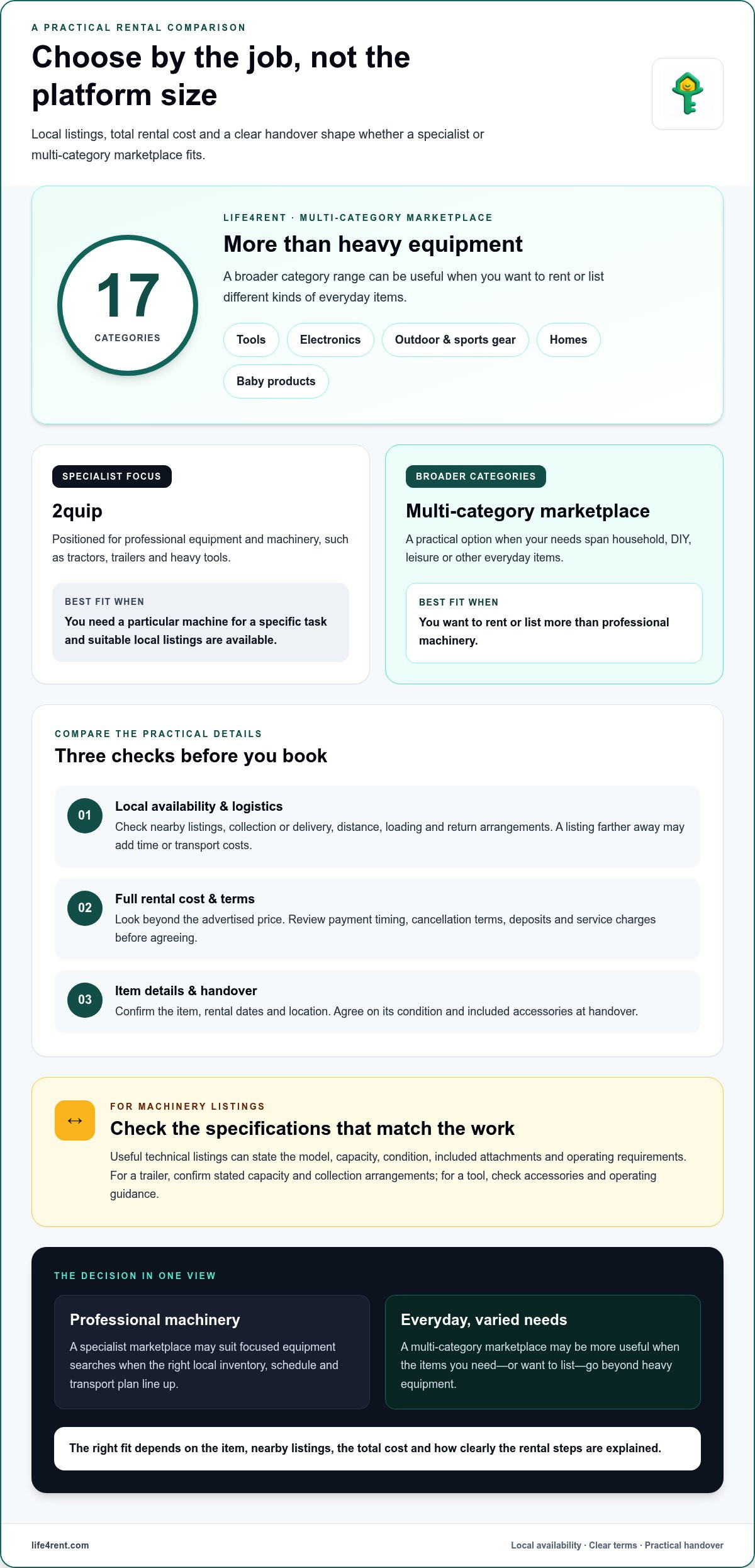
The 2quip vs peer to peer choice depends on what you need to rent, not which platform looks biggest. It matters when you’re weighing a specialist marketplace for heavy machinery against a broader option for everyday items. Local listings, total cost, and how clearly the handover is arranged can all shape the experience.
A specialist platform may suit a focused equipment search, while a multi-category marketplace can be more practical if you need different kinds of items. Life4Rent brings together 17 categories, including tools, electronics, outdoor and sports gear, homes, and baby products. That range is useful if you want to rent or list more than heavy equipment.
Compare platforms by checking the listings near you, the full cost of a rental, and the steps involved in arranging it. This guide explains how category range affects your options, what to look for in a clear rental process, and how to decide which marketplace fits your item and plans.
How Peer to Peer Equipment Rental Functions in 2026
Peer-to-peer (P2P) rental connects an item’s owner with someone who needs it temporarily. A homeowner might list a drill that rarely leaves the shed, while a renter borrows it for a weekend project instead of buying one. The owner can earn from an underused item, and the renter gets temporary access without having to store it long term.
A marketplace provides tools to arrange the exchange, such as searchable listings, booking requests, communication, and sometimes payment processing. Processes differ between platforms, so compare the full rental cost, collection or delivery arrangements, cancellation terms, and any deposit or service charges before booking. A low advertised price doesn’t necessarily mean a lower total cost.
For owners, a listing can put an underused item to work, but earnings depend on demand, availability, and the time needed to prepare and hand over the item. Clear photos, an accurate description, and specific pickup details help renters understand what they’re booking. For renters, the main advantage is access: pay for temporary use rather than buy and store an item you may rarely need.
The Growth of the Sharing Economy
Sharing existing goods can help people make more use of items that might otherwise sit unused. A nearby listing may also make collection simpler and reduce how far an item needs to travel. The peer-to-peer rental platforms overview explains the sharing model through carsharing, which offers a useful comparison for understanding equipment rentals.
Local availability matters in practice. A listing across town may be more useful than a wider selection far away if transport takes extra time or money. The peer to peer equipment rental guide explores the access-over-ownership idea in more detail.
Trust and Security in P2P Transactions
A rental between individuals works best when both sides know what to expect. Some platforms use account or identity checks, and member reviews can provide context about previous transactions, but features and standards vary. Read the listing carefully and use the platform’s communication and payment process where available, so the booking details are easier to track.
Payment timing also varies. Before agreeing to a rental, read the terms for payment, cancellations, damage reports, and refunds. Don’t assume every marketplace holds payment until the rental starts or handles disputes in the same way.
Before booking or listing:
- Confirm the item, rental dates, and handover location in the listing or platform messages.
- Review the platform’s payment and cancellation terms before paying.
- At handover, agree on the item’s condition and any included accessories.
These checks make a 2quip vs peer to peer comparison more useful than simply matching platform categories. The right choice depends on the item, local listings, and how clearly the platform explains each step.
2Quip and the Focus on Professional Equipment
2quip is positioned as a specialist marketplace for equipment and machinery rather than a general place to rent everyday belongings. Its focus may suit someone searching for a tractor, trailer, or heavy tool, especially when working capacity and condition matter as much as availability. A narrower category can make relevant listings easier to find, but nearby inventory still determines whether the platform fits a particular job.
That focus can give owners of costly, less commonly used machinery a relevant audience. Farmers, construction businesses, and independent contractors may need equipment for a specific task or period rather than a long-term purchase. The practical question is whether local listings match the job, schedule, and transport requirements.
Key Features to Look For on a Specialist Platform
Technical listings are most useful when they give renters enough detail to compare machines: model, capacity, condition, included attachments, and operating requirements. Read the listing and rental agreement for the details that matter to the job and handover. If key specifications or terms are unclear, don’t rely on assumptions when deciding whether the machine is suitable.
Who Benefits Most from 2quip?
Farmers, construction businesses, and owners of niche machinery may benefit when a specialist audience is active in their area. Renters can focus on equipment suited to a particular task, while owners can present machinery to people looking in that category. Specialist listings are most useful when they include clear specifications and the equipment is practical to access.
Before committing, match the listing to the work. Someone looking for a trailer should confirm its stated capacity and collection arrangements. A renter seeking a tool should check which accessories are included and what operating guidance is provided. For large equipment, delivery distance, loading, and return logistics may matter as much as the rental itself.
Specialization has trade-offs. A dedicated machinery marketplace can narrow the search, but may be less useful if you also need household, outdoor, or personal items. An economic analysis of peer-to-peer rental markets offers a broader framework for thinking about how access to underused assets can complement ownership. In practice, the right marketplace still depends on the item and local demand.
That’s the central point in a 2quip vs peer to peer comparison: a specialist can make sense for professional machinery, while a broader marketplace may be more useful for varied everyday needs. If you want to rent or list items beyond heavy equipment, explore Life4Rent’s everyday rental categories.
2Quip vs Multi-Category Platforms: A Practical Breakdown
A specialist marketplace and a multi-category marketplace serve different needs. A site built around machinery can make sense if you need a particular type of heavy equipment. A general marketplace is more practical when your list includes a mix of household, DIY, and leisure items. The best fit depends on what you need, what’s available nearby, and how often you expect to rent or lend.
For everyday projects, the difference is easy to picture. You might need a drill for a shelf, a camera for an event, or a stroller for a family visit. A machinery-focused site may not fit those searches, while a broader platform brings different kinds of everyday belongings together.
Inventory Breadth and Versatility
Life4Rent groups listings across 17 categories, including tools, electronics, outdoor and sports gear, homes, and baby products. This range helps renters look for different everyday needs in one place and gives owners a way to list more than one type of item. Someone with a power tool, camping gear, and a baby carrier can list each in its relevant category.
More categories don’t automatically mean more useful choice. Local listings still matter: a wide catalogue spread across a large area may be less convenient than a focused selection close to home. Compare the actual results for your location, then weigh travel and handover against the convenience of finding several categories in one marketplace.
Specialist sites such as 2quip may be a better match for machinery searches, but that focus may leave everyday household needs outside their scope. General marketplaces suit people looking for access without ownership across different parts of daily life, as well as owners who want to make several underused belongings available rather than list only one costly machine.
Fee Comparison and Value for Money
Fees vary by marketplace and transaction. Don’t assume specialist platforms always charge more because equipment is valuable, or that general sites always charge less to encourage smaller rentals. The amount and who pays it depend on the platform’s terms, so compare the stated charges for the specific listing rather than relying on a broad rule.
Owners can estimate their return by starting with the rental amount, subtracting platform charges and other costs they’re responsible for, then accounting for the time and effort involved in handover, cleaning, or upkeep. Renters should compare the total amount due, not just the listing price. Deposits, delivery, and other conditions can also affect whether a rental is worthwhile.
A practical 2quip vs peer to peer comparison comes down to more than category labels. Match the platform to the item, check nearby inventory, and calculate the full cost or expected return before deciding.
Practical Steps to Choose Your Rental Platform
Start with the item and the job it needs to do. A tractor or other specialist machine may point you toward a focused marketplace, while a household tool, camera, or baby item may be easier to find on a multi-category site. If you’re listing, consider who is likely to need the item and how far they can reasonably travel to collect it.
Next, search each platform using your location and the dates you need. Compare relevant listings, not just total results: a nearby item available on the right dates can be more useful than a larger selection that’s difficult to collect. Owners can also look at similar local listings to judge whether there’s likely to be demand before preparing an item for rent.
- Match the platform’s main categories to your item.
- Compare nearby listings, dates, and handover options.
- Review the total charges and any protection terms that apply to the item.
- Test the mobile app or site for the tasks you’ll handle most often.
Evaluating the Listing Process
A clear listing flow should make it straightforward to add photos, describe the item’s condition, set availability, and explain collection details. If a platform offers pricing suggestions based on local listings, treat them as a starting point rather than a promise of what you’ll earn. For a home project, this guide to finding a tool on rent can help you think through what to borrow.
Try the process on your phone before managing bookings there. Check whether you can edit dates, respond to messages, and find booking details without hunting through menus. These small tasks matter when plans change or a renter needs a quick clarification.
Understanding Protection and Liability
Read protection terms carefully, especially for costly or fragile items. Look for what the platform says about damage, loss, claims, and exclusions for your item category. Don’t assume a general protection plan covers every item or situation. Compare the written terms with the rental you’re considering.
Also review late-return and cancellation rules, and see whether the marketplace provides a rental agreement or records the terms in the booking. Before handover, both parties should agree on the dates, item condition, included accessories, and return arrangements. Clear records make misunderstandings easier to resolve.
A practical 2quip vs peer to peer decision should include the app or site itself, not just its inventory. Choose an option that fits the item, has useful local listings, and makes key terms easy to understand. Browse or list everyday rental items on Life4Rent if you want a marketplace organized around a range of daily needs.
Why Life4Rent is a Practical Choice for Daily Needs
Heavy machinery is only one part of peer-to-peer renting. For everyday needs, consider whether you can borrow an item for a short project or occasion instead of buying something that will spend most of its time in storage. Life4Rent groups daily items into 17 categories, including electronics, tools, outdoor and sports gear, homes, and baby products, making it relevant to a wide range of practical needs.
That range also gives owners a way to list items beyond specialist equipment. A household might have tools for occasional repairs and outdoor gear used only in certain seasons. Listing suitable belongings can help put them to use, while renters gain access to items for the time they need them.
A Marketplace for the Whole Home
A multi-category marketplace can be convenient when your rental needs change from one week to the next. You might look for a tool for a small repair, then camping gear for a trip or a baby item for a family visit. Owners can also list different kinds of belongings in relevant categories rather than treating every item as part of a machinery-only inventory.
Categories help narrow a search, but a broad selection doesn’t guarantee that a specific item is available nearby. Check the listing location, dates, condition, and handover details before making plans. Renting directly from another person can feel more personal than a standard retail transaction, but a good experience still depends on clear communication between the owner and renter.
Efficiency and Ease of Use
Everyday rentals should be straightforward to assess. Look for a clear description, useful photos, stated availability, and practical collection information. Renters need to understand what’s included and how the handover works. Owners should describe the item’s condition and any important use details in plain language.
Good communication matters more than a polished interface alone. Before confirming a rental, agree on the dates, collection and return arrangements, and the item’s condition. These details help avoid confusion, whether the listing is for a household tool or outdoor equipment.
In the 2quip vs peer to peer comparison, Life4Rent is a practical option when your needs extend beyond heavy machinery. Its broader categories support access to everyday items without buying them, while the best choice still depends on what’s listed locally and whether the rental terms suit your plans. Review the listing and arrangements, then choose the marketplace that fits the item you need or want to share.
Put Your Next Rental Plan Into Motion
Make your next step small and specific. Choose one item you need for an upcoming task, or one belonging you rarely use, then think through when you need it and how you’d arrange the handover. That gives you a practical starting point without committing to buying or listing more than you’re ready to.
The 2quip vs peer to peer choice comes down to what fits your plans: a specialist option for machinery or a broader marketplace for everyday needs. If you want to explore renting or listing items across different categories, Start renting or listing your items on Life4Rent today. Pick an item and browse or create a listing on Life4Rent to take your next step.
Frequently Asked Questions
Is 2quip safe for individual renters?
Safety depends on the platform’s rules and the care both people take during the rental. Before booking, read the listing and rental terms, keep arrangements and payment within the platform where possible, and agree on the item’s condition at handover. For costly equipment, record its condition and included parts with dated photos. Don’t assume a marketplace’s protections cover every item or type of damage.
How much does it cost to list an item on Life4Rent?
Life4Rent earns a percentage fee from each successful rental agreement. When setting a rental price, consider the amount you’ll receive after applicable charges, along with the time and effort involved in preparing and handing over the item. That helps you decide whether lending it is worthwhile.
What categories are available on general P2P marketplaces?
Categories depend on the marketplace, but broad P2P platforms can cover practical household and personal needs, not only machinery. Life4Rent organizes listings across 17 categories, including tools, electronics, outdoor and sports gear, homes, and baby products. For example, a renter might look for a camera for an event or outdoor equipment for a trip. Search local listings because category coverage doesn’t guarantee a specific item is available nearby.
Do I need my own insurance to rent out my equipment?
Don’t assume the platform’s terms replace your own insurance or that every item is covered by a marketplace protection plan. Coverage can depend on the item, the circumstances, and the policy wording. Before listing valuable equipment, read the platform’s terms and your own policy, paying attention to rental use, damage, theft, and exclusions.
Can I rent electronics on 2quip?
2quip focuses on professional equipment and machinery, so a general rental marketplace may be a more suitable place to start when looking for everyday electronics. Compare local listings and check the model, condition, included accessories, and rental dates before booking.
How do I get paid when someone rents my item?
Life4Rent facilitates rentals and earns a percentage fee from successful rental agreements. Before accepting a booking, review the platform’s payment terms so you understand how earnings are calculated, when funds are released, and what happens if a rental is cancelled. Keep booking and payment details recorded through the platform for easier reference.
What happens if a renter damages my property?
The next steps depend on the marketplace’s terms and any applicable protection or insurance. Record the item’s condition before handover, including existing wear, and keep relevant messages and booking details. If damage occurs, document it promptly and follow the platform’s stated reporting process. Don’t assume compensation is automatic; coverage, evidence requirements, and exclusions may differ by item and situation.
Is peer-to-peer rental available in Europe?
Yes, peer-to-peer rental marketplaces operate in Europe, though categories and local selection vary by platform and location. Life4Rent has a global scope, including Estonia and Europe. A renter in one city may see different nearby options from someone elsewhere, so search by location and dates. For cross-border rentals, review the platform’s terms and handover arrangements before making plans.
Life4Rent
Rent it. Earn from it. Own less, access more.
Browse peer-to-peer rentals near you, or list what you own and start earning — all protected by Life4Rent Protect.
About the author
London, United Kingdom
Fred covers rental technology, app features, and platform mechanics for the Life4Rent Renting Academy. With a background in fintech journalism, he specialises in breaking down how digital rental platforms work — from payment protection and identity verification to smart pricing and booking management.